Recent Articles

Pressure-dependent surface viscosity and its surprising consequences in interfacial lubrication flows

Harishankar Manikantan and Todd M. Squires

Phys. Rev. Fluids 2, 023301 (2017) - Published 9 February, 2017

Qualitatively new phenomena occur in the flow of surfactant-laden interfaces, where surfactant surface viscosity depends on concentration. These include “choking” of flow through a narrow channel, an upper bound on squeezing flow velocity, and kinematically irreversible particle dynamics near walls.

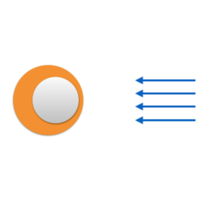
From free jets to clinging wall jets: The influence of a horizontal boundary on a horizontally forced buoyant jet

H. C. Burridge and G. R. Hunt

Phys. Rev. Fluids 2, 023501 (2017) - Published 8 February, 2017

Laboratory experiments examine the interaction of a horizontal round buoyant jet with a horizontal surface near the jet source.

Preferential concentration of inertial sub-Kolmogorov particles: The roles of mass loading of particles, Stokes numbers, and Reynolds numbers

Sholpan Sumbekova, Alain Cartellier, Alberto Aliseda, and Mickael Bourgoin

Phys. Rev. Fluids 2, 024302 (2017) - Published 8 February, 2017

An experimental investigation of the clustering phenomenon of heavy sub-Kolmogorov particles in homogeneous isotropic turbulent flows is conducted at various turbulence levels, particle inertia, and loading. Strong dependence on Reynolds number but not on Stokes number supports the “sweep stick” scenario. Volume fraction dependence suggests the presence of collective effects.

Data-driven approach to design of passive flow control strategies

F. Gómez and H. M. Blackburn

Phys. Rev. Fluids 2, 021901(R) (2017) - Published 7 February, 2017

A proper orthogonal decomposition of both fluctuating velocity and nonlinear forcing identifies the spatial locations for the application of forces for passive control of an unsteady flow.

Effect of input perturbation on the performance and wake dynamics of aquatic propulsion in heaving flexible foils

Andrea M. Lehn, Patrick J. M. Thornycroft, George V. Lauder, and Megan C. Leftwich

Phys. Rev. Fluids 2, 023101 (2017) - Published 7 February, 2017

Fish produce thrust by sweeping a caudal fin through the water in a periodic motion. The effect of imposing a low-amplitude, high-frequency component to that driving motion is explored. Such input perturbations can greatly increase both the performance and efficiency of flapping-fin propulsion.

Observation of nonlinear sloshing induced by wetting dynamics

Guillaume Michel, François Pétrélis, and Stéphan Fauve

Phys. Rev. Fluids 2, 022801(R) (2017) - Published 6 February, 2017

Experiments are conducted with a fluid near to its critical point to measure the damping of sloshing. A major contribution to the damping comes from the motion of the contact line. Linear theory only applies while the amplitude is smaller than the boundary layer thickness.

Generalized stability of a shear flow with a free surface with respect to three-dimensional perturbations

Christos Mallios and Nikolaos A. Bakas

Phys. Rev. Fluids 2, 023901 (2017) - Published 6 February, 2017

Modal and nonmodal growth of 3D perturbations in a shear flow with a free surface is examined. For low Froude numbers, 3D perturbations produce large streamwise streaks in the shear without an effect on the free surface, while for large Froude numbers, planar perturbations excite surface waves at large amplitude.

Pressure evolution equation for the particulate phase in inhomogeneous compressible disperse multiphase flows

Subramanian Annamalai, S. Balachandar, P. Sridharan, and T. L. Jackson

Phys. Rev. Fluids 2, 024301 (2017) - Published 3 February, 2017

An analytical evolution equation is derived for pressure variation inside a spherical particle subject to the time-varying ambient fluid quantities of complex incoming flows. The expression reduces to the linearized Rayleigh–Plesset equation in the incompressible limit.

Characteristics of turbulent heat transfer in an annulus at supercritical pressure

J. W. R. Peeters, R. Pecnik, M. Rohde, T. H. J. J. van der Hagen, and B. J. Boersma

Phys. Rev. Fluids 2, 024602 (2017) - Published 2 February, 2017

DNS results of simultaneously heated and cooled annular turbulent flows at supercritical pressure are used to investigate the effect of density, thermal diffusivity, heat capacity, and molecular Prandtl number variations on turbulent heat transfer.

Editorial: From the APS Editor in Chief

Pierre Meystre

Phys. Rev. Fluids 2, 020001 (2017) - Published 1 February, 2017

Helicity statistics in homogeneous and isotropic turbulence and turbulence models

Ganapati Sahoo, Massimo De Pietro, and Luca Biferale

Phys. Rev. Fluids 2, 024601 (2017) - Published 1 February, 2017

Mirror symmetry in homogeneous turbulence is studied by using state-of-the-art direct numerical simulations and shell models. A novel set of helical structure functions are used to quantitatively assess multiscale chiral contributions and to show that all flows in nature recover mirror symmetry at small enough scales.

Editorial: Physical Review Fluids: The First Year and Beyond

John Kim and Gary Leal

Phys. Rev. Fluids 2, 010001 (2017) - Published 31 January, 2017

Phoretic drag reduction of chemically active homogeneous spheres under force fields and shear flows

Ehud Yariv and Uri Kaynan

Phys. Rev. Fluids 2, 012201(R) (2017) - Published 31 January, 2017

The spherically symmetric solute field surrounding a chemically active particle is deformed when the particle sediments or is placed in a shear flow, resulting in velocity enhancement and stresslet reduction, respectively.

Oscillation of satellite droplets in an Oldroyd-B viscoelastic liquid jet

Fang Li, Xie-Yuan Yin, and Xie-Zhen Yin

Phys. Rev. Fluids 2, 013602 (2017) - Published 31 January, 2017

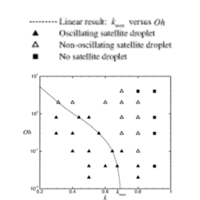
The oscillation characteristics of satellite droplets in the beads-on-a-string structure of an Oldroyd-B viscoelastic liquid jet are studied numerically using a one-dimensional model.

Convective mixing in homogeneous porous media flow

Jia-Hau Ching, Peilong Chen, and Peichun Amy Tsai

Phys. Rev. Fluids 2, 014102 (2017) - Published 31 January, 2017

The descending motion of fingerlike plumes is gravitationally driven by a fluid density difference due to a dissolution, mimicking the transport of CO2-rich dissolution in a saline aquifer.

Development of magnetic liquid metal suspensions for magnetohydrodynamics

Florian Carle, Kunlun Bai, Joshua Casara, Kyle Vanderlick, and Eric Brown

Phys. Rev. Fluids 2, 013301 (2017) - Published 30 January, 2017

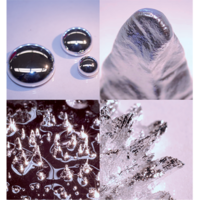
Magnetic and nonmagnetic particles are suspended in liquid metals to obtain a fluid with high magnetic susceptibility, high electrical conductivity, and tunable viscosity. These properties will allow magnetohydrodynamic experiments over a wider parameter range than liquid metals alone.

Angular dynamics of small crystals in viscous flow

J. Fries, J. Einarsson, and B. Mehlig

Phys. Rev. Fluids 2, 014302 (2017) - Published 30 January, 2017

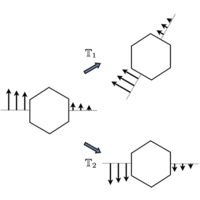
How axisymmetric spheroidal particles rotate in a viscous shear flow is already known. A new study shows that particles with discrete rotational symmetry tumble and spin like spheroids when the rotational axis is contained in a plane of reflection symmetry, but they may spin differently if it is not.

Spectra and statistics in compressible isotropic turbulence

Jianchun Wang, Toshiyuki Gotoh, and Takeshi Watanabe

Phys. Rev. Fluids 2, 013403 (2017) - Published 27 January, 2017

Spectra and statistics in compressible isotropic turbulence are studied. In weakly compressible turbulence, the pseudosound mode dominates over the acoustic mode at relatively small scales, and the spectrum of pseudosound velocity exhibits a power-law scaling with the exponent -3.

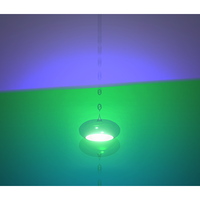
Oscillate boiling from microheaters

Fenfang Li, S. Roberto Gonzalez-Avila, Dang Minh Nguyen, and Claus-Dieter Ohl

Phys. Rev. Fluids 2, 014007 (2017) - Published 27 January, 2017

An intriguing boiling regime is observed from a single bubble oscillating at several 100 kHz on a microheater. Experiments and modeling reveal that pinning, nonspherical collapses with pinch-off, and Marangoni flow lead to many million cycles of clocklike oscillations of the bubble.

Magnetohydrodynamic implosion symmetry and suppression of Richtmyer-Meshkov instability in an octahedrally symmetric field

W. Mostert, D. I. Pullin, V. Wheatley, and R. Samtaney

Phys. Rev. Fluids 2, 013701 (2017) - Published 26 January, 2017

An interesting magnetic field geometry for the inertial confinement fusion implosion based on magnetohydrodynamics simulations is proposed.

Sign In to Your Journals Account

Filter

Recent Issues

Vol. 11, Iss. 11
November 2026
Vol. 11, Iss. 10
October 2026
Vol. 11, Iss. 9
September 2026
Vol. 11, Iss. 8
August 2026
Category
Article Type
Section

Filter

Article Lookup

Enter a citation