Recent Articles

Extended theory of generating the cylindrical underwater shock wave via the stiffened-gas equation of state

Haotian Chen, Hanbing Zou, Sheng Xu, and Bing Wang

Phys. Rev. Fluids 11, 014302 (2026) - Published 12 January, 2026

Using the stiffened-gas equation of state (SG-EOS), we extend the classical shock dynamics theory to underwater scenarios. The Chester-Chisnell-Whitham (CCW) relation and its two-dimensional characteristic relations are systematically modified. We further propose a method of designing a shock tube that transforms planar underwater shock waves into cylindrical ones with pre-set intensity and curvature. Numerical tests demonstrate that the shock intensity and curvature can be accurately controlled to match predicted values. This work provides a theoretical framework for geometric control of shock waves in compressible liquids.

Consistency requirement of data-driven subgrid-scale modeling in large-eddy simulation

Xinyi Huang, Sze Chai Leung, and H. Jane Bae

Phys. Rev. Fluids 11, 014602 (2026) - Published 12 January, 2026

Data-driven subgrid-scale modeling in the large-eddy simulations (LES) suffers from the inconsistency between the a priori tests and the a posteriori tests. We study the difference in filtered high-fidelity data and LES to identify the numerical deviation between the two cases, which is a combined impact of commutation error, numerical errors, and error coupling. By incorporating numerical deviations into model training, we enhance consistency, stabilize simulations, and improve predictions of the a posteriori tests. Our findings highlight that data-driven methods introduce significant nonlinearity and equation coupling, exacerbating inconsistencies compared to non-data-driven approaches.

Variational projection of Navier-Stokes: Fluid mechanics as a quadratic programming problem

Haithem Taha and Kshitij Anand

Phys. Rev. Fluids 11, 014901 (2026) - Published 12 January, 2026

The main challenge behind simulating incompressible flows is projecting the dynamics on the space of divergence-free fields. This projection is typically achieved by solving the Poisson equation in pressure at every time step. Here, we use the Principle of Minimum Pressure Gradient to formulate this projection as a minimization problem. The flow evolves from one instant to another in a way that minimizes the L2 norm of the pressure force required to satisfy the continuity constraint. We showed that the minimization problem is a convex quadratic programming problem and derived its closed-form solution. Hence, we obtained an explicit form for the projected dynamics of Navier-Stokes.

Turbulence/flame/wall interaction in turbulent boundary layer combustion with wall surface reactions

Zhaofan Zhu, Haiou Wang, Kun Luo, Jianren Fan, and Evatt R. Hawkes

Phys. Rev. Fluids 11, 013201 (2026) - Published 8 January, 2026

This study investigates turbulence/flame/wall interaction in turbulent boundary layer combustion with varying wall surface reactivity using direct numerical simulation (DNS). The effects of combustion on the turbulent boundary layer were investigated, revealing that the hairpin vortices of the boundary layer turbulence are lifted upward, upstream of the flame, due to the combustion-induced adverse pressure gradient. The effects of wall surface reactivity on flame/wall interaction were revealed in terms of near-wall heat release rate, wall heat flux and flame quenching behavior.

Effect of hyperdiffusion on rotating Rayleigh-Bénard convection

B. Davy, C. J. Davies, J. E. Mound, and S. M. Tobias

Phys. Rev. Fluids 11, 013502 (2026) - Published 8 January, 2026

Rotating Rayleigh–Bénard convection is a key model for rapidly rotating planetary interiors, but direct numerical simulations are restricted by the fine spatial resolution required at small scales. We systematically assess a scale-dependent horizontal hyperdiffusion scheme as a computationally cheaper alternative, comparing 107 simulations against DNS across a wide parameter range. We show that hyperdiffusion can either weaken rotational constraints at low supercriticality or suppress small-scale energy at high supercriticality, and identify parameter choices that preserve large-scale dynamics.

Capillary-viscous retraction dynamics of droplets: The role of the dynamic contact angle

Thijs Varkevisser and Daniel Bonn

Phys. Rev. Fluids 11, 013601 (2026) - Published 8 January, 2026

Understanding droplet retraction on hydrophobic surfaces is crucial for applications ranging from self-cleaning coatings to inkjet printing. While previous models relied on static wetting properties, we demonstrate that the retraction of viscous droplets is governed effectively by the dynamic receding contact angle. By incorporating this nonequilibrium parameter, we establish a unified scaling law that accurately predicts retraction rates across diverse substrates.

Retraction dynamics of a highly viscous liquid sheet

Taosif Ahsan, Rodolfo Brandão, Benny Davidovitch, and Howard A. Stone

Phys. Rev. Fluids 11, 014001 (2026) - Published 8 January, 2026

Upon rupture, a planar liquid sheet retracts under capillary forces at its free edge. We develop an asymptotic model for slender and highly viscous sheets, showing that the dynamics are governed by a remote region where viscous and inertial effects balance. There, a conserved quantity reduces the problem to a one-dimensional diffusion equation for the thickness, subject to effective boundary conditions. From this reduced description, we identify and analyze distinct retraction regimes characterized by the time elapsed since rupture and the relative magnitude of the aspect ratio to the Ohnesorge number.

Bursting of wetted and cavitating tip vortex around a wake-influenced propeller

Xincheng Wang, Huaiyu Cheng, and Bin Ji

Phys. Rev. Fluids 11, 014301 (2026) - Published 8 January, 2026

Bursting of tip vortex cavities is commonly observed behind marine propellers and is accompanied by a sharp rise in broadband noise, yet its underlying mechanisms remain poorly understood. This work introduces an Euler-Lagrange hybrid simulation to capture the dynamics of tip vortex cavity bursting. The results reveal that bubble-type vortex bursting is the dominant instability mode and that its intensity is strongly correlated with blade-load variations induced by the hull wake.

Logarithmic decay rate of streamwise turbulence intensity in incompressible channel flows with low and moderate Reynolds numbers

Tianyi Bai and Lin Fu

Phys. Rev. Fluids 11, 014601 (2026) - Published 8 January, 2026

This work introduces an extra input, the near-wall wall-normal velocity fluctuation, to the spectral linear stochastic estimation between inner and outer signals to compensate for the impact of near-wall universal signals while extracting the attached-eddy contribution. Subsequently, the logarithmic decay rate of the streamwise turbulence intensity is revisited. It becomes, overall, much larger after the compensation, which reduces its dependence on the Reynolds number. These results cannot exclude the likelihood of a constant decay rate by a qualitative analysis of linear coherence functions among near-wall streamwise, near-wall wall-normal, and outer streamwise velocity fluctuations.

Volumetric three-dimensional experimental measurement of vortex dynamics in a rotating wake

Johannes N. Hillestad, Srikar Yadala, Leon Li, R. Jason Hearst, and Nicholas A. Worth

Phys. Rev. Fluids 11, 014701 (2026) - Published 8 January, 2026

In this paper, the volumetric velocimetry measurement technique Shake-the-Box is applied to the near wake of a model wind turbine to investigate the vortex dynamics present in the wake. The interaction and breakdown of the tip vortices is visualized using three-dimensional iso-surfaces of Lamb vector magnitude, a technique and physical quantity only accessible using volumetric techniques. The paper describes the influence of the tip vortex interaction process on properties of the tip vortex, such as circulation and the circularity and inclination of the tip vortex contour itself.

Hydrodynamics and wave energy extraction in passive propulsion of a flexible foil under water surface waves

Ming Li, Sung Goon Park, Fotis Sotiropoulos, and Lian Shen

Phys. Rev. Fluids 11, 014801 (2026) - Published 8 January, 2026

A flexible body can interact with an incident water wave passively and extract wave energy to generate a thrust force. In this paper, direct numerical simulation is performed to investigate the wave energy extraction mechanism in the passive propulsion of a flexible foil. Kinematics studies show that the passive flapping motion is up–down asymmetric, with a direct impact on propulsive performance under unsteady motion. At high Strouhal numbers, a passing-over leading-edge vortex is observed, which is responsible for the enhanced thrust force.

Bubble dynamics in complex fluids

Valeria Garbin

Phys. Rev. Fluids 11, 010502 (2026) - Published 7 January, 2026

This article briefly reviews recent developments in understanding and utilizing bubble dynamics in complex fluids. Bubble dynamics impart deformations and probe properties on time scales as short as the relaxation times of complex fluids containing suspended particles or macromolecules. Examples from our research group with increasing complexity are presented: from linear rheology of soft solids using ultrasound-driven bubbles, to bubble removal from yield-stress fluids, to self-assembly in colloidal gels driven by bubble dynamics. The growing synergy between the communities of cavitation and rheology will help address new challenges in characterization and manipulation of complex fluids.

Data-driven modeling and simulation of turbulent combustion

Tarek Echekki

Phys. Rev. Fluids 11, 010501 (2026) - Published 6 January, 2026

Data from experiments or simulations enables tools to accelerate simulations and develop accurate predictions of important turbulence-chemistry interactions in turbulent combustion flows. Several methods designed to exploit this data are presented and discussed. They are motivated by and rooted in traditional paradigms in turbulent combustion that rely heavily on the existence of a low-dimensional manifold for the composition space and its coupling with turbulent transport. These methods include surrogate DNS with principal component transport, the extraction of closure models from multiscalar measurements, and deep operator networks for chemistry integration and acceleration.

Diffusive braking of penetrative convection in stably-stratified fluids

Bradley W. Hindman and J. R. Fuentes

Phys. Rev. Fluids 11, 013501 (2026) - Published 5 January, 2026

Turbulent mixing at the interface between a convection zone and a neighboring stably stratified region in a star or planet often causes the convective region to grow. This mixing process therefore plays a key role in shaping the internal structure and long-term evolution of stars and planets, especially when compositional gradients contribute substantially to the density stratification. Our numerical simulations show, however, that when the compositional stratification is sufficiently strong, chemical diffusion can halt the expansion of the convection zone. Taken together, these results suggest that chemical diffusion sets a limit to convective penetration in strongly stratified interiors.

Extreme vertical drafts as drivers of Lagrangian dispersion in stably stratified turbulent flows

Christian Reartes, Pablo D. Mininni, and Raffaele Marino

Phys. Rev. Fluids 11, 014501 (2026) - Published 5 January, 2026

In stably stratified turbulence, vertical transport is typically suppressed by buoyancy; however, intense vertical drafts can intermittently develop. Using direct numerical simulations and a Lagrangian approach based on particle pair dispersion, we show that these extreme events play a crucial role in vertical mixing, leading to strong departures from classical dispersion behavior. Our results demonstrate that a small fraction of particles experiencing extreme vertical drafts contributes disproportionately to vertical transport and mixing, highlighting the central role of large-scale intermittency in stratified turbulent flows.

Size amplification of jet drops due to insoluble surfactants

Jun Eshima, Tristan Aurégan, Palas Kumar Farsoiya, Stéphane Popinet, Howard A. Stone, and Luc Deike

Phys. Rev. Fluids 10, 123604 (2025) - Published 30 December, 2025

When bubbles burst on the ocean surface, small drops are emitted. In this work, we find that when there are surfactants, a particularly common type of contamination found on fluid surfaces, small bubbles can emit drops that are significantly larger than expected without contamination. For the bubbles considered in our experiment and simulations, we see up to a 5 times increase in the size of the emitted drop. Previous studies involving large bubbles saw the opposite effect, where the drop size decreased in the presence of surfactants. This finding therefore has fundamental implications for our understanding of aerosol production from bubble bursting.

Dynamics of a neutrally buoyant sphere during oblique water exit

Yang Huang, Qing Xiao, and Qiang Zhu

Phys. Rev. Fluids 10, 124805 (2025) - Published 30 December, 2025

Using large-eddy simulation with overset grids, this work reveals how launch angle shapes the water-exit dynamics of a neutrally buoyant sphere. The sphere exhibits nonlinear velocity attenuation, angle-dependent rotation switching, and systematic lateral deflection driven by shed vortices and image-induced pressure asymmetry. Two exit phases with distinct hydrodynamic signatures are identified. The findings deepen mechanistic understanding of water exit and aid the control of trans-medium bodies.

Spatiotemporal statistics of the dissipation rate at the boundary of a turbulent flow using diffusing-wave spectroscopy

Enzo Francisco, Julien Lambret, and Sébastien Aumaître

Phys. Rev. Fluids 10, 124606 (2025) - Published 29 December, 2025

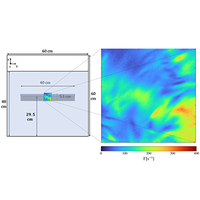
We present a novel experimental technique based on Diffusing-Wave Spectroscopy that, for the first time, provides high-resolution spatiotemporal maps of energy dissipation at the boundary of a turbulent flow. The flow, generated by an impeller, exhibits Reynolds numbers in the range 1.5×10⁴ to 6×10⁵. Measurements were performed at the boundary of a square container, within a 5×5cm² region at the impeller height. This method enables a direct experimental characterization of the statistical properties of turbulent structures near flow boundaries, offering new insights into boundary-layer dynamics in highly turbulent regimes.

Experiments on rapidly rotating convection: The role of the Prandtl number

Hannah M. Clercx and Rudie P. J. Kunnen

Phys. Rev. Fluids 10, 123503 (2025) - Published 26 December, 2025

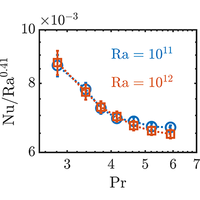
We measure the efficiency of convective heat transfer (Nusselt number) by turbulent convection in a rapidly rotating Rayleigh-Bénard convection experiment. Series of measurements are done at two constant values of the Rayleigh number. Using water at different mean temperatures, we change the Prandtl number. Raising the Prandtl number leads to a reduction of the Nusselt number with a significantly stronger dependence than without rotation. We hypothesize that this dependence is caused by the changing ratio of the thermal and kinetic boundary layer thicknesses.

Improved heat flux modeling for high-speed wall-modeled large eddy simulation

Vedant Kumar and Johan Larsson

Phys. Rev. Fluids 10, 124605 (2025) - Published 24 December, 2025

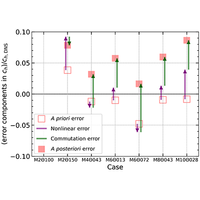
Two new modeling components for the energy equation in ordinary-differential-equation-based wall-models are proposed in order to improve the accuracy of heat flux predictions in high-speed turbulent boundary layers: a model for the diffusion of turbulence kinetic energy, and an altered near-wall damping of the thermal eddy diffusivity. These modeling additions reduce the a priori error in the heat flux to within 5% across the tested conditions. A decomposition of the a posteriori error shows the presence of two other error sources in wall-modeled large eddy simulations, which are found to contribute up to 5-10% additional error.

Sign In to Your Journals Account

Filter

Recent Issues

Vol. 11, Iss. 10
October 2026
Vol. 11, Iss. 9
September 2026
Vol. 11, Iss. 8
August 2026
Vol. 11, Iss. 7
July 2026
Category
Article Type
Section

Filter

Article Lookup

Enter a citation