Highlights

Curvature regulation of the ciliary beat through axonemal twist

Pablo Sartori, Veikko F. Geyer, Jonathon Howard, and Frank Jülicher

Phys. Rev. E 94, 042426 (2016) - Published 28 October, 2016

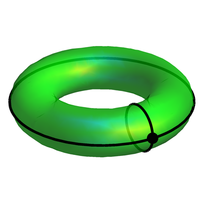
This paper proposes a three-dimensional mechanical model of the beating of flagella, which help propel cells through fluids. A combination of parallel and normal stresses is shown to interact with a twisting mechanism to produce propulsion patterns observed in nature. The presence of twist might also help solve the question how the very small strains resulting from curvature of the flagella can regulate molecular motors.

Self-assembly of colloidal particles in deformation landscapes of electrically driven layer undulations in cholesteric liquid crystals

Michael C. M. Varney, Qiaoxuan Zhang, Bohdan Senyuk, and Ivan I. Smalyukh

Phys. Rev. E 94, 042709 (2016) - Published 28 October, 2016

This paper studies the behavior of colloidal particles embedded in a cholesteric liquid-crystal matrix with an applied electric field. The authors observe that the presence of the colloidal objects reduces the threshold for deformations in the liquid crystal. Conversely, periodic deformations in the liquid crystal can be used to form patterns of colloidal particles, which also depend on the particles’ shape.

Pattern formation with repulsive soft-core interactions: Discrete particle dynamics and Dean-Kawasaki equation

Jean-Baptiste Delfau, Hélène Ollivier, Cristóbal López, Bernd Blasius, and Emilio Hernández-García

Phys. Rev. E 94, 042120 (2016) - Published 17 October, 2016

Recent theoretical and simulation work has predicted the existence of a so-called cluster crystal, where soft colloidal particles interacting through a repulsive potential are able to aggregate and form periodic crystals of particle clusters. The authors study this phenomenon using Brownian dynamics simulation and analytical theory based on the Dean-Kawasaki equation, and focus on the appearance and structure of patterns in one- and two-dimensional realizations.

Classification and predictions of RNA pseudoknots based on topological invariants

Graziano Vernizzi, Henri Orland, and A. Zee

Phys. Rev. E 94, 042410 (2016) - Published 12 October, 2016

Merging concepts of statistical mechanics, renormalization, topology, and graph theory, this paper aims to shed light on the problem of the three dimensional structure of RNA. The authors propose to include an additional term in the partition function, associated with a renormalized crossing number, that accounts for the observation that RNA unevenly populates the repertoire of pseudoknots with the same genus.

Active microrheology in a colloidal glass

M. Gruber, G. C. Abade, A. M. Puertas, and M. Fuchs

Phys. Rev. E 94, 042602 (2016) - Published 11 October, 2016

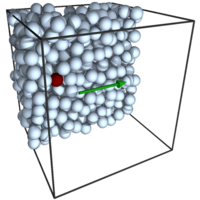
This paper uses a modified version of mode-coupling theory to investigate the microrheology of a colloidal glass. By probing and following the dynamics of an individual test particle, two force regimes are identified, one that gives rise to a localized probe and one where the probe has a steady velocity. The authors then compare theory and simulations in the localized regime.

Transfer-matrix calculations of DNA polymer micromechanics under tension and torque constraints

Artem K. Efremov, Ricksen S. Winardhi, and Jie Yan

Phys. Rev. E 94, 032404 (2016) - Published 6 September, 2016

The authors apply the formalism of the transfer matrix to the mechanical properties of DNA molecules. This allows them to take into account local variations in the properties of the DNA. By applying different sets of torques and forces they are able to reproduce the experimentally observed structural forms of DNA.

Open system trajectories specify fluctuating work but not heat

Peter Talkner and Peter Hänggi

Phys. Rev. E 94, 022143 (2016) - Published 29 August, 2016

Within the framework of the recently developed stochastic thermodynamics, fluctuating thermodynamic quantities are introduced. This paper examines these quantities for a system coupled to a thermal bath through an arbitrary, not necessarily weak interaction. The authors conclude that such fluctuating quantities can be defined, but not in a unique way.

Dynamics of weakly coupled parametrically forced oscillators

P. Salgado Sánchez, J. Porter, I. Tinao, and A. Laverón-Simavilla

Phys. Rev. E 94, 022216 (2016) - Published 29 August, 2016

This paper addresses the behavior of two parametrically forced oscillators in the weakly coupled regime. The authors investigate several instances of coupling and analyze the resulting instabilities and the breaking of symmetries in the problem. These results are connected to recent experimental observations and simulation results in fluid mechanics and granular matter.

Partial synchronous output of a neuronal population under weak common noise: Analytical approaches to the correlation statistics

Alexandra Kruscha and Benjamin Lindner

Phys. Rev. E 94, 022422 (2016) - Published 29 August, 2016

This paper analyzes the excitation of a population of uncoupled neurons stimulated by a common white-noise process. The authors define a measure for the partial synchronization of the output of the firing neurons, and study its properties analytically and numerically. The results may lead to a better understanding of coincidence detection in neural signal processing.

Self-similar aftershock rates

Jörn Davidsen and Marco Baiesi

Phys. Rev. E 94, 022314 (2016) - Published 23 August, 2016

This paper examines the occurrence and modeling of aftershocks in systems exhibiting avalanche-like behavior, particularly focusing on the case of earthquakes. The authors propose a self-similar description of the spatiotemporal correlation of events and find agreement with high-precision seismic data. This suggests that self-similarity is a general principle in seismicity, and it may have consequences for probabilistic earthquake forecasting.

Dissociation along the principal Hugoniot of the Laser Mégajoule ablator material

P. Colin-Lalu, V. Recoules, G. Salin, T. Plisson, E. Brambrink, T. Vinci, R. Bolis, and G. Huser

Phys. Rev. E 94, 023204 (2016) - Published 16 August, 2016

This paper studies the equation of state of an ablator material used for inertial confinement fusion. The authors simulate the material in the warm dense matter regime using quantum molecular dynamics and show that atomic bond dissociation affects the compressibility. Their findings are confirmed by performing shock wave experiments in the LULI2000 laser facility.

First-order phase transitions in the real microcanonical ensemble

Philipp Schierz, Johannes Zierenberg, and Wolfhard Janke

Phys. Rev. E 94, 021301(R) (2016) - Published 9 August, 2016

This paper presents a simulation method that uses Monte Carlo sampling techniques in the microcanonical ensemble, instead of the more traditional scheme based on the canonical ensemble. The authors find that the method is computationally competitive with other, more advanced, techniques when applied to first-order transitions, and hint at the possibility of using a similar proposal to create tailored ensembles for specific problems.

Effects of RNA branching on the electrostatic stabilization of viruses

Gonca Erdemci-Tandogan, Jef Wagner, Paul van der Schoot, Rudolf Podgornik, and Roya Zandi

Phys. Rev. E 94, 022408 (2016) - Published 9 August, 2016

The authors investigate how the branching of RNA, together with electrostatic interactions, affects its packaging in capsids. They use a mean-field model to calculate effects on free energy of the RNA-capsid complex and osmotic pressure inside the capsid. Results suggest that RNA branching makes a virion more stable.

Hydrodynamic theory for nematic shells: The interplay among curvature, flow, and alignment

Gaetano Napoli and Luigi Vergori

Phys. Rev. E 94, 020701(R) (2016) - Published 8 August, 2016

This paper proposes a hydrodynamic theory of nematic liquid crystals confined to a thin curved surface. The authors use a variational approach to tackle the problem and find an underlying coupling between the curvature, the flow, and the nematic ordering of the liquid crystal. The results can be useful to describe more complicated systems such as topological defects interacting with a backflow, as well as active nematics.

Q spoiling in deformed optical microdisks due to resonance-assisted tunneling

Julius Kullig and Jan Wiersig

Phys. Rev. E 94, 022202 (2016) - Published 2 August, 2016

Following the experimental observation of resonance-assisted tunneling in noncircular optical microcavities, the authors provide a description of the optical modes and study their lifetime. They apply their method to three different cavity shapes and find good agreement with numerical data and an existing perturbation theory

Kink ratchet induced by a time-dependent symmetric field potential

Bernardo Sánchez-Rey, Jesús Casado-Pascual, and Niurka R. Quintero

Phys. Rev. E 94, 012221 (2016) - Published 22 July, 2016

This paper proposes a mechanism for soliton ratchets in long Josephson junctions, in the absence of external forces and with a symmetric field potential. This is done by inducing a time-dependent phase shift in the potential in the sine-Gordon equation. The mechanism can also be applied to other similar models.

Long-range response in ac electricity grids

Daniel Jung and Stefan Kettemann

Phys. Rev. E 94, 012307 (2016) - Published 15 July, 2016

This paper analyzes the behavior of electricity grids in response to perturbations. The authors specifically consider the case of the addition of one extra edge and study the long-range response of the system, focusing on the power-law decay of the disturbance. They apply their findings to a real power grid and observe comparable behavior, although specific details such as the connectivity and the topology of the network might play a relevant role.

Useful scars: Physics of the capsids of archaeal viruses

L. E. Perotti, S. Dharmavaram, W. S. Klug, J. Marian, J. Rudnick, and R. F. Bruinsma

Phys. Rev. E 94, 012404 (2016) - Published 11 July, 2016

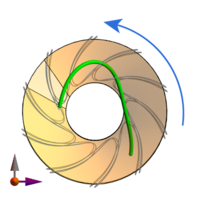
This paper presents a theoretical description of the shape of capsids for archaeal viruses, in particular the ATV virus which can develop a unique two-tail structure. The capsid takes the shape of a constant curvature surface, an unduloid, which contains scarlike defects. These defects may serve as a source of excess protein concentration, which can further enable to observed tail growth.

Assembly of bipolar microtubule structures by passive cross-linkers and molecular motors

D. Johann, D. Goswami, and K. Kruse

Phys. Rev. E 93, 062415 (2016) - Published 24 June, 2016

The authors study theoretically the midzone of the mitotic spindle, where antiparallel microtubules overlap and help maintain bipolarity of the cell during division. They find that (a) an interplay of molecular motors and passive cross-linkers can form a stable overlap region of polar filaments, (b) a bundle of aligned polar filaments may self-organize into a spindlelike pattern, and (c) results are relatively insensitive to details of the model. The work suggests how cells could generate and control spindle midzones.

Underwater acoustic wave generation by filamentation of terawatt ultrashort laser pulses

Vytautas Jukna, Amélie Jarnac, Carles Milián, Yohann Brelet, Jérôme Carbonnel, Yves-Bernard André, Régine Guillermin, Jean-Pierre Sessarego, Dominique Fattaccioli, André Mysyrowicz, Arnaud Couairon, and Aurélien Houard

Phys. Rev. E 93, 063106 (2016) - Published 15 June, 2016
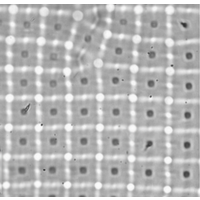
The authors study acoustic signals generated by filamentation of ultrashort terawatt laser pulses in water. They investigate experimentally and numerically the strong dependence of the shape and intensity of the acoustic waves on input pulse duration. They demonstrate that sound waves generated from an extended source produced by picosecond pulses have strong directivity, a finding relevant for underwater detection and communications.

Sign In to Your Journals Account

Filter

Section

Filter

Article Lookup

Enter a citation