Highlights

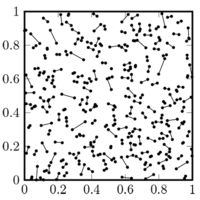
Hydrodynamics in kinetically constrained lattice-gas models

Eial Teomy and Yair Shokef

Phys. Rev. E 95, 022124 (2017) - Published 21 February, 2017

This paper presents an approximation for the density-dependent diffusion coefficient that describes the behavior of kinetically constrained lattice-gas models. The authors show that non-negligible correlations appear in these models when the system is driven out of equilibrium. Such correlations also appear to be the reason for small discrepancies between approximations and numerical results for a broader group of models.

Impact of discontinuous deformation upon the rate of chaotic mixing

Lauren D. Smith, Murray Rudman, Daniel R. Lester, and Guy Metcalfe

Phys. Rev. E 95, 022213 (2017) - Published 21 February, 2017

This paper tackles the problem of mixing in materials that, in addition to smooth flows, can also exhibit discontinuous rearrangements of the components. The authors go beyond traditional measures of mixing to study the dynamical properties of these mixings and specifically focus on the rate of mixing.

Instabilities of a rotating helical rod in a viscous fluid

Yunyoung Park, Yongsam Kim, William Ko, and Sookkyung Lim

Phys. Rev. E 95, 022410 (2017) - Published 21 February, 2017

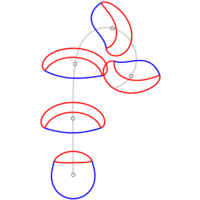
Some types of bacteria possess a propulsion mechanism that uses a helical flagellum that rotates and allows for swimming. The authors perform numerical simulations to study the hydrodynamics of this flagellum and show an array of different dynamical behaviors, further differentiated by the presence or absence of a flexible link to the motor.

Sufficient conditions for the additivity of stall forces generated by multiple filaments or motors

Tripti Bameta, Dipjyoti Das, Dibyendu Das, Ranjith Padinhateeri, and Mandar M. Inamdar

Phys. Rev. E 95, 022406 (2017) - Published 13 February, 2017

The authors study a model of cytoskeletal filaments and molecular motors and explore the conditions under which the maximum forces are additive: the force of the group is the sum of the individual contributions of each motor. They conclude that as long as the system is in a detailed-balance condition, equivalent to thermodynamic reversibility, the maximum forces are additive.

Exact results for power spectrum and susceptibility of a leaky integrate-and-fire neuron with two-state noise

Felix Droste and Benjamin Lindner

Phys. Rev. E 95, 012411 (2017) - Published 27 January, 2017

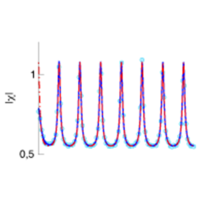
This paper provides exact expressions for the power spectrum and the susceptibility of a leaky integrate-and-fire neuron driven by asymmetric two-state noise. The authors give an intuitive discussion of the undamped periodic oscillations resulting from their equations, and also consider effects of additional broadband noise.

Long-range interacting systems in the unconstrained ensemble

Ivan Latella, Agustín Pérez-Madrid, Alessandro Campa, Lapo Casetti, and Stefano Ruffo

Phys. Rev. E 95, 012140 (2017) - Published 23 January, 2017

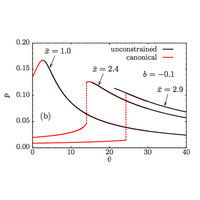
This paper explores the thermodynamics of interacting systems in the unconstrained ensemble. Whereas systems with short-ranged interactions cannot reach equilibrium under completely open conditions, the authors show that this is achievable when the particles interact through long-ranged interactions. They also compared their results for the equilibrium state with those obtained using the canonical and grand-canonical ensemble.

Large deviations in Taylor dispersion

Marcel Kahlen, Andreas Engel, and Christian Van den Broeck

Phys. Rev. E 95, 012144 (2017) - Published 23 January, 2017

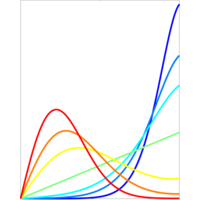
The authors study Taylor dispersion, the dispersion of particles diffusing in a cylindrical tube in the presence of flow. They find that the large deviation function for generalized Taylor dispersion can be mapped onto that for empirical distributions. This mapping allows the authors to derive a more precise description of the long-time regime for Taylor dispersion.

Beyond Flory theory: Distribution functions for interacting lattice trees

Angelo Rosa and Ralf Everaers

Phys. Rev. E 95, 012117 (2017) - Published 12 January, 2017

The authors establish a framework for calculating distribution functions for quantities characterizing conformation and connectivity of randomly branched and interacting lattice trees or polymers. The work expands the analysis of Flory theory, which is widely used to calculate average values of such quantities.

Geometry and design of origami bellows with tunable response

Austin Reid, Frederic Lechenault, Sergio Rica, and Mokhtar Adda-Bedia

Phys. Rev. E 95, 013002 (2017) - Published 11 January, 2017

This analytical and experimental study should be useful in designing deployable origami bellows for a variety of applications. The authors present a unified geometrical description of several classes of origami bellows and identify parameters that control their properties. In addition, they describe construction of physical models and measurements of their mechanical responses.

Crawling and turning in a minimal reaction-diffusion cell motility model: Coupling cell shape and biochemistry

Brian A. Camley, Yanxiang Zhao, Bo Li, Herbert Levine, and Wouter-Jan Rappel

Phys. Rev. E 95, 012401 (2017) - Published 5 January, 2017

This paper presents a model to describe the crawling of cells based on the cell shape, which is determined by the force balance in the membrane, and its internal chemical dynamics which controls the steering mechanism. The interplay of these two factors gives rise to a phase diagram where a transition from straight to circular trajectories is observed.

One-loop diagrams in the random Euclidean matching problem

Carlo Lucibello, Giorgio Parisi, and Gabriele Sicuro

Phys. Rev. E 95, 012302 (2017) - Published 3 January, 2017

This paper analyzes the Euclidean version of the matching problem, namely finding the optimal way to form pairs out of a set of vertices in d-dimensional space. By using the replica approach, the authors are able to obtain an improved approximation for the optimal cost which they compare with previous numerical results.

Overdamped stochastic thermodynamics with multiple reservoirs

Yûto Murashita and Massimiliano Esposito

Phys. Rev. E 94, 062148 (2016) - Published 29 December, 2016

This paper proposes a theory of overdamped stochastic thermodynamics in the presence of multiple reservoirs with different temperatures. After showing that naively extending the case with a single reservoir fails to give correct results, the authors construct a nontrivial overdamped approximation by starting from an underdamped description. They then show that the theory gives correct results in the case of a Brownian heat engine.

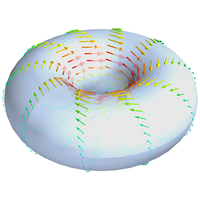
Structure of curved crystals in the thermodynamic limit and the perfect screening condition

Alex Travesset

Phys. Rev. E 94, 063001 (2016) - Published 13 December, 2016

This paper examines the distribution of defects in curved two-dimensional crystals in the limit of an arbitrarily large number of particles. The author focuses on closed manifolds and presents results for spheres and tori, for which experimental and numerical results are available. The case of more general geometries is also discussed.

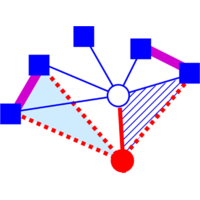
Densification and structural transitions in networks that grow by node copying

U. Bhat, P. L. Krapivsky, R. Lambiotte, and S. Redner

Phys. Rev. E 94, 062302 (2016) - Published 8 December, 2016

The authors introduce a simple growing network model that allows them to give extensive analytical results for its properties. The model grows by a copying mechanism in which a new node attaches to a randomly selected target node and also, with copying probability p, to each of the neighbors of the target. A key finding is that a transition from a sparse to a dense regime occurs as the copying probability increases beyond 1/2.

Equivalence between modularity optimization and maximum likelihood methods for community detection

M. E. J. Newman

Phys. Rev. E 94, 052315 (2016) - Published 22 November, 2016

This paper examines two common methods of community detection in networks, namely modularity maximization and the maximum likelihood method. The author shows an equivalence between these two methods, and explores some of its consequences.

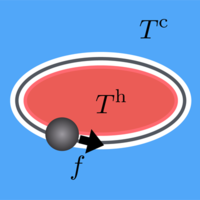
Work, work fluctuations, and the work distribution in a thermal nonequilibrium steady state

T. R. Kirkpatrick, J. R. Dorfman, and J. V. Sengers

Phys. Rev. E 94, 052128 (2016) - Published 17 November, 2016

This paper introduces the concept of Casimir work in nonequilibrium steady states. The authors analyze the fluctuation forces in a fluid that is confined between two plates and in which a constant temperature gradient is maintained. Due to the long range of the correlations in such a nonequilibrium system, the properties of the work are quite different compared to an equilibrium system.

Fragmentation and shear band formation by slow compression of brittle porous media

Gergő Pál, Zoltán Jánosi, Ferenc Kun, and Ian G. Main

Phys. Rev. E 94, 053003 (2016) - Published 16 November, 2016

The authors report a numerical study of fragmentation of disordered granular porous media. They use discrete-element simulation to study fragmentation in a shear band that occurs when a cylindrical sample is slowly compressed. Their results for the position, orientation, and width of the central shear band and the spatial and mass distributions of the fragments generally agree with experimental and field observations.

Solvent-mediated forces in critical fluids

Pietro Anzini and Alberto Parola

Phys. Rev. E 94, 052113 (2016) - Published 7 November, 2016

This paper presents a theoretical approach to the effective interaction between two planar walls immersed in a fluid, using a modified density-functional theory that is valid over much of the phase diagram including the critical point. The authors study the crossover between the short-ranged depletion force that arises as a result of volume exclusion, and the onset of a long-ranged critical Casimir force due to the confinement of the density fluctuations, as the system approaches the critical point.

High-precision estimate of the hydrodynamic radius for self-avoiding walks

Nathan Clisby and Burkhard Dünweg

Phys. Rev. E 94, 052102 (2016) - Published 1 November, 2016

The authors develop a sampling scheme that enables efficient estimation of averages of observables in self-avoiding walks. A key insight is that the hydrodynamic radius does not need to be calculated exactly in order to obtain accurate estimates of its expectation value. Their high-resolution simulation study provides a highly accurate estimate of a universal asymptotic amplitude ratio, which improves previous estimates by several orders of magnitude.

Monte Carlo method for critical systems in infinite volume: The planar Ising model

Victor Herdeiro and Benjamin Doyon

Phys. Rev. E 94, 043322 (2016) - Published 31 October, 2016

This paper presents a new approach for the treatment of finite-size effects in the simulation of critical phenomena using Monte Carlo methods, by using an iteratively implemented boundary condition that encodes the infinite volume beyond it. The method is then tested successfully in the planar Ising model.

Sign In to Your Journals Account

Filter

Section

Filter

Article Lookup

Enter a citation