Highlights

Emergence of critical-point symmetry from a microscopic perspective: Evidence for Ba134 as the “softest” nucleus without definite shape

K. Kaneko, Y. Sun, T. Mizusaki, and N. Shimizu

Phys. Rev. C 113, 014327 (2026) - Published 28 January, 2026

The authors present new results for nuclear shape evolution and phase transitions from a comprehensive microscopic calculation based on the projected Hartree-Fock-Bogolyubov plus generator coordinate method. They identify, in particular, the microscopic origins of the symmetries originally suggested by algebraic or geometric models. The calculations show that by taking 134Ba as the reference and varying the Q⋅Q strengths involving the quasi-SU(3) partners (1g9/2,2d5/2) and (1h11/2,2f7/2), one can reproduce the relevant IBM symmetries and the shape-critical behavior symmetries. The work also identifies a line, in a visual representation of the transitions between the symmetries, with Qs(21+) equal to zero dividing states indicative of prolate and oblate nuclear shapes.

Microscopic theory of angular momentum distributions across the full range of fission fragments

Petar Marević, Nicolas Schunck, and Marc Verriere

Phys. Rev. C 113, 014612 (2026) - Published 28 January, 2026

During fission, a heavy nucleus splits into two hot fragments that cool by emitting particles. To simulate this cooling process, the angular momentum distribution of the fragments is required. Historically, this has been described using simplified phenomenological models. In this work, advanced quantum-mechanical methods are used to predict, for the first time, the angular momentum distributions of all fragments observed experimentally. The calculations confirm a pronounced sawtooth pattern in the average angular momentum as a function of fragment mass, consistent with recent measurements. Moreover, substantial variations are predicted for isobaric nuclei, indicating that simplified models are not sufficiently accurate. The generated data are an important input for fission modeling based on robust quantum-mechanical methods, an effort relevant for fundamental science and technology.

Guide to nuclear polarization in muonic atoms

Mikhail Gorchtein

Phys. Rev. C 113, L011301 (2026) - Published 14 January, 2026

Many precision tests of the Standard Model require controlled understanding of nuclear structure. An example is precise knowledge of nuclear charge radii, which can be obtained from the x-ray spectra of muonic atoms. Such spectra themselves have important corrections, such as the induced nuclear polarization. This Letter presents a simple yet reliable collection of formulas to compute the nuclear polarization for light to medium-mass nuclides. These formulas encode information across bound-state QED, nuclear reactions, and hadronic interactions, and aim at providing better constraints in interpreting key experiments.

Detection of molecular hydrogen in a neutron beam lifetime experiment

J. Caylor, R. Biswas, B. Crawford, M. S. Dewey, N. Fomin, G. L. Greene, S. F. Hoogerheide, J. Hungria-Negron, H. P. Mumm, J. S. Nico, F. E. Wietfeldt, D. O. Valete, and J. Zuchegno

Phys. Rev. C 112, 065501 (2025) - Published 12 December, 2025

Precision knowledge of the neutron lifetime is important in predicting the cosmological abundance of helium following the Big Bang, the flux of solar neutrinos, and the influence of beyond-standard-model theories with new massive particles on electroweak interactions. However, the neutron lifetime puzzle—the several-standard-deviation discrepancy between the neutron storage “bottle” experiments and the neutron decay “beam” experiments—limits a confident extraction of the experimental lifetime. This work addresses a previously unquantified systematic effect in the beam experiments, the loss of trapped protons due to charge exchange with molecular hydrogen in the residual gas. These new results, using the BL2 experimental apparatus at NIST, provide direct information on the effects of charge exchange of protons and show that this effect is not responsible for the observed difference in lifetime from the two measurement techniques, concluding that the neutron lifetime puzzle remains.

β decay of the Tz=−2 nucleus Se64 and its descendants: The T=2 isobaric multiplet

P. Aguilera et al.

Phys. Rev. C 112, 054319 (2025) - Published 20 November, 2025

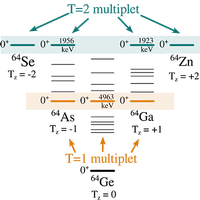
Atomic nuclei within an isobaric multiplet have rather similar structure, and studying β decay between these nuclei is a powerful spectroscopy tool. An international team of researchers reports on a large amount of nuclear structure data for several nuclei near the proton dripline: 64Se, its isobar multiplet neighbor 64As, and 63Ge. 64Se is the heaviest Tz=−2 nucleus that both β decays and has a stable mirror partner Tz=+2. The experiment used fragmentation from a high-intensity 78Kr beam at the RIKEN Nishina Center in Japan and recorded in addition to β-delayed γ rays also decay protons from states above the separation energy. The comprehensive spectroscopy led to new insights on the isobaric mass multiplet equation for the A=64 T=2 system, the heaviest multiplet where these studies are possible, and found good mirror symmetry. In also measuring the half-life of 64Se and revisiting the idea of the anti-analog state originally discussed for the A=56 system half a century ago, the work brings detailed nuclear decay studies very close to the proton drip line.

Microscopic optical potentials from a Green's function approach

G. H. Sargsyan, G. Potel, K. Kravvaris, and J. E. Escher

Phys. Rev. C 112, 054606 (2025) - Published 13 November, 2025

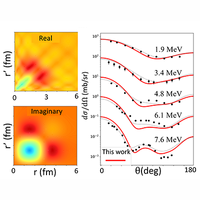
Phenomenological nuclear reaction models primarily rely on data from stable isotopes. It is uncertain how these models would perform when applied to reactions involving unstable, exotic isotopes the data of which are crucial for astrophysics, medicine, and energy applications. To address this challenge, the authors introduce a microscopic optical potential, derived from the Feshbach formalism and informed by the valence shell model. The work presents an innovative self-consistent, iterative approach for calculating the nonlocal Green’s function, forging a direct and systematic link between nuclear structure and reaction theory. Applied to n+24Mg elastic scattering, the new optical potential yields close agreement with experimental data, demonstrating a powerful and necessary tool for modeling reactions away from the valley of stability.

Modeling direct and pre-equilibrium processes of neutron-induced reactions with the noniterative finite amplitude method and with the distorted-wave Born approximation

Hirokazu Sasaki, Toshihiko Kawano, and Marc Dupuis

Phys. Rev. C 112, 054607 (2025) - Published 13 November, 2025

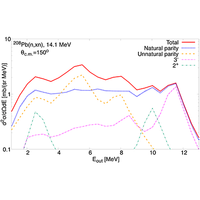
This work develops a fully microscopic framework for neutron-induced reactions to describe direct and one-step pre-equilibrium processes. The authors combine the noniterative finite-amplitude method (FAM) with the distorted-wave Born approximation (DWBA). The resulting FAM-QRPA+DWBA formalism employs the Skyrme effective interaction to derive quasiparticle random-phase approximation (QRPA) equations, which leads to a consistent and parameter-free treatment of neutron inelastic scattering to both discrete and continuum states. Applied to the 208Pb(n,n′) reaction, the method accurately reproduces measured differential and double-differential cross sections across 7–25 MeV without empirical adjustments. The calculated spin distributions of residual nuclei agree with combinatorial 1p–1h systematics, demonstrating that the noniterative FAM-QRPA+DWBA approach provides an efficient and predictive tool for modeling neutron-induced reactions within a unified microscopic framework.

Nuclear cross sections from low-energy interactions

J. Boström, J. Rotureau, B. G. Carlsson, and A. Idini

Phys. Rev. C 112, L051602 (2025) - Published 13 November, 2025

Describing reactions with deformed nuclei remains a challenging task. The article proposes a microscopic method to consistently calculate cross sections and construct optical potentials for such systems, using symmetry breaking and restoration techniques. The formalism builds Green’s functions and self-energies from multiple reference states, with sum rules that allow truncation of the many-body space, overall reducing computational time. Applied to neutron scattering on 24Mg, the approach reproduces cross sections and demonstrates a promising path toward systematic microscopic optical potentials for heavy and deformed nuclei.

Unconventional Cu67 production using high-energy bremsstrahlung and cross section evaluation

M. Eslami, D. G. Jenkins, and M. Bashkanov

Phys. Rev. C 112, 054603 (2025) - Published 7 November, 2025

Photons in high-energy probe beams that pass through their intended target can be “reused” for making promising nuclides in nuclear medicine, new experiments show.

Two-neutrino 0+→0+ double-β decay of Ca48 within the density-functional-theory–based no-core configuration-interaction framework

Jan Miśkiewicz, Maciej Konieczka, and Wojciech Satuła

Phys. Rev. C 112, 055502 (2025) - Published 6 November, 2025

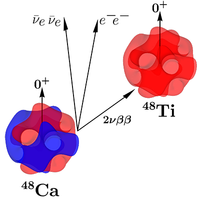
This work describes the first calculation of a nuclear matrix element for the two-neutrino double-beta transition (2νββ 48Ca→48Ti) within a recently developed theory framework, no-core configuration-interaction based on density-functional theory (DFT-NCCI). The authors build on a tested approach, and explicitly include nuclear deformation. A clever choice of the single-particle wave functions reduces the computational effort. The result obtained for this transition is complementary to those obtained in other nuclear frameworks, giving confidence in modeling this very rare process with DFT-NCCI. This is not only relevant for modeling 2νββ decay in heavier nuclei within a unified formalism but is also highly relevant for modeling the 0νββ decay process for which nuclear matrix elements differ significantly between various approaches.

Impact of ground-state correlations on the multipole response of nuclei: Ab initio calculations of moment operators

A. Porro, A. Schwenk, and A. Tichai

Phys. Rev. C 112, 054303 (2025) - Published 5 November, 2025

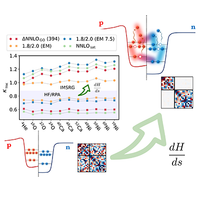
Sum rules for electromagnetic transitions offer valuable insight into atomic nuclei. The Thomas-Reiche-Kuhn (TRK) sum rule on electric dipole transitions, for instance, directly reflects the exchange components of the nuclear force. These sum rules can be efficiently computed as expectation values of moment operators. In this work, the authors perform ab initio calculations of the multipole response of closed-shell nuclei from 4He to 78Ni using various chiral two- and three-nucleon interactions. The moment operators are evolved with the in-medium similarity renormalization group (IMSRG) to incorporate key ground-state correlations. Applying this method, the TRK sum rule for 16O and 40Ca agrees well with experiment, demonstrating an advance over competing many-body methods. This framework thus provides a benchmark for other ab initio calculations of integrated nuclear response properties.

Robust ab initio predictions for dimensionless ratios of E2 and radius observables. I. Electric quadrupole moments and deformation

Mark A. Caprio, Pieter Maris, and Patrick J. Fasano

Phys. Rev. C 112, 044318 (2025) - Published 23 October, 2025

Ab initio no-core shell model calculations do well in reproducing experimental energies. Observables with radial dependences, however, such as radii and electric quadrupole moments and transitions, are particularly affected by large-distance tails of the nuclear wave function. Such observables are generally in poorer agreement with experiment and are much more sensitive to the choice of model space. The work in these two papers shows that dimensionless ratios of such observables are significantly less sensitive to the model space and agree better with data. Thus, if one can measure at least one observable, one can make a reliable prediction for the others. Moreover, these dimensionless ratios provide ab initio insight into the nuclear quadrupole deformation.

Robust ab initio predictions for dimensionless ratios of E2 and radius observables. II. Estimation of E2 transition strengths by calibration to the charge radius

Mark A. Caprio, Patrick J. Fasano, and Pieter Maris

Phys. Rev. C 112, 044319 (2025) - Published 23 October, 2025

Ab initio no-core shell model calculations do well in reproducing experimental energies. Observables with radial dependences, however, such as radii and electric quadrupole moments and transitions, are particularly affected by large-distance tails of the nuclear wave function. Such observables are generally in poorer agreement with experiment and are much more sensitive to the choice of model space. The work in these two papers shows that dimensionless ratios of such observables are significantly less sensitive to the model space and agree better with data. Thus, if one can measure at least one observable, one can make a reliable prediction for the others. Moreover, these dimensionless ratios provide ab initio insight into the nuclear quadrupole deformation.

Excited state of the α particle: A benchmark study

P.-Y. Duerinck, A. Deltuva, J. Dohet-Eraly, M. Gattobigio, A. Kievsky, R. Lazauskas, D. Likandrovas, and M. Viviani

Phys. Rev. C 112, 044001 (2025) - Published 1 October, 2025

The 4He nucleus, for historical reasons often called the α particle, has a large binding energy but it lacks stable excited states. Experimental data suggest a 0+ resonance about 0.4 MeV above the p-3H threshold with a width comparable to that energy. The authors carry out a benchmark calculation which locates a shallow bound excited state in 4He near that threshold when they switch off the Coulomb interaction. As they gradually re-introduce it, the excited state crosses the threshold and eventually becomes a resonant state. Comparisons of resonant energy and width show significant discrepancies with R-matrix analyses from experimental data. However, using universal concepts, the authors conclude that the existence of this state is not a consequence of a particular interaction between the constituent protons and neutrons but is due to a discrete scale invariance that constrains the spectrum of the N-body system, thus demonstrating a connection to the universal behavior of systems with four nucleons.

New scaling and nuclear structure aspects in heavy-ion fusion reactions

C. L. Jiang, W. F. Henning, B. P. Kay, and K. E. Rehm

Phys. Rev. C 112, 034612 (2025) - Published 17 September, 2025

Fusion reactions are the most complex reaction processes during the collision of two nuclei, their cross sections spanning several orders of magnitude. The authors expand a previous analysis of heavy-ion fusion, applying a recently proposed universal function for fusion cross sections. By scaling both energy and cross sections according to characteristics of the Coulomb barrier, the authors essentially take into account the influence of the Coulomb interaction between the two nuclei as they fuse. The approach reproduces fusion excitation functions rather well, even in the energy region below the Coulomb barrier, while highlighting individual reaction characteristics as one compares many fusion systems. The success in identifying simple scaling laws for universal representations of a large body of fusion data may motivate future work including predicting unmeasured fusion cross sections.

Quantifying uncertainty in machine learning for nuclear binding energy

Mengyao Huang, Kyle A. Wendt, Nicolas F. Schunck, and Erika M. Holmbeck

Phys. Rev. C 112, 034317 (2025) - Published 15 September, 2025

Machine learning (ML) is rapidly becoming an important technique in nuclear physics. However, applying machine learning reliably requires quantifying the uncertainty in an ML model, which can be computationally very expensive, requiring multiple runs of training. Researchers at Lawrence Livermore National Laboratory have, for the first time in nuclear physics, implemented a method to combine training data features with biases also selected from the training data features, which allow for simultaneous fitting and uncertainty quantification. When applied to nuclear binding energies, the new method not only successfully quantifies the errors, but in particular signals when the ML model is extrapolated too far from data and becomes unreliable. This heralds a new ability to extrapolate data to extreme conditions, with reduced computational resources, yet without compromising our knowledge of how trustworthy the extrapolation is.

First observation of an isomer in Es243 via α-decay spectroscopy of Md247

S. Y. Xu et al.

Phys. Rev. C 112, 034315 (2025) - Published 12 September, 2025

The study of low-lying energy levels in odd-A heavy nuclei provides important information regarding the ordering of Nilsson single-particle states, and thus the evolution of shell structure in the heavy-mass region. In the present work, the authors used the observation of pile-up traces from conversion electrons following the α-decay events of 247Md to identify a new isomeric state of 243Es, which has a half-life as short as 5 microseconds. This result, which constitutes the first observation of an isomeric decay in Z=99 Es isotopes, led to a significant rearrangement of the level scheme of 243Es. This cutting-edge α-decay spectroscopy using digital pulse-shape analysis promises to open a new avenue for exploring isomerism in other transfermium isotopes.

Cr61 as a doorway to the N=40 island of inversion

L. Lalanne et al. (CERN, ISOLDE Collaboration, IS714)

Phys. Rev. C 112, L031301 (2025) - Published 2 September, 2025

Knowing the correct ground-state spin of neutron-rich nuclei is crucial for the interpretation of β-decay data and nuclear structure, but experimental information is often scarce. Using a novel laser excitation scheme specifically developed for this work the authors measured the ground-state spin and magnetic dipole moment of the short-lived nucleus 61Cr at ISOLDE-CERN with high-resolution resonance ionization laser spectroscopy. The hyperfine spectrum of 61Cr revealed a ground-state spin of I=1/2, contradicting the previously adopted value of I=(5/2). This, together with the value of the magnetic dipole moment and advanced theoretical calculations characterizes the 61Cr ground-state configuration as dominated by an unpaired p1/2 neutron coupled to intruder neutron 2p-2h excitations, placing this Cr isotope at the “western” entrance to the N=40 island of inversion. The nature of the results holds promise for a deeper understanding of nuclear structure in a region that harbors shell and shape evolution.

Measurements of Gamow-Teller transitions from Co59 via the Co59(t,He3+γ) charge-exchange reaction and its application to the stellar electron-capture rates

B. Gao et al.

Phys. Rev. C 112, 024615 (2025) - Published 22 August, 2025

Electron-capture reactions on iron-group nuclei are relevant in the late stages of the evolution of massive stars, but their rates are highly sensitive to the detailed Gamow-Teller (GT) strength distributions. Using a combination of experimental facilities at the NSCL at MSU including high-resolution γ coincidences the authors measured the GT strength via a charge-exchange reaction from a triton beam. The work demonstrates that low-lying states play important roles in certain stellar environments, emphasizing the importance of coincident high-resolution γ-ray spectroscopy to obtain accurate electron-capture rates.

Total cross section of N14+n from 0.1 to 12 MeV

R. J. deBoer, A. R. Junghans, R. Arquette, D. Bemmerer, A. Best, R. Beyer, A. Boeltzig, G. Clarke, J. Görres, T. Hensel, M. Matney, S. E. Müller, D. Rapagnani, A. Roberts, K. Römer, S. Turkat, K. Schmidt, J. Skowronski, A. Wagner, M. Wiescher, and A. Yadav

Phys. Rev. C 112, 025805 (2025) - Published 20 August, 2025

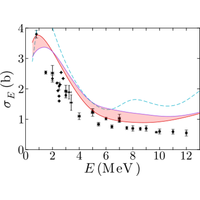
The 14N+n reaction plays a significant role in various nuclear science scenarios: it is thought to be one of the main neutron poisons during s-process nucleosynthesis; it provides insight for nuclear security for atmospheric nuclear weapons testing; and it is needed for simulating neutron transport through a variety of materials. Yet, for 14N+n, only one high-sensitivity measurement has been available, but its experimental details were incomplete. To cross-check existing nuclear evaluations, the authors carried out comprehensive neutron transmission measurements from 0.1 to 12 MeV neutron energy at the nELBE facility in Dresden-Rossendorf, Germany, and combined them with detailed R-matrix studies. The cross sections are in good agreement with previous data over much of the energy range with the key exception of the lowest-energy resonance at a neutron energy of 433 keV. In addition to providing strong confirmation of the role of 14N in influencing the s process, this work improves confidence in the present ENDF/B nuclear evaluation and promises improvements for future evaluations of related 14N+n cross sections.

Sign In to Your Journals Account

Filter

Section

Filter

Article Lookup

Enter a citation