Highlights

Investigation of P31 levels near the proton threshold with nuclear resonance fluorescence and the impact on the Si30(p,γ)P31 thermonuclear rate

David Gribble, Christian Iliadis, Robert V. F. Janssens, Udo Friman-Gayer, Akaa D. Ayangeakaa, Art Champagne, Emily Churchman, William Fox, Steven Frye, Xavier K.-H. James, Samantha R. Johnson, Richard Longland, Antonella Saracino, Nirupama Sensharma, Kaixin Song, and Clay Wegner

Phys. Rev. C 112, 025804 (2025) - Published 15 August, 2025

Recent observations of red giant stars in a globular cluster in the outer halo of the Milky Way revealed a puzzling anomaly in the abundance of chemical elements that cannot be explained by common cluster evolution models. The authors use nuclear resonance fluorescence, a powerful method for determining the spins and parities of astrophysically relevant nuclear resonances, to selectively photoexcite several low-lying levels in 31P that would be challenging to access with traditional reaction techniques. Using the TUNL High-Intensity Gammaray Source, the authors unambiguously determined the orbital angular momentum transfers of two previously unobserved resonances at Erc.m.=18.7 keV and 50.5 keV. The measured thermonuclear reaction rate differs by about an order of magnitude from earlier estimates at temperatures of T≤200 MK relevant for globular cluster nucleosynthesis. The new results put crucial constraints on the reaction mechanism correcting assumptions from previous work and could have broader implications for nucleosynthesis in certain stellar populations.

Radii of light nuclei from the Jacobi no-core shell model

Xiang-Xiang Sun, Hoai Le, Ulf-G. Meißner, and Andreas Nogga

Phys. Rev. C 112, 024317 (2025) - Published 12 August, 2025

First principles calculations of nuclear binding and excitation energies have been a dramatic success of the recent era of nuclear structure calculations. Much more challenging have been long-range observables such as radii, in part because the standard harmonic oscillator basis functions fall off too quickly. This work repairs the radial densities by introducing the known exponential tail, leading to much better agreement. As both binding energies and radii are key inputs in constraining theory, this approach may help address a long-standing gap in our fundamental models.

Charge-dependent nucleon-nucleon interaction at NLO3 in nuclear lattice effective field theory

Chengxin Wu, Teng Wang, Bing-Nan Lu, and Ning Li

Phys. Rev. C 112, 014009 (2025) - Published 29 July, 2025

The nucleon-nucleon interaction is studied in chiral effective field theory on the lattice. For the first time isospin-breaking effects, charge-independence breaking as well as charge-symmetry breaking, and the two-pion exchange interaction up to next-to-next-to-next-to leading order are included on the lattice. A high-quality description of the two-nucleon phase-shift and mixing-angle parameters is achieved up to 200 MeV/c relative momentum. The deuteron properties are accurately reproduced. The work provides a promising basis to apply lattice effective field theory to nuclear many-body problems.

α-particle condensation in diluted O16 at finite temperature

M. Davies, E. Yüksel, J.-P. Ebran, E. Khan, and P. Stevenson

Phys. Rev. C 112, 014311 (2025) - Published 10 July, 2025

Nuclei are often viewed as drops of nuclear matter, but we also know that α clusters can play an important role in nuclear structure. A relativistic mean-field calculation of 16O, constraining the radius and thus the density, shows a change from a mostly homogeneous constitution to a dilute gas-like structure of four α particles. Such a phase transition, which is also sensitive to the effect of temperature, could have implications both for the structure of finite nuclei as well as nuclear matter in astrophysical scenarios.

Role of the isovector spin-orbit potential in mitigating the CREX-PREX dilemma

Athul Kunjipurayil, J. Piekarewicz, and Marc Salinas

Phys. Rev. C 112, 014310 (2025) - Published 8 July, 2025

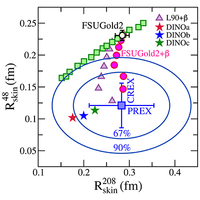
Increasing the strength of the isovector spin-orbit potential in mean-field calculations can reconcile the PREX and CREX measurements of the neutron skin thicknesses in 208Pb and 48Ca. The authors demonstrate this within a relativistic mean-field framework by exactly recasting the Dirac equation into a Schrödinger-like form, allowing a clear identification and manipulation of the various components of the effective potential. However, they show that such modifications undermine well-established shell-model phenomenology, particularly the ordering of spin-orbit partners. Although by itself this approach cannot resolve the CREX-PREX dilemma in a consistent way, the results underscore that the ongoing tension offers a valuable opportunity to advance our understanding of the nuclear dynamics.

Fermi operator expansion for the Hartree-Fock-Bogoliubov theory

Chengpeng Yu and Takashi Nakatsukasa

Phys. Rev. C 112, 015804 (2025) - Published 8 July, 2025

The inner crust of neutron stars is known to form exotic inhomogeneous phases, described as “pasta” phases. They are expected to affect observational properties of neutrons stars, such as pulsar glitches. This requires an accurate description of neutron pairing effects between free neutrons and their interaction with lattice nuclei that determines the band structure. The manuscript presents a generalization of the finite-temperature coordinate-space Fermi operator expansion method for Hartree-Fock-Bogoliubov band theory calculations. The method produces results with high accuracy, providing a promising tool for the simulation of the pasta phases in the inner crust of neutron stars.

Numerical assessment of convergence in the post-form Ichimura-Austern-Vincent model

Jin Lei

Phys. Rev. C 112, 014609 (2025) - Published 2 July, 2025

Nuclear breakup reactions provide crucial insights into nuclear structure, but modeling them accurately has been hampered by numerical instabilities. This work solves a long-standing computational problem in the Ichimura-Austern-Vincent model by introducing a hybrid technique that achieves stable, accurate calculations. Validated through calculations for the deuteron and 6Li, the method significantly outperforms traditional approaches. This advance enables reliable theoretical predictions of breakup processes, providing the nuclear physics community with an improved tool for interpreting experiments at modern facilities.

Variations in the charge radii of indium isotopes between N=52 and 82

A. R. Vernon et al. (CRIS-ISOLDE Collaboration)

Phys. Rev. C 111, 064325 (2025) - Published 26 June, 2025

The size of the atomic nucleus is a fundamental observable, for which laser spectroscopy of atomic hyperfine transitions can measure the changes in mean-square charge radii as neutrons are added or removed. This work reports an extensive set of results from collinear resonance ionization spectroscopy at ISOLDE-CERN on ground- and isomeric states of indium (Z=49) isotopes, almost spanning the complete valence space between the neutron-shell closures N=50 and 82. Whereas the new results largely agree with literature values within experimental and atomic-factor uncertainties, the authors find intricate variations in the odd-even staggering of the nuclear charge radii. This work shows how the breadth of data can serve as a benchmark for nuclear theory, suggesting directions for further improvements.

Sensitivity of double deeply virtual Compton-scattering observables to generalized parton distributions

J. S. Alvarado, M. Hoballah, and E. Voutier

Phys. Rev. C 111, 065205 (2025) - Published 24 June, 2025

A major thrust of twenty-first century electron scattering at the present CEBAF at JLab and at the future Electron Ion Collider (EIC) at BNL is the determination of generalized parton distributions (GPDs), which describe the full 3D quark and gluon structure of the proton and of atomic nuclei. The authors have carried out a comprehensive study of a new, yet-unmeasured process, double deeply virtual Compton scattering (DDVCS), at both CEBAF and EIC, which can access GPDs without restrictions that are present in current measurements. For example, they show the sensitivity of DDVCS cross-section asymmetries to the chiral-even proton GPDs from different model predictions. The insights gained from the systematic analysis promise significant benefit to next-generation experiments designed to study the full 3D quark and gluon structure of hadrons.

Modern version of the uncited 1938 experiment that first observed DT fusion

W. Tornow, S. W. Finch, J. B. Wilhelmy, M. B. Chadwick, G. M. Hale, J. P. Lestone, and M. W. Paris

Phys. Rev. C 111, 064618 (2025) - Published 20 June, 2025

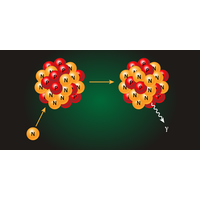
Fusion of the two heavy hydrogen isotopes deuterium with tritium is important for future energy production. The authors attempt to reproduce an early experimental result by Arthur J. Ruhlig (published in the Physical Review in 1938, but not cited until 2023) that suggested Ruhlig had observed the so-called “DT” reaction, 3H(d,n)4He in a secondary reaction (see figure). In the present work the authors use modern experimental techniques to repeat the experiment, and they indeed observe DT fusion and measure the reaction rate. In addition to giving insights into the historic nuclear fusion experiment, the technique used could have applications in checking triton stopping powers in deuterium-containing fusion targets.

Improved S factor of the C13(p,γ)N14 reaction at Ep=330−740keV and parameters of resonances at 448 keV and 551 keV

J. Skowronski et al.

Phys. Rev. C 111, 064611 (2025) - Published 11 June, 2025

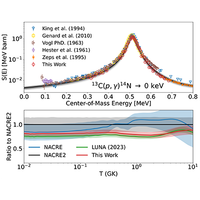
The stellar carbon-nitrogen-oxygen nuclear reaction cycle (CNO cycle) converts four protons to an α particle providing most of the energy in massive main sequence stars and in stars in more advanced stages. It also affects the nucleosynthesis output of these stars and ultimately the chemical evolution of galaxies. The present manuscript reports on a new cross-section measurement for the 13C(p,γ)14N reaction—the second proton capture reaction in the CNO cycle—performed at the Felsenkeller shallow-underground laboratory in Dresden, Germany. The new data are consistent with recent results reported by the LUNA Collaboration and are about 20\% lower than previous literature data. The newly calculated reaction rate is systematically lower than assumed so far for temperatures up to 10 GK, a result that should have an impact on stellar model calculations and CNO cycle nucleosynthesis.

Isomeric yield ratios of fission products: A missing piece in reactor antineutrino summation calculations

A. Mattera, A. A. Sonzogni, E. A. McCutchan, C. J. Sears, and C. Billings

Phys. Rev. C 111, L061601 (2025) - Published 11 June, 2025

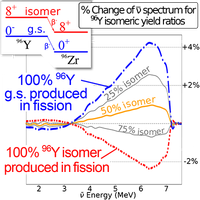
Nuclear reactors create copious amounts of antineutrinos, but calculating their spectrum is challenging because one must understand in great detail both the available nuclear data and which physics contributions are relevant. Accurate new experiments have shown a 5% neutrino deficit in the detected flux known as the “reactor antineutrino anomaly”, and an excess at 5 to 7 MeV. The authors explore the effect of one particular and so far not fully appreciated input, the ratio of fission yield from an isomeric state to the total yield, known as the isomeric yield ratio (IYR) and which reflects different endpoint energies of the antineutrino spectra. Examining newly evaluated IYRs, the authors find that the values for certain isotopes significantly increase the antineutrino spectrum around and above 7 MeV with a 50% or greater increase at higher energies. The sensitivity study in this work identifies the need for accurate experimental data, especially for key fission products, to fully understand the observed discrepancies between measured and calculated antineutrino spectra.

Shell effects and multichance fission in the sub-lead region

F. A. Ivanyuk, C. Schmitt, C. Ishizuka, and S. Chiba

Phys. Rev. C 111, 054620 (2025) - Published 20 May, 2025

The authors present the first dynamical fission model calculation of fission in the sub-lead region in which the mass yields and total kinetic energies arise from the calculations. The Langevin code developed by the authors reproduces the fragment mass and total kinetic energy distributions with remarkable accuracy for the reactions 36Ar + 144Sm ⇒ 180Hg and 36Ar + 154Sm ⇒ 190Hg at various excitation energies, with deviations of the calculated results from experiment that do not exceed the experimental uncertainties. The study also clarifies the role of shell effects due to multi-chance fission at excitation energies of 30–50 MeV, where these effects are not well known. The present work confirms the five-dimensional Langevin approach as a reliable tool to predict fission process observables.

First study of Zr88+n at DICER at LANSCE at energies up to 500 eV and relevance to explosive environments

Athanasios Stamatopoulos, Paul E. Koehler, Brad DiGiovine, Veronika Mocko, Artem Matyskin, Christiaan Vermeulen, Aaron Couture, Andrew Cooper, Jonathan Morrell, Ellen O'Brien, Dusan Kral, and John Ullmann

Phys. Rev. C 111, 034613 (2025) - Published 18 March, 2025

Measuring how efficiently an isotope captures neutrons of various energies both confirms and refutes some surprising recent results.

Reaching the prolate-oblate boundary at N=116 via first fragmentation of a Pt198 beam: Sharp transition to triaxiality in Ta189

K. Sharma et al.

Phys. Rev. C 111, L031301 (2025) - Published 18 March, 2025

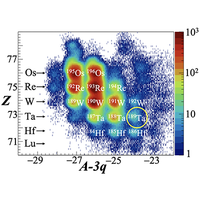
How shapes of heavy nuclei evolve as their valence nucleon shells are filled continues to be a nuclear physics research frontier. The authors populated high-spin isomers in very-neutron-rich A≈190 Hf-Ta-W nuclei with the pioneering fragmentation of a 198Pt primary beam at the NSCL. The collective level structure deduced from the subsequent γ decay of stopped isomeric fragments using the A1900 spectrometer and GRETINA array points to a sudden transition from axially prolate shapes in the lighter Ta isotopes to a strong triaxial shape for the 189Ta nucleus (Z=73, N=116; 8 neutrons more than stable 181Ta). The results suggest that the prolate-oblate shape boundary has been reached in this previously inaccessible region of neutron-rich nuclei. They are also an important experimental benchmark for nuclear theory to describe nuclear structure and shape evolution far from stability.

First simultaneous measurement of the γ-ray and neutron emission probabilities in inverse kinematics at a heavy-ion storage ring

M. Sguazzin et al.

Phys. Rev. C 111, 024614 (2025) - Published 18 February, 2025

The probabilities of an excited atomic nucleus to emit particles and γ rays provide important information on the nuclear level density as well as the γ-ray strength function. These statistical quantities are important to model nuclear reactions including the complex nucleosynthesis networks that have formed the elements that exist today. But these emission probabilities are hard to come by in the laboratory. The authors demonstrate how they have achieved this challenging task with a new experimental approach, by exciting the stable, doubly magic nucleus 208Pb in inelastic proton scattering on a hydrogen gas-jet target inside the Experimental Storage Ring (ESR) at the GSI facility, and by detecting the lead (Pb) beamlike ions instead of the emitted γ rays or neutrons. Such measurements in inverse kinematics in a storage ring are free from complications by, e.g., competing reactions or energy loss in a fixed target. Here, the 208Pb beam passes the low-density hydrogen target a million times per second, restoring the luminosity in the regime of the thin target that preserves pristine excitation-energy resolution and particle identification capability, and enables outstanding detection efficiencies. The present results along with improvements under development promise future results for many short-lived nuclei of interest in astrophysics and nuclear science applications.

Nuclear-level effective theory of μ→e conversion: Inelastic process

W. C. Haxton and Evan Rule

Phys. Rev. C 111, 025501 (2025) - Published 7 February, 2025

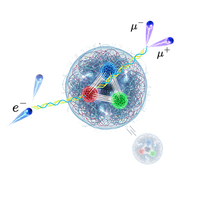
Because processes involving charged leptons are expected to conserve flavor, any evidence of muon-to-electron conversion is recognized as an important signal to constrain physics beyond the Standard Model. Whereas most experiments so far have assumed elastic transitions for muon-to-electron conversion, this paper shows how inelastic transitions which leave the nucleus in an excited state would allow for more probes of new physics. Such transitions can modify the near-endpoint spectrum of conversion electrons, to which the underlying flavor-symmetry violating operator is sensitive. The authors find that 27Al, the target of ongoing muon-to-electron conversion experiments, is an excellent isotope choice to observe inelastic transitions.

Microscopic origins of octupole collectivity in doubly magic Pb208

M. Rejmund and P. Van Isacker

Phys. Rev. C 111, L021301 (2025) - Published 5 February, 2025

Many spherical nuclei exhibit a collective, low-lying octupole excitation. This paper analyzes such a state in the doubly magic nucleus 208Pb and traces the properties back to coherent scattering of high-angular momentum proton-neutron pairs that are fully aligned. A large fragmentation of the particle-hole wave function, together with its coherence, which is shown to be a generic property of the lowest-energy eigenstate, lead to a constructive accumulation of interaction strength. This insight into the shell-model underpinnings of such otherwise well-characterized collective nuclear states may help explain the ubiquity of their appearance.

Constraining theoretical corrections to Gamow-Teller transition rates

L. Xayavong and Y. Lim

Phys. Rev. C 111, 015501 (2025) - Published 13 January, 2025

β decays provide important tests of the Standard Model, but the precision is limited by model dependencies and small but crucial corrections such as isospin breaking. By comparing theoretical and experimental ratios of mirror decays, the authors find cancellation of many of the model dependencies, allowing constraints on the remaining corrections and ultimately on possible new physics.

High-precision mass measurement of Sn103 restores smoothness of the mass surface

C. M. Ireland, F. M. Maier, G. Bollen, S. E. Campbell, X. Chen, H. Erington, N. D. Gamage, M. J. Gutiérrez, C. Izzo, E. Leistenschneider, E. M. Lykiardopoulou, R. Orford, W. S. Porter, D. Puentes, M. Redshaw, R. Ringle, S. Rogers, S. Schwarz, L. Stackable, C. S. Sumithrarachchi, A. A. Valverde, A. C. C. Villari, and I. T. Yandow

Phys. Rev. C 111, 014314 (2025) - Published 9 January, 2025

100Sn is often regarded as the holy grail of nuclear structure studies as it is the heaviest proton-bound nucleus with equal numbers of protons and neutrons; and with N=Z=50 it is also expected to be doubly magic. Aside from the proximity to the proton dripline, the region of the nuclear chart near 100Sn also harbors nuclei at the end of the rp process which powers x-ray bursts on the surface of accreting neutron stars. The nuclear mass is a telltale observable for nuclear structure studies and nuclear astrophysics. Just three neutrons heavier than 100Sn, 103Sn had been identified as an outlier with a seriously irregular mass deduced from its β-decay Q value and the decay-daughter mass. An international research team performed high-precision Penning-trap mass measurements of 103Sn at the Facility for Rare Isotope Beams (FRIB). Their measured mass value is more than an order of magnitude more precise than that of a previous storage ring measurement. The team’s reported result reestablishes the smoothness of the nuclear mass surface and provides reevaluated values for the masses of several other important isotopes connected to 103Sn via decays.

Sign In to Your Journals Account

Filter

Section

Filter

Article Lookup

Enter a citation