Highlights

Direct transfer to K46,48 as a survey of the π(s1/2)−ν(sdpf) interaction

C. J. Paxman et al.

Phys. Rev. C 114, 044318 (2026) - Published 15 October, 2026

Nucleon-adding and -removing transfer reactions provide a unique experimental window into the anatomy of the shell-model picture of atomic nuclei. The authors put the neutron-removing transfer reaction 47K(d,t) and the neutron-adding counterpart 47K(d,p) to work for meticulously probing our understanding of the neutron shell structure and interaction of the last valence proton in 46K. With that, they provided a unique benchmark for the nuclear shell model on the quest to describe shell evolution in neutron-rich nuclei.

Ab initio study of Li7 with coupled mass partitions

Jakub Herko, Konstantinos Kravvaris, Sofia Quaglioni, Petr Navrátil, Guillaume Hupin, and Mark A. Caprio

Phys. Rev. C 114, 044613 (2026) - Published 13 October, 2026

A new capability of describing charge-exchange and transfer reactions by coupling different mass/charge partitions of the compound nucleus was developed within ab initio nuclear theory. We apply this capability to 7Li, employing the no-core shell model with continuum for the first time in a calculation that couples three mass/charge partitions, namely 4He + 3H, 6Li + n, and 6He + p, using a chiral nucleon-nucleon interaction as input. Specifically, we investigate the effect of interpartition coupling on the spectrum of 7Li and calculate cross sections for the 6Li(n,p)6He, 6He(p,n)6Li, and 6He(p,t)4He reactions. The results show that coupling the relevant mass/charge partitions is important for a consistent description of the 7Li spectrum and reaction cross sections, and offers a useful framework for interpreting existing data and guiding future measurements. This work also paves the way for calculations of transfer reactions relevant for fusion energy generation such as 6Li(n,t)4He.

Comparative study of Langevin and random walk models for nuclear fission in the overdamped regime

A. Augustyn, T. Cap, M. Kowal, and K. Pomorski

Phys. Rev. C 114, 044614 (2026) - Published 13 October, 2026

Fission is a highly dissipative process. Stochastic methods like Brownian shape motion and Langevin dynamics couple macroscopic-microscopic models with dynamics. This paper compares and contrasts these two approaches within a consistent framework and demonstrates the connections between them. The work also hints at the potential role of higher-dimensional deformation modes in broadening the widths of the fission fragment mass yields to better match the measured yields.

Neutron fluence and relation of yields for transuranium nuclei during nucleosynthesis under conditions of thermonuclear explosions

V. I. Lyashuk

Phys. Rev. C 114, 044603 (2026) - Published 1 October, 2026

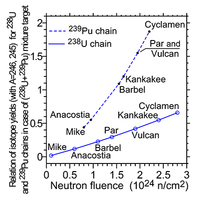
There is much interest and activity in identifying transuranium isotopes and determining their cosmological origins, such as neutron star mergers. This paper studies how one could determine the production of transuranium isotopes in pulse nucleosynthesis based on isotopic yield ratios, a process that is very dependent on neutron fluence. The relationship between the neutron flux and abundances is determined in a rather unique way: by looking at yields from nuclear tests conducted during the Plowshares program. Making use of these nuclear tests (indicated in the figure) may help determine whether the periodic table has been extended in natural events in space.

Quarkyonic quark-meson coupling model for nuclear and neutron matter

Koichi Saito, Tsuyoshi Miyatsu, and Myung-Ki Cheoun

Phys. Rev. C 114, 045201 (2026) - Published 1 October, 2026

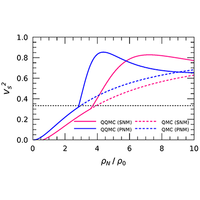
We have constructed a quark-based nuclear model that extends from low densities into the crossover region where nucleonic matter begins to evolve into quark matter. It combines the quark-meson coupling model with the dual quarkyonic picture. A relativistic treatment of quark wave functions within nucleons ensures that quarkyonic matter emerges above nuclear saturation density, preserving consistency with conventional low-energy nuclear physics. Nuclear interactions are crucial for quantitative predictions in the quarkyonic regime. The predicted sound speed exhibits a pronounced peak and is consistent with constraints inferred from neutron-star observations using neural networks and Bayesian inference. The calculated pressures in symmetric nuclear matter and pure neutron matter also lie within the ranges inferred from high-energy heavy-ion collisions. This framework can help address the hyperon puzzle in massive neutron stars.

Measurement of the Gerasimov-Drell-Hearn integrand for the proton and deuteron from 200 to 1400 MeV

P. Pedroni et al. (A2 Collaboration at MAMI)

Phys. Rev. C 114, 045203 (2026) - Published 1 October, 2026

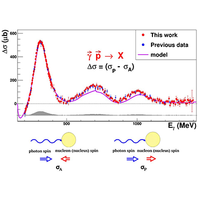
The Gerasimov-Drell-Hearn (GDH) sum rule establishes a fundamental link between the total absorption cross section of circularly polarized photons on longitudinally polarized nucleons and nuclei and their static properties. The two relative spin configurations, parallel or antiparallel, determine the absorption cross sections, σP and σA. The sum rule relates the difference of the cross sections (Δσ) to the mass, spin, and anomalous magnetic moment of the nucleon (nucleus). It implies that a non-zero anomalous magnetic moment is connected to the excitation spectrum of the nucleon (nucleus) and, therefore, to its composite nature. Thus, measuring the GDH sum rule integral for different nuclear targets is a sensitive tool for studying both the nucleon resonance properties and the modifications of nucleon properties inside the nuclear medium. We present new precise data on the helicity-dependent total inclusive photoabsorption cross section for the proton and the deuteron, verifying the validity of the GDH sum rule. These new data provide a precise experimental benchmark for theoretical models of nucleons, both free and embedded in the nuclear medium.

Measurement of the neutron incoherent scattering length of Hg199 using stored ultracold neutrons

C. Abel et al. (nEDM Collaboration)

Phys. Rev. C 114, 045501 (2026) - Published 1 October, 2026

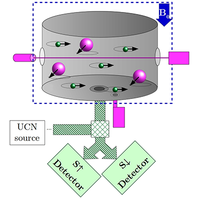
The imbalance between matter and antimatter in our Universe remains one of the great mysteries of modern physics. The neutron’s electric dipole moment (EDM) is a sensitive probe of new sources of CP violation that could help explain this asymmetry. Searches for an EDM rely on extraordinarily precise measurements of the neutron spin precession, using polarized mercury atoms to monitor the applied magnetic field. But the mercury atoms themselves can interact with neutrons in a way that produces a tiny, spin-dependent frequency shift, potentially mimicking an EDM signal. In this study, the nEDM Collaboration, with the experiment based at the Paul Scherrer Institute, directly investigates this subtle neutron-mercury interaction. The results provide a precise characterization of an important systematic effect, improving the control of a key source of uncertainty in EDM measurements.

Correlated and uncorrelated Monte Carlo neutron-capture rate variations in weak r-process simulations

Atul Kedia, Jeffrey M. Berryman, Jonathan Cabrera Garcia, Jutta E. Escher, Oliver C. Gorton, Erika M. Holmbeck, Gail C. McLaughlin, Cole D. Pruitt, Andre Sieverding, and Rebecca Surman

Phys. Rev. C 114, 035805 (2026) - Published 21 September, 2026

Where do the heavy elements in our universe come from, and how accurately can we model their creation? Accurately predicting the abundances of elements produced in the weak rapid neutron-capture (r- process) requires rigorous quantification of nuclear reaction uncertainties far from stability. This work utilizes cross sections with uncertainty-quantified optical potential and considers both independent (uncorrelated) rate variations and rate variations fully correlated via the underlying optical potential. While fully correlated variations alter the covariance structure among elemental yields, they do not automatically reduce the overall uncertainty envelope. By identifying specific neutron capture rates that have the most leverage on the r-process element production, this work provides a roadmap for experimental and theoretical efforts to constrain key nuclear reaction rates.

Precise determination of electron-capture Q value of Sn113 decay related to electron neutrino mass measurements

Zhuang Ge, Tommi Eronen, Vasile Alin Sevestrean, Ovidiu Niţescu, Sabin Stoica, Marlom Ramalho, Jouni Suhonen, Anu Kankainen, Marjut Hukkanen, Arthur Jaries, Ari Jokinen, Joel Kostensalo, Jenni Kotila, Maxime Mougeot, Iain D. Moore, Wirunchana Rattanasakuldilok, Jouni Ruotsalainen, and Marek Stryjczyk

Phys. Rev. C 114, 035501 (2026) - Published 10 September, 2026

High-precision measurements of nuclear decay energies can reveal rare low-Q transitions with enhanced sensitivity to the absolute neutrino mass. Using the JYFLTRAP double Penning trap and the PI-ICR technique, the electron-capture Q value of 113Sn was determined with an eightfold improvement in precision over the previous evaluation. Combining the new mass result with known excited states in 113In identifies two energetically allowed low-Q electron-capture branches. In particular, an allowed transition to the 1029.650-keV state has Q*EC=9.60(20) keV and lies close to the L-shell binding energies. Atomic and nuclear calculations show enhanced spectral sensitivity near the endpoint, making this decay an interesting complementary system for future direct neutrino-mass studies.

Electromagnetic radiation from baryon-rich matter in heavy-ion collisions

Xiang-Yu Wu, Charles Gale, Sangyong Jeon, Jean-François Paquet, Björn Schenke, and Chun Shen

Phys. Rev. C 114, 034902 (2026) - Published 8 September, 2026

Photons and dileptons produced in high energy nuclear collisions contain undistorted information about the conditions at their point of emission, such as the local temperature, flow velocity, and chemical potential. Using state of the art modeling of the collision dynamics, which reproduce hadronic spectra, the authors find good agreement with measurements by the STAR Collaboration at the Relativistic Heavy Collider, but differ from measurements by the PHENIX Collaboration in terms of magnitude but not shape. This work shows that the multimessenger approach to heavy-ion collisions previously used at higher energy is amenable to baryon-rich environments at lower temperatures, and paves the way for more comprehensive studies of the QCD phase diagram.

Impact of the small Dirac component on the valence electron density of actinides at their nuclei in solids

A. V. Nikolaev, U. N. Kurelchuk, and E. V. Tkalya

Phys. Rev. C 114, 034601 (2026) - Published 3 September, 2026

An enhanced Full-Potential Linear Augmented Plane Wave (FLAPW) method is introduced which incorporates the small Dirac components of valence states—specifically the 6p1/2 semicore states—in actinide solids such as Ac, Th, ThO2, and UO2. By accounting for these small components, it is demonstrated that the valence electron density at the nucleus increases by a factor of 2.4 to 4.3, correcting standard approximations in computational physics that omit significant valence electron density near the atomic nucleus. These refined relativistic Dirac calculations offer improved theoretical precision for nuclear phenomena such as internal conversion, Mossbauer spectroscopy, and electron bridge effects, providing foundational electronic structure insights relevant to technologies like 229Th-based solid-state nuclear clocks.

Decay-resolved charge changes from radioactive decays in levitated microparticles

Jiaxiang Wang, T. W. Penny, Yu-Han Tseng, Benjamin Siegel, and David C. Moore

Phys. Rev. C 114, 034602 (2026) - Published 3 September, 2026

We have demonstrated a new way to reveal the electrical ‘fingerprint’ left by a single nuclear decay. When a radioactive atom implanted just beneath a surface decays, its products can eject a shower of secondary electrons from the surrounding material. Often undetected by conventional laboratory instruments, these electrons can create a substantial background in experiments that rely on precise electron counting. To study this process, we use a microscopic glass sphere suspended by laser light as a highly isolated charge detector with sub-electron charge sensitivity. We pair the sphere with a conventional scintillation detector that records the emitted radiation. By matching the timing of the two signals, we can link each charge change to a specific decay. We found that one alpha decay can knock more than 100 electrons from a material’s surface, while beta decays release far fewer. Measuring these electrical fingerprints one decay at a time could help experiments searching for rare events, including future sterile neutrino searches, to distinguish genuine signals from electrons released by radioactive impurities near detector surfaces.

Perturbative effective-field-theory calculation of the deuteron longitudinal response function

Andrew J. Andis, Songlin Lyu (吕松林), Bingwei Long (龙炳蔚), and Sebastian König

Phys. Rev. C 114, 024004 (2026) - Published 31 August, 2026

Nuclear effective field theories (EFTs) have had enormous impact on ab initio nuclear physics, yet many open questions remain regarding their development and application. This work studies Chiral EFT in a strictly RG-invariant formulation and applies it to the process of deuteron electrodisintegration, extending the reach of such calculations from static properties to breakup processes that probe a larger range of physics. To achieve this, the Lorentz Integral Transform (LIT) method is extended such that all subleading corrections, including those to the electromagnetic current operator, are included in perturbation theory, reaching second order in the EFT expansion. Finding good agreement with available data, this perturbative LIT framework paves the way for similar studies involving heavier nuclei.

Quantifying uncertainty in physics-based predictions of rare-isotope production cross sections via Bayesian-inspired model averaging across nuclear mass tables

O. B. Tarasov

Phys. Rev. C 114, 024603 (2026) - Published 6 August, 2026

Discovering new isotopes begins with knowing where to look. Predicting rare-isotope production is difficult because different nuclear-mass models can give substantially different results, making the planning of experiments uncertain. This work introduces a Bayesian-inspired model-averaging framework that combines abrasion–ablation calculations based on 12 nuclear mass tables into one statistically weighted prediction. Experimental data for krypton-78 and xenon-124 are used to determine which calculations are more reliable, and the resulting trends are transferred to molybdenum-92 and samarium-144 projectiles. The method provides predicted cross sections together with uncertainty estimates, giving a more reliable basis for selecting primary beams and estimating yields. Applied to proton-rich fragmentation at FRIB, the approach identifies several promising candidates for new-isotope searches with expected production rates above one event per day. It can help researchers plan experiments more effectively and explore still-unknown regions of the nuclear chart.

Exact solutions of the nuclear shell-model secular problem: Discrete nonorthogonal shell model within a variation-after-projection approach

Duy Duc Dao and Frédéric Nowacki

Phys. Rev. C 114, 014327 (2026) - Published 22 July, 2026

Variational methods employing symmetry-breaking intrinsic states offer alternative ways to tackle large-scale shell model calculations. While the latter provides a unified picture of the rotational motion and shell structure, the former has been known to provide a good approximation for the description of nuclear deformation. However, in such approaches, it is generally difficult to fully capture the effects of pairing correlations, for example in the backbending phenomena where the collective rotational motion is significantly disturbed. In this paper, the binding energies of levels coming from large-scale shell-model calculations are exactly reproduced using a discrete set of non-orthogonal Slater determinants, thus verifying their relevance for describing pairing properties as demonstrated in the ground-state band of 48Cr and the ground state of 78Ni, which is at the limit of conventional shell-model calculations. These results constitute a firm proof of the Broeckhove-Deumens theorem on the completeness property of non-orthogonal wave functions in realistic shell-model calculations.

Longitudinal dynamics of large and small systems from a 3D Bayesian calibration of RHIC top-energy collision data

A. Mankolli et al. (JETSCAPE Collaboration)

Phys. Rev. C 114, 014905 (2026) - Published 15 July, 2026

The authors present both qualitative and quantitative advances in extracting transport coefficients and other parameters for the quark-gluon plasma formed in heavy ion collisions. The manuscript uses extensive data sets from all four of the original RHIC experiments to calibrate the input to a full 3-dimensional simulation based on relativistic hydrodynamics. The authors consider both a large system (Au+Au) as well as several small systems (d+Au, p+Au and 3He+Au). The success in describing small systems provides strong support for the hydrodynamic paradigm, and also helps resolve a long-standing puzzle between STAR and PHENIX measurements in such systems.

Superfluid fraction in the crystal phase of the inner crust of neutron stars

Giorgio Almirante, Theodora Kaskitsi, and Michael Urban

Phys. Rev. C 114, 015802 (2026) - Published 6 July, 2026

This work addresses the important issue of the determination of the superfluid neutron fraction in the inner crust of neutrons stars. Knowing this fraction is important to understand if the inner crust can provide enough angular momentum to drive observed pulsar glitches. The paper presents, for the first time, fully self-consistent Hartree-Fock-Bogoliubov calculations of the flow of superfluid neutrons through the periodic lattice of nuclear clusters, which show that the superfluid fraction can reach 90% and support a sufficient superfluid angular momentum reservoir to drive pulsar glitches.

Constraining the astrophysical i process: The Kr87(n,γ)Kr88 reaction rate

S. Uthayakumaar, A. Spyrou, C. Harris, P. A. Denissenkov, D. Mücher, H. C. Berg, J. A. Clark, P. A. DeYoung, A. C. Dombos, B. Greaves, M. Guttormsen, F. Herwig, A. C. Larsen, S. N. Liddick, S. Lyons, J. Owens-Fryar, A. Palmisano-Kyle, G. Perdikakis, A. L. Richard, D. Santiago-Gonzalez, G. Savard, S. Siem, M. K. Smith, W. W. von Seeger, and M. Wiedeking

Phys. Rev. C 113, 065801 (2026) - Published 1 June, 2026

A key goal in nuclear astrophysics is explaining the abundance patterns of the elements in combination with observational astrophysical data and nuclear reaction networks. Although two nuclear reaction pathways—the slow (s process) and rapid (r process) neutron capture processes—are known to produce many heavy elements beyond iron, a process at intermediate neutron densities (the i process) has been proposed. This process is an additional pathway that occurs in some stellar environments to explain observed elemental abundances. In this work, the authors utilized a 88Br beam that was implanted within a γ-ray total absorption spectrometer to produce the compound nucleus 88Kr through β decay. The authors measured the constrained neutron radiative capture on 87Kr, showing that it plays an important role in the production of Rb in the conditions of the i process. In addition, the results significantly reduce the uncertainty in the rate of this reaction by determining the γ-ray strength function in the compound nucleus 88Kr. This work demonstrates that reducing experimental uncertainties in a single neutron-capture reaction can significantly affect comparisons with theoretical predictions of element abundance patterns.

β-decay spectrum of tritiated graphene: Combining nuclear quantum mechanics with density functional theory

Andrea Casale, Angelo Esposito, Guido Menichetti, and Valentina Tozzini

Phys. Rev. C 113, 054607 (2026) - Published 13 May, 2026

New density-functional-theory calculations describe the radioactive decay of tritium bound to graphene, offering a way to model experiments that could open cleaner windows onto neutrino mass.

Mechanism to synthesize superheavy element 120: A dinuclear system model approach with microscopic inputs

Wei Zhang (张炜), Shi-Jie Zhang (张士杰), and Peng-Hui Chen (陈鹏辉)

Phys. Rev. C 113, 054604 (2026) - Published 7 May, 2026

To overcome the challenge of synthesizing nuclei of superheavy elements (SHEs) beyond Z=118, the authors developed a new calculation method using the dinuclear system model. The novel approach consistently and microscopically derives all necessary structure inputs—including nuclear masses, fission barriers, and level density parameters—from finite-temperature covariant density functional theory. After validating the method against data for nobelium and flerovium isotopes, the approach provides meaningful predictions for the production of Z=120 isotopes, which should be useful for planning future SHE synthesis experiments.

Sign In to Your Journals Account

Filter

Section

Filter

Article Lookup

Enter a citation