Browse Issues:

HIGHLIGHTED ARTICLES

Thermodynamic constraint for the electronic structure of Fe-Ni alloys at room and high temperature

Jonathan Paras and Antoine Allanore

Phys. Rev. B 111, 085105 (2025) - Published 3 February, 2025

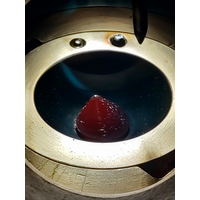
The contribution of electrons to the entropy of metallic elements and their alloys is well established below room temperature. In this work, the authors test the performance of using an irreversible thermodynamic theory that experimentally links the transport electronic entropy to the thermopower and the number of charge carriers, to inform the total entropy of mixing of the system Fe-Ni, at both room temperature and 1273 K.

Generalized framework for straintronics in two-dimensional quantum materials using group theory

Rami Zemouri, A. R. Champagne, and Saurabh Maiti

Phys. Rev. B 111, 085112 (2025) - Published 5 February, 2025

There is a growing need for strain modeling in the rapidly developing field of straintronics and two-dimensional materials. Here, by means of group theory the authors formulate a general microscopic theory of strain which considers the symmetry of the lattice and the bonds within the unit cell. They identify when and how many scalar and vector potentials can arise from strain in single and multilayer systems. Thus, for example, strained low-energy bilayer graphene is shown to have two vector potentials. This formulation allows for a greater range of materials to be studied in quantum transport experiments.

Full minimal coupling Maxwell-TDDFT: An ab initio framework for light-matter interaction beyond the dipole approximation

Franco P. Bonafé, Esra Ilke Albar, Sebastian T. Ohlmann, Valeriia P. Kosheleva, Carlos M. Bustamante, Francesco Troisi, Angel Rubio, and Heiko Appel

Phys. Rev. B 111, 085114 (2025) - Published 5 February, 2025

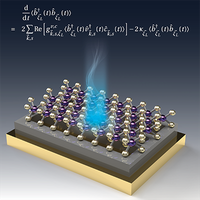
The authors present here the first ab initio nonrelativistic QED method that self-consistently couples light and matter beyond the electric dipole approximation, avoiding multipolar truncations. Implemented in the open-source code Octopus for massively parallel simulations, this framework unveils phenomena like renormalized Cherenkov radiation, magneto-optical effects in molecules, and frequency shifts in plasmonic modes. Crucially, it captures effects beyond the dipole approximation, missed by traditional approaches. Thus, the method opens new frontiers in the exploration of quantum matter driven by structured light, orbital angular momentum, and strong-field physics.

Hardening of Ni-O bond-stretching phonons in LaNiO2

Yilin Wang

Phys. Rev. B 111, 085117 (2025) - Published 6 February, 2025

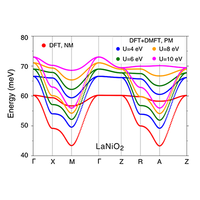
Using DFT+DMFT calculations, the authors demonstrate here that dynamical electron correlations and fluctuating local magnetic moments in the paramagnetic state induce significant hardening of the optical Ni-O bond-stretching phonons of the infinite-layer nickelate superconductor LaNiO2. The electron correlations are found to be sensitive to such phonons, indicating a strong electron coupling to the Ni-O bond-stretching phonons. It emphasizes that local spin fluctuations should be fully considered when describing the lattice dynamics of the infinite-layer nickelates without long-range magnetic order.

Quasimolecular electronic structure of the trimer iridate Ba4NbIr3O12

M. Magnaterra, A. Sandberg, H. Schilling, P. Warzanowski, L. Pätzold, E. Bergamasco, Ch. J. Sahle, B. Detlefs, K. Ruotsalainen, M. Moretti Sala, G. Monaco, P. Becker, Q. Faure, G. S. Thakur, M. Songvilay, C. Felser, P. H. M. van Loosdrecht, J. van den Brink, M. Hermanns, and M. Grüninger

Phys. Rev. B 111, 085122 (2025) - Published 10 February, 2025

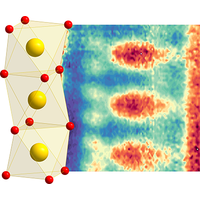
The trimer compound Ba4NbIr3O12 is found to be a spin-orbit-entangled cluster Mott insulator, with two holes per trimer occupying quasimolecular orbitals. The authors employ here resonant inelastic x-ray scattering (RIXS) and exact diagonalization. The quasimolecular nature yields a characteristic interference pattern in the RIXS intensity, reflecting the character of the wavefunction. Despite a large hopping, strong spin-orbit coupling is decisive for the electronic states. This promises nontrivial magnetic moments in trimers with an odd number of holes.

Zeeman splitting and quantum-limit magnetoresistance anomaly in the topological insulator β-Ag2Se

Yue Zhao, Lei Shi, Kuan Li, Huakun Zuo, Gangjian Jin, Zhifeng Xue, Wei Zhou, Dingyong Zhong, Donghui Guo, Qizhong Zhu, Yunwei Zhang, Huixia Luo, and Huichao Wang

Phys. Rev. B 111, 085135 (2025) - Published 18 February, 2025

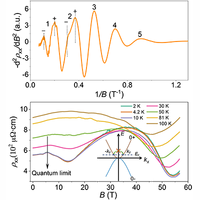
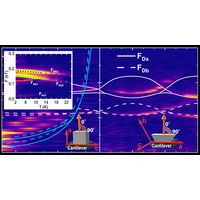
The nontrivial bulk states of topological insulators open avenues for comprehending and harnessing topological phases. Here, the authors demonstrate β-Ag2Se as a topological insulator by uncovering exceptional transport properties linked to the bulk states, supported by theoretical calculations. The observation of notable Shubnikov–de Haas oscillations and Zeeman splitting reveals a Landé g-factor of approximately 10. The longitudinal magnetoresistance exhibits two anomalous dips in the quantum limit, attributed to forbidden backscattering, providing further affirmation of the strong topological insulator characteristics in this compound.

Mapping the three-dimensional fermiology of the triangular lattice magnet EuAg4Sb2

J. Green, Harry W. T. Morgan, Morgaine Mandigo-Stoba, William T. Laderer, Kuan-Yu Wey, Asari G. Prado, Chris Jozwiak, Aaron Bostwick, Eli Rotenberg, Christopher Gutiérrez, Anastassia N. Alexandrova, and Ni Ni

Phys. Rev. B 111, 085139 (2025) - Published 19 February, 2025

Magnetic materials that allow for the mapping of all Fermi surfaces to fully capture the interplay between magnetism and electronic structure are rare. The authors elucidate here the fermiology of antiferromagnetic EuAg4Sb2 through quantum oscillations, capturing full sets of spin-split Fermi pockets in the polarized ferromagnetic state. These results show good agreement with first-principles calculations and ARPES data. Temperature-dependent changes in the size and shape of the small hourglass pockets, but not the large ones, highlight that variations in exchange splitting, driven by changes in magnetic moment, primarily affect the small pockets without significantly altering the overall electronic structure in this compound.

Higher-rank spin liquids and spin nematics from competing orders in pyrochlore magnets

Niccolò Francini, Lukas Janssen, and Daniel Lozano-Gómez

Phys. Rev. B 111, 085140 (2025) - Published 19 February, 2025

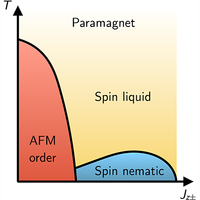
Magnetic insulators with a pyrochlore lattice structure serve as an ideal platform for investigating exotic phases of matter arising from frustration. Here, the authors reveal two previously unidentified phases in pyrochlore magnets: a higher-rank classical spin liquid and a spin-nematic phase stabilized by a thermal order-by-disorder mechanism. These discoveries shed new light on the interplay of competing magnetic orders and highlight the potential for realizing unconventional magnetic phases driven by this competition.

Material-oriented modeling of quantum many-body effects in a monolayer transition metal dichalcogenide nanolaser device

J. Buchgeister, A. Steinhoff, D. Erben, M. Lorke, and F. Jahnke

Phys. Rev. B 111, 085301 (2025) - Published 6 February, 2025

Monolayer transition metal dichalcogenides are a notable option as a gain material in future optoelectronic devices, in particular as source of stimulated emission. Here, the authors report a fully quantum mechanical theory to microscopically investigate the interplay of the efficient light-matter interaction and many-body effects in an MoS2 monolayer nanolaser operating at room temperature. The key finding is that such devices are capable of establishing stable gain phases for electron-hole-plasma-based lasing occurring at excited carrier densities above 5×1013cm−2.

Landé g factors and spin dynamics of charge carriers in CuCl nanocrystals in a glass matrix

Dennis Kudlacik, Evgeny A. Zhukov, Dmitri R. Yakovlev, Gang Qiang, Marina A. Semina, Aleksandr A. Golovatenko, Anna V. Rodina, Alexander L. Efros, Alexey I. Ekimov, and Manfred Bayer

Phys. Rev. B 111, 085423 (2025) - Published 21 February, 2025

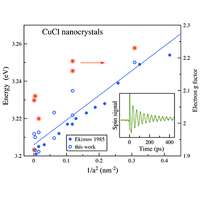
The size-dependent blue shift of exciton lines due to confinement in CuCl nanocrystals (NCs), observed by Ekimov and Onuschenko in 1981, was likely the first demonstration of the quantum confinement effect. Parabolic conduction and valence band edges in CuCl resemble those of a large class of perovskite semiconductors. Few magneto-optical studies, however, exist on CuCl NCs, unlike perovskite NCs. Here, the electron g-factor, measured using different methods, shows puzzlingly increases as CuCl NC sizes decrease, a phenomenon that is not described within existing theoretical models.

Nonmonotonic temperature dependence of electron viscosity and crossover to high-temperature universal viscous fluid in monolayer and bilayer graphene

Indra Yudhistira, Ramal Afrose, and Shaffique Adam

Phys. Rev. B 111, 085433 (2025) - Published 28 February, 2025

This paper studies the temperature dependence of viscosity and entropy density in the strong interaction regime for the electron fluid in monolayer and bilayer graphene. It demonstrates the nontrivial temperature dependence of the viscosity in the hydrodynamic regime, and calculates, via a combination of microscopic calculation of electron lifetime and the macroscopic Navier-Stokes equation, a high-temperature limit for the viscosity and entropy density. It represents a significant advancement in our understanding of the hydrodynamic electronic transport in monolayer and bilayer graphene.

Graph-theoretical proof of nonintegrability in quantum many-body systems: Application to the PXP model

HaRu K. Park and SungBin Lee

Phys. Rev. B 111, L081101 (2025) - Published 4 February, 2025

The Yang-Baxter method is a powerful tool for studying integrable systems, but proving whether a system possesses local conserved quantities remains challenging. Shiraishi’s proof of the XYZ model’s nonintegrability with a magnetic field inspired the authors’ demonstration of the PXP model’s nonintegrability, previously only conjectured via level statistics. As the PXP model is a key example of quantum many-body scars exhibiting exotic long-time behavior, the present work highlights that such behavior is unrelated to local conserved quantities and introduces a graph-theoretical approach, suggesting universality in nonintegrability proofs.

Optical manifestations and bounds of topological Euler class

Wojciech J. Jankowski, Arthur S. Morris, Adrien Bouhon, F. Nur Ünal, and Robert-Jan Slager

Phys. Rev. B 111, L081103 (2025) - Published 4 February, 2025

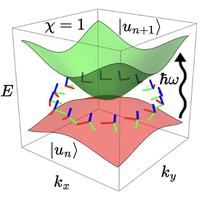
The authors demonstrate here that multigap topological phases hosting an Euler invariant relate to quantum-geometric bounds. These bounds constrain optical weights and sizes of adjacent gaps. The results are validated upon recasting them as optical absorption rates and open up a route to determine experimentally the topological Euler class through momentum- and frequency-resolved measurements. Moreover, it is shown that a singular quantum geometry of topological Euler band nodes induces observable features, such as quantized optical conductivities.

Transverse voltage in anisotropic hydrodynamic conductors

Kaize Wang, Chunyu Guo, Philip J. W. Moll, and Tobias Holder

Phys. Rev. B 111, L081402 (2025) - Published 6 February, 2025

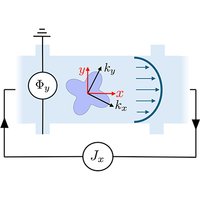
Here, the authors study correlated electron flow in a two-dimensional channel at highly anisotropic Fermi surfaces. If the principal crystal axes are misaligned with respect to the channel geometry, a transverse voltage develops whose sign is determined by the competition of viscous and dissipative forces. This effect presents a sensitive indicator for the onset of hydrodynamic electron transport, showcasing that real materials give rise to novel phenomena which are unattainable with purely isotropic Fermi surfaces.

Linear-in-temperature conductance in two-dimensional electron fluids

Serhii Kryhin, Qiantan Hong, and Leonid Levitov

Phys. Rev. B 111, L081403 (2025) - Published 7 February, 2025

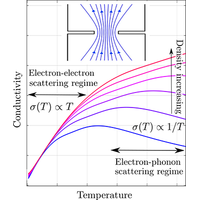
A hallmark of electron hydrodynamics—a transport regime dominated by electron collisions—is that collisions enhance conduction and reduce dissipation, causing resistance to drop and conductance to rise with temperature (T). Here, the authors present a microscopic study of two-dimensional electron fluids, predicting linear-in-T scaling of hydrodynamic conductance. This behavior, contrasting with the T2 scaling in three-dimensional Fermi liquids, arises from a cascade of multiple long-lived viscous modes unique to two-dimensional systems. The number of modes relevant for transport grows as T decreases, resulting in a non-Fermi-liquid linear-in-T behavior.

LETTERS

Electronic structure and strongly correlated systems

Graph-theoretical proof of nonintegrability in quantum many-body systems: Application to the PXP model

HaRu K. Park and SungBin Lee

Phys. Rev. B 111, L081101 (2025) - Published 4 February, 2025

The Yang-Baxter method is a powerful tool for studying integrable systems, but proving whether a system possesses local conserved quantities remains challenging. Shiraishi’s proof of the XYZ model’s nonintegrability with a magnetic field inspired the authors’ demonstration of the PXP model’s nonintegrability, previously only conjectured via level statistics. As the PXP model is a key example of quantum many-body scars exhibiting exotic long-time behavior, the present work highlights that such behavior is unrelated to local conserved quantities and introduces a graph-theoretical approach, suggesting universality in nonintegrability proofs.

Nonstabilizerness in U(1) lattice gauge theory

Pedro R. Nicácio Falcão, Poetri Sonya Tarabunga, Martina Frau, Emanuele Tirrito, Jakub Zakrzewski, and Marcello Dalmonte

Phys. Rev. B 111, L081102 (2025) - Published 5 February, 2025

Optical manifestations and bounds of topological Euler class

Wojciech J. Jankowski, Arthur S. Morris, Adrien Bouhon, F. Nur Ünal, and Robert-Jan Slager

Phys. Rev. B 111, L081103 (2025) - Published 4 February, 2025

The authors demonstrate here that multigap topological phases hosting an Euler invariant relate to quantum-geometric bounds. These bounds constrain optical weights and sizes of adjacent gaps. The results are validated upon recasting them as optical absorption rates and open up a route to determine experimentally the topological Euler class through momentum- and frequency-resolved measurements. Moreover, it is shown that a singular quantum geometry of topological Euler band nodes induces observable features, such as quantized optical conductivities.

Diffusion in liquid metals is directed by competing collective modes

Franz Demmel and Noel Jakse

Phys. Rev. B 111, L081104 (2025) - Published 6 February, 2025

Adiabatic transformations in dissipative and non-Hermitian phase transitions

Pavel Orlov, Georgy V. Shlyapnikov, and Denis V. Kurlov

Phys. Rev. B 111, L081105 (2025) - Published 6 February, 2025

Floquet-Volkov interference in a semiconductor

Changhua Bao, Haoyuan Zhong, Benshu Fan, Xuanxi Cai, Fei Wang, Shaohua Zhou, Tianyun Lin, Hongyun Zhang, Pu Yu, Peizhe Tang, Wenhui Duan, and Shuyun Zhou

Phys. Rev. B 111, L081106 (2025) - Published 10 February, 2025

Dipole-obstructed Cooper pairing: Theory and application to j=32 superconductors

Penghao Zhu and Rui-Xing Zhang

Phys. Rev. B 111, L081107 (2025) - Published 12 February, 2025

Residual entropy from the temperature incremental Monte Carlo method

Zenan Dai and Xiao Yan Xu

Phys. Rev. B 111, L081108 (2025) - Published 14 February, 2025

Incommensurate broken helix induced by nonstoichiometry in the axion insulator candidate EuIn2As2

Masaki Gen, Yukako Fujishiro, Kazuki Okigami, Satoru Hayami, Max T. Birch, Kiyohiro Adachi, Daisuke Hashizume, Takashi Kurumaji, Hajime Sagayama, Hironori Nakao, Yoshinori Tokura, and Taka-hisa Arima

Phys. Rev. B 111, L081109 (2025) - Published 18 February, 2025

Interplay of electron-phonon coupling, pseudogap, and superconductivity in CsCa2Fe4As4F2 studied using ultrafast optical spectroscopy

Qi-Yi Wu, Chen Zhang, Bai-Zhuo Li, Hao Liu, Jiao-Jiao Song, Bo Chen, Hai-Yun Liu, Yu-Xia Duan, Jun He, Jun Liu, Guang-Han Cao, and Jian-Qiao Meng

Phys. Rev. B 111, L081110 (2025) - Published 20 February, 2025

Layer-dependent quantum anomalous Hall effect in rhombohedral graphene

Zhaochen Liu and Jing Wang

Phys. Rev. B 111, L081111 (2025) - Published 21 February, 2025

Experimental characterization of manipulated metallic plate array supporting spoof surface plasmon polaritons in the W band

Francisco Pizarro, Go Itami, and Osamu Sakai

Phys. Rev. B 111, L081113 (2025) - Published 24 February, 2025

Nonchiral 1T−TiSe2 creates circular dichroism in resonant x-ray diffraction via multipole scattering interference

Hiroki Ueda, Yves Joly, and Urs Staub

Phys. Rev. B 111, L081114 (2025) - Published 25 February, 2025

Logarithmically enhanced intrinsic nonlinear Hall effects in PT-symmetric antiferromagnetic nodal-line semimetals

Yixin Zhang, Hui Zeng, and H. Huang

Phys. Rev. B 111, L081115 (2025) - Published 26 February, 2025

Zone-selection effect of photoelectron intensity distributions in the nonsymmorphic system RAlSi (R=Ce or Nd)

Yusei Morita, K. Nakanishi, T. Iwata, K. Ohwada, Y. Nishioka, T. Kousa, M. Nurmamat, K. Yamagami, A. Kimura, T. Yamada, H. Tanida, and Kenta Kuroda

Phys. Rev. B 111, L081116 (2025) - Published 26 February, 2025

Frustration-enhanced persistent currents in correlated trimer nanorings

Tie-Feng Fang, Wei-Tao Lu, Ai-Min Guo, and Qing-Feng Sun

Phys. Rev. B 111, L081117 (2025) - Published 26 February, 2025

Failure of the crystalline equivalence principle for weak free fermions

Daniel Sheinbaum and Omar Antolín Camarena

Phys. Rev. B 111, L081118 (2025) - Published 27 February, 2025

Semiconductors I: bulk

Microscopic mechanism of displacive excitation of coherent phonons in a bulk Rashba semiconductor

P. Fischer, J. Bär, M. Cimander, L. Feuerer, V. Wiechert, O. Tereshchenko, and D. Bossini

Phys. Rev. B 111, L081201 (2025) - Published 4 February, 2025

Semiconductors II: surfaces, interfaces, microstructures, and related topics

Observation of intravalley spin scattering in a doped multivalley semiconductor

K. Hamaya, T. Okada, K. Kawashima, T. Naito, K. Oki, S. Kikuoka, Y. Wagatsuma, M. Yamada, and K. Sawano

Phys. Rev. B 111, L081301 (2025) - Published 18 February, 2025

Surface physics, nanoscale physics, low-dimensional systems

Chemical strain induced Rashba effect in two-dimensional Ruddlesden-Popper perovskites

Suhas K. T., Tisita Das, Aditya Singh, Azat Khadiev, Ajay Soni, Sudip Chakraborty, and Ranjani Viswanatha

Phys. Rev. B 111, L081401 (2025) - Published 3 February, 2025

Transverse voltage in anisotropic hydrodynamic conductors

Kaize Wang, Chunyu Guo, Philip J. W. Moll, and Tobias Holder

Phys. Rev. B 111, L081402 (2025) - Published 6 February, 2025

Here, the authors study correlated electron flow in a two-dimensional channel at highly anisotropic Fermi surfaces. If the principal crystal axes are misaligned with respect to the channel geometry, a transverse voltage develops whose sign is determined by the competition of viscous and dissipative forces. This effect presents a sensitive indicator for the onset of hydrodynamic electron transport, showcasing that real materials give rise to novel phenomena which are unattainable with purely isotropic Fermi surfaces.

Linear-in-temperature conductance in two-dimensional electron fluids

Serhii Kryhin, Qiantan Hong, and Leonid Levitov

Phys. Rev. B 111, L081403 (2025) - Published 7 February, 2025

A hallmark of electron hydrodynamics—a transport regime dominated by electron collisions—is that collisions enhance conduction and reduce dissipation, causing resistance to drop and conductance to rise with temperature (T). Here, the authors present a microscopic study of two-dimensional electron fluids, predicting linear-in-T scaling of hydrodynamic conductance. This behavior, contrasting with the T2 scaling in three-dimensional Fermi liquids, arises from a cascade of multiple long-lived viscous modes unique to two-dimensional systems. The number of modes relevant for transport grows as T decreases, resulting in a non-Fermi-liquid linear-in-T behavior.

Isolated zero-energy flat bands and intrinsic magnetism in carbon monolayers

Chaoyu He, Shifang Li, Yuwen Zhang, Zhentao Fu, Jin Li, and Jianxin Zhong

Phys. Rev. B 111, L081404 (2025) - Published 10 February, 2025

Multifractal thermovoltage fluctuations in topological insulators

Nathan L. Pessoa, Duhyuk Kwon, Jonghyun Song, Myung-Ho Bae, Antônio M. S. Macêdo, and Anderson L. R. Barbosa

Phys. Rev. B 111, L081405 (2025) - Published 19 February, 2025

Compact and highly efficient plasmonic mode conversion in a metal slab waveguide with asymmetric subwaveguides

Kum-Song Ho, Myong-Song Jong, Jin Kang, Song-Jin Im, Kum-Dong Kim, Kil-Song Song, Ji-Song Pae, and Chol-Song Ri

Phys. Rev. B 111, L081406 (2025) - Published 25 February, 2025

Combining intrinsic and sliding-induced polarizations for multistates in two-dimensional ferroelectrics

Chuhan Tang, Zhiqiang Tian, Tao Ouyang, Anlian Pan, and Mingxing Chen

Phys. Rev. B 111, L081407 (2025) - Published 27 February, 2025

ARTICLES

Electronic structure and strongly correlated systems

Strong long-wave infrared optical response in a topological semiconductor with a Mexican-hat band structure

Mark J. Polking, Haowei Xu, Raman Sankar, Kevin Grossklaus, and Ju Li

Phys. Rev. B 111, 085101 (2025) - Published 3 February, 2025

Non-Hermitian skin effect in an extended Su-Schrieffer-Heeger model with balanced gain and loss and nonreciprocal next-nearest-neighbor hopping phase

Yu-Ping Lai, Yu-Xin Fang, Cheng-Qu Su, Yongyao Li, and Shi-Qiao Wu

Phys. Rev. B 111, 085102 (2025) - Published 3 February, 2025

Effective time-dependent temperature for fermionic master equations beyond the Markov and the secular approximations

Lukas Litzba, Eric Kleinherbers, Jürgen König, Ralf Schützhold, and Nikodem Szpak

Phys. Rev. B 111, 085103 (2025) - Published 3 February, 2025

Nonintegrability in the PXP model: A graph-theoretical approach

HaRu K. Park and SungBin Lee

Phys. Rev. B 111, 085104 (2025) - Published 4 February, 2025

Thermodynamic constraint for the electronic structure of Fe-Ni alloys at room and high temperature

Jonathan Paras and Antoine Allanore

Phys. Rev. B 111, 085105 (2025) - Published 3 February, 2025

The contribution of electrons to the entropy of metallic elements and their alloys is well established below room temperature. In this work, the authors test the performance of using an irreversible thermodynamic theory that experimentally links the transport electronic entropy to the thermopower and the number of charge carriers, to inform the total entropy of mixing of the system Fe-Ni, at both room temperature and 1273 K.

Tunable topological phases in quantum kirigamis

Rahul Singh and Adhip Agarwala

Phys. Rev. B 111, 085106 (2025) - Published 3 February, 2025

Circular dichroism of the dipole transition in nanosized topological insulators

Shiqi Liang, Liang Li, Jiapeng Li, Sen Qiao, Yuntian Zhang, Wei He, Di Wu, Xiaosong Zhu, Pengfei Lan, and Peixiang Lu

Phys. Rev. B 111, 085107 (2025) - Published 3 February, 2025

Superconductivity in the lightly doped Hubbard model on the cylindrical honeycomb lattice

Cheng Peng, D. N. Sheng, and Hong-Chen Jiang

Phys. Rev. B 111, 085108 (2025) - Published 3 February, 2025

Thermodynamic theory of linear optical and electro-optical properties of ferroelectrics

Aiden Ross, Mohamed S. M. M. Ali, Akash Saha, Rui Zu, Venkatraman Gopalan, Ismaila Dabo, and Long-Qing Chen

Phys. Rev. B 111, 085109 (2025) - Published 3 February, 2025

Machine learning approach to predict L-edge x-ray absorption spectra of light transition metal ion compounds

Johann Lüder

Phys. Rev. B 111, 085110 (2025) - Published 4 February, 2025

Generalized framework for straintronics in two-dimensional quantum materials using group theory

Rami Zemouri, A. R. Champagne, and Saurabh Maiti

Phys. Rev. B 111, 085112 (2025) - Published 5 February, 2025

There is a growing need for strain modeling in the rapidly developing field of straintronics and two-dimensional materials. Here, by means of group theory the authors formulate a general microscopic theory of strain which considers the symmetry of the lattice and the bonds within the unit cell. They identify when and how many scalar and vector potentials can arise from strain in single and multilayer systems. Thus, for example, strained low-energy bilayer graphene is shown to have two vector potentials. This formulation allows for a greater range of materials to be studied in quantum transport experiments.

Quantum phase transitions on the noncommutative circle

Chao Han and W. Zhu

Phys. Rev. B 111, 085113 (2025) - Published 5 February, 2025

Full minimal coupling Maxwell-TDDFT: An ab initio framework for light-matter interaction beyond the dipole approximation

Franco P. Bonafé, Esra Ilke Albar, Sebastian T. Ohlmann, Valeriia P. Kosheleva, Carlos M. Bustamante, Francesco Troisi, Angel Rubio, and Heiko Appel

Phys. Rev. B 111, 085114 (2025) - Published 5 February, 2025

The authors present here the first ab initio nonrelativistic QED method that self-consistently couples light and matter beyond the electric dipole approximation, avoiding multipolar truncations. Implemented in the open-source code Octopus for massively parallel simulations, this framework unveils phenomena like renormalized Cherenkov radiation, magneto-optical effects in molecules, and frequency shifts in plasmonic modes. Crucially, it captures effects beyond the dipole approximation, missed by traditional approaches. Thus, the method opens new frontiers in the exploration of quantum matter driven by structured light, orbital angular momentum, and strong-field physics.

Computing the Z2 invariant in two-dimensional strongly correlated systems

Sounak Sinha, Derek Y. Pan, and Barry Bradlyn

Phys. Rev. B 111, 085116 (2025) - Published 6 February, 2025

Hardening of Ni-O bond-stretching phonons in LaNiO2

Yilin Wang

Phys. Rev. B 111, 085117 (2025) - Published 6 February, 2025

Using DFT+DMFT calculations, the authors demonstrate here that dynamical electron correlations and fluctuating local magnetic moments in the paramagnetic state induce significant hardening of the optical Ni-O bond-stretching phonons of the infinite-layer nickelate superconductor LaNiO2. The electron correlations are found to be sensitive to such phonons, indicating a strong electron coupling to the Ni-O bond-stretching phonons. It emphasizes that local spin fluctuations should be fully considered when describing the lattice dynamics of the infinite-layer nickelates without long-range magnetic order.

Phonon heat transport and anisotropic tuning of quantum fluctuations in a frustrated honeycomb magnet

Haoran Fan, Yue Chen, Yuchen Gu, Xintong Li, Yuan Li, and Xi Lin

Phys. Rev. B 111, 085119 (2025) - Published 10 February, 2025

Exceptional topology in non-Hermitian twisted bilayer graphene

Yingyi Huang

Phys. Rev. B 111, 085120 (2025) - Published 10 February, 2025

Disentangling critical quantum spin chains with Clifford circuits

Chaohui Fan, Xiangjian Qian, Hua-Chen Zhang, Rui-Zhen Huang, Mingpu Qin, and Tao Xiang

Phys. Rev. B 111, 085121 (2025) - Published 10 February, 2025

Quasimolecular electronic structure of the trimer iridate Ba4NbIr3O12

M. Magnaterra, A. Sandberg, H. Schilling, P. Warzanowski, L. Pätzold, E. Bergamasco, Ch. J. Sahle, B. Detlefs, K. Ruotsalainen, M. Moretti Sala, G. Monaco, P. Becker, Q. Faure, G. S. Thakur, M. Songvilay, C. Felser, P. H. M. van Loosdrecht, J. van den Brink, M. Hermanns, and M. Grüninger

Phys. Rev. B 111, 085122 (2025) - Published 10 February, 2025

The trimer compound Ba4NbIr3O12 is found to be a spin-orbit-entangled cluster Mott insulator, with two holes per trimer occupying quasimolecular orbitals. The authors employ here resonant inelastic x-ray scattering (RIXS) and exact diagonalization. The quasimolecular nature yields a characteristic interference pattern in the RIXS intensity, reflecting the character of the wavefunction. Despite a large hopping, strong spin-orbit coupling is decisive for the electronic states. This promises nontrivial magnetic moments in trimers with an odd number of holes.

Metal-insulator transition in FeSex originating in an anomalous lattice effect

Shubham Purwar, Shinjini Paul, Kritika Vijay, R. Venkatesh, Soma Banik, P. Mahadevan, and S. Thirupathaiah

Phys. Rev. B 111, 085123 (2025) - Published 10 February, 2025

Beyond a cluster-Mott state in the breathing kagome lattice of LiZn2Mo3O8

S. V. Streltsov, D. Takegami, R. Nakamura, P. P. Kovaleva, A. I. Poteryaev, S. A. Nikolaev, H.-H. Xu, Y. Sui, M. Yoshimura, K.-D. Tsuei, N. L. Saini, D. I. Khomskii, and T. Mizokawa

Phys. Rev. B 111, 085124 (2025) - Published 11 February, 2025

Multiorbital Cu impurity embedded in an anisotropic square lattice of oxygen atoms

Yan Peng and Mi Jiang

Phys. Rev. B 111, 085125 (2025) - Published 12 February, 2025

Fractons from covariant higher-rank three-dimensional BF theory

Erica Bertolini, Alberto Blasi, Matteo Carrega, Nicola Maggiore, and Daniel Sacco Shaikh

Phys. Rev. B 111, 085126 (2025) - Published 12 February, 2025

Spin Chern number in altermagnets

Rafael González-Hernández, Higinio Serrano, and Bernardo Uribe

Phys. Rev. B 111, 085127 (2025) - Published 13 February, 2025

Dirac-point spectroscopy of flat-band systems with the quantum twisting microscope

Nemin Wei, Felix von Oppen, and Leonid I. Glazman

Phys. Rev. B 111, 085128 (2025) - Published 13 February, 2025

Temperature dependence of spin-orbit coupling effect in solids

Lingyan Lu and Yi-Yang Sun

Phys. Rev. B 111, 085129 (2025) - Published 14 February, 2025

Possibility of BCS-BEC crossover in κ-type organic superconductors

Hiroshi Watanabe and Hiroaki Ikeda

Phys. Rev. B 111, 085130 (2025) - Published 18 February, 2025

Strong effects of thermally induced low-spin to high-spin crossover on transport properties of correlated metals

Johanna Moser, Jernej Mravlje, and Markus Aichhorn

Phys. Rev. B 111, 085131 (2025) - Published 18 February, 2025

Successive quadrupolar ordering with different order parameters facilitated by magnetic octupoles in the chiral magnet DyNi3Al9

Isao Ishii, Makoto Shoji, Koji Araki, Kentaro Isobe, Kanna Sunazaki, Shota Nakamura, Shigeo Ohara, and Takashi Suzuki

Phys. Rev. B 111, 085132 (2025) - Published 18 February, 2025

Transport signatures of Fermi arcs at twin boundaries in Weyl materials

Sahal Kaushik, Iñigo Robredo, Nitish Mathur, Leslie M. Schoop, Song Jin, Maia G. Vergniory, and Jennifer Cano

Phys. Rev. B 111, 085133 (2025) - Published 18 February, 2025

Zeeman splitting and quantum-limit magnetoresistance anomaly in the topological insulator β-Ag2Se

Yue Zhao, Lei Shi, Kuan Li, Huakun Zuo, Gangjian Jin, Zhifeng Xue, Wei Zhou, Dingyong Zhong, Donghui Guo, Qizhong Zhu, Yunwei Zhang, Huixia Luo, and Huichao Wang

Phys. Rev. B 111, 085135 (2025) - Published 18 February, 2025

The nontrivial bulk states of topological insulators open avenues for comprehending and harnessing topological phases. Here, the authors demonstrate β-Ag2Se as a topological insulator by uncovering exceptional transport properties linked to the bulk states, supported by theoretical calculations. The observation of notable Shubnikov–de Haas oscillations and Zeeman splitting reveals a Landé g-factor of approximately 10. The longitudinal magnetoresistance exhibits two anomalous dips in the quantum limit, attributed to forbidden backscattering, providing further affirmation of the strong topological insulator characteristics in this compound.

Phase transitions in the spin-12 Heisenberg antiferromagnet on the dimerized diamond lattice

Ronja Bärwolf, Alexander Sushchyev, Francesco Parisen Toldin, and Stefan Wessel

Phys. Rev. B 111, 085136 (2025) - Published 19 February, 2025

Higher-order band topology in a twisted bilayer kagome lattice

Xiaolin Wan, Junjie Zeng, Ruixiang Zhu, Dong-Hui Xu, Baobing Zheng, and Rui Wang

Phys. Rev. B 111, 085137 (2025) - Published 19 February, 2025

Theory of charge dynamics in bilayer electron system with long-range Coulomb interaction

Hiroyuki Yamase

Phys. Rev. B 111, 085138 (2025) - Published 19 February, 2025

Mapping the three-dimensional fermiology of the triangular lattice magnet EuAg4Sb2

J. Green, Harry W. T. Morgan, Morgaine Mandigo-Stoba, William T. Laderer, Kuan-Yu Wey, Asari G. Prado, Chris Jozwiak, Aaron Bostwick, Eli Rotenberg, Christopher Gutiérrez, Anastassia N. Alexandrova, and Ni Ni

Phys. Rev. B 111, 085139 (2025) - Published 19 February, 2025

Magnetic materials that allow for the mapping of all Fermi surfaces to fully capture the interplay between magnetism and electronic structure are rare. The authors elucidate here the fermiology of antiferromagnetic EuAg4Sb2 through quantum oscillations, capturing full sets of spin-split Fermi pockets in the polarized ferromagnetic state. These results show good agreement with first-principles calculations and ARPES data. Temperature-dependent changes in the size and shape of the small hourglass pockets, but not the large ones, highlight that variations in exchange splitting, driven by changes in magnetic moment, primarily affect the small pockets without significantly altering the overall electronic structure in this compound.

Higher-rank spin liquids and spin nematics from competing orders in pyrochlore magnets

Niccolò Francini, Lukas Janssen, and Daniel Lozano-Gómez

Phys. Rev. B 111, 085140 (2025) - Published 19 February, 2025

Magnetic insulators with a pyrochlore lattice structure serve as an ideal platform for investigating exotic phases of matter arising from frustration. Here, the authors reveal two previously unidentified phases in pyrochlore magnets: a higher-rank classical spin liquid and a spin-nematic phase stabilized by a thermal order-by-disorder mechanism. These discoveries shed new light on the interplay of competing magnetic orders and highlight the potential for realizing unconventional magnetic phases driven by this competition.

Type-II topological phase transitions of topological skyrmion phases

Reyhan Ay, Joe H. Winter, and A. M. Cook

Phys. Rev. B 111, 085141 (2025) - Published 19 February, 2025

Electron spectroscopy study of single-crystal CrTe

A. R. Shelke, C. N. Kuo, Shishir K. Pandey, T. L. Nguyen, Y. X. Chen, Y. T. Cheng, F. H. Chang, M. Yoshimura, N. Hiraoka, T. W. Pi, H. J. Lin, C. T. Chen, A. Fujimori, Priya Mahadevan, C. S. Lue, and A. Chainani

Phys. Rev. B 111, 085142 (2025) - Published 20 February, 2025

Effect of the Hubbard interaction on the quantum metric

Pavlo Sukhachov, Niels Henrik Aase, Kristian Mæland, and Asle Sudbø

Phys. Rev. B 111, 085143 (2025) - Published 20 February, 2025

Nonequilibrium quantum Monte Carlo algorithm for stabilizer Rényi entropy in spin systems

Zejun Liu and Bryan K. Clark

Phys. Rev. B 111, 085144 (2025) - Published 20 February, 2025

Altermagnetism in heavy-fermion systems: Mean-field study on the Kondo lattice

Miaomiao Zhao, Wei-Wei Yang, Xueming Guo, Hong-Gang Luo, and Yin Zhong

Phys. Rev. B 111, 085145 (2025) - Published 21 February, 2025

Identifying an effective model for the two-stage Kondo regime: Numerical renormalization group results

P. A. Almeida, E. Vernek, E. V. Anda, S. E. Ulloa, and G. B. Martins

Phys. Rev. B 111, 085146 (2025) - Published 24 February, 2025

Eightfold degenerate Dirac nodal line in the collinear antiferromagnet Mn5Si3

Victor Mendoza-Estrada, Rafael González-Hernández, Bernardo Uribe, and Libor Šmejkal

Phys. Rev. B 111, 085147 (2025) - Published 25 February, 2025

Pseudospin-induced asymmetric field in non-Hermitian photonic crystals with multiple topological transitions

Yuchen Peng, Aoqian Shi, Peng Peng, and Jianjun Liu

Phys. Rev. B 111, 085148 (2025) - Published 25 February, 2025

Classification of unitary operators by local generatability

Xu Liu, Adrian B. Culver, Fenner Harper, and Rahul Roy

Phys. Rev. B 111, 085149 (2025) - Published 25 February, 2025

Hidden chiral symmetry for the kagome lattice and its analogs

Tomonari Mizoguchi and Yasuhiro Hatsugai

Phys. Rev. B 111, 085150 (2025) - Published 26 February, 2025

Subleading logarithmic behavior in the parquet formalism

Marcel Gievers, Richard Schmidt, Jan von Delft, and Fabian B. Kugler

Phys. Rev. B 111, 085151 (2025) - Published 27 February, 2025

Even-odd effect in multilayer Kitaev honeycomb magnets

Jaime Merino and Arnaud Ralko

Phys. Rev. B 111, 085152 (2025) - Published 27 February, 2025

Mass enhancement and metal-nonmetal transition driven by d-f hybridization in perovskite La1−xPrxCuO3

H. Takahashi, M. Ito, J. Fujioka, M. Ochi, S. Sakai, R. Arita, H. Sagayama, Y. Yamasaki, and S. Ishiwata

Phys. Rev. B 111, 085153 (2025) - Published 28 February, 2025

Semiconductors I: bulk

Atomic-vibration-induced nonlinear electronic polarization for terahertz detection

Zhi Li, Hussain Irshad, Yu Gu, Miriding Mutailipu, Toshiaki Iitaka, Haibin Su, and Xiangang Wan

Phys. Rev. B 111, 085201 (2025) - Published 18 February, 2025

Dielectric and optical markers originating from quantum geometry

Wei Chen

Phys. Rev. B 111, 085202 (2025) - Published 20 February, 2025

Semiconductors II: surfaces, interfaces, microstructures, and related topics

Material-oriented modeling of quantum many-body effects in a monolayer transition metal dichalcogenide nanolaser device

J. Buchgeister, A. Steinhoff, D. Erben, M. Lorke, and F. Jahnke

Phys. Rev. B 111, 085301 (2025) - Published 6 February, 2025

Monolayer transition metal dichalcogenides are a notable option as a gain material in future optoelectronic devices, in particular as source of stimulated emission. Here, the authors report a fully quantum mechanical theory to microscopically investigate the interplay of the efficient light-matter interaction and many-body effects in an MoS2 monolayer nanolaser operating at room temperature. The key finding is that such devices are capable of establishing stable gain phases for electron-hole-plasma-based lasing occurring at excited carrier densities above 5×1013cm−2.

Optical manipulation of localized electron transport in disordered chromium nitride

Bidesh Biswas, Deeksha Sharma, Sourav Rudra, Dheemahi Rao, Akhil Tayal, Ashalatha Indiradevi Kamalasanan Pillai, Magnus Garbrecht, N. S. Vidhyadhiraja, and Bivas Saha

Phys. Rev. B 111, 085302 (2025) - Published 10 February, 2025

Refined phase diagram for a spin-1 system exhibiting a Haldane phase

Mohamad Mousa, Birgit Wehefritz-Kaufmann, Sabre Kais, Shawn Cui, and Ralph Kaufmann

Phys. Rev. B 111, 085303 (2025) - Published 18 February, 2025

Crossover from inhomogeneous to homogeneous response of a resonantly driven hBN quantum emitter

Domitille Gérard, Stéphanie Buil, Jean-Pierre Hermier, and Aymeric Delteil

Phys. Rev. B 111, 085304 (2025) - Published 26 February, 2025

Component exchange theory of trions

Dinh Van Tuan and Hanan Dery

Phys. Rev. B 111, 085305 (2025) - Published 28 February, 2025

Surface physics, nanoscale physics, low-dimensional systems

Van Hove singularity, flat bands, Dirac states, and superconductivity in van der Waals–bonded and covalently bonded bilayer borophene with a coloring triangular lattice

Yan Liu, Yiming Zhang, Meiling Xu, Jiaqi Feng, Jian Hao, and Yinwei Li

Phys. Rev. B 111, 085401 (2025) - Published 3 February, 2025

Photoinduced multiply quantized vortex states in Dirac-like materials

Lauren I. Massaro, Connor Meese, Nancy P. Sandler, and Mahmoud M. Asmar

Phys. Rev. B 111, 085402 (2025) - Published 3 February, 2025

Thermal conductivity near armchair and zigzag edges of supported graphene

Nikhil Joseph Joy, Ranjuna M K, and Jayakumar Balakrishnan

Phys. Rev. B 111, 085403 (2025) - Published 3 February, 2025

Efficient calculation of trion energies in monolayer transition metal dichalcogenides

Sangeet S. Kumar, Brendan C. Mulkerin, Antonio Tiene, Francesca Maria Marchetti, Meera M. Parish, and Jesper Levinsen

Phys. Rev. B 111, 085404 (2025) - Published 5 February, 2025

Detecting winding and Chern numbers in topological matter using the spectral function

Kiran Babasaheb Estake and Dibyendu Roy

Phys. Rev. B 111, 085406 (2025) - Published 6 February, 2025

Impact of metal oxidation on ice growth and melting

S. Carretero-Palacios, V. Esteso, Y. Li, S. Kuthe, I. Brevik, K. Iordanidou, O. I. Malyi, B. Glaser, C. Persson, and M. Boström

Phys. Rev. B 111, 085407 (2025) - Published 7 February, 2025

Entropy-driven electron density and effective model Hamiltonian for boron systems

Chang-Chun He, Shao-Gang Xu, Yu-Jun Zhao, Hu Xu, and Xiao-Bao Yang

Phys. Rev. B 111, 085408 (2025) - Published 7 February, 2025

Interpreting tunneling spectroscopic maps of a dinuclear Co(II) complex on gold

Roberto Robles, Chao Li, Sara Realista, Paulo N. Martinho, Manuel Gruber, Alexander Weismann, Nicolás Lorente, and Richard Berndt

Phys. Rev. B 111, 085409 (2025) - Published 10 February, 2025

Optimal energy storage and collective charging speedup in the central-spin quantum battery

Hui-Yu Yang, Kun Zhang, Xiao-Hui Wang, and Hai-Long Shi

Phys. Rev. B 111, 085410 (2025) - Published 10 February, 2025

Photonic spin Hall effect at an optical bound state in the continuum

Gan Wan, Zuhai Ma, Yu Xue, Chi Zhang, Yu Chen, and Xinxing Zhou

Phys. Rev. B 111, 085411 (2025) - Published 12 February, 2025

Moiré flat bands in alternating twisted MoTe2 multilayers

Miao Liang, Shi-Ping Ding, Ming Wu, Chen Zhao, and Jin-Hua Gao

Phys. Rev. B 111, 085412 (2025) - Published 12 February, 2025

Phonon coherence and minimum thermal conductivity in disordered superlattices

Xin Wu, Zhang Wu, Ting Liang, Zheyong Fan, Jianbin Xu, Masahiro Nomura, and Penghua Ying

Phys. Rev. B 111, 085413 (2025) - Published 12 February, 2025

Anomalous chirality dependence of strain energy in gold nanotubes

Shota Ono and Hideo Yoshioka

Phys. Rev. B 111, 085414 (2025) - Published 12 February, 2025

Topological edge states in all-dielectric square-lattice arrays of bianisotropic microwave resonators

Alina D. Rozenblit, Georgiy D. Kurganov, Dmitry V. Zhirihin, and Nikita A. Olekhno

Phys. Rev. B 111, 085415 (2025) - Published 13 February, 2025

Enhancement of the topological regime in elongated Josephson junctions

D. Kuiri, P. Wójcik, and M. P. Nowak

Phys. Rev. B 111, 085416 (2025) - Published 13 February, 2025

Dynamics of ferroelectricity in monolayer AgCr2S4 calculated with a machine learning potential

Jinming Wu, Haoran Zhu, Xuanyi Li, Guoliang Yu, Hongyu Yu, and Changsong Xu

Phys. Rev. B 111, 085417 (2025) - Published 18 February, 2025

High-frequency plasmonic excitation in the two-dimensional MBenes Ti2B2 and Mo2B2

Huiwen Zhang, Mingfeng Zhu, Liwei Jiang, and Yisong Zheng

Phys. Rev. B 111, 085418 (2025) - Published 18 February, 2025

Anomalous behavior of lattice thermal conductivity in two-dimensional carbon chalcogenides

Amit K. Bhojani, Hardik L. Kagdada, and Dheeraj K. Singh

Phys. Rev. B 111, 085419 (2025) - Published 18 February, 2025

Measurement of the adhesion energy between Si and Au caused by dispersion forces

Aleksander V. Postnikov, Ilia V. Uvarov, and Vitaly B. Svetovoy

Phys. Rev. B 111, 085420 (2025) - Published 18 February, 2025

Multifold Majorana corner modes arising from multiple pairs of helical edge states

Zhiwei Yin, Haoshu Li, Zhongbo Yan, and Shaolong Wan

Phys. Rev. B 111, 085421 (2025) - Published 20 February, 2025

Landé g factors and spin dynamics of charge carriers in CuCl nanocrystals in a glass matrix

Dennis Kudlacik, Evgeny A. Zhukov, Dmitri R. Yakovlev, Gang Qiang, Marina A. Semina, Aleksandr A. Golovatenko, Anna V. Rodina, Alexander L. Efros, Alexey I. Ekimov, and Manfred Bayer

Phys. Rev. B 111, 085423 (2025) - Published 21 February, 2025

The size-dependent blue shift of exciton lines due to confinement in CuCl nanocrystals (NCs), observed by Ekimov and Onuschenko in 1981, was likely the first demonstration of the quantum confinement effect. Parabolic conduction and valence band edges in CuCl resemble those of a large class of perovskite semiconductors. Few magneto-optical studies, however, exist on CuCl NCs, unlike perovskite NCs. Here, the electron g-factor, measured using different methods, shows puzzlingly increases as CuCl NC sizes decrease, a phenomenon that is not described within existing theoretical models.

Interlayer excitons in double-layer transition metal dichalcogenide quantum dots

Xiang Liu, Zheng Tao, Wenchen Luo, and Tapash Chakraborty

Phys. Rev. B 111, 085424 (2025) - Published 21 February, 2025

Effects of stacking configuration on the electronic and topological properties of V2O3 bilayers

Zheng Wang, Jingshen Yan, Kaixuan Chen, and Shu-Shen Lyu

Phys. Rev. B 111, 085425 (2025) - Published 24 February, 2025

Density of states and differential entropy in Dirac materials in crossed magnetic and in-plane electric fields

Andrii A. Chaika, Yelizaveta Kulynych, D. O. Oriekhov, and Sergei G. Sharapov

Phys. Rev. B 111, 085426 (2025) - Published 24 February, 2025

Spin-flip locking by tunneling and relaxation in a driven double quantum dot with spin-orbit coupling

D. V. Khomitsky, M. V. Bastrakova, and D. S. Pashin

Phys. Rev. B 111, 085427 (2025) - Published 24 February, 2025

Single vanadium ion magnetic dopant in an individual CdTe/ZnTe quantum dot

K. E. Połczyńska, T. Kazimierczuk, P. Kossacki, and W. Pacuski

Phys. Rev. B 111, 085428 (2025) - Published 25 February, 2025

Competing many-body phases at small fillings in ultrahigh-quality GaAs two-dimensional hole systems: Role of Landau level mixing

Chengyu Wang, A. Gupta, S. K. Singh, L. N. Pfeiffer, K. W. Baldwin, R. Winkler, and M. Shayegan

Phys. Rev. B 111, 085429 (2025) - Published 26 February, 2025

Current-induced anomalous Hall effect and nonlinear magnetoelectric effect in the Weyl semimetal WTe2

Xing-Guo Ye, Peng-Fei Zhu, Wen-Zheng Xu, An-Qi Wang, and Zhi-Min Liao

Phys. Rev. B 111, 085430 (2025) - Published 26 February, 2025

Kekulé distortions in graphene on cadmium sulfide

Yonatan Betancur-Ocampo, Santiago Galván y García, Samuel Tehuacanero-Nuñez, José Reyes-Gasga, Thomas Stegmann, and Francisco Sánchez-Ochoa

Phys. Rev. B 111, 085431 (2025) - Published 27 February, 2025

Multifield tunable valley splitting and anomalous valley Hall effect in two-dimensional antiferromagnetic MnBr

Yiding Wang, Hanbo Sun, Chao Wu, Weixi Zhang, San-Dong Guo, Yanchao She, and Ping Li

Phys. Rev. B 111, 085432 (2025) - Published 28 February, 2025

Nonmonotonic temperature dependence of electron viscosity and crossover to high-temperature universal viscous fluid in monolayer and bilayer graphene

Indra Yudhistira, Ramal Afrose, and Shaffique Adam

Phys. Rev. B 111, 085433 (2025) - Published 28 February, 2025

This paper studies the temperature dependence of viscosity and entropy density in the strong interaction regime for the electron fluid in monolayer and bilayer graphene. It demonstrates the nontrivial temperature dependence of the viscosity in the hydrodynamic regime, and calculates, via a combination of microscopic calculation of electron lifetime and the macroscopic Navier-Stokes equation, a high-temperature limit for the viscosity and entropy density. It represents a significant advancement in our understanding of the hydrodynamic electronic transport in monolayer and bilayer graphene.

Sign In to Your Journals Account

Filter

Filter

Article Lookup

Enter a citation