Highlights

Helimagnetism in the candidate ferroelectric CrI2

John A. Schneeloch, Shunshun Liu, Prasanna V. Balachandran, Qiang Zhang, and Despina Louca

Phys. Rev. B 109, 144403 (2024) - Published 3 April, 2024

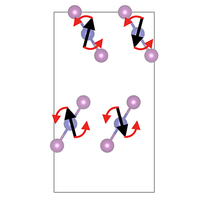
Although many other transition metal halides have been magnetically characterized, CrI2, a proposed “sliding ferroelectric”, has been overlooked. Via neutron powder diffraction, the authors report here that a screw-like helimagnetic order develops below 17 K, corresponding to a ~90º spin rotation per Cr ion along the “ribbon chains”. Calculations suggest that, as in the structurally and magnetically similar copper dihalides, the helimagnetism arises due to a sufficiently antiferromagnetic intrachain next-nearest-neighbor coupling.

Structural transition and magnetic anisotropy in α−RuCl3

Subin Kim, Ezekiel Horsley, Jacob P. C. Ruff, Beatriz D. Moreno, and Young-June Kim

Phys. Rev. B 109, L140101 (2024) - Published 3 April, 2024

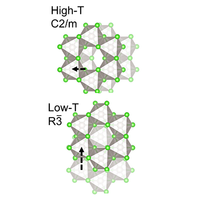
α-RuCl3 is a candidate for realizing the Kitaev quantum spin liquid state. Despite extensive research efforts, its crystal structure at temperatures relevant to studying Kitaev physics has been controversial. Here, the authors examine a single crystal with minimal twinning and stacking faults, allowing them to unambiguously determine the symmetry change across the structural phase transition. They find that the three-fold rotational symmetry of the honeycomb plane is restored in the low-temperature phase with symmetry group R3¯, although this symmetry is explicitly broken in the room-temperature C2/m structure.

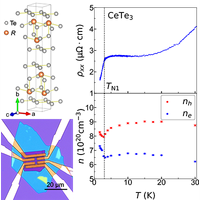
Magnetotransport properties in van der Waals RTe3 (R=La, Ce, Tb)

Tomo Higashihara, Ryotaro Asama, Ryoya Nakamura, Mori Watanabe, Nanami Tomoda, Thomas Johannes Hasiweder, Yuita Fujisawa, Yoshinori Okada, Takuya Iwasaki, Kenji Watanabe, Takashi Taniguchi, Nan Jiang, and Yasuhiro Niimi

Phys. Rev. B 109, 134404 (2024) - Published 2 April, 2024

Rare-earth tritellurides are van der Waals antiferromagnets that are a promising platform not only for spintronic devices but also for the study of the correlation between the charge density wave (CDW) and magnetic states in low-dimensional materials. Here, the authors perform longitudinal and Hall resistivity measurements in exfoliated RTe3 (R=La, Ce, Tb) thin film devices. The carrier mobility and concentration change at the magnetic transition temperature. The result suggests the strong coupling between the CDW and antiferromagnetic phases.

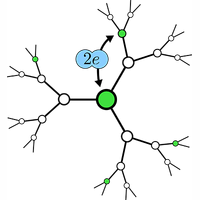
Near power-law temperature dependence of the superfluid stiffness in strongly disordered superconductors

Anton V. Khvalyuk, Thibault Charpentier, Nicolas Roch, Benjamin Sacépé, and Mikhail V. Feigel'man

Phys. Rev. B 109, 144501 (2024) - Published 1 April, 2024

This paper reports unconventional behavior of the superfluid stiffness Θ(T) in disordered superconductors, such as to amorphous InOx. The authors unveil a remarkable power-law suppression δΘ(T)∝Tb at T≪Tc, with an exponent b∼1.6. Through a combination of experiments and theory, they reveal the influence of disorder on this phenomenon, shedding light on the existence of low-energy collective excitations. These findings redefine our understanding of dissipation in inhomogeneous superconductors, with implications for their use in quantum circuits.

Exploiting polarization dependence in two-dimensional coherent spectroscopy: Examples of Ce2Zr2O7 and Nd2Zr2O7

Mark Potts, Roderich Moessner, and Owen Benton

Phys. Rev. B 109, 104435 (2024) - Published 29 March, 2024

Fractionalized excitations arise in many exotic phases of matter. Signatures of these quasiparticles are broad continua in linear response, hard to distinguish from other sources of broadening. The authors explore here excitations of emergent one-dimensional structures within pyrochlore magnets, demonstrating how nonlinear spectroscopy can be used to obtain sharp signatures of both fractionalized spinon and conventional magnon excitations. Varying the polarization of the probe fields enables either spinons or magnons to be observed and enables extraction of microscopic Hamiltonian parameters.

Dynamics of vacancy-induced modes in the non-Abelian Kitaev spin liquid

Wen-Han Kao, Gábor B. Halász, and Natalia B. Perkins

Phys. Rev. B 109, 125150 (2024) - Published 29 March, 2024

Identification of quantum spin liquids faces two main challenges: the absence of local magnetic ordering and the inevitable presence of disorder. Analyzing the dynamical response of the site-diluted Kitaev spin liquid, the authors reveal here distinctive Majorana features, including a quasi-zero-frequency peak, explained by a local hybridization model of defect-induced Majorana modes. These findings, highlighting the nontrivial interplay between disorder and spin fractionalization, suggest the potential detection of spin-liquid phases in candidate materials by using scanning tunneling microscopy (STM).

Propagation of focused scalar and vector vortex beams in anisotropic media: A semianalytical approach

Vittorio Aita, Mykyta Shevchenko, Francisco J. Rodríguez-Fortuño, and Anatoly V. Zayats

Phys. Rev. B 109, 125433 (2024) - Published 29 March, 2024

Presented in this work is a versatile model designed for simulating the propagation of focused scalar and vector beams through three-layered systems, addressing a wide range of beams and materials. The former are described within the Laguerre-Gauss basis, while the latter encompass dispersive and lossy materials - whether isotropic or uniaxial - enabling the investigation of elliptic, hyperbolic, and epsilon-near-zero dispersion regimes. The developed model has been released as an open-source software package for wider accessibility.

Symmetry analysis with spin crystallographic groups: Disentangling effects free of spin-orbit coupling in emergent electromagnetism

Hikaru Watanabe, Kohei Shinohara, Takuya Nomoto, Atsushi Togo, and Ryotaro Arita

Phys. Rev. B 109, 094438 (2024) - Published 28 March, 2024

The authors explore here the spin-order-induced physical properties free of relativistic spin-orbit coupling. They delve into the role of spin crystallographic symmetry in disentangling spin and orbital freedoms, shedding light on contrasting aspects between magnets with zero and nonzero propagation vectors. The analysis is applied to the systematic classification of 1500 magnets in terms of electromagnetic responses arising from the spin order, making significant contributions to future explorations of spintronic phenomena based on antiferromagnets.

Magnetic field induced phases and spin Hamiltonian in Cs2CoBr4

L. Facheris, S. D. Nabi, K. Yu. Povarov, Z. Yan, A. Glezer Moshe, U. Nagel, T. Rõõm, A. Podlesnyak, E. Ressouche, K. Beauvois, J. R. Stewart, P. Manuel, D. Khalyavin, F. Orlandi, and A. Zheludev

Phys. Rev. B 109, 104433 (2024) - Published 27 March, 2024

Geometric frustration, magnetic anisotropy, and reduced dimensionality are responsible for the plethora of magnetic phases observed in the quantum antiferromagnet Cs2CoB4. Among them are a commensurate magnetization plateau, a longitudinal spin density wave, and an incommensurate spin-fan structure. Even more unusual is the excitation spectrum. It is an hierarchy of successive bound states of fractional kink quasiparticles. To understand this rich physics, one has to know the spin Hamiltonian, and that can only be determined in high-field spectroscopic measurements.

Coexistence of topological and normal insulating phases in electro-optically tuned InAs/GaSb bilayer quantum wells

M. Meyer, T. Fähndrich, S. Schmid, A. Wolf, S. S. Krishtopenko, B. Jouault, G. Bastard, F. Teppe, F. Hartmann, and S. Höfling

Phys. Rev. B 109, L121303 (2024) - Published 27 March, 2024

Topological insulators (TIs) based on InAs/GaSb bilayer quantum wells are appealing due to the electric field tuning between topological and normal insulating (NI) phases. Here, the authors report on the coexistence of NI and TI phases in electro-optically tuned InAs/GaSb bilayer quantum wells and helical edge channels in the bulk of the sample. These findings pave the way to the manipulation and utilization of helical edge channels by using spatially defined gates (optically or electrically), separating them from the physical edges.

Experimental evidence for nonspherical magnetic form factor in Ru3+

Colin L. Sarkis, John W. Villanova, Casey Eichstaedt, Adolfo G. Eguiluz, Jaime A. Fernandez-Baca, Masaaki Matsuda, Jiaqiang Yan, Christian Balz, Arnab Banerjee, D. Alan Tennant, Tom Berlijn, and Stephen E. Nagler

Phys. Rev. B 109, 104432 (2024) - Published 26 March, 2024

Half-polarized neutron diffraction is used to measure the microscopic local magnetization density in the prototypical Kitaev material α-RuCl3, aiding in the determination of the elusive low-energy Hamiltonian. The magnetization density around each Ru3+ ion is seen to be anisotropic, with hybridization resulting in a significant fraction of the moment associated with Cl atoms. First-principles calculations that take into account both the spin and orbital magnetization via Wannier functions elucidate the origin of the anisotropy.

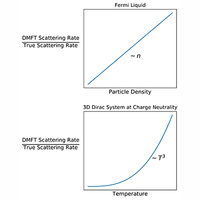
Adequacy of the dynamical mean field theory for low density and Dirac materials

Anqi Mu, Zhiyuan Sun, and Andrew J. Millis

Phys. Rev. B 109, 115154 (2024) - Published 26 March, 2024

Dynamical mean field theory – a powerful and widely used technique for calculating phase diagrams and transport properties of quantum materials – is shown to fail qualitatively for low carrier density systems and for materials with the Fermi surface near Dirac or Weyl points, because it underestimates the single particle scattering rate by a factor proportional to the density of electrons per unit cell. The problem is shown to arise because dynamical mean field theory relies on a local self-energy approximation that is invalidated by scattering kinematics in low-density systems. The results indicate that recent calculations of scattering rates and conductivity in Weyl metals should be reexamined.

Chiral spin liquid and quantum phase diagram of spin-12 J1−J2−Jχ model on the square lattice

Xiao-Tian Zhang, Yixuan Huang, Han-Qing Wu, D. N. Sheng, and Shou-Shu Gong

Phys. Rev. B 109, 125146 (2024) - Published 26 March, 2024

A chiral spin liquid (CSL) is an analog of the fractional quantum Hall state in spin systems. Recently, an interesting topic has been the coexistence of CSL and magnetic order, which is beyond the conventional understanding of the spin liquid. Here, the authors examine possible phase coexistence in the spin-½ square-lattice J1-J2-Jχ model, by using unbiased density matrix renormalization group calculations. The numerical data identify the CSL but find no evidence for the phase coexistence that was conjectured by mean-field calculations.

Absence of Weyl nodes in EuCd2As2 revealed by the carrier density dependence of the anomalous Hall effect

Yue Shi, Zhaoyu Liu, Logan A. Burnett, Seokhyeong Lee, Chaowei Hu, Qianni Jiang, Jiaqi Cai, Xiaodong Xu, Mo Li, Cheng-Chien Chen, and Jiun-Haw Chu

Phys. Rev. B 109, 125202 (2024) - Published 26 March, 2024

EuCd2As2 has been widely considered as a leading candidate for the ideal Weyl semimetal. However, a recent study challenged this view by discovering a substantial band gap in this system. Here, the authors successfully synthesize highly insulating EuCd2As2. It reveals a decrease of the anomalous Hall conductivity (AHC) by orders of magnitude as the carrier density decreases, contradicting the expected behavior of intrinsic AHC generated by the Weyl points. The results suggest that EuCd2As2 is a magnetic semiconductor rather than a Weyl semimetal.

Occupancy-driven Zeeman suppression and inversion in trapped polariton condensates

Krzysztof Sawicki, Dmitriy Dovzhenko, Yuan Wang, Tamsin Cookson, Helgi Sigurðsson, and Pavlos G. Lagoudakis

Phys. Rev. B 109, 125307 (2024) - Published 26 March, 2024

Extremely high coherence time and, thus, ultranarrow spectral linewidths make it possible to resolve magnetically induced µeV fine-energy shifts in trapped exciton-polariton condensates. The continuous control over the polariton confinement enable the authors here to explore two operation regimes: (1) the full parametric screening of the Zeeman splitting and (2) the Zeeman inversion regime. The transition from one range to the other occurs by adjusting the size of the optical trap, which controls the strength of the polariton-polariton and polariton-exciton reservoir interactions.

Complete zero-energy flat bands of surface states in fully gapped chiral noncentrosymmetric superconductors

Clara J. Lapp, Julia M. Link, and Carsten Timm

Phys. Rev. B 109, 104521 (2024) - Published 25 March, 2024

Flat bands of surface states in noncentrosymmetric superconductors accompanied by a full gap in the bulk would be an alternative route to a strongly interacting two-dimensional Fermi system. They could provide a robust platform for quantum computation. Here, the authors explore a way to stabilize such bands in the entire surface Brillouin zone by introducing an additional spin-rotation symmetry that forces the direction of the spin-orbit-coupling vector not to depend on the momentum component, normal to the surface.

Optical coherence and spin population dynamics in Yb3+171:Y2SiO5 single crystals

Federico Chiossi, Eloïse Lafitte-Houssat, Alban Ferrier, Sacha Welinski, Loïc Morvan, Perrine Berger, Diana Serrano, Mikael Afzelius, and Philippe Goldner

Phys. Rev. B 109, 094114 (2024) - Published 22 March, 2024

Rare earth doped crystals are a promising platform for long-distance quantum communications, where they can perform quantum light storage. Among different systems, 171Yb3+-doped Y2SiO5 (YSO) crystals stand out because of long optical and spin coherence times, and large hyperfine splitting, enabling long-time storage over large bandwidths. Here, the authors study the mechanisms affecting the optical decoherence in a broad range of temperatures (40 mK to 18 K) using high-resolution spectroscopic techniques, and identify ways to further improve the crystal’s properties.

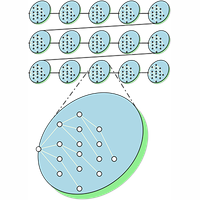
Ultrafast hybrid fermion-to-qubit mapping

Oliver O'Brien and Sergii Strelchuk

Phys. Rev. B 109, 115149 (2024) - Published 22 March, 2024

Simulating the behavior of fermionic systems is a major application of quantum computers. The key challenge for quantum algorithms that simulate such systems is how to efficiently map fermionic interactions to qubits. By meticulous combination of the most efficient mappings in one dimension – the Jordan-Wigner as well as Bravyi-Kitaev with two-dimensional Verstraete-Cirac methods – the authors derive new high-performance mappings that use fewer ancillary resources and produce shorter quantum circuits than existing techniques. Low-resource requirements make these mappings suitable for emerging quantum hardware.

Thermal equation of state of rhodium to 191 GPa and 2700 K using double-sided flash laser heating in a diamond anvil cell

J. D. McHardy, C. V. Storm, M. J. Duff, C. M. Lonsdale, G. A. Woolman, M. I. McMahon, N. Giordano, and S. G. MacLeod

Phys. Rev. B 109, 094113 (2024) - Published 21 March, 2024

Elemental rhodium (Rh) is one of eight noble metals in the periodic table exhibiting high resistance to corrosion and oxidation, even at elevated temperatures, and finds wide-ranging industrial applications. This paper presents a thermal equation of state describing the structural and volumetric behaviour of Rh under static compression to 191 GPa and flash laser heating to 2700 K as determined by \textit{in situ} synchrotron x-ray diffraction (XRD) in a diamond anvil cell. Fast scanning, combined with a small x-ray spot size, enables micron-scale XRD mapping of the local stress conditions within the sample assembly.

Symmetric improved estimators for multipoint vertex functions

Jae-Mo Lihm, Johannes Halbinger, Jeongmin Shim, Jan von Delft, Fabian B. Kugler, and Seung-Sup B. Lee

Phys. Rev. B 109, 125138 (2024) - Published 21 March, 2024
The authors develop here a new representation of two-particle vertices, the effective interaction between quantum particles in a many-body environment. This yields numerical results with much higher accuracy and robustness than previously possible. By avoiding error-prone inversion, their “symmetric improved estimators” successfully pass stringent precision tests in both the real- and imaginary-frequency frameworks of quantum field theory. This scheme allows field-theoretic methods for strongly correlated electrons to expand into the real-frequency direction.

Sign In to Your Journals Account

Filter

Section

Filter

Article Lookup

Enter a citation