Highlights

Topological quantum computation on a chiral Kondo chain

Tianhao Ren, Elio J. König, and Alexei M. Tsvelik

Phys. Rev. B 109, 075145 (2024) - Published 21 February, 2024

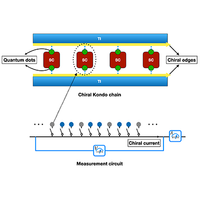
This work describes a chiral Kondo chain model with symplectic symmetry. The authors demonstrate that it has a quantum critical ground state populated by non-Abelian anyons. Such a model is more robust than previously proposed models, and it can be experimentally implemented using hybrid quantum devices featuring superconducting islands coupled to chiral edges of topological insulators. Proposals for measurement-only anyonic quantum computations and error mitigations based on such a setup are provided.

Bloch-wave interferometry of driven quasiparticles in bulk GaAs

Seamus D. O'Hara, Joseph B. Costello, Qile Wu, Ken West, Loren Pfeiffer, and Mark S. Sherwin

Phys. Rev. B 109, 054308 (2024) - Published 20 February, 2024

Interferometers that manipulate and detect electromagnetic waves are indispensable to science. Quasiparticles in crystalline solids can be described as Bloch waves, but rapid dephasing of accelerating charged quasiparticles has so far prevented the development of interferometers sensitive to their inertial properties. Here, the authors show that polarizations of near-infrared sidebands emitted by GaAs in strong terahertz fields can be viewed as interferograms from a Michelson-like interferometer for Bloch waves. A simple analytical model connects these inteferograms to quasiparticle masses and dephasing.

Excited-state geometry relaxation of point defects in monolayer hexagonal boron nitride

Alexander Kirchhoff, Thorsten Deilmann, and Michael Rohlfing

Phys. Rev. B 109, 085127 (2024) - Published 16 February, 2024

Optical excitation and deexcitation processes are governed by the dependence of the involved energy levels on the atom positions. This geometry dependence is calculated here for several defects in h-BN, e.g., CBVN, within constrained density functional theory and many-body perturbation theory. The investigated Stokes shifts show distinct differences compared to experiments. For the Tamm-Dancoff approximation, an approximation frequently employed in the calculation of exciton energies in crystalline solids, the authors find small but significant influence for defect systems.

Observation of double-kink states in multivalley acoustic crystals

Xiao-Hui Gou, Hua-Shan Lai, Xiao-Chen Sun, Si-Yuan Yu, Y. B. Chen, Cheng He, and Yan-Feng Chen

Phys. Rev. B 109, 054109 (2024) - Published 15 February, 2024

Graphene structures usually accommodate one pair of Dirac cones, naturally forming a single kink valley state after symmetry breaking. The authors report here that acoustic S-graphene, i.e., a carbon allotrope of graphene, can harbor two pairs of Dirac cones, further shaping double-kink valley states. By selectively exciting different symmetric or antisymmetric branches, robust yet tunable superdirectional sound radiation is experimentally demonstrated. This study could double the degrees of freedom for valleytronics and help in the design of unique functional devices.

Dynamic heterogeneity at the experimental glass transition predicted by transferable machine learning

Gerhard Jung, Giulio Biroli, and Ludovic Berthier

Phys. Rev. B 109, 064205 (2024) - Published 14 February, 2024

Dynamic heterogeneities represent a critical aspect of glassy dynamics, and their analysis constitutes a fundamental step in understanding the essence of the glass transition. The authors employ physics-inspired machine learning to predict the microscopic structural relaxation from amorphous configurations of deeply supercooled liquids. Leveraging the transferability in temperature of the trained networks enables the prediction of dynamic heterogeneities at the experimental glass transition temperature, thereby circumventing the prohibitively large computational cost associated with conventional simulation methods at such low temperatures.

Ground-state phase diagram and superconductivity of the doped Hubbard model on six-leg square cylinders

Yi-Fan Jiang, Thomas P. Devereaux, and Hong-Chen Jiang

Phys. Rev. B 109, 085121 (2024) - Published 14 February, 2024

The authors employ the density-matrix renormalization group to investigate the doped Hubbard model on six-leg square cylinders. It uncovers a rich quantum phase diagram, intricately sensitive to next-nearest-neighbor electron hopping (t′). The positive-t′ region shows a robust d-wave superconducting phase with intertwined superconducting and charge-density-wave orders. In contrast, the negative-t′ side remains insulating, where doped holes form either long-range charge stripe order at small t′ or a holon Wigner crystal with one doped hole per emergent unit cell and short-range spin correlations at larger t’.

Coherence of group-IV color centers

Isaac B. W. Harris and Dirk Englund

Phys. Rev. B 109, 085414 (2024) - Published 14 February, 2024

Group-IV color centers in diamond are a promising platform for quantum entanglement distribution experiments. However, they suffer from a phonon-mediated decoherence mechanism that limits the maximum temperature at which they can operate. This theoretical work develops a model that accurately predicts coherence time, and further predicts regimes in which the coherence can be extended, potentially leading to higher-temperature operation.

Bi2YbO4Cl: A two-dimensional square-lattice compound with Jeff=12 magnetic moments

V. K. Singh, K. Nam, M. Barik, K. Boya, E. Kermarrec, P. Khuntia, Kee Hoon Kim, S. Bhowal, and B. Koteswararao

Phys. Rev. B 109, 075128 (2024) - Published 13 February, 2024

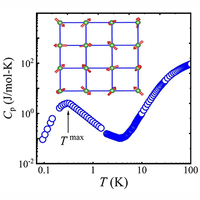
P. W. Anderson once proposed a “resonating valence bond” ground state of a 2D square lattice, an exotic disordered state formed by spin-pair superposition due to large quantum zero-point motion. However, perfect square-lattice materials realized so far exhibit long-range order with a reduced ordered moment. Here, the authors introduce a new quantum magnet, Bi2YbO4Cl, synthesized by the hydrothermal method. This compound realizes spin-orbit entangled moments in a 2D square lattice and maintains spin disorder down to several millikelvin temperatures.

Physics of the Majorana superconducting qubit hybrids

D. B. Karki, K. A. Matveev, and Ivar Martin

Phys. Rev. B 109, 085410 (2024) - Published 12 February, 2024

Realizing perfectly decoupled Majorana zero modes (MZMs) – the key element of proposed topological quantum computers – remains a challenge so far. Fortunately, even a few imperfect MZMs can be used to qualitatively extend the behavior of standard superconducting qubits. Such hybrid devices take advantage of the interplay of Cooper pair tunneling, coherent single-electron tunneling, and Majorana hybridization. Here, the authors offer a detailed description and present various analytical approaches to addressing the complex behavior of the MZM-superconducting qubit hybrid. Some practical applications of such a hybrid device are highlighted.

Noncoplanar and chiral spin states on the way towards Néel ordering in fullerene Heisenberg models

Attila Szabó, Sylvain Capponi, and Fabien Alet

Phys. Rev. B 109, 054410 (2024) - Published 8 February, 2024

The authors obtain here the symmetry-resolved low-energy spectrum of the Heisenberg model on fullerene geometries using a neural-network-based variational technique. They also develop a theoretical framework, based on Anderson towers of states, to interpret these spectra. The authors find that the hexagonal faces of the fullerenes favour incipient Néel ordering, which is, however, frustrated by the pentagonal faces. This brings about exotic noncoplanar and chiral magnetic ordering, with possible interesting ramifications for fullerene superconductivity.

Flat bands promoted by Hund's rule coupling in the candidate double-layer high-temperature superconductor La3Ni2O7 under high pressure

Yingying Cao and Yi-feng Yang

Phys. Rev. B 109, L081105 (2024) - Published 8 February, 2024

This work describes systematic strongly correlated electronic structure calculations for the candidate double-layer high-temperature superconductor La3Ni2O7 under pressure. These reveal the localized-itinerant duality of Ni dz2 electrons, flat dz2 and dx2−y2 quasiparticle bands, and strong interlayer antiferromagnetic correlations due to the interplay of orbital-selective Mott, Hund, and Kondo physics. These results imply a two-component theory with possibly preformed interlayer pairing for the high-temperature superconductivity in pressurized La3Ni2O7. The strange metallicity in the normal state is also explained from the quasiparticle lifetimes.

Error channels in quantum nondemolition measurements on spin systems

Benjamin Joecker, Holly G. Stemp, Irene Fernández de Fuentes, Mark A. I. Johnson, and Andrea Morello

Phys. Rev. B 109, 085302 (2024) - Published 7 February, 2024

Quantum nondemolition measurements (QNDMs) are a precious resource for quantum computing. They are an integral part of the surface code, the holy grail of quantum error correction, and can boost initialization and readout fidelities through repeated measurements. In spin systems, scalable QNDMS are achievable by coupling to ancillary spins read via charge reservoirs. Here, the authors develop a model to quantify how small deviations from true QNDMs in real spin system can introduce bit-flip errors and analyze how they can be minimized.

Adiabatic Cooper pair splitter

Fredrik Brange, Riya Baruah, and Christian Flindt

Phys. Rev. B 109, L081402 (2024) - Published 6 February, 2024

By adiabatically changing the energy levels of two quantum dots, theoreticians predict that it should be possible to control the splitting of Cooper pairs from a superconductor. Such an adiabatic Cooper pair splitter could serve as an on-demand source of entangled electrons in future solid-state quantum technologies.

Einstein–de Haas torque as a discrete spectroscopic probe allows nanomechanical measurement of a magnetic resonance

K. R. Fast, J. E. Losby, G. Hajisalem, P. E. Barclay, and M. R. Freeman

Phys. Rev. B 109, 064404 (2024) - Published 5 February, 2024

The Einstein-de Haas (EdH) effect is a consequence of angular momentum conservation wherein a physical rotation of a magnetic body results from a change in magnetization. A micromechanical resonator supporting a ladder of resonances is used to explore the inherent frequency dependence of torque resulting from this rotation in a thin-film permalloy sample, utilizing cavity optomechanical readout. Giant EdH torques are found at a gyrotropic magnetic resonance in the permalloy, which overlaps a high-order mechanical resonance of the sensor.

Entropy and de Haas–van Alphen oscillations of a three-dimensional marginal Fermi liquid

P. A. Nosov, Yi-Ming Wu, and S. Raghu

Phys. Rev. B 109, 075107 (2024) - Published 5 February, 2024

The free energy of metals in a magnetic field exhibits oscillations, influencing thermodynamics and transport. Typically, these oscillations are interpreted using the Lifshitz-Kosevich theory, which assumes nearly free electrons. Here, the authors study quantum oscillations in three-dimensional metals near quantum phase transitions, where electrons are strongly-coupled. Naive extensions of the Lifshitz-Kosevich formula to this state result in a finite zero-temperature entropy, contradicting the laws of thermodynamics. They authors propose a new thermodynamically consistent theory of magneto-oscillations, yielding a distinct temperature dependence of the oscillation amplitudes.

Landau quantization near generalized Van Hove singularities: Magnetic breakdown and orbit networks

V. A. Zakharov, A. Mert Bozkurt, A. R. Akhmerov, and D. O. Oriekhov

Phys. Rev. B 109, L081103 (2024) - Published 5 February, 2024

Several of the recently discovered 2D layered quantum materials host higher-order Van Hove singularities near the charge neutrality point. The authors develop here a universal description for magnetic breakdown near different types of higher-order Van Hove singularities. The observation of such a magnetic breakdown via measurement of quantum oscillations or longitudinal bulk conductance in a quantum Hall bar allows for reconstruction of a Fermi surface and classification of the corresponding saddle point in dispersion.

Terahertz field driven giant nonlinear phonon response in ferroelectric semiconductor In-doped (Sn,Pb)Te

H. Handa, Y. Okamura, R. Yoshimi, A. Tsukazaki, K. S. Takahashi, Y. Tokura, and Y. Takahashi

Phys. Rev. B 109, L081102 (2024) - Published 2 February, 2024

Recent advances in high-field terahertz technologies can unveil the nonlinear response of elementary excitations. This work finds large-amplitude coherent phonon dynamics in the fully anharmonic regime by intense terahertz excitation of the ferroelectric semiconductor In-doped (Sn,Pb)Te. The high-field resonant drive of soft phonons induces the dramatic shift of transient phonon frequency near the ferroelectric transition point. This highly nonlinear terahertz response quantitatively reveals a phonon potential dominated by strong anharmonicity and temporal lattice dynamics with giant atomic displacement.

Variational density functional perturbation theory for metals

Xavier Gonze, Samare Rostami, and Christian Tantardini

Phys. Rev. B 109, 014317 (2024) - Published 30 January, 2024

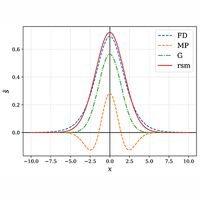
Density Functional Perturbation Theory (DFPT) is a proven method for analyzing molecular and solid responses to perturbations. For metals, challenges arise due to Fermi-Dirac statistics and electronic bands crossing the Fermi energy. This work focuses on variational DFPT for metals, examining the convexity of the entropy function of occupation numbers. It emphasizes benefits from resmearing Fermi-Dirac broadening at finite temperature, details variational expressions for free energy derivatives, and addresses inaccuracies in unperturbed wavefunctions. The formalism is implemented in the ABINIT software.

Breakdown of chiral edge modes in topological magnon insulators

Jonas Habel, Alexander Mook, Josef Willsher, and Johannes Knolle

Phys. Rev. B 109, 024441 (2024) - Published 30 January, 2024

Topological magnon edge modes have been proposed for the realization of robust, low-loss spintronic devices. However, ubiquitous many-body interactions that do not preserve particle number significantly compromise their topological protection. The authors show here that these interactions can lead to significant edge mode damping, hybridization with bulk modes, and coupling between edge modes on opposite sides. These findings pose challenges for the experimental realization of topological magnon edge modes, but can be overcome by the application of large magnetic fields.

Electronic structure, magnetic correlations, and superconducting pairing in the reduced Ruddlesden-Popper bilayer La3Ni2O6 under pressure: Different role of d3z2−r2 orbital compared with La3Ni2O7

Yang Zhang, Ling-Fang Lin, Adriana Moreo, Thomas A. Maier, and Elbio Dagotto

Phys. Rev. B 109, 045151 (2024) - Published 30 January, 2024

The authors investigate here two bilayer nickelates under pressure, establishing substantial qualitative differences between the two systems. They find that the d3z2−r2 orbital in La3Ni2O6 and La3Ni2O7 plays a different role: one “active” orbital (dx2−y2) vs two “active” orbitals (eg), respectively. The Fermi surface only has two sheets in La3Ni2O6, with the γ pocket absent, different from La3Ni2O7. They also find that La3Ni2O6 is far from a superconducting instability. Moreover, they do not observe changes in the electronic density in La3Ni2O6 under pressure.

Sign In to Your Journals Account

Filter

Section

Filter

Article Lookup

Enter a citation