Highlights

Strong-coupling topological states and phase transitions in helical trilayer graphene

Yves H. Kwan, Patrick J. Ledwith, Chiu Fan Bowen Lo, and Trithep Devakul

Phys. Rev. B 109, 125141 (2024) - Published 21 March, 2024

Helical trilayer graphene is a new experimentally accessible magic-angle graphene heterostructure with nontrivial physics at both the moiré and supermoiré scale. The authors’ theoretical analysis reveals a plethora of topological strong-coupling Chern insulators at all integer moiré fillings. Crucially, the band renormalization that plagues previous moiré graphene systems is significantly suppressed, ensuring the validity of the strong-coupling perspective and opening the path to fractionalized phases. At experimentally accessible displacement fields, the authors find continuous topological transitions to more complex orders. Their results establish helical trilayer graphene as a promising platform for tunable strongly interacting topological phases.

Multigap nodeless superconductivity in the Dirac intermetallic alloy V2Ga5 with one-dimensional vanadium chains

C. Q. Xu, C. C. Zhao, Y. Shen, D. Ratkovski, X. Ma, W. Zhou, Xunqing Yin, B. Li, A. F. Bangura, Chao Cao, Baomin Wang, Ziming Zhu, X. Ke, Dong Qian, Shiyan Li, and Xiaofeng Xu

Phys. Rev. B 109, L100506 (2024) - Published 21 March, 2024

A vast landscape of topological phases of matter with emergent quasiparticles has been explored in the past two decades, but the majority of them are 2D or 3D in essence and far fewer 1D counterparts are known to exist. Here, first-principles calculations reveal a multitude of topological fermions near the Fermi level in the quasi-one-dimensional alloy V2Ga5, which becomes a multigap nodeless superconductor below 3.6 K, raising the possibility of realizing topological superconductivity in this quasi-1D system.

Spin current leakage and Onsager reciprocity in interfacial spin-charge interconversion

Aurélien Manchon, Shuyuan Shi, and Hyunsoo Yang

Phys. Rev. B 109, 094424 (2024) - Published 19 March, 2024

Spintronics involves converting spin currents to charge currents and vice versa, a process that has wide-ranging applications. However, in magnetic heterostructures, the efficiency of converting spins into charges is not always equivalent to converting charges into spins. This study intends to explain this discrepancy by accounting for both interfacial and bulk spin-orbit coupling. It shows that the charge-to-spin conversion is highly sensitive to spin current leakage, whereas spin-to-charge conversion is less affected by it. As a result, spin pumping appears as a more robust process than spin-orbit torque to quantify spin-charge interconversion efficiencies.

Amperean superconductivity cannot be induced by deep subwavelength cavities in a two-dimensional material

Gian Marcello Andolina, Antonella De Pasquale, Francesco Maria Dimitri Pellegrino, Iacopo Torre, Frank H. L. Koppens, and Marco Polini

Phys. Rev. B 109, 104513 (2024) - Published 19 March, 2024

Amperean superconductivity is stemming from attractive effective electron-electron interactions mediated by a transverse gauge field. Amperean superconductivity has been recently proposed to occur at temperatures on the order of 1 K in two-dimensional electron gases embedded inside deep subwavelength optical cavities. Here, the authors generalize the microscopic theory of cavity-induced Amperean superconductivity to the case of graphene and then argue that this superconducting state cannot be achieved in the deep subwavelength regime.

Kitaev-Heisenberg model on the star lattice: From chiral Majorana fermions to chiral triplons

P. d'Ornellas and J. Knolle

Phys. Rev. B 109, 094421 (2024) - Published 15 March, 2024

Recently, the Kitaev Heisenberg model has attracted considerable interest as a description of Kitaev materials. On the honeycomb lattice, it has a phase diagram containing two spin-liquid and four magnetically ordered phases. Here, the authors consider this model on a lattice that breaks bipartite symmetry, frustrating the formation of antiferromagnetic order. Using mean field theory and DMRG, they find that this leads to the formation of two novel valence bond solid phases with a rich topological phase diagram and protected edge modes.

Signatures of Majorana bound states in the diffraction patterns of extended superconductor–topological insulator–superconductor Josephson junctions

Guang Yue, Can Zhang, Erik D. Huemiller, Jessica H. Montone, Gilbert R. Arias, Drew G. Wild, Jered Y. Zhang, David R. Hamilton, Xiaoyu Yuan, Xiong Yao, Deepti Jain, Jisoo Moon, Maryam Salehi, Nikesh Koirala, Seongshik Oh, and Dale J. Van Harlingen

Phys. Rev. B 109, 094511 (2024) - Published 14 March, 2024

Lateral Josephson junctions with topological insulator barriers (S-TI-S junctions) have been proposed as a platform to support Majorana bound states that can be used for topologically protected quantum processing. Here, the authors present a compilation of measurements of the critical current versus magnetic field diffraction patterns of such junctions and compare them to a model incorporating Majorana states, taking into account the effects of junction disorder and Majorana parity fluctuations. They observe entry features and lifting of odd nodes consistent with this picture.

Selective observation of enantiomeric chiral phonons in α-quartz

Eiichi Oishi, Yasuhiro Fujii, and Akitoshi Koreeda

Phys. Rev. B 109, 104306 (2024) - Published 12 March, 2024

Phonons that have angular momentum and propagate in crystals are known as chiral phonons. The authors demonstrate the selective observation of chiral phonons in α-quartz, the most typical chiral crystal, by circularly polarized Raman spectroscopy. They clarify the Raman tensors of the chiral phonons verifying the angular momentum conservation law in the Raman process, involving photons and the chiral phonon. This study suggests the possibility of controlling the angular momentum and propagation direction of chiral phonons via the Raman process.

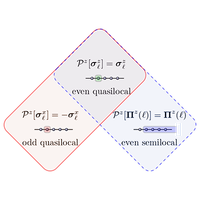
Nonequilibrium symmetry-protected topological order: Emergence of semilocal Gibbs ensembles

Maurizio Fagotti, Vanja Marić, and Lenart Zadnik

Phys. Rev. B 109, 115117 (2024) - Published 11 March, 2024

A generic nonequilibrium quantum system relaxes locally into a state resembling a thermal one even when isolated from the environment. In one-dimensional systems at finite temperature, ordered phases are generally excluded. Consequently, although symmetry-protected topological order may be present at zero temperature, its emergence at late times is not expected. This paper uncovers a mechanism that allows symmetry-protected topological order to emerge away from equilibrium for arbitrarily long times. It is based on the existence of hidden (semilocal) symmetries associated with operators that represent local observables only in a symmetry-restricted Hilbert space.

Phonon thermal Hall effect in charge-compensated topological insulators

Rohit Sharma, Mahasweta Bagchi, Yongjian Wang, Yoichi Ando, and Thomas Lorenz

Phys. Rev. B 109, 104304 (2024) - Published 8 March, 2024

The observation of surprisingly large thermal Hall ratios in a growing number of mainly oxide-based insulators is a major puzzle and raises the question about potential mechanisms that can induce a thermal Hall effect in materials with dominant charge-neutral heat carriers. Here, the authors report the finding of comparable thermal Hall ratios in a series of charge-compensated topological insulators and discuss this observation in the context of a recent proposal that a thermal Hall effect can result from skew scattering of phonons on charged defects.

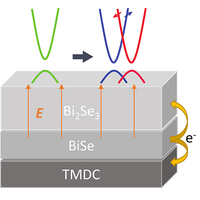
Manipulating topological properties in Bi2Se3/BiSe/transition metal dichalcogenide heterostructures with interface charge transfer

Xuance Jiang, Turgut Yilmaz, Elio Vescovo, and Deyu Lu

Phys. Rev. B 109, 115112 (2024) - Published 8 March, 2024

The 3D topological insulator Bi2Se3 transitions to a trivial insulator under the 2D limit. Through first-principles studies, the authors show here that significant charge transfer occurs at the Bi2Se3/BiSe/transition metal dichalcogenide heterostructure interfaces that stabilizes the BiSe layer as an electron donor and the resulting dipole field breaks the inversion symmetry of the Bi2Se3 layer. This results in giant Rashba band splitting and the reemergence of the Dirac states in thin Bi2Se3 layers.

Near- and mid-infrared excitation of ultrafast demagnetization in a cobalt multilayer system

Katherine Légaré, Guillaume Barrette, Laurent Giroux, Jean-Michel Parent, Elissa Haddad, Heide Ibrahim, Philippe Lassonde, Emmanuelle Jal, Boris Vodungbo, Jan Lüning, Fabio Boschini, Nicolas Jaouen, and François Légaré

Phys. Rev. B 109, 094407 (2024) - Published 6 March, 2024

Ultrafast demagnetization occurs when magnetic materials are excited by a sudden burst of energy, such as from an ultrashort laser pulse. After generating pulses from the ultraviolet to the mid-infrared spectral regions, the authors retrieve here the ultrafast magnetic dynamics of a multilayered cobalt ferromagnet excited by femtosecond pulses with wavelengths ranging from 0.8 to 8.7 µm. A weak relationship between the excitation wavelength and the magnetic dynamics is uncovered as well as a significant effect of the pulse’s shape and duration.

Observation of ferrotoroidic domains in a metal

Takeshi Hayashida, Ryusuke Misawa, Manfred Fiebig, and Tsuyoshi Kimura

Phys. Rev. B 109, L100401 (2024) - Published 4 March, 2024

Ferrotoroidic order refers to a spontaneous vortex arrangement of magnetic dipoles, which has recently been established as the fourth primary ferroic state of matter. Thus far, ferrotoroidic order has been studied extensively in insulators, but much less investigated in metallic materials. Here, the authors demonstrate the visualization of ferrotoroidic domains in metallic NdB4 by spatial distribution measurements of optical second harmonic generation (SHG). This study will stimulate research on unique functionalities of ferrotoroidic order in metals, such as an electric current induced domain switching.

Observation of a giant band splitting in altermagnetic MnTe

T. Osumi, S. Souma, T. Aoyama, K. Yamauchi, A. Honma, K. Nakayama, T. Takahashi, K. Ohgushi, and T. Sato

Phys. Rev. B 109, 115102 (2024) - Published 1 March, 2024

This paper reports angle-resolved photoemission spectroscopy and first-principles band calculations for MnTe, a candidate for an altermagnet that is now emerging as a new type of magnet, distinct from conventional ferromagnets and antiferromagnets. The authors provide direct experimental evidence for an exchange band splitting that reaches 0.8 eV. This band splitting was found to show strong anisotropy and multiple nodal lines in momentum space associated with the PT symmetry breaking characteristic of altermagnets.

Moiré fractals in twisted graphene layers

Deepanshu Aggarwal, Rohit Narula, and Sankalpa Ghosh

Phys. Rev. B 109, 125302 (2024) - Published 1 March, 2024

Fractals are ubiquitous in nature. When two-dimensional crystals such as graphene or h-BN are multiply stacked and then twisted by a specific angle, the resulting super-moiré pattern exhibits electronic fractality. The authors call these novel structures “moiré fractals”. They derive a formula that relates their fractal dimension to the number of electronic bands in a given energy window. Such a number of bands fundamentally constrains charge and heat transport, thus providing a powerful tool for engineering designer quantum materials.

Experimental demonstration of a two-dimensional hole gas in a GaN/AlGaN/GaN based heterostructure by optical spectroscopy

Loïc Méchin, François Médard, Joël Leymarie, Sophie Bouchoule, Jean-Yves Duboz, Blandine Alloing, Jesús Zuñiga-Pérez, and Pierre Disseix

Phys. Rev. B 109, 125401 (2024) - Published 1 March, 2024

Optical spectroscopy techniques, including time-resolved and intensity-dependent photoluminescence, are employed here to optically demonstrate, for the first time, the presence of a buried two-dimensional hole gas (2DHG) in a nitride-based heterostructure. The characteristic spectral and temporal features of this recombination highlight the asymmetric electric field distribution on either side of the 2DHG. The effects of this electric field are discussed, particularly regarding their implications for optical recombination mechanisms within the heterostructure.

Quantum dots as optimized chiral emitters for photonic integrated circuits

Jakub Rosiński, Michał Gawełczyk, Karol Tarnowski, Paweł Karwat, Daniel Wigger, and Paweł Machnikowski

Phys. Rev. B 109, 085431 (2024) - Published 26 February, 2024

A quantum emitter coupled to a photonic waveguide may emit photons in one particular direction. It is, however, challenging to create a system that matches the requirements of the directional coupling over a broad area of the waveguide. The authors show here that a properly designed quantum dot can be fine tuned in situ with a magnetic field to yield the desired directionality. This finding overcomes the obstacles on the path to efficient chiral coupling in QD-based photonic integrated circuits.

Quantum criticality and entanglement for the two-dimensional long-range Heisenberg bilayer

Menghan Song, Jiarui Zhao, Yang Qi, Junchen Rong, and Zi Yang Meng

Phys. Rev. B 109, L081114 (2024) - Published 26 February, 2024

The authors conduct here a pioneering and unbiased investigation into the entanglement properties of (2+1)-dimensional O(3) quantum critical points and two-dimensional Néel states in systems with long-range interactions. This study uncovers exotic properties, such as the vanishing of logarithmic corrections to entanglement entropies at QCPs and an enhancement in Néel states as long-range interactions amplify. Moreover, they determine precise critical exponents of QCPs influenced by long-range interactions, characterized by three distinct renormalization group fixed points.

Three-dimensional checkerboard spin structure on a breathing pyrochlore lattice

Margarita G. Dronova, Václav Petříček, Zachary Morgan, Feng Ye, Daniel M. Silevitch, and Yejun Feng

Phys. Rev. B 109, 064421 (2024) - Published 23 February, 2024

The magnetism in the spinel compound ZnFe2O4 is one of the examples in P.W. Anderson’s original discussion of magnetic order and disorder on the pyrochlore lattice in the 1950’s. It has been studied for over seven decades, but the details of the ordering have remained unresolved. Here, a combination of high-quality single crystal growth, continuous-wave neutron diffraction, and a representation analysis based magnetic refinement reveal a noncollinear spin structure of alternatively stacked ferromagnetic and antiferromagnetic tetrahedra in a three-dimensional checkerboard array. This rare magnetic structure is stabilized by the existing breathing pyrochlore lattice and provides a precise insight into the magnetic structure factor, which challenges the claim for a classical spin liquid in several chromate spinel oxides.

Intercalation-induced states at the Fermi level and the coupling of intercalated magnetic ions to conducting layers in Ni1/3NbS2

Yuki Utsumi Boucher, Izabela Biało, Mateusz A. Gala, Wojciech Tabiś, Marcin Rosmus, Natalia Olszowska, Jacek J. Kolodziej, Bruno Gudac, Mario Novak, Naveen Kumar Chogondahalli Muniraju, Ivo Batistić, Neven Barišić, Petar Popčević, and Eduard Tutiš

Phys. Rev. B 109, 085135 (2024) - Published 23 February, 2024

The intercalation with magnetic ions (Ni, Co) provides strong spin-selective hybridization between NbS2 layers. The symmetries of dominant bridging orbitals as displayed in the accompanying figure (a, b) and the type of magnetic order strongly affect the electronic structure and the conduction bands (c), as seen in ARPES spectra and understood through DFT+U calculations. In addition, the magnetic fluctuations at bridging sites are prone to produce strong electron correlation effects at the Fermi level (d), inaccessible by DFT+U calculations.

Reorientation of magnetic stripe domains by mid-infrared pulses

Maxime Gidding, Carl S. Davies, and Andrei Kirilyuk

Phys. Rev. B 109, L060408 (2024) - Published 23 February, 2024

Infrared pulses can be used to generate ultrafast strains in magnetic dielectrics, leading to magnetisation switching. Here, the authors find that in multidomain samples, such strains can drive domain reorientation, with the domains becoming aligned along the magnetocrystalline anisotropy axes. Moreover, the application of subsequent pulses leads to the pushing of the reoriented domains far beyond the radius of the infrared pulse.

Sign In to Your Journals Account

Filter

Section

Filter

Article Lookup

Enter a citation