Highlights

Accelerated molecular vibrational decay and suppressed electronic nonlinearities in plasmonic cavities through coherent Raman scattering

Lukas A. Jakob, William M. Deacon, Rakesh Arul, Bart de Nijs, Niclas S. Mueller, and Jeremy J. Baumberg

Phys. Rev. B 109, 195404 (2024) - Published 2 May, 2024

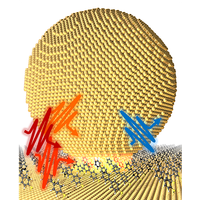
Molecular vibrations play a key role in sensing, catalysis, molecular electronics and beyond, but investigating the coherence and dynamics of individual molecules is extremely challenging. Here, the authors study the vibrational dynamics of ~100 molecules confined in plasmonic nanocavities through simultaneous coherent and incoherent Raman scattering to access both phonon population decay and dephasing. The results show that the dephasing of collective molecular vibrations is accelerated by excitation-power-dependent processes, amplified by the plasmonic near-field enhancement in the cavity.

Electronic topology with bound defect charges promotes intermediate hexatic phase in two-dimensional melting

Junyan Ma and H. Huang

Phys. Rev. B 109, 205107 (2024) - Published 1 May, 2024

This paper delves into the intriguing connection between electronic topology and the two-dimensional melting of solids. Conventionally, Kosterlitz-Thouless-Halperin-Nelson-Young theory shows that the behavior of disclinations determines the melting process of 2D crystals. By uncovering how electrons become trapped in disclinations due to nontrivial electronic topology, the authors shed light here on a deviation of the disclination-involving melting process, because of the increase in the energy barrier for unbinding disclination pairs.

Ballistic to diffusive crossover in a weakly interacting Fermi gas

Jerome Lloyd, Tibor Rakovszky, Frank Pollmann, and Curt von Keyserlingk

Phys. Rev. B 109, 205108 (2024) - Published 1 May, 2024

In systems of fermions at finite temperatures, interactions are believed to induce a crossover from the coherent and ballistic streaming of quasiparticles at early times, to incoherent diffusive behavior at late times. Here, the authors develop a numerical method to simulate such systems. They use the method to determine how the rate of diffusion depends on the strength of interactions, and to confirm the predicted crossover.

Topological enhancement of nonnormality in non-Hermitian skin effects

Yusuke O. Nakai, Nobuyuki Okuma, Daichi Nakamura, Kenji Shimomura, and Masatoshi Sato

Phys. Rev. B 109, 144203 (2024) - Published 26 April, 2024

This paper introduces scalar measures that adequately characterize the non-Hermitian skin effects under open boundary condition. Using these measures, the authors reveal that the topological properties of the non-Hermitian skin effect give a macroscopic enhancement of non-normality under open boundary condition. The topological enhancement of non-normality governs the perturbation sensitivity of the spectra and the anomalous time-evolution dynamics intrinsic to non-Hermiticity. They also show that these measures correctly describe the disorder-induced topological phase transitions of the skin effect.

Photon statistics of resonantly driven spectrally diffusive quantum emitters

Aymeric Delteil, Stéphanie Buil, and Jean-Pierre Hermier

Phys. Rev. B 109, 155308 (2024) - Published 26 April, 2024

Solid-state quantum emitters often suffer from temporal variations of their transition energies, inherited from fluctuations in the host crystal environment. This spectral diffusion (SD) is detrimental to the emitter linewidth but is often challenging to characterize experimentally. The authors show here that, under resonant laser excitation, the statistics of the scattered photons offer multiple signatures of the SD process, making it possible to discriminate between discrete jumps and continuous diffusion, as well as to access relevant parameters of the SD mechanisms.

Connecting the avoided quantum critical point to the magic-angle transition in three-dimensional Weyl semimetals

J. H. Pixley, David A. Huse, and Justin H. Wilson

Phys. Rev. B 109, 165151 (2024) - Published 25 April, 2024

This work establishes a direct connection between the magic-angle effect, originally discovered in two-dimensional twisted bilayer graphene, and the avoided quantum critical point in disordered three-dimensional Weyl and Dirac semimetals. This is achieved through a theoretical study of the interplay of quasiperiodicity and disorder in a model for three-dimensional inversion broken Weyl semimetal. The predictions can be tested in future ultracold atom or circuit quantum electrodynamic experiments.

Magnetic property changes of NdGa upon hydrogen absorption

Johan Cedervall, Vitalii Shtender, Pascal Manuel, Vladimir Pomjakushin, Roland Mathieu, Ulrich Häussermann, and Mikael S. Andersson

Phys. Rev. B 109, 134434 (2024) - Published 23 April, 2024

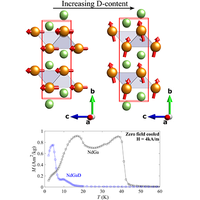
Using a combination of neutron powder diffraction and SQUID magnetometry, this work explores the impact that hydrogen (deuterium) incorporation has on the magnetic properties of NdGaDx (x=0, 0.9, and 1.6). The experimental results show that hydrogenation leads to large change in the magnetic order and to a significant decrease in the corresponding transition temperatures. Furthermore, the results suggest that this is related to changes in the electronic structure and the Nd-Nd distances induced by the hydrogenation.

Negative electronic compressibility in charge islands in twisted bilayer graphene

Robin J. Dolleman, Alexander Rothstein, Ammon Fischer, Lennart Klebl, Lutz Waldecker, Kenji Watanabe, Takashi Taniguchi, Dante M. Kennes, Florian Libisch, Bernd Beschoten, and Christoph Stampfer

Phys. Rev. B 109, 155430 (2024) - Published 23 April, 2024

By exploiting naturally occurring charge islands due to twist angle variations in twisted bilayer graphene, the authors measure here how strongly charge carriers interact. They discover negative capacitance contributions, which are indicative of correlation effects near band insulators at full filling on both flat and remote sides, and at integer partial fillings. The correlation strength remains constant across all bands, unaffected by a magnetic field. The reported results point to a possible Wigner crystal phase as the underlying mechanism.

Exciton-activated effective phonon magnetic moment in monolayer MoS2

Chunli Tang, Gaihua Ye, Cynthia Nnokwe, Mengqi Fang, Li Xiang, Masoud Mahjouri-Samani, Dmitry Smirnov, Eui-Hyeok Yang, Tingting Wang, Lifa Zhang, Rui He, and Wencan Jin

Phys. Rev. B 109, 155426 (2024) - Published 22 April, 2024

Chiral phonons are lattice vibration modes in which the atomic circular motions produce nonzero angular momentum. In monolayer MoS2, the authors demonstrate here a chiral phonon mode at ~270 cm−1 that is activated by resonant excitation of the bright exciton. Under an out-of-plane magnetic field, this mode exhibits large Zeeman splitting, which corresponds to an effective magnetic moment of ~2.5 μB. This study will stimulate research on the effective magnetic moments that emerge from the interplay between chiral phonons and the valley degree of freedom.

Filling-enforced obstructed atomic insulators

Yuanfeng Xu, Luis Elcoro, Zhi-Da Song, M. G. Vergniory, Claudia Felser, Stuart S. P. Parkin, Nicolas Regnault, Juan L. Mañes, and B. Andrei Bernevig

Phys. Rev. B 109, 165139 (2024) - Published 19 April, 2024

Topologically trivial insulators can further be identified as obstructed atomic insulators when the symmetric Wannier functions are centered at positions not occupied by atoms. Here, the authors derive all charge-filling criteria that force a topologically trivial insulator to an obstructed atomic insulator. About one thousand filling-enforced obstructed atomic insulators are found through high-throughput calculations.

Electronic band structure of Sb2Te3

I. Mohelsky, J. Wyzula, F. Le Mardelé, F. Abadizaman, O. Caha, A. Dubroka, X. D. Sun, C. W. Cho, B. A. Piot, M. F. Tanzim, I. Aguilera, G. Bauer, G. Springholz, and M. Orlita

Phys. Rev. B 109, 165205 (2024) - Published 18 April, 2024

Antimony telluride (Sb2Te3) has garnered significant attention within the condensed matter community, particularly as one of the earliest experimentally recognized topological insulators. However, despite substantial investigation, our understanding of the bulk electronic band structure of Sb2Te3 remains incomplete. Here, the authors employ a comprehensive experimental and theoretical approach integrating magneto-optical, optical, magnetotransport and ab initio techniques to examine Sb2Te3. Their findings reveal that this material possesses a direct energy band gap at the center of the Brillouin zone, while also exhibiting additional low-energy band extrema in mirror planes.

Fragility of the magnetic order in the prototypical altermagnet RuO2

Andriy Smolyanyuk, Igor I. Mazin, Laura Garcia-Gassull, and Roser Valentí

Phys. Rev. B 109, 134424 (2024) - Published 16 April, 2024

Altermagnetism is increasingly gaining attention and RuO2 thin films have been arguably the most popular altermagnetic candidate. However, most publications miss a disturbing fact: direct experiments indicate the absence of any sizable ordered magnetism in stoichiometric bulk samples. Here, the authors confirm, through first-principles calculations, that the bulk samples are indeed far from ordered magnetism, but intrinsic hole doping strongly enhances the tendency to magnetism, suggesting an interesting possibility that the measured thin films may be magnetically different from stoichiometric bulk RuO2.

Antiferromagnetic ordering and chiral crystal structure transformation in Nd3Rh4Sn13

Ami Shimoda, Kazuaki Iwasa, Keitaro Kuwahara, Hajime Sagayama, Hironori Nakao, Motoyuki Ishikado, Akiko Nakao, Seiko Ohira-Kawamura, Naoki Murai, Takashi Ohhara, and Yusuke Nambu

Phys. Rev. B 109, 134425 (2024) - Published 16 April, 2024

The so-called Remeika phase of the 3–4–13 class of materials is a candidate system for investigating topological electronic phenomena. The authors explore here an antiferromagnetic ordered structure comprising one-dimensional Nd chains connected via the triangular lattice in Nd3Rh4Sn13, which is superimposed on the chiral structure like that in several Remeika phase compounds. The results suggest that simultaneously broken spatial and time-reversal symmetries in this material open an avenue to investigate magnetic interactions mediated by the topological electrons protected by the noncentrosymmetric chiral structure.

Perturbative analysis of quasiperiodic patterning of transmon quantum computers: Enhancement of many-body localization

Evangelos Varvelis and David P. DiVincenzo

Phys. Rev. B 109, 144201 (2024) - Published 10 April, 2024

To be useful for quantum computation, qubits in an array must remain localized – that is, not “dressed” too much by nearby degrees of freedom. This localization has been previously achieved using disorder. But the authors observe here that a more effective route to localization is with a quasiperiodic patterning of the qubit array Hamiltonian. This paper develops two different perturbation approaches to calculate diagnostics for many-body localization in quasiperiodic superconducting transmon arrays. Perturbing in anharmonicity versus perturbing in hopping strength give complementary information.

Thickness-dependent anisotropic superconductivity and charge density wave in ZrTe3 down to the two-dimensional limit

Xinyu Chen, Changsheng Zhu, Bin Lei, Weizhuang Zhuo, Wenxiang Wang, Jiaxiang Ma, Xigang Luo, Ziji Xiang, and Xianhui Chen

Phys. Rev. B 109, 144513 (2024) - Published 10 April, 2024

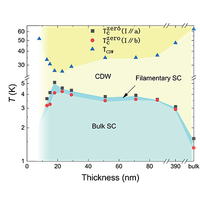
Charge density waves (CDW) accompanied by superconductivity (SC) is an enduring topic in the field of condensed matter physics for it involves exotic physical properties and quantum states. This paper presents a competitive relationship between the anisotropic SC and CDW down to the two-dimensional limit in ZrTe3, a quasi-one-dimensional material. It reveals an unusual nonmonotonic evolution versus thickness and suggests a complicated superconducting mechanism in this compound.

Role of photonic angular momentum in all-optical magnetic switching

Muhammad Waleed Khalid, Ali Akbar, Jeongho Ha, Mohammed Salah El Hadri, Alexander V. Sergienko, Eric E. Fullerton, and Abdoulaye Ndao

Phys. Rev. B 109, L140403 (2024) - Published 9 April, 2024

By examining the complex interactions between light and magnetism, this work uncovers the dominant role played by light’s spin angular momentum in magnetic all-optical switching (AOS) using Co/Pt ferromagnetic thin films. The authors use femtosecond vortex beams to demonstrate that the topological charge and orbital angular momentum’s handedness are inconsequential. As a result, this research enhances our comprehension and underscores the pivotal correlation between the angular momentum of light and magnetization dynamics.

Catching thermal avalanches in the disordered XXZ model

Tomasz Szołdra, Piotr Sierant, Maciej Lewenstein, and Jakub Zakrzewski

Phys. Rev. B 109, 134202 (2024) - Published 8 April, 2024

Strong disorder in many-body quantum systems leads to many-body localization (MBL), manifested as long-time memory of the initial state. Spatial regions of anomalously weak disorder, arising due to fluctuations in the disordered potential, may act as ergodic inclusions that seed quantum avalanches and destabilize the MBL. To investigate this mechanism in a controlled setting, the authors plant ergodic inclusions by engineering regions of a weak disorder and compare the system’s time evolution with predictions of the avalanche theory.

High-order harmonics and the reverse of the squaring up process in the triangular-lattice magnet HoPdAl4Ge2

Fei Gao, Weijun Ren, Chin-Wei Wang, S. Yano, Stuart Calder, Qiang Zhang, Hengheng Wu, Meng An, Yanpei Jing, Bing Li, and Zhidong Zhang

Phys. Rev. B 109, 134407 (2024) - Published 5 April, 2024

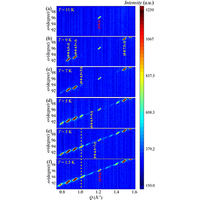
High-order harmonics and the reverse of the squaring-up process is uncovered in the evolution of magnetic orders of the centrosymmetric layered triangular-lattice magnet HoPdAl4Ge2. Ho3+ spins order antiferromagnetically as a transverse spin density wave below 10.5 K. Upon further cooling through 5.5 K, the high-order harmonics develop, suggesting a “squaring up” process. It is surprising that the squaring up process does not continue down to 0 K but reverses the trend below ~3 K or by applying a small magnetic field.

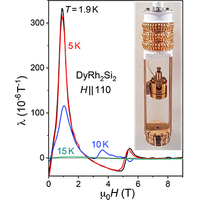
Coupling between magnetic and thermodynamic properties in RRh2Si2(R = Dy, Ho)

H. Dawczak-Dębicki, K. Kliemt, M. V. Ale Crivillero, R. Küchler, C. Krellner, O. Stockert, and S. Wirth

Phys. Rev. B 109, 134408 (2024) - Published 5 April, 2024

The tetragonal 122 family of compounds exhibits a wide variety of intriguing phenomena, many of which are intimately related to their magnetic properties. Here, the magnetic phase diagrams of DyRh2Si2 and HoRh2Si2 are explored in detail by extremely sensitive thermal expansion and magnetostriction measurements. Some similarities can be attributed to comparable crystalline electric fields in these compounds, while an additional transition is revealed for HoRh2Si2 just below the Néel temperature (TN) and analyzed via the magnetic Grüneisen ratio.

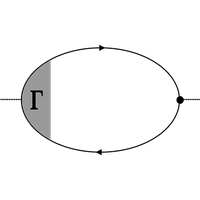
Superfluid stiffness within Eliashberg theory: The role of vertex corrections

Zachary M. Raines, Shang-Shun Zhang, and Andrey V. Chubukov

Phys. Rev. B 109, 144505 (2024) - Published 5 April, 2024

The superfluid stiffness Ds(T) is one of the key characteristics of a superconductor, determining the magnetic penetration length and, in two dimensions, the critical temperature. For Galilean invariant systems, it is known that the zero-temperature stiffness takes a universal value DsGal = nm (T=0), while for non-Galilean invariant systems the superfluid stiffness may be suppressed. Here, the authors demonstrate when and how vertex corrections may cancel suppression of the superfluid stiffness at strong coupling.

Sign In to Your Journals Account

Filter

Section

Filter

Article Lookup

Enter a citation