Highlights

Non-Hermitian multiterminal phase-biased Josephson junctions

Jorge Cayao and Masatoshi Sato

Phys. Rev. B 110, 235426 (2024) - Published 24 December, 2024

The authors predict here the realization of higher-dimensional exceptional points by combining the realms of non-Hermitian physics and multiterminal Josephson junctions. They demonstrate that the exceptional points emerge as stable lines and surfaces in the Andreev spectrum protected by non-Hermitian topology and controllable by the Josephson effect via the superconducting phases. The authors also show that the exceptional points mediate the formation of Andreev molecules and enhance their nonlocal Josephson effect, which is otherwise tiny.

Generative diffusion model for surface structure discovery

Nikolaj Rønne, Alán Aspuru-Guzik, and Bjørk Hammer

Phys. Rev. B 110, 235427 (2024) - Published 24 December, 2024

The generative diffusion method is adapted for use in connection with surface structure determination. The authors introduce here the concepts required to train a diffusion model on structures from small-cell density functional theory calculations. Using the diffusion model to generate large-cell surface structures, the authors demonstrate that highly plausible structures result. The efficiency of generating low-energy structures is compared to that of the random structure search method. Finally, using the diffusion method, a structure for a Ag-based surface-oxide grain boundary is proposed.

Theories for charge-driven nematicity in kagome metals

Francesco Grandi, Michael A. Sentef, Dante M. Kennes, and Ronny Thomale

Phys. Rev. B 110, 245138 (2024) - Published 24 December, 2024

Nematicity, the broken rotational symmetry of a lattice’s point group, is often linked to unconventional superconductivity. This work presents two theories for the nematic behavior in kagome metals. One theory suggests a d-wave charge Pomeranchuk instability, while the other attributes nematicity to fluctuations in one-dimensional charge order observed experimentally. Unlike iron-based superconductors, where spin-fluctuations drive nematicity, the kagome metals’ nematic tendencies are likely induced by charge fluctuations, offering a distinct mechanism for this behavior.

Experimental observation of boundary flat bands with topological spin textures

Yuanchuan Biao, Zhongbo Yan, and Rui Yu

Phys. Rev. B 110, L241110 (2024) - Published 24 December, 2024

The spin polarization of a boundary flat band (BFB) protected by chiral symmetry is typically fixed. The authors experimentally demonstrate here the realization of BFBs with momentum-dependent spin polarizations, exhibiting nontrivial topological windings across the boundary Brillouin zone in a circuit system. The so-called subchiral symmetry is the key symmetry responsible for the emergence of these additional topological properties. These findings establish BFBs as a promising new platform for exploring flat-band physics.

Nonreciprocal heat transport in the Kitaev chiral spin liquid

Yoshiki Sano, Daichi Takikawa, Masahiro O. Takahashi, Masahiko G. Yamada, Takeshi Mizushima, and Satoshi Fujimoto

Phys. Rev. B 110, 214430 (2024) - Published 20 December, 2024

Nonreciprocal transport, characterized by its direction-selective nature, holds significant potential for applications due to its rectification. Here, the authors theoretically investigate nonreciprocal heat transport in the Kitaev chiral spin liquid with open boundaries, where the Dzyaloshinskii-Moriya interaction is considered. They show the nonreciprocal heat transport even with considering the contributions from both of counter-propagating upper and lower edge states. Also, the potential exists to manipulate both of the directions and magnitude of the nonreciprocal current by varying external magnetic fields.

Magnetic structure of polar magnet GaV4Se8 with Néel-type skyrmion lattice probed by V51 NMR

Hikaru Takeda, Misaki Ishikawa, Masashi Takigawa, Minoru Yamashita, Yuri Fujima, and Taka-hisa Arima

Phys. Rev. B 110, 224430 (2024) - Published 20 December, 2024

Using magnetization and 51V nuclear magnetic resonance (NMR) measurements, this study probes the intricate magnetic textures of the polar magnet GaV4Se8, a host material for Néel-type skyrmion lattices. The analysis of the 51V NMR spectra under external magnetic fields reveals a rich evolution of spin structures, including a transition from a cycloidal to a conical state and the emergence of a supermagnetized cycloidal state. Notably, the skyrmion lattice state itself fails to produce a detectable NMR signal, which is attributed to low-energy excitations inherent to the magnetic skyrmion.

Anisotropy of Yu-Shiba-Rusinov states in NbSe2

Mateo Uldemolins, Freek Massee, Tristan Cren, Andrej Mesaros, and Pascal Simon

Phys. Rev. B 110, 224519 (2024) - Published 20 December, 2024

The spatial form of Yu-Shiba-Rusinov (YSR) states induced by magnetic impurities in superconductors is controlled by an exponential decay length and a prefactor, whose anisotropies generally depend on the band structure of the material. The authors extract here the angular dependence of the YSR state from scanning tunneling microscopy (STM) data on NbSe2 and match it to the theoretical prediction to confirm that the exponential decay can be neglected, while the anisotropy of the prefactor gives insight into the underlying Fermi surface and Fermi velocity. Their findings refine the framework for analyzing STM data and designing multi-impurity states in small-gap superconductors.

Topological classification of one-dimensional chiral symmetric interfaces

Harry MullineauxSanders and Bernd Braunecker

Phys. Rev. B 110, L241409 (2024) - Published 20 December, 2024

The placement of an interface of scatterers into a substrate allows the engineering of low-dimensional topological phases through interface modes. The different dimensionality of interface and substrate, as well as the spatial extent of the interface modes, impedes a straightforward topological classification, though, and makes some classification schemes fail. The authors provide here a proof that the computationally easily accessible Green’s function tuned to the interface provides the exact classification, by accurately disentangling the topological properties of substrate and interface.

Tensorial approach to altermagnetism

Paolo G. Radaelli

Phys. Rev. B 110, 214428 (2024) - Published 19 December, 2024

Seventy years after the first experimental observation of antiferromagnetism [Shull et al., Phys. Rev. 83, 333 (1951)], it was generally believed that all fundamental aspects of magnetism had been discovered. Much to everyone’s surprise, a new class of magnets emerged (named “altermagnets”), having antiferromagnetic spin arrangements but also strongly spin-polarized electronic bands – a property usually associated with ferromagnets. This paper analyses the symmetry conditions for the existence of momentum-space spin textures in antiferromagnets, and demonstrates that such textures generally contain a strong “altermagnetic” component, which can exist in the absence of spin-orbit coupling.

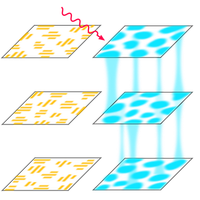
Emergence of light-induced superconducting-like state from the charge density wave state in high-Tc cuprate superconductors

Morihiko Nishida, Dongjoon Song, Alannah M. Hallas, Hiroshi Eisaki, and Ryo Shimano

Phys. Rev. B 110, 224515 (2024) - Published 19 December, 2024

A comprehensive study of light-induced superconducting-like response in the La-based cuprate superconductors La2−x−yNdySrxCuO4 and its correlation with the charge density wave states is investigated by near-infrared optical pump and terahertz probe spectroscopy. The light-induced plasma edge appears up to far above Tc with the same frequency as that of the Josephson plasma resonance of La2−xSrxCuO4 in its superconducting phase while lacking the long-range superconducting coherence, suggesting the presence of localized Cooper pairs above Tc that show up after photoexcitation.

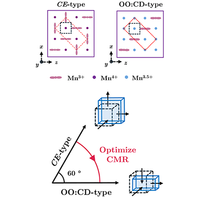
Proximity to a state with orbital order and charge disorder in optimally doped R5/8Ca3/8MnO3 perovskites

Ben R. M. Tragheim, Clemens Ritter, and Mark S. Senn

Phys. Rev. B 110, 235141 (2024) - Published 19 December, 2024

Colossal magnetoresistance (CMR) is the canonical property of the manganite perovskites to undergo dramatic changes in resistivity under applied magnetic fields. However, the reason CMR is maximised in manganites for specific doping levels and compositions, remains poorly understood. Here, via detailed analysis of the compositional and temperature dependence of symmetry-breaking strains in a series of R5/8Ca3/8MnO3 perovskites, the authors demonstrate that the maximum CMR response in this class of materials arises in proximity to a novel state that simultaneously exhibits signatures of orbital order and charge disorder.

Photoinduced phase transition on black samarium monosulfide

Hiroshi Watanabe, Yusuke Takeno, Yusuke Negoro, Ryohei Ikeda, Yuria Shibata, Yitong Chen, Takuto Nakamura, Kohei Yamagami, Yasuyuki Hirata, Yujun Zhang, Ryunosuke Takahashi, Hiroki Wadati, Kenji Tamasaku, Keiichiro Imura, Hiroyuki S. Suzuki, Noriaki K. Sato, and Shin-ichi Kimura

Phys. Rev. B 110, 245133 (2024) - Published 19 December, 2024

Samarium monosulfide (SmS) is known to present a pressure-induced phase transition (BGT) from a black-colored insulator (BI) to a golden yellow colored metal (GM). To investigate the role of excitonic instability in BGT, the authors measure here the changes in electronic structure and lattice constant after pulse-laser excitations. The photoexcitation creates a photoinduced phase slightly different from the BI state, but utterly different from the GM state, suggesting that BGT requires effects other than the appearance of excitons.

Helical edge modes in a triangular Heisenberg antiferromagnet

Bastián Pradenas, Grigor Adamyan, and Oleg Tchernyshyov

Phys. Rev. B 110, 224426 (2024) - Published 18 December, 2024

An energy or action term proportional to a topological invariant does not change under continuous variations. Although such a term does not affect classical dynamics in the bulk, it may alter boundary conditions. The authors show here that a topological energy term, allowed in a Heisenberg antiferromagnet on a triangular lattice, leads to the formation of one-way propagating magnon edge modes. They offer a realistic microscopic superexchange model that yields this topological term and helical edge modes.

Spectral density and sum rules for second-order response functions

Barry Bradlyn and Peter Abbamonte

Phys. Rev. B 110, 245132 (2024) - Published 18 December, 2024

Sum rules for response functions represent some of the few exact results in many-body physics, relating the dynamical response functions to equilibrium ground state properties. To date, however, sum rules have been examined primarily for linear response functions. In this work, the authors introduce a spectral density representation for second-order response functions, using it to systematically derive families of sum rules, including a nonlinear extension of the well-known f-sum rule. This work places important constraints on future nonlinear spectroscopic experiments.

Anisotropic, multiband, and strong-coupling superconductivity of the Pb0.64Bi0.36 alloy

Sylwia Gutowska, Karolina Górnicka, Paweł Wójcik, Tomasz Klimczuk, and Bartlomiej Wiendlocha

Phys. Rev. B 110, 214510 (2024) - Published 13 December, 2024

Pb and Pb-Bi alloys are prototypes of strongly coupled superconductors, combining fascinating physics with application potential. Electron-phonon coupling (EPC) in cubic Pb is already strong, with λ≃1.5 and Tc=7.2 K. The work here demonstrates how alloying Pb with Bi — through electron doping, a cubic-to-hexagonal phase transition, and strong spin-orbit coupling — produces an alloy with record-strong EPC (λ≃2) and a higher Tc=8.6 K. Furthermore, the alloy’s anisotropic superconducting gap structure and strong electron scattering influence its thermodynamic properties, deviating from isotropic BCS and Eliashberg theories.

Quantum embedding study of strain- and electric-field-induced Stark effects on the NV− center in diamond

Gabriel I. López-Morales, Joanna M. Zajac, Johannes Flick, Carlos A. Meriles, and Cyrus E. Dreyer

Phys. Rev. B 110, 245127 (2024) - Published 13 December, 2024

The negatively charged nitrogen vacancy (NV−) center in diamond is a well-known color center with interesting applications in nanoscale sensing and quantum metrology, due to its high sensitivity to minute local electric, magnetic, and strain fields. Motivated by these applications of the this center, the authors employ here first-principles calculations based on quantum embedding to derive a many-body description of its excited-state dipole couplings and strain susceptibilities, which underlie the electric field and strain induced Stark effects.

Minimal pole representation and analytic continuation of matrix-valued correlation functions

Lei Zhang, Yang Yu, and Emanuel Gull

Phys. Rev. B 110, 235131 (2024) - Published 12 December, 2024

The authors present here a method for analytically continuing matrix-valued correlation functions to the real axis, accurately capturing off-diagonal elements to enhance the interpretation of self-energies and susceptibilities. Based on a minimal information criterion, a selection of poles in the complex plane results in a universal noise-resistant approximation that converges reliably with increasing data precision. Comparisons with state-of-the-art techniques highlight its resolution and efficiency, establishing it as a significant advancement in computational quantum physics.

Nonreciprocal transport of thermally generated magnons

M. Cosset-Chéneau, S. H. Tirion, X.-Y. Wei, J. Ben Youssef, and B. J. van Wees

Phys. Rev. B 110, 214418 (2024) - Published 11 December, 2024

The dynamic dipolar magnetic stray fields of magnons propagating in a magnetic insulator allow for a nonreciprocity of their transmission under a ferromagnetic gate. Such a nonreciprocity has been previously detected in conventional coherent magnon transport experiments. Here, the authors show that this mechanism can also lead to a nonreciprocity of thermally generated magnon transport, that is in a dependence of the nonlocal spin Seebeck effect amplitude on the thermal gradient direction.

Hybrid skyrmions in magnetic multilayer thin films are half-integer hopfions

W. S. Parker, J. A. Reddinger, and B. J. McMorran

Phys. Rev. B 110, 224420 (2024) - Published 11 December, 2024

The magnetic skyrmions found in multilayer thin films have a three-dimensional hybrid structure with depth-dependent helicity. The authors develop here a theoretical framework for these hybrid skyrmions based on the Hopf fibration, which captures the knotted structure of their field lines. They show that hybrid skyrmions can be considered half-integer Hopfions, and use their framework to relate the topological charge of partially twisted hybrid skyrmions to their surface domain wall helicity, providing a connection between experimental measurements and underlying topology.

Entanglement entropy on generalized Brillouin zone

Zhenghao Yang, Chaoze Lu, and Xiancong Lu

Phys. Rev. B 110, 235127 (2024) - Published 11 December, 2024

The physical interpretation of entanglement entropy in non-Hermitian systems remains unclear. The authors construct here an artificial lattice by performing a Fourier transformation on the non-Bloch Hamiltonian. Interestingly, when the generalized Brillouin zone (GBZ) is circular, the authors demonstrate that the entanglement entropy on the artificial lattices is well defined (real and positive definite). For noncircular GBZ, the non-Bloch edge entanglement entropy remains real and quantized, serving as a reliable topological indicator. The non-Bloch entanglement entropy opens new possibilities for studying many-body non-Hermitian physics.

Sign In to Your Journals Account

Filter

Section

Filter

Article Lookup

Enter a citation