Highlights

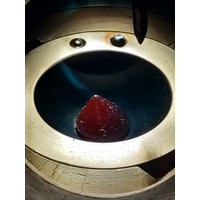
Electric field driven domain wall dynamics in BaTiO3 nanoparticles

Jialun Liu, David Yang, Ana F. Suzana, Steven J. Leake, and Ian K. Robinson

Phys. Rev. B 111, 054101 (2025) - Published 3 February, 2025

Why do nanomaterials outperform bulk materials? This study reveals how nearly strainfree surfaces in BaTiO₃ nanoparticles enhance domain-wall mobility, driving superior dielectric performance. Using Bragg coherent diffraction imaging, the authors uncover electric field driven domain-wall dynamics. They validate a “side-by-side” domain model and identify a critical threshold of 3 MV/m for irreversible changes. These findings transform our understanding of nanoscale dielectric behavior and pave the path for breakthroughs in nanoelectronics.

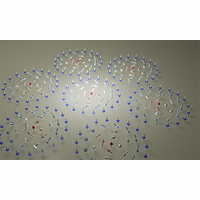
Incommensurate intervalley coherent states in ABC graphene: Collective modes and superconductivity

Yaar Vituri, Jiewen Xiao, Keshav Pareek, Tobias Holder, and Erez Berg

Phys. Rev. B 111, 075103 (2025) - Published 3 February, 2025

Here, the authors identify incommensurate intervalley fluctuations between concentric hole and electron pockets as the primary particle-hole instability in hole-doped ABC-graphene’s half-metallic state. At intermediate densities, these fluctuations lead to a low-temperature superconducting instability with a sign-changing s-wave order parameter as revealed through a generalized RPA analysis. Closer to charge neutrality, the system develops finite-momentum intervalley coherent order, followed by a transition to a valley polarized state.

Thermodynamic constraint for the electronic structure of Fe-Ni alloys at room and high temperature

Jonathan Paras and Antoine Allanore

Phys. Rev. B 111, 085105 (2025) - Published 3 February, 2025

The contribution of electrons to the entropy of metallic elements and their alloys is well established below room temperature. In this work, the authors test the performance of using an irreversible thermodynamic theory that experimentally links the transport electronic entropy to the thermopower and the number of charge carriers, to inform the total entropy of mixing of the system Fe-Ni, at both room temperature and 1273 K.

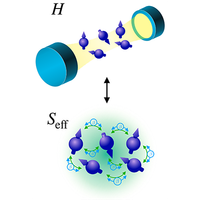
Linear response theory for cavity QED materials at arbitrary light-matter coupling strengths

Juan Román-Roche, Álvaro Gómez-León, Fernando Luis, and David Zueco

Phys. Rev. B 111, 035156 (2025) - Published 31 January, 2025

The authors develop a linear response theory for materials collectively coupled to a cavity that is valid in all regimes of light-matter coupling, including symmetry-broken phases. The response functions for the cavity and the material are obtained in terms of the respective bare responses. The theory is formulated for a general model which encompasses most of the systems typically considered in the field of cavity QED materials. It is then applied to several specific models.

Manipulation of magnetic spin textures at room temperature in a van der Waals ferromagnet

Xiong Luo, Minxia Fang, Le-Ping Miao, Junning Zhao, Zhong Shen, Wencheng Fan, Xiaoxuan Ma, Zhaocai Wang, Aoli Shen, Junchao Zhang, Haoran Ye, Yu Xing, Xiaoyan Yao, Fusheng Ma, Ni Zhong, Shixun Cao, Chungang Duan, Shuai Dong, and Linglong Li

Phys. Rev. B 111, 014442 (2025) - Published 29 January, 2025

External stimuli, such as thermal agitation and magnetic fields, disrupt order in condensed matter systems while facilitating phase transitions by overcoming energy barriers. The authors demonstrate here the manipulation of perpendicular magnetic anisotropy and long-range dipolar interactions to achieve multistate magnetic spin textures at room temperature in the van der Waals ferromagnet Fe3GaTe2. This study provides experimental evidence for topological quasiparticles in two-dimensional systems.

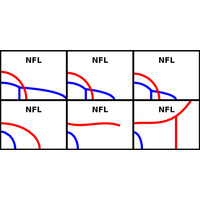
Origin of the non-Fermi-liquid behavior in CeRh2As2

P. Khanenko, D. Hafner, K. Semeniuk, J. Banda, T. Lühmann, F. Bärtl, T. Kotte, J. Wosnitza, G. Zwicknagl, C. Geibel, J. F. Landaeta, S. Khim, E. Hassinger, and M. Brando

Phys. Rev. B 111, 045162 (2025) - Published 29 January, 2025

The non-Fermi liquid (NFL) behavior often observed in heavy-fermion superconductors results from quantum critical fluctuations associated with a magnetic quantum critical point. There is growing evidence that these fluctuations are responsible for the pairing mechanism that forms the unconventional superconducting state in these systems near the QCP. In this work, the authors study the NFL behavior in the recently discovered superconductor CeRh2As2. They show that the NFL behavior is very weakly dependent on the magnetic field. This suggests a predominantly nonmagnetic origin of the quantum critical fluctuations.

Detecting slow magnetization relaxation via magnetotransport measurements based on the current-reversal method

Sebastian Beckert, Richard Schlitz, Gregor Skobjin, Antonin Badura, Miina Leiviskä, Dominik Kriegner, Daniel Scheffler, Giacomo Sala, Nadine Nabben, Xian-Yue Ai, Kamil Olejník, Lisa Michez, Vincent Baltz, Andy Thomas, Helena Reichlová, and Sebastian T. B. Goennenwein

Phys. Rev. B 111, 014441 (2025) - Published 27 January, 2025

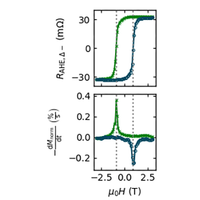
The authors present here a straightforward magnetotransport measurement based screening method for detecting slow magnetization relaxation processes in magnetic thin films. They validate the measurement scheme considering the anomalous Hall effect in a Pt/Co/AlOx trilayer as a generic example, and then extend it to study magnetization relaxation in τ-MnAl films. The experimental data show that the magnetotransport-based screening is particularly sensitive to relaxation processes occurring on timescales of several seconds, and allows for a robust detection of slow magnetic relaxation.

Transfer matrix approach for topological edge states

Rickson Wielian, Ivan Toftul, and Yuri Kivshar

Phys. Rev. B 111, 035151 (2025) - Published 27 January, 2025

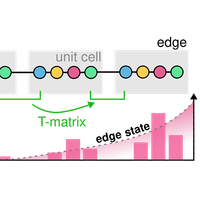
The authors present here a way to understand topological properties of periodic systems using the transfer matrix approach. This technique simplifies the connection between bulk properties and edge states, offering a clear proof of the Zak phase bulk-edge correspondence in one-dimensional systems. The authors use Su-Schrieffer-Heeger chains and more complicated dimerized photonic crystals to showcase this method, where it proves to be versatile in analyzing topological invariants and provides valuable insights into topological edge states.

Large negative magnetoresistance in the off-stoichiometric topological semimetal PrSbxTe2−x

Gokul Acharya, Krishna Pandey, M. M. Sharma, Jian Wang, Santosh Karki Chhetri, Md Rafique Un Nabi, Dinesh Upreti, Rabindra Basnet, Josh Sakon, and Jin Hu

Phys. Rev. B 111, 024421 (2025) - Published 24 January, 2025

PrSbxTe1−x, a topological semimetal with strong magnetism but no long-range order, offers a unique platform to explore the interplay between topological electronic states and magnetism. Varying composition in PrSbxTe1−x, the authors identify here strongly anisotropic and gigantic negative magnetoresistance in off-stoichiometric PrSb0.3Te1.7, in which a switching from hole- to electron-type transport occurs. The twofold anisotropy in magnetoresistance aligns with magnetism. These findings suggest that tuning electronic states via composition can yield exciting properties in magnetic topological materials, paving a way for future applications.

Soft modes in vector spin glass models on sparse random graphs

Silvio Franz, Cosimo Lupo, Flavio Nicoletti, Giorgio Parisi, and Federico Ricci-Tersenghi

Phys. Rev. B 111, 014203 (2025) - Published 23 January, 2025

The authors study here low-energy linear excitations in XY and Heisenberg spin glasses at zero temperature, considering systems defined on sparse random regular graphs. The localization properties of the soft modes are linked to the spin glass transition in a field. The authors discover a new kind of low-energy excitation, called a “Concentrated and Delocalized Low Energy Mode” (CDLEM), given that this excitation is restricted to a sub-extensive number of vertices spread over the largest possible distances.

Formation of generalized Wannier-Stark ladders: Theorem and applications

H. P. Zhang and Z. Song

Phys. Rev. B 111, 014313 (2025) - Published 23 January, 2025

For noninteracting systems, Wannier-Stark ladders (WSLs) describe electronic state quantization in crystals under constant electric fields, related to Bloch oscillations. The authors develop here a theory for interacting Hamiltonians with translational symmetry and linear potentials, possessing WSLs. They illustrate this using 1D extended Bose-Hubbard models with real and imaginary hopping strengths.

Magnetic nutation: Transient separation of magnetization from its angular momentum

Anulekha De, Julius Schlegel, Akira Lentfert, Laura Scheuer, Benjamin Stadtmüller, Philipp Pirro, Georg von Freymann, Ulrich Nowak, and Martin Aeschlimann

Phys. Rev. B 111, 014432 (2025) - Published 23 January, 2025

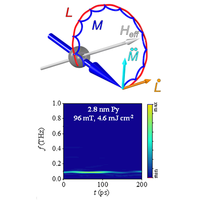
Using a TR-MOKE experiment and atomistic spin dynamics simulations, the authors show here that a sudden, incoherent, “kick” to the spin system of a ferromagnet not only triggers the well-known precession (GHz range), but also, on top, a faster nutation (sub-THz range). The separation of magnetization from angular momentum leading to nutation is an inherent phenomenon occurring during the relaxation of a nonequilibrium excitation of a magnetic system using ultrashort optical pulses. The study allows us to integrate different processes, ranging from demagnetization via nutation to precession in a single experiment.

Cavity-enhanced charge-driven feedback loop in single quantum dot photocurrent spectroscopy

M. Hohn, M. Schmidt, S. Höfling, and S. Reitzenstein

Phys. Rev. B 111, 035306 (2025) - Published 23 January, 2025

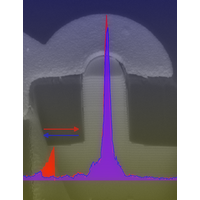
The authors investigate here a charge-driven feedback loop in single quantum dots embedded in micropillar cavities under electrical readout, where hysteresis effects are a characteristic phenomenon. They demonstrate a significant reduction in hysteresis when the quantum dot resonates with the cavity mode. This reduction arises from cavity quantum electrodynamics effects in the Purcell regime, where enhanced excitation power and competition between radiative and nonradiative recombination play a critical role. These findings offer a pathway to improving the stability and performance of quantum dot based devices, particularly in applications requiring precise control of optical and electronic properties, such as quantum communication and quantum computing systems.

Entanglement enhancement induced by noise in inhomogeneously monitored systems

Cristiano Muzzi, Mikheil Tsitsishvili, and Giuliano Chiriacò

Phys. Rev. B 111, 014312 (2025) - Published 22 January, 2025

Noise is usually seen as an obstacle to quantum coherence, but the authors uncover here a surprising phenomenon: under certain conditions, noise can enhance entanglement in quantum systems. By examining two coupled fermionic chains—one system and one ancilla—they demonstrate that fast ancilla dynamics, combined with strong noise, alters the interplay between coherence and decoherence, boosting entanglement within the system. This counterintuitive discovery opens up new pathways to exploit noise for processes in quantum information technologies.

Phase transitions in H2−HD−D2 mixtures up to 350 GPa

Haian Xu, Wan Xu, Pu Wang, Lin Liu, Xiao-Di Liu, and Eugene Gregoryanz

Phys. Rev. B 111, 024109 (2025) - Published 22 January, 2025

Solid hydrogen deuteride (HD), due to the absence of the ortho-para distinction and having a mass inbetween that of hydrogen and deuterium, is an interesting object to study and compare to the two other species. Here, the authors map out the phase diagram of a H2-HD-D2 mixture up to 350 GPa (3.5 MAtm) and between 10 and 300 K. They demonstrate the existence of the phase IV previously observed in the pure isotopes only and optically measure the mixture closing band gap as function of pressure.

Non-Majorana origin of the half-integer conductance quantization elucidated by multiterminal superconductor–quantum anomalous Hall insulator heterostructure

Anjana Uday, Gertjan Lippertz, Bibek Bhujel, Alexey A. Taskin, and Yoichi Ando

Phys. Rev. B 111, 035440 (2025) - Published 22 January, 2025

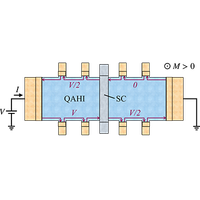
Half-integer conductance quantization due to chiral Majorana edge modes is predicted when a section of a quantum anomalous Hall insulator is proximitized by an s-wave superconductor. While such a quantization has been observed, its origin remains controversial. The new study here consists of multiterminal measurements and analyzes the data using the Landauer-Büttiker formalism. Elucidation of all the relevant edge potentials unambiguously concludes that the half-inter quantization arises from edge-state equilibration, and hence is not of Majorana origin.

Theory of ultrafast screening of U in driven charge-transfer insulators: A time-resolved x-ray absorption study

Denis Golež, Eva Paprotzki, Philipp Werner, and Martin Eckstein

Phys. Rev. B 111, 045147 (2025) - Published 22 January, 2025

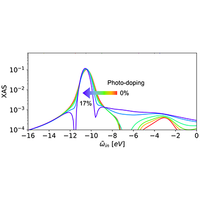
Time-resolved x-ray absorption spectroscopy (XAS) is a powerful tool for exploring ultrafast changes in electron interactions in Mott and charge transfer insulators. Recent advances in free-electron laser experiments have demonstrated that photodoping can modify effective interactions, particularly the Hubbard U, as evidenced by shifts in x-ray absorption spectra. This theoretical study, based on GW+EDMFT, reveals that dynamical screening effects induced by photodoping become evident both in a change of the position and the lineshape of the x-ray absorption spectra. This response arises from a complex interplay of multiorbital interactions and photoinduced changes in screening, highlighting the value of comparing different spectroscopic probes to investigate the nature of photoinduced screening.

Decoherence in a ballistic quantum interferometer due to the interplay of radio-frequency electromagnetic field and surface acoustic wave

Shung-Kang Koh, Ching-Ping Lee, Tzu-Kan Hsiao, Io-Chun Hoi, Yen-Hsiang Lin, Chung-Yu Mou, Dah-Chin Ling, Yung-Fu Chen, Cen-Shawn Wu, and Jeng-Chung Chen

Phys. Rev. B 111, 045150 (2025) - Published 22 January, 2025

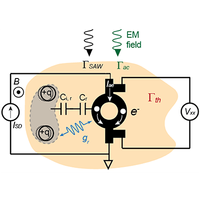
Understanding environmental noise properties helps devise strategies to minimize decoherence rates. This study investigates decoherence in an Aharonov-Bohm quantum interferometer influenced by a radio-frequency electromagnetic (RF-EM) field and surface acoustic waves (SAW). The authors examine RF-EM field-induced phase breaking without thermal heating and identify optimal SAW conditions to minimize dephasing. Decoherence arises from electric field fluctuations associated with RF-EM fields and SAWs, enhancing charge-charge interactions.

Probing Fermi surface parity with spin-resolved transverse magnetic focusing

M. J. Rendell, S. D. Liles, S. Bladwell, A. Srinivasan, O. Klochan, I. Farrer, D. A. Ritchie, O. P. Sushkov, and A. R. Hamilton

Phys. Rev. B 111, L041113 (2025) - Published 22 January, 2025

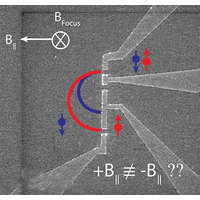
Fermi surface measurements are critical for determining the electrical and magnetic properties of solids. Typical techniques used in 2D systems such as Shubnikov–de Haas and commensurability oscillations are unable to detect changes in the parity of the Fermi surface, i.e., when E(+k) ≠ E(-k). In this work, the authors show that transverse magnetic focusing can be used to detect changes in Fermi surface parity, as focusing only measures a well defined section of the Fermi surface.

Rydberg excitons and polaritons in monolayer transition metal dichalcogenides in a magnetic field

David de la Fuente Pico, Jesper Levinsen, Emma Laird, Meera M. Parish, and Francesca Maria Marchetti

Phys. Rev. B 111, 035432 (2025) - Published 21 January, 2025

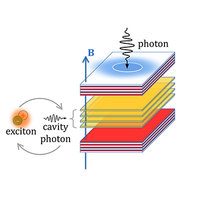
In the very strong light-matter coupling regime, the excitons in a semiconductor are intrinsically modified by the photon modes in a microcavity. A magnetic field can probe and manipulate these changes in exciton-polaritons. Here, the authors develop a microscopic theory for excitons and polaritons under strong magnetic fields in the specific case of transition metal dichalcogenide monolayers. Numerically exact solutions reveal critical deviations from perturbative models and are employed to estimate light and magnetic field effects on the particle interaction strengths.

Sign In to Your Journals Account

Filter

Section

Filter

Article Lookup

Enter a citation