Highlights

Topological central charge from Berry curvature: Gravitational anomalies in trial wave functions for topological phases

Barry Bradlyn and N. Read

Phys. Rev. B 91, 165306 (2015) - Published 20 April, 2015

The topological central charge is a property that takes the same value throughout a topological phase of matter. In this work authors show how to compute topological central charge as a Berry curvature associated with position-dependent changes in the spatial metric in the bulk of the system.

Topological invariants for gauge theories and symmetry-protected topological phases

Chenjie Wang and Michael Levin

Phys. Rev. B 91, 165119 (2015) - Published 15 April, 2015

According to a recent theoretical conjecture for a classification of symmetry protected topological (SPT) phases which can arise in a collection of lattice boson models called group cohomology models, each model belongs to a distinct SPT phase, and each SPT phase can be realized by a model. Here the authors show that for SPT phases with symmetry groups that are finite, Abelian, and unitary, each group cohomology model can be characterized by a unique set of topological invariants and therefore belongs to a distinct SPT phase. In two dimensions it is further shown that the complete set of group cohomology models accounts for all SPT phases, while in three dimensions evidence pointing toward such a proof is found.

Heat-flux control and solid-state cooling by regulating chemical potential of photons in near-field electromagnetic heat transfer

Kaifeng Chen, Parthiban Santhanam, Sunil Sandhu, Linxiao Zhu, and Shanhui Fan

Phys. Rev. B 91, 134301 (2015) - Published 13 April, 2015

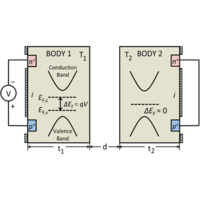
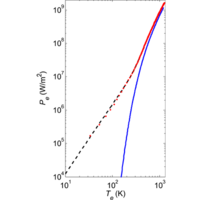
Near-field electromagnetic heat transfer is studied in a theoretical semiconductor heterojunction system in the presence of a non-zero chemical potential (via a bias voltage). Changing the potential enables electronic control of near-field heat transfer and suggests a novel and very exciting new possibility for achieving solid-state cooling, a holy grail in thermal science.

New material for probing spin-orbit coupling in iridates

Brendan F. Phelan, Jason Krizan, Weiwei Xie, Quinn Gibson, and R. J. Cava

Phys. Rev. B 91, 155117 (2015) - Published 13 April, 2015

Synthesis of a new material in the iridate family with a continuously tunable valence of Ir shows the dominant role played by spin-orbit coupling in determining the magnetic properties.

Surface band structure of Bi1−xSbx(111)

Hadj M. Benia, Carola Straßer, Klaus Kern, and Christian R. Ast

Phys. Rev. B 91, 161406(R) (2015) - Published 13 April, 2015

The much debated topology of Bi1-xSbx has been resolved in this very careful and thorough experiment. The authors optimized the Bi1-xSbx growth method and minimized surface imperfections. They performed direct measurements of the surface band structure and followed its evolution within a large window of Sb concentration. They did not detect a third surface band seen in previous experiments. Thus, they conclude that the experimental surface band structure of B1-xSbx in the topologically insulating regime now agrees well with the theoretical predictions.

Spinon confinement in the one-dimensional Ising-like antiferromagnet SrCo2V2O8

Zhe Wang, M. Schmidt, A. K. Bera, A. T. M. N. Islam, B. Lake, A. Loidl, and J. Deisenhofer

Phys. Rev. B 91, 140404(R) (2015) - Published 9 April, 2015

Using high resolution THz spectroscopy, the authors study spinon confinement in the weakly coupled antiferromagnetic chain compound SrCo2V2O8. The confined spinons appear in a hierarchy that can be fully described by a one dimensional Schrödinger equation with a linear confinement potential.

Tunable terahertz frequency comb generation using time-dependent graphene sheets

Vincent Ginis, Philippe Tassin, Thomas Koschny, and Costas M. Soukoulis

Phys. Rev. B 91, 161403(R) (2015) - Published 8 April, 2015

In addition to its extraordinary mechanical, thermal and electrical properties, graphene shows great potential in manipulating electromagnetic fields. One of the main advantages of graphene compared to other materials is the extraordinary tunability of its conductivity, which can be achieved electrically by means of a back gate, or optically through the excitation of photocarriers. Scientists from Belgium, Sweden and the United States demonstrate that this tunability of graphene can be used in a novel setup for the generation of frequency combs. Traditionally, frequency combs are generated using nonlinear materials. The researchers studied the interaction between light and time-dependent graphene sheets, including both dispersion and explicit time-dependence of the conductivity. Based on this model, they demonstrated that frequency combs can be generated without material nonlinearities. Indeed, at terahertz frequencies it is possible to modulate the linear, time-dependent conductivity of graphene to obtain a large variety of frequency combs.

State-selective intersystem crossing in nitrogen-vacancy centers

M. L. Goldman, M. W. Doherty, A. Sipahigil, N. Y. Yao, S. D. Bennett, N. B. Manson, A. Kubanek, and M. D. Lukin

Phys. Rev. B 91, 165201 (2015) - Published 8 April, 2015

Motivated by recent measurements of state-selective intersystem crossing (ISC) in the nitrogen-vacancy (NV) center in diamond (see companion PRL), a new microscopic model is developed of the key ISC mechanism. These nonradiative transitions between states of different spin multiplicity are pivotal in the optical initialization and readout of the NV center’s electronic spin, which has created a diverse range of room-temperature applications in metrology and quantum information science.

Emergence of the nematic electronic state in FeSe

M. D. Watson, T. K. Kim, A. A. Haghighirad, N. R. Davies, A. McCollam, A. Narayanan, S. F. Blake, Y. L. Chen, S. Ghannadzadeh, A. J. Schofield, M. Hoesch, C. Meingast, T. Wolf, and A. I. Coldea

Phys. Rev. B 91, 155106 (2015) - Published 7 April, 2015

Improvements in experimental resolution allow this group to elucidate how the electronic nematic transition evolves in FeSe. They observe the changing Fermi surface, the position of the lowest energy electronic excitations, as well as the propensity towards nematic order and its manifestation under strain.

Classification and description of bosonic symmetry protected topological phases with semiclassical nonlinear sigma models

Zhen Bi, Alex Rasmussen, Kevin Slagle, and Cenke Xu

Phys. Rev. B 91, 134404 (2015) - Published 6 April, 2015

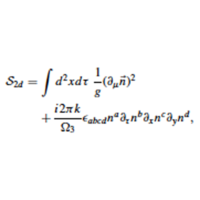
Using semiclassical nonlinear sigma model techniques the authors classify a broad class of bosonic symmetry protected topological phases. This construction works in all dimensions.

Photoemission and x-ray absorption studies of the isostructural to Fe-based superconductors diluted magnetic semiconductor Ba1−xKx(Zn1−yMny)2As2

H. Suzuki, K. Zhao, G. Shibata, Y. Takahashi, S. Sakamoto, K. Yoshimatsu, B. J. Chen, H. Kumigashira, F.-H. Chang, H.-J. Lin, D. J. Huang, C. T. Chen, Bo Gu, S. Maekawa, Y. J. Uemura, C. Q. Jin, and A. Fujimori

Phys. Rev. B 91, 140401(R) (2015) - Published 6 April, 2015

Diluted magnetic semiconductors have attracted much attention as candidates for spintronic devices after the discovery of ferromagnetism in Mn-doped GaAs. However, the limited chemical solubility of the magnetic element Mn together with the inability to control carrier density independently of the magnetic element concentration are major obstacles to material design and applications. The newly found diluted magnetic semiconductor Ba1-yKy(Zn1-xMnx)2As2, which has the same crystal structure as the iron-based superconductor BaFe2As2, circumvents these problems and exhibits ferromagnetic transition temperatures as high as 230 K. Using x-ray absorption and resonance photoemission spectroscopy this group explicitly demonstrates that the ThCr2Si2-type crystal structure is an ideal framework both for high-temperature superconductivity and for ferromagnetism, and that the carrier-induced ferromagnetism of GaMnAs is operating in other ferromagnetic semiconductors.

Emergence of ferroelectricity and spin-valley properties in two-dimensional honeycomb binary compounds

Domenico Di Sante, Alessandro Stroppa, Paolo Barone, Myung-Hwan Whangbo, and Silvia Picozzi

Phys. Rev. B 91, 161401(R) (2015) - Published 6 April, 2015

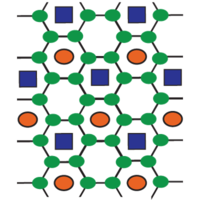
First-principles calculations presented in this Rapid Communication suggest that a number of AB binary honeycomb monolayers should be ferroelectric. Dipoles arise from the buckled structure, and the polarization reversal occurs via switching the structural buckling which can be triggered by an external electric field. The authors address the emerging valley-dependent properties arising from the ferroelectric bistability and explore the intimate link between ferroelectricity, spin-valley physics, and Rashba spin-splitting phenomena.

Weyl semimetal from spontaneous inversion symmetry breaking in pyrochlore oxides

Tomáš Bzdušek, Andreas Rüegg, and Manfred Sigrist

Phys. Rev. B 91, 165105 (2015) - Published 6 April, 2015

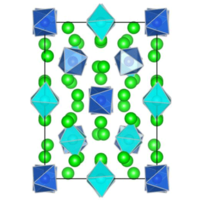
Most of the previously suggested scenarios for the realization of Weyl semimetal on a pyrochlore lattice require breaking of time-reversal symmetry. In this study the authors show that spontaneous deformations of the crystal that break the inversion symmetry can stabilize this phase as well. They demonstrate that in the temperature-elasticity phase diagram Weyl semimetal shows a reentrant behavior.

Enhanced nonlinear optical response from individual silicon nanowires

Peter R. Wiecha, Arnaud Arbouet, Houssem Kallel, Priyanka Periwal, Thierry Baron, and Vincent Paillard

Phys. Rev. B 91, 121416(R) (2015) - Published 31 March, 2015

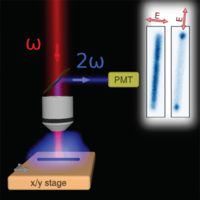
Semiconductor nanostructures, such as arrays of Si nanowires, are promising candidates for photonic and photovoltaic applications where light management and light trapping abilities are essential. A significant aspect for the development of such functionality is understanding the electromagnetic field distribution around the nanostructures. In this Rapid Communication, a collaboration of researchers from Toulouse and Grenoble use nonlinear microscopy on isolated silicon nanowires in order to study the local electromagnetic field morphology. They find that the second harmonic generation yield in Si nanowires can be strongly enhanced compared to bulk silicon.

Kekulé textures, pseudospin-one Dirac cones, and quadratic band crossings in a graphene-hexagonal indium chalcogenide bilayer

Gianluca Giovannetti, Massimo Capone, Jeroen van den Brink, and Carmine Ortix

Phys. Rev. B 91, 121417(R) (2015) - Published 31 March, 2015

Density functional theory calculations of the electronic properties of graphene-hexagonal indium telluride superlattices predicts two inequivalent geometrical structures that are almost degenerate in energy. These structures give rise to either gapped states in Kekule phase or gapless states in reconstructed graphene Dirac cones. The results of this study will be useful for exploring the possibility of many-body instabilities in two-dimensional systems.

General microscopic model of magnetoelastic coupling from first principles

X. Z. Lu, Xifan Wu, and H. J. Xiang

Phys. Rev. B 91, 100405(R) (2015) - Published 30 March, 2015

Magnetoelastic coupling describes the interaction between the magnetic degrees of freedom of a material and its strain. This Rapid Communication presents a microscopic model of magnetoelasticity in which all parameters are derived from first-principles calculations. In application to multiferroic materials, the model reveals a new contribution to the electric polarization that appears as a combination of the magnetoelastic and piezoelectric effects. Surprisingly, in the prototypical multiferroic material BiFeO3 the new effect is responsible for a significant share of the total polarization and exceeds the known ionic and electronic contributions.

Coupling between electrons and optical phonons in suspended bilayer graphene

Antti Laitinen, Manohar Kumar, Mika Oksanen, Bernard Plaçais, Pauli Virtanen, and Pertti Hakonen

Phys. Rev. B 91, 121414(R) (2015) - Published 27 March, 2015

The electron-phonon scattering dominated heat dissipation is difficult to observe in graphene due to the role of impurities in scattering processes. Owing to the suppression of flexural-mode-induced supercollisions in suspended bilayer graphene, the authors of this paper are able to demonstrate that the intrinsic electron-optical phonon coupling governs the heat flow in suspended bilayer graphene samples.

Using electron vortex beams to determine chirality of crystals in transmission electron microscopy

Roeland Juchtmans, Armand Béché, Artem Abakumov, Maria Batuk, and Jo Verbeeck

Phys. Rev. B 91, 094112 (2015) - Published 26 March, 2015

Chiral crystals come in left- and right-handed forms. Methods for using electron diffraction to determine crystal chirality have heretofore required the use of multiple scattering and depended sensitively on the sample thickness. Here it is shown that these constraints can be removed with the use of electron vortex beams (which carry orbital angular momentum) in a transmission electron microscope. In accordance with theoretical expectation, the chirality of a sample of Mn2Sb2O7 is experimentally determined.

X-ray induced lock-in transition of cycloidal magnetic order in a multiferroic perovskite manganite

Y. Yamasaki, H. Nakao, Y. Murakami, T. Nakajima, A. Lafuente Sampietro, H. Ohsumi, M. Takata, T. Arima, and Y. Tokura

Phys. Rev. B 91, 100403(R) (2015) - Published 24 March, 2015

Gd1-xTbxMnO3 oxides are characterized by two main competing states that exhibit both ferroelectric and multiferroic ordering. Both states involve cycloidal magnetic order that drives ferroelectricity. In their new article, a collaboration of researchers from Japan discovered that exposure of Gd0.5Tb0.5MnO3 to x-ray irradiation induces a reversible transition into a new hidden state, which is also characterized by cycloidal order, but with a different modulation wave vector. The ability to manipulate the state with x-rays suggests a novel route for photocontrol of multiferroic materials.

Coexistence of electron-glass phase and persistent photoconductivity in GeSbTe compounds

Z. Ovadyahu

Phys. Rev. B 91, 094204 (2015) - Published 23 March, 2015

Using infrared excitation at cryogenic temperatures in thin films of GeSbTe compounds, the authors observe persistent-photoconductivity (charge generation by exposure to light without change of stoichiometry) in a material that also exhibits intrinsic electron-glass behavior and has high carrier concentration.

Sign In to Your Journals Account

Filter

Section

Filter

Article Lookup

Enter a citation