Highlights

Engineering two-dimensional electron gases at the (001) and (101) surfaces of TiO2 anatase using light

T. C. Rödel, F. Fortuna, F. Bertran, M. Gabay, M. J. Rozenberg, A. F. Santander-Syro, and P. Le Fèvre

Phys. Rev. B 92, 041106(R) (2015) - Published 8 July, 2015

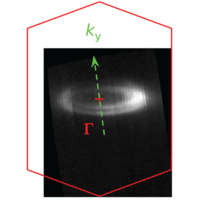
Angle-resolved photoemission shows the existence of two-dimensional metallic states of confined itinerant electrons at the (001) and (101) surfaces of insulating TiO2 anatase. This is a material of much current interest, as a photocatalyst or a transparent conducting oxide, for instance. The 2D electron gases come from the formation of oxygen vacancies in the near-surface region, created by exposure to ultraviolet irradiation. The results here open a route to nano-engineering these confined electronic states using ultraviolet light, controlling their metallic or insulating nature.

Questioning the existence of superconducting potassium doped phases for aromatic hydrocarbons

Satoshi Heguri, Mototada Kobayashi, and Katsumi Tanigaki

Phys. Rev. B 92, 014502 (2015) - Published 7 July, 2015

It was reported earlier that alkali metal doped picene shows superconductivity at rather high temperatures. In this paper the authors have prepared such materials and thoroughly analyzed them using a variety of measurements. They conclude that superconductivity in doped hydrocarbons is questionable, casting doubts on the previous interpretation of the data.

Evidence of quantum dimer excitations in Sr3Ir2O7

M. Moretti Sala, V. Schnells, S. Boseggia, L. Simonelli, A. Al-Zein, J. G. Vale, L. Paolasini, E. C. Hunter, R. S. Perry, D. Prabhakaran, A. T. Boothroyd, M. Krisch, G. Monaco, H. M. Rønnow, D. F. McMorrow, and F. Mila

Phys. Rev. B 92, 024405 (2015) - Published 6 July, 2015

Sr3Ir2O7 is a member of the iridate Ruddlesden-Popper series Srn+1IrnO3n+1 with electronic properties that interpolate between the insulating single-layer Sr2IrO4 (n=1) and a metallic compound SrIrO3 (n=∞). Using resonant inelastic X-ray scattering (RIXS) experiments, the authors reveal a new magnetic mode and propose a model based on weakly coupled quantum dimers to describe the observed excitation spectrum.

Magnetic charges and magnetoelectricity in hexagonal rare-earth manganites and ferrites

Meng Ye and David Vanderbilt

Phys. Rev. B 92, 035107 (2015) - Published 6 July, 2015

The authors study magneto-electric properties of several hexagonal manganites and ferrites (HoMnO3, ErMnO3, YbMnO3, LuMnO3, and LuFeO3). By disentangling the contributions of exchange striction and the spin-orbit coupling, they propose HoMnO3 as a promising candidate material with magneto-electric coefficient reaching 15 ps/m.

Generic fixed point model for pseudo-spin-12 quantum dots in nonequilibrium: Spin-valve systems with compensating spin polarizations

Stefan Göttel, Frank Reininghaus, and Herbert Schoeller

Phys. Rev. B 92, 041103(R) (2015) - Published 6 July, 2015

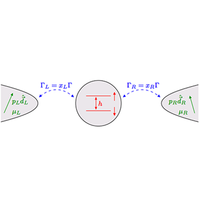
The authors study a generic quantum dot close to the particle-hole symmetric point. By first mapping the model onto an equivalent two-level system coupled to spin-polarized leads, they are able to study the system as a function of magnetic field at large bias voltage. Doing so they are able to identify a non-equilibrium fixed point of the model.

Anisotropic magnetotransport and exotic longitudinal linear magnetoresistance in WTe2 crystals

Yanfei Zhao, Haiwen Liu, Jiaqiang Yan, Wei An, Jun Liu, Xi Zhang, Huichao Wang, Yi Liu, Hua Jiang, Qing Li, Yong Wang, Xin-Zheng Li, David Mandrus, X. C. Xie, Minghu Pan, and Jian Wang

Phys. Rev. B 92, 041104(R) (2015) - Published 6 July, 2015

The tungsten ditelluride WTe2 semimetal is known for if its extremely large magnetoresistance. The authors measure the angular dependence of this magnetoresistance and find that when the magnetic field is applied parallel to the tungsten chains (along the a axis), the very large magnetoresistance (as high as 1200% at 15 T and 2 K) no longer exhibits a conventional quadratic but rather a linear field dependence.

Beyond double-resonant Raman scattering: Ultraviolet Raman spectroscopy on graphene, graphite, and carbon nanotubes

Christoph Tyborski, Felix Herziger, Roland Gillen, and Janina Maultzsch

Phys. Rev. B 92, 041401(R) (2015) - Published 1 July, 2015

The study of Raman scattering processes in the ultraviolet excitation energy range is not common in carbon-based materials. This paper reports that the widely known double-resonant Raman scattering, which is dominant in the visible excitation energy in these materials, is suppressed in the UV range. This is an important development because one can now measure two-phonon densities of states that were not accessible before. The results demonstrate the high potential of UV Raman spectroscopy for research on graphitic nanocarbons.

Efficient continuous-time quantum Monte Carlo method for the ground state of correlated fermions

Lei Wang, Mauro Iazzi, Philippe Corboz, and Matthias Troyer

Phys. Rev. B 91, 235151 (2015) - Published 30 June, 2015

While efficient algorithms exist for the simulation of bosons simulations of fermions are more challenging because of the infamous fermion sign problem. In this paper the authors take a step toward solution and develop continuous-time quantum Monte Carlo algorithm for lattice fermions that scales linearly with projection time and interaction strength. This method is benchmarked on the problem of the fermionic quantum critical point of spinless fermions on a honeycomb lattice.

Solving the fermion sign problem in quantum Monte Carlo simulations by Majorana representation

Zi-Xiang Li, Yi-Fan Jiang, and Hong Yao

Phys. Rev. B 91, 241117(R) (2015) - Published 30 June, 2015

Much attention has been devoted recently to identify possible ways to overcome the notorious sign problem encountered in quantum Monte Carlo simulations. The authors of this paper propose a new method based on Majorana representation of complex fermions, which they dub Majorana Quantum Monte Carlo (MQMC). They find a class of SU(N) fermionic models which are sign-free in MQMC but cannot be solved with other available methods.

Field-direction control of the type of charge carriers in nonsymmorphic IrO2

M. Uchida, W. Sano, K. S. Takahashi, T. Koretsune, Y. Kozuka, R. Arita, Y. Tokura, and M. Kawasaki

Phys. Rev. B 91, 241119(R) (2015) - Published 30 June, 2015

Nonsymmorphic materials, which possess special symmetry operations (screw rotation, glide mirror), have been theoretically reexamined in recent years for possible novel quantum phases or electronic functions derived from the symmetry requirements. Here, the authors demonstrate that in the typical nonsymmorphic material IrO2, the type of charge carrier (electron or hole) is strongly dependent on the crystal orientation and capable of being switched by a magnetic field. This remarkable effect is seen in electrical transport measurements on various thin films supported by simple tight-binding and band structure calculations.

Dislocation core reconstruction induced by carbon segregation in bcc iron

Lisa Ventelon, B. Lüthi, E. Clouet, L. Proville, B. Legrand, D. Rodney, and F. Willaime

Phys. Rev. B 91, 220102(R) (2015) - Published 29 June, 2015

Dislocations are central to the understanding of plasticity in metals. Using density functional theory the authors show that interstitial carbon atoms in ferritic steels stabilize a dislocation core configuration called a hard core which is otherwise unstable. Since, as they also show, at equilibrium all dislocations are expected to be fully decorated by carbon atoms, this has important implications for the understanding of plasticity in ferritic steels. It is expected that the picture developed here could also be applicable to other solutes besides carbon and to other metals besides iron.

Phase transition in bulk single crystals and thin films of VO2 by nanoscale infrared spectroscopy and imaging

Mengkun Liu, Aaron J. Sternbach, Martin Wagner, Tetiana V. Slusar, Tai Kong, Sergey L. Bud'ko, Salinporn Kittiwatanakul, M. M. Qazilbash, Alexander McLeod, Zhe Fei, Elsa Abreu, Jingdi Zhang, Michael Goldflam, Siyuan Dai, Guang-Xin Ni, Jiwei Lu, Hans A. Bechtel, Michael C. Martin, Markus B. Raschke, Richard D. Averitt, Stuart A. Wolf, Hyun-Tak Kim, Paul C. Canfield, and D. N. Basov

Phys. Rev. B 91, 245155 (2015) - Published 29 June, 2015

Infrared spectroscopy of VO2 thin films at high spatial resolution shows new electronic and lattice states due to epitaxial strain that differ fundamentally from those in the bulk. This is the first ultra-broadband infrared near-field study of a correlated electron material, made possible by the newly developed synchrotron infrared near-field spectroscopy method (SINS) on the Advanced Light Source at Lawrence Berkeley National Laboratory.

Analytical theory for proton correlations in common-water ice Ih

S. V. Isakov, R. Moessner, S. L. Sondhi, and D. A. Tennant

Phys. Rev. B 91, 245152 (2015) - Published 25 June, 2015

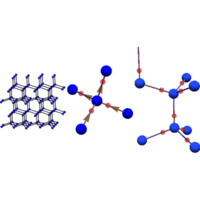
The authors study the proton correlations present in water ice in its ice rule phase Ih. Using an effective field theory, an analytic form for the correlation function is derived and then compared against numerics, showing excellent agreement. This field theory is argued to be a U(1) gauge theory in its deconfined Coulomb phase.

Effect of electron-phonon interaction on the formation of one-dimensional electronic states in coupled Cl vacancies

Bruno Schuler, Mats Persson, Sami Paavilainen, Niko Pavliček, Leo Gross, Gerhard Meyer, and Jascha Repp

Phys. Rev. B 91, 235443 (2015) - Published 24 June, 2015

The formation of extended electron states in one-dimensional nanostructures is of key importance for the function of molecular electronics devices. In this paper, using a combination of atomic force microscopy, scanning tunneling spectroscopy, and tight-binding calculations the authors investigate the confinement of electronic states to controlled Cl vacancy pairs in a NaCl bilayer on Cu(111). They reveal that electron-phonon coupling has great influence on these quantities.

Continuous Mott transition between a metal and a quantum spin liquid

Ryan V. Mishmash, Iván González, Roger G. Melko, Olexei I. Motrunich, and Matthew P. A. Fisher

Phys. Rev. B 91, 235140 (2015) - Published 23 June, 2015

Can the two-dimensional interaction driven Mott metal-insulator transition be continuous? Motivated by experiments on quasi two-dimensional organics that may show such a transition the authors study a two-leg triangular Hubbard strip. They argue that this model harbors a continuous Kosterlitz-Thouless-like quantum phase transition between a metal and a gapless spin liquid.

Analytic derivation of electrostrictive tensors and their application to optical force density calculations

Wujiong Sun, S. B. Wang, Jack Ng, Lei Zhou, and C. T. Chan

Phys. Rev. B 91, 235439 (2015) - Published 23 June, 2015

A theoretical formalism is developed to calculate the optical force induced within a 2D metamaterial, based on the electrostrictive tensor. It turns out that it is not always straightforward to use the usual effective-medium parameters ϵ and μ of the metamaterial for obtaining the body force density. The findings are tested via a 2D array of parallel infinitely long dielectric cylinders and the analytical theory is in excellent agreement with numerics. The correct stress tensor to describe the force density in an effective medium is the Helmholtz one rather than the Maxwell. The theory, though, is not exact and points to a fundamental limitation of effective medium theory in describing light-induced body forces.

Ferroelectric soft mode of polar ZnTiO3 investigated by Raman spectroscopy at high pressure

J. Ruiz-Fuertes, B. Winkler, T. Bernert, L. Bayarjargal, W. Morgenroth, M. Koch-Müller, K. Refson, V. Milman, and N. Tamura

Phys. Rev. B 91, 214110 (2015) - Published 22 June, 2015

Polar zinc titanate (ZnTiO3) is a promising lead-free ferroelectric compound with high spontaneous polarization of 75 μC/cm2, which is comparable with that of PbTiO3. In this work a collaboration of researchers from Germany, UK, and USA present a detailed investigation of vibrational properties of ZnTiO3 via the high-pressure Raman spectroscopy, second-harmonic generation, and ab initio calculations.

Copper-substituted iron telluride: A phase diagram

Patrick N. Valdivia, Min Gyu Kim, Thomas R. Forrest, Zhijun Xu, Meng Wang, Hui Wu, Leland W. Harringer, Edith D. Bourret-Courchesne, and Robert J. Birgeneau

Phys. Rev. B 91, 224424 (2015) - Published 22 June, 2015

Thorough experimental investigations from this group provide new data and cogent understanding of the effects of copper substitution in iron telluride over a broad substitution range. They also show how subtle changes in copper substitution and an applied magnetic field modify the low-temperature magnetic and structural phases in these materials, as well as the nature of the transitions into these phases.

Optical dielectric function of silver

Honghua U. Yang, Jeffrey D'Archangel, Michael L. Sundheimer, Eric Tucker, Glenn D. Boreman, and Markus B. Raschke

Phys. Rev. B 91, 235137 (2015) - Published 22 June, 2015

Using broadband spectroscopic ellipsometry, the authors determine the complex valued dielectric function of silver films from 0.05 eV (λ=25 μ) to 4.14 eV (λ = 300 nm) with a statistical uncertainty of less than 1%. While several previous similar measurements exist, they span considerably shorter energy ranges and report partially inconsistent results. In view of the wide-ranging applications of silver in nanophotonics, plasmonics and optical metamaterials, we anticipate this paper to become a standard reference for many scientists and engineers.

Quantum spin Hall effect in two-dimensional transition-metal dichalcogenide haeckelites

S. M. Nie, Zhida Song, Hongming Weng, and Zhong Fang

Phys. Rev. B 91, 235434 (2015) - Published 19 June, 2015

This works brings us a step closer towards the realization of the quantum spin Hall (QSH) effect. Using electronic structure calculations, the authors suggest that a family of the single-layer 2D transition metal dichalcogenide haeckelites MX2 (M=W or Mo, X=S, Se, or Te) can host the QSH effect at high temperatures. Their work also implies that a square-lattice 2D material can host a nontrivial topological state, thus, extending the search boundaries for topological materials beyond the ones with a hexagonal lattice.

Sign In to Your Journals Account

Filter

Section

Filter

Article Lookup

Enter a citation