Highlights

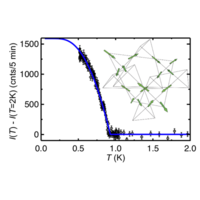
Unstable spin-ice order in the stuffed metallic pyrochlore Pr2+xIr2−xO7−δ

D. E. MacLaughlin, O. O. Bernal, Lei Shu, Jun Ishikawa, Yosuke Matsumoto, J.-J. Wen, M. Mourigal, C. Stock, G. Ehlers, C. L. Broholm, Yo Machida, Kenta Kimura, Satoru Nakatsuji, Yasuyuki Shimura, and Toshiro Sakakibara

Phys. Rev. B 92, 054432 (2015) - Published 24 August, 2015

The authors study the stuffed metallic pyrochlore Pr2+xIr2-xO7-δ through specific heat, elastic neutron scattering, and muon spin rotation (μSR) measurements. They consider the question of why the static local field (Bloc) as measured in μSR is so small. They weigh two possible theories, the fluctuating-moment picture and the suppressed-moment picture, and argue that the available evidence leans toward the former, while stating that regardless of picture, this pyrochlore is very close to a magnetic-nonmagnetic critical point.

(Li0.84Fe0.16)OHFe0.98Se superconductor: Ion-exchange synthesis of large single-crystal and highly two-dimensional electron properties

Xiaoli Dong, Kui Jin, Dongna Yuan, Huaxue Zhou, Jie Yuan, Yulong Huang, Wei Hua, Junliang Sun, Ping Zheng, Wei Hu, Yiyuan Mao, Mingwei Ma, Guangming Zhang, Fang Zhou, and Zhongxian Zhao

Phys. Rev. B 92, 064515 (2015) - Published 24 August, 2015

Using a novel hydrothermal ion-exchange technique, large and high-quality optimally doped single crystals of the new superconductor (Li0.84Fe0.16)OHFe0.98Se have been successfully synthesized for the first time. Thanks to these single-crystal samples, the anomalous normal-state properties of a linear in-plane electric resistivity, a dip in the Hall coefficient, and a linear magnetic susceptibility are revealed for the first time.

Chiral degeneracies and Fermi-surface Chern numbers in bcc Fe

Daniel Gosálbez-Martínez, Ivo Souza, and David Vanderbilt

Phys. Rev. B 92, 085138 (2015) - Published 21 August, 2015

Using bcc Fe as a playground, the authors investigate the presence of chiral degeneracies in realistic band structures of ferromagnetic materials. They find ubiquitous Weyl points and demonstrate that Chern numbers can be transferred between Fermi sheets by varying the Fermi level or an external parameter such as the magnetization direction.

Quantum oscillations in the heavy-fermion compound YbPtBi

E. Mun, S. L. Bud'ko, Y. Lee, C. Martin, M. A. Tanatar, R. Prozorov, and P. C. Canfield

Phys. Rev. B 92, 085135 (2015) - Published 20 August, 2015

Heavy fermion systems are useful for studying quantum criticality because the low energy scale associated with their large effective mass can be tuned by nonthermal control parameters. Here, Shubnikov-de Haas oscillations are observed in YbPtBi, a heavy fermion compound with an exceptionally large effective mass for electrons, at a high magnetic field that reveals the shape of the Fermi surface. In the future these observations, when combined with additional data at lower magnetic fields, could provide important information about quantum criticality in these systems.

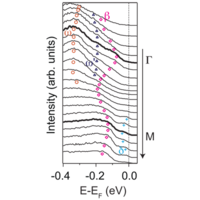
Surface electronic structure and isotropic superconducting gap in (Li0.8Fe0.2)OHFeSe

X. H. Niu, R. Peng, H. C. Xu, Y. J. Yan, J. Jiang, D. F. Xu, T. L. Yu, Q. Song, Z. C. Huang, Y. X. Wang, B. P. Xie, X. F. Lu, N. Z. Wang, X. H. Chen, Z. Sun, and D. L. Feng

Phys. Rev. B 92, 060504(R) (2015) - Published 18 August, 2015

To understand the pairing symmetry and superconducting transition temperature in heavily electron-doped iron-based superconductors, it is important to study more of these materials, especially ones with decent stability in air and without phase separation. Here, angle-resolved photoemission spectroscopy probes the surface electronic structure and superconducting gap in the new superconductor (Li0.8Fe0.2)OHFeSe, which shows a Tc as high as 40 K.

Axial anomaly and longitudinal magnetoresistance of a generic three-dimensional metal

Pallab Goswami, J. H. Pixley, and S. Das Sarma

Phys. Rev. B 92, 075205 (2015) - Published 17 August, 2015

Longitudinal magnetoresistance has recently been used as an experimental tool to identify exotic topological phases such as Weyl semimetals. The authors of this paper show that in the presence of certain scattering mechanisms generic materials can demonstrate similar characteristics as well, including negative longitudinal magnetoresistance.

Muonium donor in rutile TiO2 and comparison with hydrogen

R. C. Vilão, R. B. L. Vieira, H. V. Alberto, J. M. Gil, A. Weidinger, R. L. Lichti, B. B. Baker, P. W. Mengyan, and J. S. Lord

Phys. Rev. B 92, 081202(R) (2015) - Published 17 August, 2015

Muonium is like hydrogen, but with a positively charged muon instead of a proton at the center. Observing muon spin rotation in a single crystal of TiO2, and comparing to existing data for hydrogen, the authors demonstrate that the defect configuration and electronic structure are the same for both. This provides important support for research which uses muons as a substitute for hydrogen in semiconductors.

Multifractal orthogonality catastrophe in one-dimensional random quantum critical points

Romain Vasseur and Joel E. Moore

Phys. Rev. B 92, 054203 (2015) - Published 14 August, 2015

The authors in this work consider the orthogonality catastrophe in a new context, that of disordered quantum spin chains. Here the orthogonality catastrophe arises from measuring the overlap of the spin chain’s ground state before and after cutting the system into two. Unlike the orthogonality catastrophe in a metal, here the orthogonality catastrophe exhibits multifractality: different disorder-averaged moments of the overlap exhibit different scaling exponents with system size.

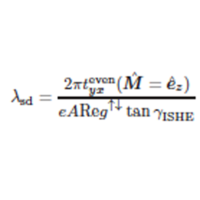
Direct and inverse spin-orbit torques

Frank Freimuth, Stefan Blügel, and Yuriy Mokrousov

Phys. Rev. B 92, 064415 (2015) - Published 12 August, 2015

The connection between the spin-orbit torque (SOT) and inverse spin-orbit torque (ISOT) in systems without inversion symmetry is studied by combining phenomenological models, diffusion theory, and density functional theory. Using this, DFT calculations on Co/Pt(111) magnetic bilayers expose the mechanisms underlying SOT and ISOT and highlight their reciprocity on the microscopic level.

Magnetoresistance quantum oscillations in a magnetic two-dimensional electron gas

J. Kunc, B. A. Piot, D. K. Maude, M. Potemski, R. Grill, C. Betthausen, D. Weiss, V. Kolkovsky, G. Karczewski, and T. Wojtowicz

Phys. Rev. B 92, 085304 (2015) - Published 12 August, 2015

At low temperatures, the longitudinal resistivity of metallic systems exhibits quantum oscillations when submitted to a sufficiently high magnetic field. The authors report magneto-transport study of a high quality magnetic two-dimensional electron gas formed in a diluted magnetic CdMnTe quantum well. They find that the Shubnikov-de Haas characteristics is well-described by incorporating the electron Mn exchange interaction into the traditional Lifshitz-Kosevich formalism in a “mean field” approach.

Quantized topological magnetoelectric effect of the zero-plateau quantum anomalous Hall state

Jing Wang, Biao Lian, Xiao-Liang Qi, and Shou-Cheng Zhang

Phys. Rev. B 92, 081107(R) (2015) - Published 10 August, 2015

Motivated by the possibility of experimental detection of the topological magnetoelectric effect the authors put forth a theoretical proposal for its realization in the zero plateau quantum anomalous Hall state of a ferromagnet-topological insulator heterostructure.

Spin dynamics in pressure-induced magnetically ordered phases in (C4H12N2)Cu2Cl6

G. Perren, J. S. Möller, D. Hüvonen, A. A. Podlesnyak, and A. Zheludev

Phys. Rev. B 92, 054413 (2015) - Published 7 August, 2015

Organic molecular magnets like piperazinium hexachlorodicuprate (PHCC) have attracted interest due to their sensitivity to pressure which presents possibilities for pressure-induced quantum phase transitions. Previous neutron and muon studies of PHCC gave differing indications of how the spin gap in this material varied with applied pressure. The authors of this work have resolved this discrepancy by further neutron scattering results showing that the spin gap has dissipated completely by 9 kbar, in agreement with the previous muon data. The authors also present a model in which the results are explained by the weakening of a single exchange pathway.

Topological magnetoelectric effects in thin films of topological insulators

Takahiro Morimoto, Akira Furusaki, and Naoto Nagaosa

Phys. Rev. B 92, 085113 (2015) - Published 7 August, 2015

The authors describe two theoretical setups that could be used to demonstrate the yet unobserved topological magnetoelectric effect. The first proposal employs the zero-filling quantum Hall effect in thin films under magnetic field. The second setup involves topological insulator thin films doped with two magnetic ions such as Cr and Mn.

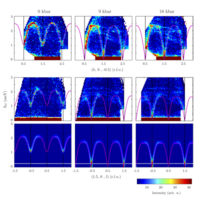
Neutron-scattering-based evidence for interacting magnetic excitons in LaCoO3

S. El-Khatib, D. Phelan, J. G. Barker, H. Zheng, J. F. Mitchell, and C. Leighton

Phys. Rev. B 92, 060404(R) (2015) - Published 6 August, 2015

For several decades LaCoO3 attracted interest due the unconventional thermally-driven spin-state crossover from a nonmagnetic to paramagnetic state. More recently, it was realized that the “nonmagnetic” ground state harbors some form of magnetism that is likely due to local magnetic entities forming at oxygen vacancies. Such entities dubbed “magnetic excitons” were predicted in 1996, with some evidence for their existence emerging around 2005 from muon spin relaxation. In this Rapid Communication the authors provide the first scattering-based evidence for spin excitons, direct information on the size and density of the excitons, as well as their interactions. The form of the scattering is also direct proof of a bulk 3D ensemble of these excitons.

Raman study of lattice dynamics in the Weyl semimetal TaAs

H. W. Liu, P. Richard, Z. D. Song, L. X. Zhao, Z. Fang, G.-F. Chen, and H. Ding

Phys. Rev. B 92, 064302 (2015) - Published 6 August, 2015

The shift of attention in topological matter is quickly shifting from topological insulators to Weyl semimetals after the recent much publicized theoretical prediction and experimental verification in TaAs. Reported here is the first Raman study of a Weyl semimetal. As with topological insulators, Raman phonons will be routinely used as probes to characterize the quality and the conditions of samples and devices. The study here identifies all the optic phonon modes and finds some additional interesting features, and should provide a good guide for future work.

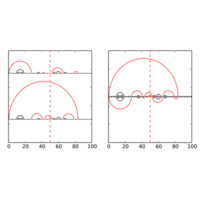
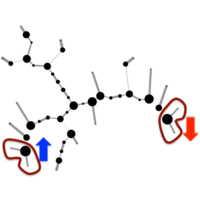
Schwinger boson mean field perspective on emergent spins in diluted Heisenberg antiferromagnets

Shivam Ghosh, Hitesh J. Changlani, and Christopher L. Henley

Phys. Rev. B 92, 064401 (2015) - Published 3 August, 2015

The authors study the diluted spin-half Heisenberg model near the percolation threshold using Schwinger boson mean field theory (SBMFT). They show how SBMFT predicts the emergence of effective local spin degrees of freedom. They demonstrate that SBMFT applied to dilute spin systems is qualitatively accurate by also performing DMRG computations.

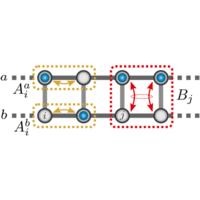
Interacting two-level defects as sources of fluctuating high-frequency noise in superconducting circuits

Clemens Müller, Jürgen Lisenfeld, Alexander Shnirman, and Stefano Poletto

Phys. Rev. B 92, 035442 (2015) - Published 31 July, 2015

Defect two-level systems (TLS) ensembles are well known to be responsible for the low-frequency noise in solid-state mesoscopic devices, but are generally considered to be non-interacting. A model based on interactions between TLS, believed to reside in the surface oxide covering the superconducting material, provides a novel mechanism to explain the noise fluctuations that are present in virtually all superconducting circuit designs, the origins of which have remained elusive so far.

Structural and magnetic phase transitions in EuTi1−xNbxO3

Ling Li, James R. Morris, Michael R. Koehler, Zhiling Dun, Haidong Zhou, Jiaqiang Yan, David Mandrus, and Veerle Keppens

Phys. Rev. B 92, 024109 (2015) - Published 30 July, 2015

EuTiO3 has been attracting considerable attention due to its large magnetoelectric effect and its potential for future applications. In this work the authors focus on the structural phase transition that bears resemblance to the prototypical phase transition in isostructural SrTiO3 but takes place at much higher temperatures TS. The authors perform a detailed study of poly- and single-crystalline EuTiO3 and EuTi1-xNbxO3 using synchrotron X-ray diffraction, Resonant Ultrasound Spectroscopy, and magnetization measurements. They find an unexpectedly rapid increase of TS when EuTiO3 is doped with niobium. Another notable result of the Nb doping, which is confirmed in this study for single-crystalline samples, is an unusual transformation of the low-temperature phase from an antiferromagnetic to ferromagnetic state at x=0.1.

Quantum oscillations and magnetic reconstruction in the delafossite PdCrO2

Clifford W. Hicks, Alexandra S. Gibbs, Lishan Zhao, Pallavi Kushwaha, Horst Borrmann, Andrew P. Mackenzie, Hiroshi Takatsu, Shingo Yonezawa, Yoshiteru Maeno, and Edward A. Yelland

Phys. Rev. B 92, 014425 (2015) - Published 29 July, 2015

Quantum oscillations measurements on PdCrO2 show that the Fermi surface of the antiferromagnetically ordered state is a consequence of reconstruction of the Fermi surface of the unordered state.

Topological states in a microscopic model of interacting fermions

Nicolai Lang and Hans Peter Büchler

Phys. Rev. B 92, 041118(R) (2015) - Published 29 July, 2015

Motivated by the question of topological classification in interacting models the authors study an exactly solvable two-leg ladder model of spinless fermions with attractive interactions and find its ground states and correlation functions. They also demonstrate the appearance of topologically protected edge states and derive their braiding properties on a microscopic level.

Sign In to Your Journals Account

Filter

Section

Filter

Article Lookup

Enter a citation