Highlights

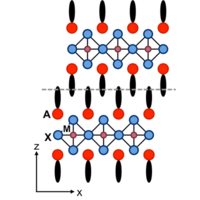
Comparison of the magneto-Peltier and magneto-Seebeck effects in magnetic tunnel junctions

J. Shan, F. K. Dejene, J. C. Leutenantsmeyer, J. Flipse, M. Münzenberg, and B. J. van Wees

Phys. Rev. B 92, 020414(R) (2015) - Published 28 July, 2015

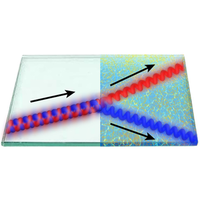
Magnetic tunnel junctions (MTJs) are the building blocks of the magnetic random access memory technology due to their large contrast of the electrical resistances between the two different magnetic configurations. This work is focused on their configuration-dependent thermal properties. For the first time, the magneto-Peltier effect, a reciprocal effect of the magneto-Seebeck effect in magnetic tunnel junctions, is detected experimentally. These results open up the possibility of a magnetically controllable cooling mechanism in MTJs, which can be potentially applied in novel magnetic logic devices.

Doping evolution and polar surface reconstruction of the infinite-layer cuprate Sr1−xLaxCuO2

John W. Harter, Luigi Maritato, Daniel E. Shai, Eric J. Monkman, Yuefeng Nie, Darrell G. Schlom, and Kyle M. Shen

Phys. Rev. B 92, 035149 (2015) - Published 28 July, 2015

By exploiting epitaxial stabilization for materials synthesis in combination with in situ angle-resolved photoemission spectroscopy, the authors study the doping evolution of the archetypal infinite-layer cuprate Sr1-xLaxCuO2 and uncover a surface reconstruction that is likely related to its polar structure.

Model of two-dimensional electron gas formation at ferroelectric interfaces

P. Aguado-Puente, N. C. Bristowe, B. Yin, R. Shirasawa, Philippe Ghosez, P. B. Littlewood, and Emilio Artacho

Phys. Rev. B 92, 035438 (2015) - Published 28 July, 2015

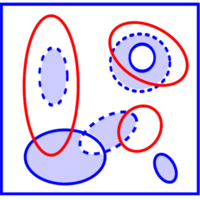
After the discovery of a 2D electron gas at the interface between LaAlO3 and SrTiO3, a great effort has been devoted to the investigation of possible routes to manipulate this system in order to exploit its interesting properties in practical applications. In this work the authors use a Landau model to show that a similar 2-dimensional electron gas may spontaneously form at ferroelectric interfaces. Unlike in the case of the LaAlO3/SrTiO3 interface, the properties of this system can be tuned in a nonvolatile way with the application of an electric field through its coupling with the ferroelectric polarization. This, for instance, would allow to induce a metal/insulator transition or to switch between an electron and a hole gas using an electric field. Such properties open new avenues for the use of 2D electron gases in oxide interfaces.

CaMn2Al10: Itinerant Mn magnetism on the verge of magnetic order

L. Steinke, J. W. Simonson, W.-G. Yin, G. J. Smith, J. J. Kistner-Morris, S. Zellman, A. Puri, and M. C. Aronson

Phys. Rev. B 92, 020413(R) (2015) - Published 24 July, 2015

Convincing experimental data show that CaMn2Al10 presents itinerant Mn-magnetism on the cusp of ferromagnetic order, opening up a new material to explore the relationship between quantum criticality and possible exotic ground states.

Incommensurate spin density wave at a ferromagnetic quantum critical point in a three-dimensional parabolic semimetal

James M. Murray, Oskar Vafek, and Leon Balents

Phys. Rev. B 92, 035137 (2015) - Published 21 July, 2015

Two- and three-dimensional semi-metallic systems have recently emerged as an exciting arena in which to explore the effects of interactions in itinerant electron systems, and to advance the understanding of competing orders in strongly correlated materials. In this work, a study of the critical behavior of a three-dimensional parabolic semimetal in proximity to a quantum phase transition into a ferromagnetic phase demonstrates that the quantum critical point is unstable toward the formation of an incommensurate spin density wave phase.

Electronic analog of chiral metamaterial: Helicity-resolved filtering and focusing of Dirac fermions in thin films of topological materials

Lu Zhao, Jianfeng Wang, Junwei Liu, Yong Xu, Bing-Lin Gu, Qi-Kun Xue, and Wenhui Duan

Phys. Rev. B 92, 041408(R) (2015) - Published 21 July, 2015

Inspired by helicity dependent optical phenomena in chiral metamaterials the authors exploit the idea of helicity degree of freedom of Dirac fermions. They perform a first-principles study of SnTe films and show that giant helicity splitting in the band structures can be induced under moderate electric field. They suggest using helicity as an extra degree of freedom for helicity-resolved filtering and focusing of Dirac fermions.

Prediction of the material with highest known melting point from ab initio molecular dynamics calculations

Qi-Jun Hong and Axel van de Walle

Phys. Rev. B 92, 020104(R) (2015) - Published 20 July, 2015

High-performance refractory materials play an important role in applications ranging from gas turbines to heat shields for hypersonic vehicles. The authors carried out an extensive first-principles investigation into the melting temperatures of the refractory Hf-C and Hf-Ta-C systems, which hold the highest melting temperatures known to date, and identified the major factors that contribute to the high melting temperatures. A new class of materials were proposed and explored, which, according to the calculation, may increase the current melting point record by up to 200 K. This work demonstrates the feasibility and usefulness of large-scale first-principles calculations for high-throughput materials screening on a high-level thermodynamic property.

Switching of magnetic anisotropy in a fcc antiferromagnet with direction-dependent interactions

Hiroaki Ishizuka and Leon Balents

Phys. Rev. B 92, 020411(R) (2015) - Published 20 July, 2015

Exploration of novel phenomena in oxides with strong spin-orbit coupling is one of the hot topics in condensed matter physics. The authors theoretically study the macroscopic magnetic anisotropy induced by fluctuations. By considering a spin model on fcc lattice with direction-dependent interactions, which may serve as an effective model for insulating magnetic oxides with strong spin-orbit coupling, they discover of a novel behavior in spin models with direction-dependent interaction.

Tunable electronic anisotropy in single-crystal A2Cr3As3(A=K, Rb) quasi-one-dimensional superconductors

X. F. Wang, C. Roncaioli, C. Eckberg, H. Kim, J. Yong, Y. Nakajima, S. R. Saha, P. Y. Zavalij, and J. Paglione

Phys. Rev. B 92, 020508(R) (2015) - Published 20 July, 2015

The authors report structural, transport, magnetic and thermodynamic properties of of single-crystalline samples of Rb2Cr3As3 in both the normal and superconducting states. By compare them with those of K2Cr3As3 they argue for the evidence of reduced dimensionality and the ability to control it by structural tuning.

Angular momentum in spin-phonon processes

D. A. Garanin and E. M. Chudnovsky

Phys. Rev. B 92, 024421 (2015) - Published 20 July, 2015

Although a century has passed since the celebrated Einstein - de Haas experiments, the microscopic mechanisms leading to the conversion of the spin angular momentum to the mechanical angular momentum in elastic solids has not been fully understood. In this paper D. A. Garanin and E. M. Chudnovsky explore the concept of the phonon spin recently suggested by L. Zhang and Q. Niu, Physical Review Letters 112, 085503 (2014). They show how it enters the problem of the relaxation of the atomic spin in the elastic body and explicitly demonstrate the conservation of the total angular momentum in spin-phonon processes at the microscopic level.

Intact quasiparticles at an unconventional quantum critical point

M. L. Sutherland, E. C. T. O'Farrell, W. H. Toews, J. Dunn, K. Kuga, S. Nakatsuji, Y. Machida, K. Izawa, and R. W. Hill

Phys. Rev. B 92, 041114(R) (2015) - Published 20 July, 2015

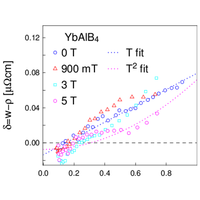
Measurements of thermal and electrical transport at low temperature near an unconventional quantum critical point in β-YbAlB4 reveal that the Wiedemann-Franz law continues to be obeyed and Landau quasiparticles remain intact.

Large magnetoresistance over an extended temperature regime in monophosphides of tantalum and niobium

Chenglong Zhang, Cheng Guo, Hong Lu, Xiao Zhang, Zhujun Yuan, Ziquan Lin, Junfeng Wang, and Shuang Jia

Phys. Rev. B 92, 041203(R) (2015) - Published 20 July, 2015

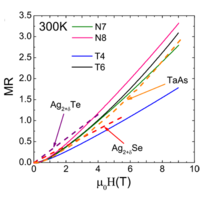
The authors report observation of extremely large magnetoresistance in two compounds which were recently suggested as candidates for Weyl semimetals.

Resonant driving of magnetization precession in a ferromagnetic layer by coherent monochromatic phonons

J. V. Jäger, A. V. Scherbakov, B. A. Glavin, A. S. Salasyuk, R. P. Campion, A. W. Rushforth, D. R. Yakovlev, A. V. Akimov, and M. Bayer

Phys. Rev. B 92, 020404(R) (2015) - Published 16 July, 2015

The traditional methods for manipulating the magnetization precession resonantly by microwaves fail to operate at the nanoscale. In the present paper, by using a specially designed ferromagnetic structure, the authors demonstrate resonant driving of the magnetization precession at microwave frequencies by exploiting coherent lattice vibrations. They use a 59-nm ferromagnetic layer as cavity of a phononic Fabry-Perot nanoresonator formed by a semiconductor superlattice. The coherent phonons with resonance frequencies up to 30 GHz are excited by femtosecond laser pulses and feed the magnetization precession within their nanosecond lifetime. The amplitude of the precession increases drastically for resonant conditions when the frequency of the free precession is equal to the frequency of the driving magnetostrictive force.

Logarithmic correlations in quantum Hall plateau transitions

Romain Vasseur

Phys. Rev. B 92, 014205 (2015) - Published 15 July, 2015

The critical behavior of quantum Hall transitions in two-dimensional disordered electronic systems can be described by a class of non-unitary conformal field theories with logarithmic correlations. Using the replica trick and the underlying symmetries of these quantum critical points, the author shows how to construct non-perturbatively disorder-averaged observables in terms of Green’s functions that scale logarithmically at criticality.

Excitons in ultrathin organic-inorganic perovskite crystals

Omer Yaffe, Alexey Chernikov, Zachariah M. Norman, Yu Zhong, Ajanthkrishna Velauthapillai, Arend van der Zande, Jonathan S. Owen, and Tony F. Heinz

Phys. Rev. B 92, 045414 (2015) - Published 14 July, 2015

The new family of layered organic-inorganic perovskite crystals (OIPCs) is a unique addition to the set of available 2D materials. It is a crystalline inorganic solid that is surrounded by well-ordered organic ligands, both of which can be modified separately. This hybrid character endows the material with an unusual degree of tunability and flexibility. Here, the authors present their results on the synthesis and extensive characterization of 2D OIPC single-crystalline bilayers of (C4H9NH3)2PbI4. These materials could significantly expand the range of van der Waals heterostructures that can be produced by their combination with, e.g., graphene, h-BN layers, transition metal dichalcogenide layers, etc.

Superconductor-insulator transitions: Phase diagram and magnetoresistance

I. S. Burmistrov, I. V. Gornyi, and A. D. Mirlin

Phys. Rev. B 92, 014506 (2015) - Published 13 July, 2015

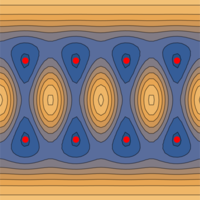
Renormalization group analysis of the effects of disorder and interactions in two-dimensions shows that in some parameter regimes superconductivity can even be enhanced by localization effects.

Hidden symmetries of the extended Kitaev-Heisenberg model: Implications for the honeycomb-lattice iridates A2IrO3

Jiří Chaloupka and Giniyat Khaliullin

Phys. Rev. B 92, 024413 (2015) - Published 13 July, 2015

Nontrivial (hidden) symmetries present within extended Kitaev-Heisenberg model, have been recently introduced to capture the magnetism of layered honeycomb iridates Na2IrO3 and Li2IrO3. The authors study the hidden symmetries of a generic four-parameter nearest-neighbor spin model of iridates of the A2IrO3 kind in the honeycomb lattice compounds under trigonal compression. Their method utilizes a mapping of the Hamiltonian on itself by using the symmetry of the Hamiltonian, which connects different points in its parameter space. They claim that a complete set of points of hidden SU(2) symmetry at which seemingly highly anisotropic model can be mapped back on the Heisenberg model and inherits therefore its properties such as the presence of gapless Goldstone modes.

Ab initio theory of superconductivity in a magnetic field. I. Spin density functional theory for superconductors and Eliashberg equations

A. Linscheid, A. Sanna, F. Essenberger, and E. K. U. Gross

Phys. Rev. B 92, 024505 (2015) - Published 8 July, 2015

The interplay between superconductivity and magnetism is a complex but very interesting and technologically important topic in solid state physics. The rich physics resulting from the competition of these two phases has been studied so far with models and phenomenological approaches that leave the prediction of material-specific properties, such as the critical temperature Tc, or the magnetization, out of reach. Density functional approaches have been very successful in the prediction of the material specific magnetization via Spin-DFT on the one, and Tc for superconducting system via SCDFT on the other hand. In this work the authors present a fully ab initio theory to describe the microscopic competition of magnetism and superconductivity, in the framework of a density functional theory unifying SpinDFT and SCDFT.

Ab initio theory of superconductivity in a magnetic field. II. Numerical solution

A. Linscheid, A. Sanna, and E. K. U. Gross

Phys. Rev. B 92, 024506 (2015) - Published 8 July, 2015

This work presents the numerical solution of the equations derived in the companion manuscript “Ab Initio Theory of Superconductivity in a Magnetic Field. I. Spin Density Functional Theory For Superconductors and Eliashberg Equations.” and the comparison of the methods presented therein. To perform this comparison the authors analyze a superconducting test system where free electron states couple via a phonon field and are Zeeman split by a tunable homogeneous magnetic field. It turns out that while the superconducting analogue of the Kohn-Sham (KS) density functional framework can accurately predict the superconducting critical temperature, it also suffers from the analogue of the “band gap” problem for the quasiparticle spectrum in the superconducting state. The authors resolve this problem by introducing a generalization of the G0W0 approximation to superconductors.

Loop braiding statistics in exactly soluble three-dimensional lattice models

Chien-Hung Lin and Michael Levin

Phys. Rev. B 92, 035115 (2015) - Published 8 July, 2015
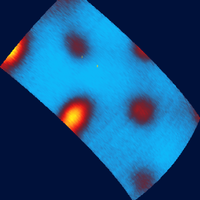
Motivated by the question of whether or not two gapped Hamiltonians belong to the same phase, the authors compare two exactly solvable lattice models. They show that the only way to see that these models belong to distinct phases is to examine their three-loop braiding statistics.

Sign In to Your Journals Account

Filter

Section

Filter

Article Lookup

Enter a citation