Highlights

Quantum dynamical field theory for nonequilibrium phase transitions in driven open systems

Jamir Marino and Sebastian Diehl

Phys. Rev. B 94, 085150 (2016) - Published 30 August, 2016

Driven-dissipative quantum many-body systems, i.e., many-particle systems where quantum coherent dynamics and dissipative effects occur on the same footing, can constitute a promising platform to initiate a systematic classification of quantum dynamical criticality. In this work, the authors show that both nonequilibrium and quantum features can be simultaneously present and persist in the low-frequency properties of a critical one-dimensional driven open Bose gas, and no effective equilibrium description is applicable for this novel type of nonequilibrium quantum criticality.

Tuning Yu-Shiba-Rusinov states in a quantum dot

Anders Jellinggaard, Kasper Grove-Rasmussen, Morten Hannibal Madsen, and Jesper Nygård

Phys. Rev. B 94, 064520 (2016) - Published 29 August, 2016

Nanowire/superconductor hybrid devices are important systems that are currently used in many experimental programs. In these systems, deliberate or accidental quantum dots in the nanowire create Yu-Shiba-Rusinov subgap states when they couple to the superconductor. In this work, an array of bottom gates under an InAs nanowire is used to tune the coupling (ΓS) of individual quantum states to a superconductor as the system is probed with a weakly coupled normal lead. The paper includes measurements of a coupling-induced quantum phase transition as well as the Zeeman splitting of a subgap state for different values of ΓS. The authors analyze their data using an extension of the Anderson model and the numerical renormalization group procedure and give quantitative values for key parameters of the system.

Electronic band gaps and exciton binding energies in monolayer MoxW1−xS2 transition metal dichalcogenide alloys probed by scanning tunneling and optical spectroscopy

Albert F. Rigosi, Heather M. Hill, Kwang Taeg Rim, George W. Flynn, and Tony F. Heinz

Phys. Rev. B 94, 075440 (2016) - Published 29 August, 2016

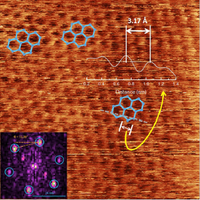
Using optical absorption and scanning tunneling spectroscopy techniques, the authors investigate band-gap properties of single layers of transition metal dichalcogenide (TMDC) alloyed crystals (MoxW1-xS2). They observe a significant modulation of the excitonic transitions, quasiparticle band gaps, and exciton binding energies. These findings may hold promise for fundamental studies of intralayer phenomena and for potential applications of TMDC alloys in electronic and optoelectronic devices.

Determining the quantum-coherent to semiclassical transition in atomic-scale quasi-one-dimensional metals

Bent Weber and Michelle Y. Simmons

Phys. Rev. B 94, 081412(R) (2016) - Published 29 August, 2016

Individual dopants in semiconductors are attracting considerable attention due to the prospect of using them in a wide range of applications. In particular, phosphorus donors in silicon have attracted significant interest owing to their weak interaction with the host crystal. However, harnessing their attributes toward the construction of scalable circuitry will require low resistive interconnects at a comparable scale as the dopant atoms. In this Rapid Communication, the authors investigate the transition from quantum coherent to the semiclassical diffusive transport in a 4.6-nm quasi-one-dimensional Si:P metal wire. Analyzing the temperature dependence of universal conductance fluctuations (UCF) the authors show that electron transport evolves from a quantum coherent to a semiclassical regime at temperatures as low as ~4 K and confirm that concepts of UCF and weak localization remain valid in metallic conductors at the atomic-scale.

Enhancement of hopping conductivity by spontaneous fractal ordering of low-energy sites

Tianran Chen and Brian Skinner

Phys. Rev. B 94, 085146 (2016) - Published 29 August, 2016

In the usual theory of electrical insulators, a small conductivity is permitted at finite temperature by the process of phonon-assisted quantum tunneling, or “hopping”, of electrons across a disordered energy landscape. The long-standing assumption has been that during this process each electron hops between essentially random locations in space. Here the authors show that the paths followed by electrons through a compensated semiconductor are in fact far from random. Instead, these electron pathways spontaneously form a fractal shape with effective dimension 2. The existence of these fractal pathways allows an unexpectedly high electrical current to move through the material at low temperature. The authors’ results can be used to explain recent surprising observations about electron transport through compensated topological insulators and nanocrystal arrays.

Exact steady states for quantum quenches in integrable Heisenberg spin chains

Lorenzo Piroli, Eric Vernier, and Pasquale Calabrese

Phys. Rev. B 94, 054313 (2016) - Published 23 August, 2016

What is the long-time behavior of a quantum system after it is brought out of equilibrium? In a generic case, it has been proposed that an effective thermalization occurs, and the local properties of the system can then be described by a thermal Gibbs ensemble. However, in integrable systems, with infinitely many conservation laws, the answer is far more complicated. It was shown in several special cases that the long-time steady state can be exactly described by the so called complete generalized Gibbs ensemble. The latter can be obtained by maximizing the entropy with constraints imposed by the conservation of energy, but also by additional carefully chosen subset of the integrals of motion. In this work, the authors analyze more general initial states, focusing on integrable XXZ Heisenberg spin chains. They find that the complete generalized Gibbs ensemble indeed correctly describes the system at long times after the quench.

Computation of dynamical correlation functions for many-fermion systems with auxiliary-field quantum Monte Carlo

Ettore Vitali, Hao Shi, Mingpu Qin, and Shiwei Zhang

Phys. Rev. B 94, 085140 (2016) - Published 23 August, 2016

Quantum Monte Carlo simulations provide a powerful tool to compute static properties of quantum many-particles models and realistic systems. A vast array of ground-state energies and properties defined by equal-time correlation functions can be computed with high accuracy. On the other hand, the extensions needed to study time-displaced correlation functions, which provide access to excited states, have been challenging, especially for fermionic strongly correlated systems. The authors present a methodology that allows a high-accuracy calculation of the dynamical Green functions of many-fermions systems in the framework of the auxiliary-field quantum Monte Carlo method. They extract the the charge gap of the repulsive two-dimensional Hubbard model at half-filling as a function of the interaction strength and propose strategies for applying their methodology to more realistic systems.

Effect of Dzyaloshinski-Moriya interaction on elastic small-angle neutron scattering

Andreas Michels, Denis Mettus, Dirk Honecker, and Konstantin L. Metlov

Phys. Rev. B 94, 054424 (2016) - Published 22 August, 2016

The Dzyaloshinski-Moriya interaction (DMI) originates from the relativistic spin-orbit coupling, and in low-symmetry crystal structures without inversion centers it gives rise to antisymmetric magnetic exchange. DMI plays an important role in the formation of inhomogeneous spin structures such as long-wavelength spirals, vortex states, and skyrmion textures. Even in high-symmetry lattices, where the antisymmetric DM term would normally vanish, DMI is present in the vicinity of any lattice defect and can influence the magnetic microstructure of polycrystalline materials with a large defect density. In this work the authors have studied the impact of the DMI on the magnetic small-angle neutron scattering (SANS) cross section, which is able to probe long-wavelength magnetization fluctuations in the bulk and on the nanometer length scale. The analysis of the authors provides a promising way to characterize the DMI in defect-rich materials.

Fermi arc electronic structure and Chern numbers in the type-II Weyl semimetal candidate MoxW1−xTe2

Ilya Belopolski et al.

Phys. Rev. B 94, 085127 (2016) - Published 15 August, 2016

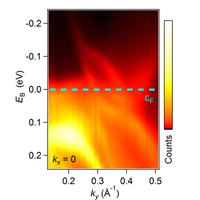
Members of the MoxW1-xTe2 series are predicted to be Weyl semimetals, hosting type-II Weyl fermions, which have yet to be experimentally realized and which are unusual because they strongly violate Lorentz invariance. Crucially, the Weyl points in this system are predicted to sit above the Fermi level. Here, the authors show that for a type-II Weyl cone, although not for a type-I Weyl cone, if the Weyl point is above the Fermi level, then it’s necessary to see the band structure above the Fermi level to observe a topological Fermi arc. The authors also discover that pump-probe angle-resolved photoemission beautifully displays the unoccupied band structure in MoxW1-xTe2. Their work sets the stage for demonstrating that this system is the first type-II Weyl semimetal, as well as the first tunable Weyl semimetal.

Tunability of the dielectric function of heavily doped germanium thin films for mid-infrared plasmonics

Jacopo Frigerio, Andrea Ballabio, Giovanni Isella, Emilie Sakat, Giovanni Pellegrini, Paolo Biagioni, Monica Bollani, Enrico Napolitani, Costanza Manganelli, Michele Virgilio, Alexander Grupp, Marco P. Fischer, Daniele Brida, Kevin Gallacher, Douglas J. Paul, Leonetta Baldassarre, Paolo Calvani, Valeria Giliberti, Alessandro Nucara, and Michele Ortolani

Phys. Rev. B 94, 085202 (2016) - Published 15 August, 2016

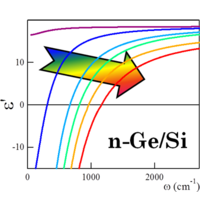
Mid-infrared plasmonics has the potential to revolutionize molecular sensing technology, if integrated into optoelectronic chips. Recently,several groups working on plasmonics have substituted metals with heavily doped semiconductors for the sake of integration, also opening up the possibility of tuning the device response via the doping level. In this work, the authors analyze the relevant case of heavily doped Ge films by combining transport measurements with infrared spectroscopy. They demonstrate a broad tunability of the screened plasma frequency up to the mid-infrared range. The main loss channels are identified through comparison of the experimental scattering rates with quantum calculations and pump-probe measurements. Heavily doped Ge is highlighted as a viable route for the integration of mid-infrared plasmonics into silicon optoelectronic platforms.

One-shot calculation of temperature-dependent optical spectra and phonon-induced band-gap renormalization

Marios Zacharias and Feliciano Giustino

Phys. Rev. B 94, 075125 (2016) - Published 12 August, 2016

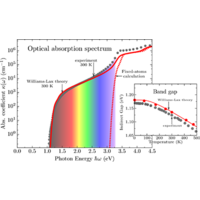
Here, the authors demonstrate a new first-principles computational method for performing predictive calculations of the optical absorption spectra of solids at finite temperature, including both zero-point fluctuations and phonon-assisted optical transitions. The comparison between calculations and measurements for the case of silicon, diamond, and gallium arsenide shows that this new method is not only efficient, but also very accurate, and is capable of yielding absorption coefficients in agreement with experiment over several orders of magnitude.

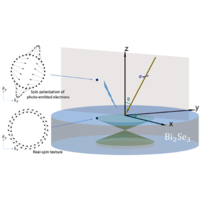
Pseudospin, real spin, and spin polarization of photoemitted electrons

Rui Yu, Hongming Weng, Zhong Fang, and Xi Dai

Phys. Rev. B 94, 085123 (2016) - Published 12 August, 2016

Spin-resolved and circular dichroism angle-resolved photoemission spectroscopies (ARPES) are powerful techniques to detect the spin information of electrons in materials. In this work, the authors distinguish the following three types of spin in the ARPES experiment: the real spin, the pseudospin, and the spin polarization of photoemitted electrons. The authors present an interesting theoretical study on these three spin textures for topological surface states of Bi2Se3 and SmB6. Based on a model-type surface state Hamiltonian, they discuss the connections and differences of these spin textures as a function of the symmetry of the investigated system and the polarization of the incident detection light. This work provides a detailed and quantitative analytical study of the spin polarization and circular dichroism spectrum of the photoelectrons detected in an ARPES experiment.

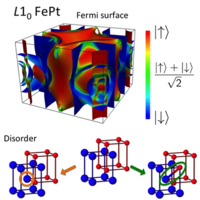
Influence of complex disorder on skew-scattering Hall effects in L10-ordered FePt alloy

Bernd Zimmermann, Nguyen H. Long, Phivos Mavropoulos, Stefan Blügel, and Yuriy Mokrousov

Phys. Rev. B 94, 060406(R) (2016) - Published 11 August, 2016

One of the key mechanisms for transverse spin-current generation in metals is the electron skew scattering off defects and impurities, where the spin-orbit interaction leads to an effective deflection of the electrons away from the direction of an applied electric field. Recently, there has been an intensive interest in the skew-scattering part of the Hall effects in an important spintronics material, L10-ordered FePt alloy, where conflicting data with regard to the skew-scattering magnitude have been reported in previous studies. To understand the reason for this controversy, the authors considered various sources of scattering in FePt and determined the skew scattering Hall angles from microscopic density functional theory calculations and Boltzmann transport theory. Based on their results, the authors are able to explain the extreme spread of available data for FePt with drastic dependence of the skew-scattering properties on the details of disorder.

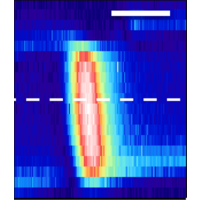
Direct measurement of interfacial Dzyaloshinskii-Moriya interaction in X|CoFeB|MgO heterostructures with a scanning NV magnetometer (X=Ta,TaN, and W)

I. Gross, L. J. Martínez, J.-P. Tetienne, T. Hingant, J.-F. Roch, K. Garcia, R. Soucaille, J. P. Adam, J.-V. Kim, S. Rohart, A. Thiaville, J. Torrejon, M. Hayashi, and V. Jacques

Phys. Rev. B 94, 064413 (2016) - Published 11 August, 2016

The Dzyaloshinskii-Moriya Interaction (DMI) has recently attracted considerable interest owing to its fundamental role in the stabilization of chiral spin textures in ultrathin ferromagnets, which are interesting candidates for novel spintronic technologies. Here, the authors present an experimental study of the DMI strength that is induced in nanometer-thick CoFeB ferromagnetic thin films in contact with different nonmagnetic metal underlayers. They use a novel technique for noninvasive high-sensitivity sensing of magnetic field: a scanning nanomagnetometer based on the magnetic response of a single nitrogen-vacancy defect in diamond. The magnetic domain walls are mapped, the spin structure and type of domain wall determined, and the DMI strength extracted. Importantly, the authors find local variation of the DMI constant, which clearly suggests that local field mapping techniques are extremely important to study this physics.

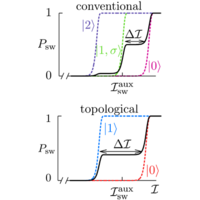
Signatures of topological Josephson junctions

Yang Peng, Falko Pientka, Erez Berg, Yuval Oreg, and Felix von Oppen

Phys. Rev. B 94, 085409 (2016) - Published 11 August, 2016

The fractional Josephson effect is of the most striking phenomena heralding topological superconductivity and Majorana bound states. In contrast to the conventional Josephson current that is 2π-periodic in the applied phase difference, the periodicity is 4π in the junctions connecting topological superconductors. Unfortunately, this effect can be easily masked in experiments due to the quasiparticle poisoning processes resulting from inelastic transitions between the localized subgap states of the junction and delocalized states in the quasiparticle continuum. The authors propose a simple and feasible solution to this problem by embedding the topological Josephson junction in a SQUID setup. They show that signatures of the topological junction can be found in the switching probability of the supercurrent through the SQUID, even in the presence of quasiparticle poisoning processes.

Anisotropic and strong negative magnetoresistance in the three-dimensional topological insulator Bi2Se3

S. Wiedmann, A. Jost, B. Fauqué, J. van Dijk, M. J. Meijer, T. Khouri, S. Pezzini, S. Grauer, S. Schreyeck, C. Brüne, H. Buhmann, L. W. Molenkamp, and N. E. Hussey

Phys. Rev. B 94, 081302(R) (2016) - Published 10 August, 2016

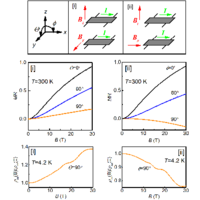
Magnetoresistance studies are one of the simplest yet powerful tools to investigate the electronic properties of solids. The authors here report on high-field angle-dependent magnetotransport measurements on epitaxial thin films of Bi2Se3, a three-dimensional topological insulator. At low temperature, they observe quantum oscillations that demonstrate the simultaneous presence of bulk and surface carriers. Their key observation is a strong anisotropy in the magnetoresistance in Bi2Se3 that depends on the orientation of the applied current (electric field) with respect to the applied magnetic field. When the magnetic field is applied parallel to the electric field, they find a strong negative longitudinal magnetoresistance (NLMR) that, quite strikingly, persists even up to room temperature. With this finding, the authors demonstrate that the observation of a NLMR is not unique to topological semimetals, such as Weyl semimetals, and therefore cannot by itself be taken as a diagnostic tool and as conclusive evidence for the existence of Weyl fermions. These results could pave the way towards a general understanding of the emergence of the axial anomaly that is suggested to be a universal phenomenon for generic three-dimensional metals in the presence of parallel electric and magnetic fields.

Coulomb charging energy of vacancy-induced states in graphene

V. G. Miranda, Luis G. G. V. Dias da Silva, and C. H. Lewenkopf

Phys. Rev. B 94, 075114 (2016) - Published 8 August, 2016

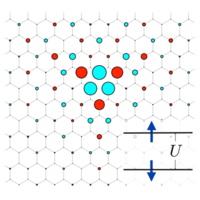
Magnetism due to vacancies in graphene has been a controversial topic, with conflicting results in the literature. This work aims to shine some light on the discussion by calculating the charging energy U, a key measure that encodes the local electron-electron Coulomb interaction in the vacancy-induced state. By combining analytical and numerical tools, the authors obtain values of U reaching about 1 eV for typical micron-sized samples, which is significantly higher than the previous estimates. These results provide a strong theoretical support to the emergence of vacancy-mediated magnetism in bulk graphene with a dilute concentration of vacancies and are in agreement with recent experiments in the literature.

Nature and topology of the low-energy states in ZrTe5

L. Moreschini, J. C. Johannsen, H. Berger, J. Denlinger, C. Jozwiak, E. Rotenberg, K. S. Kim, A. Bostwick, and M. Grioni

Phys. Rev. B 94, 081101(R) (2016) - Published 4 August, 2016

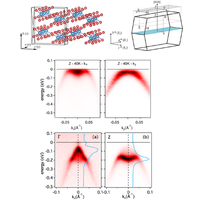
The transport properties of zirconium pentatelluride ZrTe5, where the sign of carriers changes with temperature, have so far eluded a clear understanding. In this work, the authors investigate by angle-resolved photoemission the temperature dependence of the low-energy electronic bands, and find that the transport behavior can be explained by the presence of a van Hove singularity in the density of states. By surface doping with alkali atoms, the authors also access the unoccupied states in the conduction band and define this material as being a weak topological insulator.

Energetic molding of chiral magnetic bubbles

Derek Lau, Vignesh Sundar, Jian-Gang Zhu, and Vincent Sokalski

Phys. Rev. B 94, 060401(R) (2016) - Published 1 August, 2016

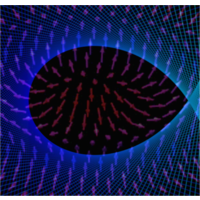
Unique spin configurations in thin films, including skyrmions and chiral domain walls, present fascinating physical questions while also promising future, low-energy computing systems. The emergent interfacial Dzyaloshinskii-Moriya interaction (DMI), which stabilizes these features, greatly changes the energetic and symmetry-based arguments by which magnetic domains have previously been described. The authors here analyze the behavior of magnetic bubbles in thin films influenced by DMI using classical interface thermodynamics via the Wulff construction, originally conceived to describe crystal facets more than 100 years ago. The striking resemblance of experimentally observed domain shapes to those predicted theoretically suggests that a significant energetic driving force for domain growth exists due to an anisotropic wall energy term from the interfacial DMI. This description explains the observed reversal in growth symmetry found here in Co/Ni multilayer films while presenting a new paradigm for describing the broader behavior of chiral domain walls.

Search for high-Tc conventional superconductivity at megabar pressures in the lithium-sulfur system

Christian Kokail, Christoph Heil, and Lilia Boeri

Phys. Rev. B 94, 060502(R) (2016) - Published 1 August, 2016

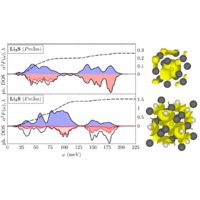
Superconductivity at high-pressures has attracted considerable interest after the report of a record critical temperature (Tc) of 203 K in sulfur hydride (H3S) at 200 GPa. In this work, the authors predict several novel lithium-sulfur compounds at high pressure using evolutionary crystal structure prediction techniques and investigate their superconducting properties with density functional linear response calculations. The calculations reveal an intrinsic correlation between superconductivity and real-space electron localization. We find that high-Tc superconductivity in the Li-S system occurs at pressures much higher than in H3S, i.e., only when the electrode-like interstitial charge localization typical of alkali-metal compounds is suppressed. This is illustrated in the image, which shows a comparison of the electron-phonon spectral function α2F(ω) of Li3S in the low- pressure (panel a, Tc=0 K) and high-pressure phases (panel c, Tc=80 K), calculated at 500 GPa. The right panels of the image show that the increase in Tc is accompanied by a shift of the electronic charge from interstitial regions to Li-S bonds.

Sign In to Your Journals Account

Filter

Section

Filter

Article Lookup

Enter a citation