Highlights

Electrodynamic duality and vortex unbinding in driven-dissipative condensates

G. Wachtel, L. M. Sieberer, S. Diehl, and E. Altman

Phys. Rev. B 94, 104520 (2016) - Published 27 September, 2016

Superfluidity in two dimensions relies on the stability of a vortex imposed by external rotation of the fluid. It is lost if the flow around the test vortex is screened by spontaneously generated free vortices. In thermal equilibrium, this occurs through a Kosterlitz-Thouless phase transition, where vortex-antivortex pairs bound by Coulomb-like forces unbind only above the critical temperature. Recent experiments with exciton-polariton fluids and other driven dissipative systems raise the question of how this physics changes away from thermal equilibrium. In this paper, the authors generalize the electrostatic duality, which represents vortices as Coulomb charges, to a full electrodynamic description of the nonequilibrium system. The unbinding of vortices is analyzed within this theory using a renormalization group framework. In contrast to the equilibrium case, it is found that vortices always unbind beyond a large emergent length scale due to nonlinearities in the field dynamics. Hence, there is no superfluidity in a truly infinite driven system, while a finite system may appear as a superfluid. The heuristic derivation of the dual electrodynamics presented in this paper is supplemented by a systematic one starting from a microscopic lattice theory in a companion paper.

Lattice duality for the compact Kardar-Parisi-Zhang equation

L. M. Sieberer, G. Wachtel, E. Altman, and S. Diehl

Phys. Rev. B 94, 104521 (2016) - Published 27 September, 2016

Duality transformations have a long history in physics, and recently saw a surge of renewed interest in the context of strongly correlated fermion systems. A prime example for such a transformation was established to describe the phase transition in two-dimensional superfluids in thermal equilibrium. Here, Kosterlitz and Thouless developed a dual representation of the superfluid, which maps the vortices in the latter to charges in a Coulomb gas. In this framework, the dissociation of vortex-antivortex pairs at the critical temperature corresponds to the formation of a plasma of free charges. How can such a framework be leveraged over to nonequilibrium situations, relevant to the understanding of driven open fluids of light such as exciton-polariton systems? In this work, the authors make a crucial step in this direction by deriving a transformation that maps the stochastic equation of motion for the phase of a driven open condensate — the compact Kardar-Parisi-Zhang (cKPZ) equation — to a dual electrodynamic theory. This results in modified, and in particular, nonlinear Maxwell equations for the electromagnetic fields, and a diffusion equation for the charges representing vortices in the cKPZ equation. In a companion paper, the authors apply this theoretical framework to the study of nonequilibrium vortex unbinding.

Distinctive orbital anisotropy observed in the nematic state of a FeSe thin film

Y. Zhang, M. Yi, Z.-K. Liu, W. Li, J. J. Lee, R. G. Moore, M. Hashimoto, M. Nakajima, H. Eisaki, S.-K. Mo, Z. Hussain, T. P. Devereaux, Z.-X. Shen, and D. H. Lu

Phys. Rev. B 94, 115153 (2016) - Published 26 September, 2016

The nematic state, where a system is translationally invariant but breaks rotational symmetry, has drawn great attention recently due to the experimental observations of such a state in high-Tc superconductors. For iron-based superconductors, the nematic state intertwines strongly with the antiferromagnetic order. Hence, clear experimental delineation of the nematic state has always been challenging. Here, the authors study the electronic structure of a multilayer FeSe film using angle-resolved photoemission spectroscopy. The band reconstruction in the nematic state is clearly delineated. They find that the energy splitting between dxz and dyz bands shows a nonmonotonic distribution in momentum space. The energy splitting was also observed on the dxy bands with an energy scale around 45 meV. The momentum dependence of the dxz and dyz energy splitting and the reconstruction of dxy exclude the simple on-site ferro-orbital ordering as a driving force of nematicity. Instead, strong anisotropy exists in the hopping of all dxz, dyz, and dxy orbitals, the origin of which holds the key to a microscopic understanding of the nematicity in iron-based superconductors.

Observation of Dirac surface states in the noncentrosymmetric superconductor BiPd

H. M. Benia, E. Rampi, C. Trainer, C. M. Yim, A. Maldonado, D. C. Peets, A. Stöhr, U. Starke, K. Kern, A. Yaresko, G. Levy, A. Damascelli, C. R. Ast, A. P. Schnyder, and P. Wahl

Phys. Rev. B 94, 121407(R) (2016) - Published 22 September, 2016

Materials with strong spin-orbit coupling often host a unique electronic structure, both in the bulk and on the surface. In particular, in systems that break inversion symmetry, spin-orbit coupling facilitates the Rashba-Dresselhaus effect, leading to a lifting of spin degeneracy in the bulk and intricate spin textures of the Bloch wave functions. Such materials could see potential applications in spintronics and quantum information technology, but these applications would benefit from a broader suite of materials, with a greater range of properties, and in particularly from very strong spin-orbit splitting. This paper’s angular-resolved photoemission and low-temperature scanning tunneling microscopy experiments, together with relativistic first-principles band structure calculations, identify several Dirac surface states in BiPd, one of which exhibits an extremely large spin splitting. Unlike the surface states in inversion-symmetric systems, the Dirac surface states of BiPd have completely different properties at opposite faces of the crystal and are not trivially linked by symmetry. The spin splitting of the surface states exhibits a strong anisotropy by itself, which can be linked to the low in-plane symmetry of the surface termination. Both may be useful to implement new functionalities for spintronic applications.

Strong magnetoelastic coupling at the transition from harmonic to anharmonic order in NaFe(WO4)2 with 3d5 configuration

S. Holbein, M. Ackermann, L. Chapon, P. Steffens, A. Gukasov, A. Sazonov, O. Breunig, Y. Sanders, P. Becker, L. Bohatý, T. Lorenz, and M. Braden

Phys. Rev. B 94, 104423 (2016) - Published 21 September, 2016

Although NaFe(WO4)2 is not multiferroic itself, the magnetic order in this S=5/2 chain material is a reference for many multiferroic materials, such as MnWO4 and RMnO3, because NaFe(WO4)2 exhibits a transition from an incommensurate spiral order to a commensurate up-up-down-down structure. Here, the authors perform a very extensive study of the magnetic properties in the this double tungstate compound at low temperatures and high magnetic fields. A complex B-T phase diagram is unveiled. Strong magnetoelastic anomalies with a relative contraction of the b lattice parameter of up to 2.6 × 10⁻⁴ are associated with the up-up-down-down ordering, which appears in the commensurate and also in the anharmonic incommensurate structure. In contrast, the transition to the magnetically ordered phase, with a purely harmonic incommensurate spiral modulation, does not cause resolvable anomalies in the thermal expansion. Thus, the strong magnetoelastic anomaly coupling can be attributed to the lifting of magnetic frustration in the up-up-down-down structure, where neighboring moments align either parallel or antiparallel, although all these bonds are equivalent in the paramagnetic state.

Normal-metal quasiparticle traps for superconducting qubits

R.-P. Riwar, A. Hosseinkhani, L. D. Burkhart, Y. Y. Gao, R. J. Schoelkopf, L. I. Glazman, and G. Catelani

Phys. Rev. B 94, 104516 (2016) - Published 20 September, 2016

Superconducting qubits are among the most promising elements for the implementation of the concept of quantum computing. Quasiparticles are an intrinsic sources of qubit decoherence, and are more generally detrimental to the operation of superconducting devices, e.g., Cooper pair pumps. Experiments reveal that quasiparticles fail to equilibrate and their density remains high even at low temperatures. Planting normal-metal traps on a superconducting device offers a way to reduce the quasiparticle density: once a quasiparticle tunnels into the normal metal and relaxes to subgap energy via inelastic processes, it cannot return to the superconductor. This paper presents a theoretical model for the time-resolved dynamics of quasiparticles injected into a qubit, and experiments with transmon qubits validating the model. The authors show that, contrary to expectations, the effective trapping rate depends on temperature, which is a consequence of the strong energy dependence of the quasiparticle density of states in the superconductor. At low temperatures, the relaxation process in the normal metal is the bottleneck limiting the effectiveness of traps. The authors also show that the trapping rate saturates for larger traps. At saturation, the rate is limited by the inverse of the time it takes for quasiparticles to diffuse across the device.

Spin transport at interfaces with spin-orbit coupling: Formalism

V. P. Amin and M. D. Stiles

Phys. Rev. B 94, 104419 (2016) - Published 16 September, 2016

Spin transport at interfaces between nonmagnets and ferromagnets plays an important role in spintronic devices. Lately, there is an increasing suspicion that spin-orbit coupling, which couples the spin and momentum of carriers, might contribute significantly to this process. Unfortunately, the existing description of spin transport at such interfaces, magnetoelectronic circuit theory, is not valid when spin-orbit coupling is present at the interface. This paper presents a generalization of magnetoelectronic circuit theory to interfaces with spin-orbit coupling. Like the original theory, this generalization describes spin transport in terms of drops in spin and charge accumulations across the interface, but also includes responses to in-plane electric fields and offsets in spin accumulations. The most important result is a description of the way in-plane electric fields generate spin accumulations, spin currents, and torques at the interface. The effects described by this generalized circuit theory impact the interpretation of experiments involving spin-orbit torques, spin pumping, spin memory loss, the Rashba-Edelstein effect, and spin Hall magnetoresistance.

Spin transport at interfaces with spin-orbit coupling: Phenomenology

V. P. Amin and M. D. Stiles

Phys. Rev. B 94, 104420 (2016) - Published 16 September, 2016

Most spintronic devices share two features: they utilize spin-orbit coupling and they contain interfaces. While bulk spin-orbit effects are thought to be well described by phenomenological theories, interfacial spin-orbit effects are not. A theory that could describe interfacial spin-orbit effects would be useful in analyzing experiments on heavy-metal ferromagnet bilayers, which are a key feature of potential energy-efficient implementations of MRAM. To develop such a theory, the authors present the boundary conditions needed for drift-diffusion models to treat interfaces with spin-orbit coupling. Together with the drift-diffusion equations, these boundary conditions give an analytical model of spin-orbit torques caused by both the spin Hall and Rashba-Edelstein effects. A key feature of these boundary conditions is that they capture spin currents generated by interfacial spin-orbit scattering. The authors validate this phenomenological approach by comparing the results with those obtained by solving the spin-dependent Boltzmann equation. They discuss the interpretation of current experiments, and describe in particular how interfacial effects give rise to torques on a nearby ferromagnetic layer even through a nonmagnetic spacer layer.

Nonperturbative emergence of non-Fermi-liquid behavior in d=2 quantum critical metals

Balazs Meszena, Petter Säterskog, Andrey Bagrov, and Koenraad Schalm

Phys. Rev. B 94, 115134 (2016) - Published 14 September, 2016

Landau theory of Fermi liquids is the foundational concept behind our understanding of conventional metals. Its basic postulate is that the low-energy physics can be described by weakly interacting quasiparticles — a dressed but effectively free version of electrons formally represented by poles of the single-particle Green’s function. However, this concept notoriously fails for strongly interacting systems such as high-Tc cuprate superconductors, and our understanding of properties of these “non-Fermi” quantum liquids is far from complete. One well-known candidate theory for non-Fermi liquids is Hertz-Millis theory: a finite-density fermion system coupled to a massless critical boson. In (2+1) dimensions, this theory is strongly interacting at low energies, but as of yet there is no controlled insight in this regime; conventional perturbation theory fails. In this article, the authors show that in the so-called quenched approximation the fermionic spectrum can be computed exactly to all orders in the coupling constant. They show extensive detailed analysis that, in this quenched limit, the nonperturbative low-energy dynamics are indeed that of a non-Fermi liquid. Instead of coherent quasiparticles one finds the emergence of critical fermionic excitations described by branch cuts in the single particle Green’s function.

Observation of large topologically trivial Fermi arcs in the candidate type-II Weyl semimetal WTe2

F. Y. Bruno, A. Tamai, Q. S. Wu, I. Cucchi, C. Barreteau, A. de la Torre, S. McKeown Walker, S. Riccò, Z. Wang, T. K. Kim, M. Hoesch, M. Shi, N. C. Plumb, E. Giannini, A. A. Soluyanov, and F. Baumberger

Phys. Rev. B 94, 121112(R) (2016) - Published 14 September, 2016

The authors present here several advances towards a comprehensive understanding of WTe2. Using microfocus laser ARPES, they resolve for the first time the distinct electronic structure of both inequivalent top and bottom (001) surfaces of WTe2. Moreover, they demonstrate for the first time the presence of large surface state Fermi arcs on both surfaces. Using surface electronic structure calculations, they further demonstrate that these Fermi arcs are topologically trivial and that their existence is independent of the presence of type-II Weyl points in the bulk band structure. Contrary to common belief, the observation of surface state Fermi arcs is thus not suitable to robustly identify a type-II Weyl semimetal. Finally, the authors use the observation of Fermi arcs and distinct top and bottom surfaces to clarify the controversial bulk electronic structure of WTe2. They show that the bulk Fermi surface is formed by three-dimensional electron and hole pockets with areas that are found to be in good agreement with transport experiments, with the exception of small hole pockets that have not been observed in quantum oscillation experiments.

Observation of Fermi arcs in the type-II Weyl semimetal candidate WTe2

Yun Wu, Daixiang Mou, Na Hyun Jo, Kewei Sun, Lunan Huang, S. L. Bud'ko, P. C. Canfield, and Adam Kaminski

Phys. Rev. B 94, 121113(R) (2016) - Published 14 September, 2016

In recently predicted type-II Weyl semimetals, the Weyl states connect hole and electron bands that would otherwise be separated by an indirect gap. The set of points in the momentum space at which both bands touch are called Weyl points and are connected by Fermi arcs at the surface of the sample. Experimental evidence confirmed existence of these exotic fermions in MoTe2 and MoxW1-xTe2. Here, the authors show that such states also exist in pure WTe2 and are very sensitive to strain. While flat undistorted portions of the sample show well defined Fermi arcs – a clear signature of Weyl fermions – strain due to bulking of the surface in other locations suppresses this state and destroys the Weyl state. Such high sensitivity to strain provides a simple way to tune properties of Weyl Fermions and explore the physics of these unusual objects.

Section Chern number for a three-dimensional photonic crystal and the bulk-edge correspondence

Shuhei Oono, Toshikaze Kariyado, and Yasuhiro Hatsugai

Phys. Rev. B 94, 125125 (2016) - Published 14 September, 2016

Slicing the 3D Brillouin zone into 2D as a dimensional reduction makes the topological structure of the 3D Weyl point clear as a topological critical point. The Chern number of the sliced 2D system (section Chern number) changes discontinuously at the gap-closing momentum that guarantees topological stability of the Weyl point. This section Chern number is just a mathematical tool and cannot be directly measured experimentally. However, propagating edge modes of the 3D system with boundaries are necessarily momentum selective, associated with the section Chern number. This is a direct consequence of the bulk-edge correspondence. Using a localized basis with/without boundaries, the authors have demonstrated this here in a 3D helical photonic crystal without inversion symmetry

Domains and ferroelectric switching pathways in Ca3Ti2O7 from first principles

Elizabeth A. Nowadnick and Craig J. Fennie

Phys. Rev. B 94, 104105 (2016) - Published 8 September, 2016

Ferroelectrics that allow a coupling between the polarization and another order parameter are of great interest because they could make the electric field control of nonpolar order parameters possible. In recent years, “hybrid improper’” ferroelectrics - materials where the polarization couples to two different structural distortions - have emerged as a possible way to realize this goal. Theoretical predictions of hybrid improper ferroelectricity in layered perovskite materials were followed by its first experimental realization in Ca3Ti2O7 in 2015. However, the precise pathway by which the polarization reverses in this material during ferroelectric switching remains an open question. The authors address this question and lay the groundwork for understanding the unexpectedly complex domain structure of Ca3Ti2O7, consisting of a network of multiple types of domain walls and topological defects.

Entanglement entropy of U(1) quantum spin liquids

Michael Pretko and T. Senthil

Phys. Rev. B 94, 125112 (2016) - Published 8 September, 2016

Entanglement entropy is a powerful tool for characterizing spin liquids and other systems with long-range entanglement. For gapped spin liquids, this problem has been well-studied, finding a universal subleading constant term in the entanglement entropy, known as the topological entanglement entropy. In this paper, the idea of topological entanglement entropy is generalized to the gapless U(1) spin liquid. First, it is shown that the entanglement entropy separates into two pieces, one due to emergent charges of the theory (assumed to be gapped) and one due to the emergent gapless gauge mode. Both give universal subheading contributions to the entanglement entropy, which are logarithmic in the size of the region considered. The photon contribution is due to the local physics of the gapless mode. The particle contribution, on the other hand, is a topological term, generalizing the notion of topological entanglement entropy. A construction is presented which can isolate this topological piece by eliminating the photon contribution and other local terms, such as the area law. This topological term in the entanglement entropy can serve as a powerful diagnostic tool for U(1) spin liquids.

Spin and the Coulomb gap in the half-filled lowest Landau level

J. P. Eisenstein, T. Khaire, D. Nandi, A. D. K. Finck, L. N. Pfeiffer, and K. W. West

Phys. Rev. B 94, 125409 (2016) - Published 8 September, 2016

In a strong magnetic field, two-dimensional electron systems are dominated by Coulomb interactions between the electrons. While the most familiar manifestation of these interactions is the fractional quantum Hall effect, this is actually a relatively subtle variation in the strong electronic correlations that exist throughout the high-field regime. This is clearly revealed in tunneling experiments in which an uncorrelated electron is rapidly thrust into a strongly correlated electron gas. A robust Coulomb pseudogap is observed, with tunneling strongly suppressed until the energy of the incoming electron is large enough. The Coulomb gap is insensitive to the precise magnetic field and is typically much larger than the energy gap associated with the fractional quantum Hall effect. In the present paper, the authors demonstrate that the size of the Coulomb gap observed in tunneling between two parallel two-dimensional electron systems depends sensitively on their spin configuration, with larger gaps associated with a larger net spin polarization. In effect, it is easier for electrons ‘to get out of the way’ of an incoming tunneling electron when the spin polarization of the electron gas is less than complete.

Magnetic-field- and pressure-induced quantum phase transition in CsFeCl3 proved via magnetization measurements

Nobuyuki Kurita and Hidekazu Tanaka

Phys. Rev. B 94, 104409 (2016) - Published 7 September, 2016

There is much interest from the physics community in materials with a gapped nonmagnetic ground state, in which quantum critical points can be reached by application of a magnetic field. Here, the authors report magnetization data as a function of temperature, field, and hydrostatic pressure for the gapped quantum magnet CsFeCl3, a quite intriguing system in which the large easy-plane single-ion anisotropy competes with the exchange interactions. They establish the phase boundary, and identify a quantum phase transition at a critical value of the pressure. It is likely that experiments by other techniques will follow this discovery of both magnetic-field and pressure-controlled transitions in this interesting compound.

Local atomic and magnetic structure of dilute magnetic semiconductor (Ba,K)(Zn,Mn)2As2

Benjamin A. Frandsen, Zizhou Gong, Maxwell W. Terban, Soham Banerjee, Bijuan Chen, Changqing Jin, Mikhail Feygenson, Yasutomo J. Uemura, and Simon J. L. Billinge

Phys. Rev. B 94, 094102 (2016) - Published 6 September, 2016

Spintronics holds the promise of novel functionality and higher device performance, but a massive challenge is to find semiconducting materials with good electronic properties that are also ferromagnetic. Dilute magnetic semiconductors (DMS) such as Mn-doped GaAs have great potential but are notoriously difficult to make, only stabilizing in thin films in most cases. Recently, a promising new class of DMS materials based on the chemistry and structure of iron-based superconductors has been discovered, including the compound (Ba,K)(Zn,Mn)2As2. These materials can be synthesized in bulk form, providing an unprecedented opportunity to study the mechanism of ferromagnetism in semiconductors. In this work, the authors present detailed temperature-dependent characterization of the atomic and magnetic structure of (Ba,K)(Zn,Mn)2As2 using x-ray and neutron pair distribution function techniques, establishing the existence of an unexpected structural distortion on a short length scale and surprisingly robust short-range ferromagnetic correlations that persist even at room temperature. These results fill in important gaps in the experimental understanding of DMS materials and provide valuable guidance to their theoretical description.

Emergent O(n) symmetry in a series of three-dimensional Potts models

Chengxiang Ding, Henk W. J. Blöte, and Youjin Deng

Phys. Rev. B 94, 104402 (2016) - Published 1 September, 2016

Scaling, universality, and renormalization are three pillars of modern critical phenomena. According to the hypothesis of universality, continuous phase transitions fall into classes mainly determined by spatial dimensionality and symmetry of the order parameter. The latter is usually reflected by the degeneracy of the ground state of the Hamiltonian. However, for certain systems at criticality, a higher symmetry emerges in the order parameter, and the associated critical behavior may become very rich. Such emergent symmetry has been found in spin ice systems, deconfined quantum critical points, high-Tc superconductors, and so forth, and are often accompanied by very interesting critical phenomena. New results presented here are based on Monte Carlo simulations and finite-size scaling of a series of q-state Potts models on the simple cubic lattice with ferromagnetic interactions in one lattice direction and antiferromagnetic interactions in the other two directions. The staggered magnetization appears to display an emergent continuous O(n) symmetry with n=q-1, as illustrated by two-dimensional intersections of the distribution functions. Also the estimated critical exponents are consistent with the O(n=q-1) universality classes.

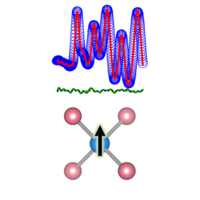
Discrimination between spin-dependent charge transport and spin-dependent recombination in π-conjugated polymers by correlated current and electroluminescence-detected magnetic resonance

Marzieh Kavand, Douglas Baird, Kipp van Schooten, Hans Malissa, John M. Lupton, and Christoph Boehme

Phys. Rev. B 94, 075209 (2016) - Published 31 August, 2016

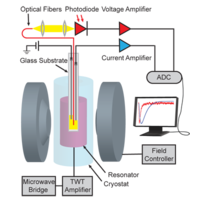
It has been corroborated in the past that Pauli blockade mechanisms of weakly spin-coupled charge carrier pairs undergoing transitions into doubly occupied singlet states are among the most dominant spin-selection rules influencing room-temperature magnetoresistance and luminescence of organic semiconductors. It has remained unclear though whether these pairs consist of equal or opposite charges, and thus, whether the spin-dependent transitions are recombination or charge transport processes. Here, the authors report on simultaneous transient measurements of electric current and optical emission changes in organic light emitting diodes due to pulsed magnetic resonance induced charge carrier spin manipulation. When a room-temperature steady-state current is changed magnetic resonantly, the electroluminescence changes show identical dynamic and magnetic resonant signatures, indicating that both observables are controlled by the same spin-dependent electronic process. However, a quantitative analysis of the optical emission change reveals that its magnitude significantly exceeds what is expected from the magnitude of the electrical current change, implying that the optical emission change occurs not only because of the device current change but also due to a change of the radiative recombination rate, thereby showing that the observed spin-dependent process is due to recombination, not transport.

Tuning the spin Hall effect of Pt from the moderately dirty to the superclean regime

Edurne Sagasta, Yasutomo Omori, Miren Isasa, Martin Gradhand, Luis E. Hueso, Yasuhiro Niimi, YoshiChika Otani, and Fèlix Casanova

Phys. Rev. B 94, 060412(R) (2016) - Published 30 August, 2016

The discovery of new spin-to-charge current conversion effects such as the spin Hall effect (SHE) is expanding the potential of spintronic applications. In contrast to the anomalous Hall effect (AHE), a systematic experimental study of the different mechanisms contributing to the SHE is lacking. Finding routes to maximize the SHE is not possible as long as it remains unclear which is the dominant mechanism in a material. The authors systematically study Pt, the prototypical SHE material, using the spin absorption method and find a single intrinsic spin Hall conductivity in a wide range of Pt conductivities, in good agreement with theory. By tuning the conductivity, they observe for the first time the crossover between the moderately dirty and the superclean scaling regimes of the SHE, equivalent to that obtained for the AHE. These results explain the dispersion of values in the literature and show a clear path to enhance this important effect.

Sign In to Your Journals Account

Filter

Section

Filter

Article Lookup

Enter a citation