Highlights

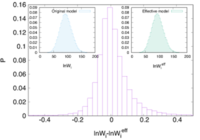
Self-learning Monte Carlo method: Continuous-time algorithm

Yuki Nagai, Huitao Shen, Yang Qi, Junwei Liu, and Liang Fu

Phys. Rev. B 96, 161102(R) (2017) - Published 3 October, 2017

The self-learning Monte Carlo (SLMC) method speeds up the Monte Carlo simulation by designing and training an effective model to propose efficient global updates. We implement the continuous-time quantum Monte Carlo algorithm for quantum impurity models in the framework of SLMC. We introduce and train a diagram generating function (DGF) to model the probability distribution of field configurations in the continuous imaginary time at all orders of diagrammatic expansion. By using the DGF to propose global updates, we show that the self-learning continuous-time Monte Carlo method can significantly reduce the computational complexity of the simulation.

Nonlocal magnon-polaron transport in yttrium iron garnet

L. J. Cornelissen, K. Oyanagi, T. Kikkawa, Z. Qiu, T. Kuschel, G. E. W. Bauer, B. J. van Wees, and E. Saitoh

Phys. Rev. B 96, 104441 (2017) - Published 29 September, 2017

Magnon-polarons are coherently mixed quasiparticles – half magnon, half phonon – and are generated by magnetoelasticity. Though predicted by Kittel long ago, their effect on spin transport was discovered only recently in yttrium iron garnet (YIG) using optical and local spin Seebeck effect (SSE) experiments. In the latter, magnon-polarons are manifest as resonant peaks in the SSE signal as a function of magnetic field. Here, the authors show that they also show up in the nonlocal SSE, with a surprising twist: measured nonlocally, the magnon-polaron peak turns into a dip. The authors show that this crossover is a consequence of the magnon physics underlying the SSE: thermal generation and diffusive backflow of magnons in YIG compete, which can generate any sign for the magnon-polaron anomaly in nonlocal experiments.

Approximating the Sachdev-Ye-Kitaev model with Majorana wires

Aaron Chew, Andrew Essin, and Jason Alicea

Phys. Rev. B 96, 121119(R) (2017) - Published 29 September, 2017

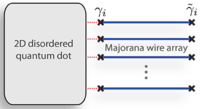
Randomly interacting Majorana fermions governed by the Sachdev-Ye-Kitaev model have recently been shown to exhibit profound links to quantum chaos and black holes. Here, the authors propose a solid-state implementation of the model that exploits hardware components that are now widely pursued for topological quantum computation – namely, an array of Majorana wires interfaced with a disordered quantum dot that mediates the desired interactions. This work highlights a potential pathway for using table-top condensed-matter systems to probe novel concepts from high-energy physics and quantum information.

Direct observation of magnon-phonon coupling in yttrium iron garnet

Haoran Man, Zhong Shi, Guangyong Xu, Yadong Xu, Xi Chen, Sean Sullivan, Jianshi Zhou, Ke Xia, Jing Shi, and Pengcheng Dai

Phys. Rev. B 96, 100406(R) (2017) - Published 27 September, 2017

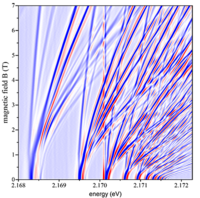
The ferrimagnetic insulator yttrium iron garnet (YIG) has been widely used in microwave and spintronic devices. Anomalous features in spin Seeback effect voltages have been observed in Pt/YIG and attributed to magnon-phonon coupling. Using inelastic neutron scattering to map out low-energy spin waves and acoustic phonons in YIG as a function of increasing magnetic field, the authors find that the magnon-phonon interaction enhances the hybridized scattering intensity at the magnon-phonon dispersion crossing points in zero field. These results go against the expectations of conventional spin-lattice coupling, calling for a different explanation of the magnon-phonon interactions and the resulting magnon polarons in YIG.

Higher-spin Witten effect and two-dimensional fracton phases

Michael Pretko

Phys. Rev. B 96, 125151 (2017) - Published 27 September, 2017

In addition to the familiar Maxwell terms, the Lagrangian for a three-dimensional U(1) gauge theory can have an extra “theta” term which has two effects: attaching electric charge to magnetic monopoles in the bulk, and generating a Chern-Simons term on the boundary. This work studies theta terms in the context of higher rank tensor U(1) gauge theories, which host gapless higher-spin gauge modes and subdimensional charge excitations. There are multiple different varieties of theta terms, enforcing different types of charge attachment in the bulk. These terms also lead to generalized tensor Chern-Simons theories on the boundary, bringing about the existence of two-dimensional fracton phases.

Inflated nodes and surface states in superconducting half-Heusler compounds

C. Timm, A. P. Schnyder, D. F. Agterberg, and P. M. R. Brydon

Phys. Rev. B 96, 094526 (2017) - Published 26 September, 2017

The half-Heusler superconductors such as YPtBi are multiorbital systems with both strong spin-orbit coupling and broken inversion symmetry. The spin-orbit coupling allows for the formation of Cooper pairs with effective spins larger than unity, which introduces novel pairing states. Some of these states display Fermi surfaces of Bogoliubov quasiparticles. On the other hand, the absence of inversion symmetry leads to topologically protected nodes associated with specific surface features as, for example, flat bands. The authors consider two likely pairing symmetries for this material, one that breaks time-reversal symmetry and one that does not, and find a rich variety of bulk nodes and surface states.

Theory of the magnon-mediated tunnel magneto-Seebeck effect

Benedetta Flebus, Gerrit E. W. Bauer, Rembert A. Duine, and Yaroslav Tserkovnyak

Phys. Rev. B 96, 094429 (2017) - Published 25 September, 2017

In the tunnel magneto-Seebeck effect, a temperature gradient generates an electric voltage over a nonmagnetic tunnel barrier between two magnetic films that depends on the relative orientation of the magnetizations. This effect has been modeled in the past by the single-electron picture as implemented in band structure calculations. Here, the authors depart from this interpretation and investigate the thermoelectric response induced by electron-magnon interactions. The importance of collective magnetic effects found in the present study challenges the conventional single-electron model for the thermopower of magnetic tunneling junctions.

Spin-orbit coupling induced two-electron relaxation in silicon donor pairs

Yang Song and S. Das Sarma

Phys. Rev. B 96, 115444 (2017) - Published 25 September, 2017

Here, the authors discover the unexpected important role of intrinsic atomic donor spin-orbit coupling (SOC) in driving the relaxation of coupled-donor electron states in silicon-28, which is a promising host material for semiconductor qubits, despite the commonly perceived weak strength of atomic SOC in this material. The only existing spin-relaxation mechanism considered in this context before was the relaxation of two-electron states induced by hyperfine interaction with the donor nuclear spins. The new intrinsic SOC mechanism becomes important when the donors are closely spaced as is the case in silicon quantum computing architectures. This mechanism may also shed important new light on the well-studied problem of electron spin resonance in highly doped silicon.

Scaling laws of Rydberg excitons

J. Heckötter, M. Freitag, D. Fröhlich, M. Aßmann, M. Bayer, M. A. Semina, and M. M. Glazov

Phys. Rev. B 96, 125142 (2017) - Published 22 September, 2017

The recent observation of excitons in highly excited states has allowed the study of Rydberg physics in cuprous oxide crystals. This opens the unique possibility to elaborate on similarities and differences between Rydberg atoms and Rydberg excitons, as done here experimentally and theoretically for quantities related to the splitting of multiplets with particular principal quantum number n in zero and finite electric or magnetic fields. The authors find characteristic scaling laws with n with some discrepancies between excitons and atoms, but surprisingly, they find mostly similarities, even though the underlying physics, such as the complex valence band structure, are quite different.

Fluctuation-induced continuous transition and quantum criticality in Dirac semimetals

Laura Classen, Igor F. Herbut, and Michael M. Scherer

Phys. Rev. B 96, 115132 (2017) - Published 20 September, 2017

Thermal phase transitions are successfully described by fluctuations of an appropriate order parameter, which further allows classification of the transition into first or second order. However, some quantum analogs of thermal phase transitions defy this description and identifying the mechanisms behind these unconventional processes will fundamentally improve our understanding of matter. Here, the authors provide a thorough study of such a transition, which has been experimentally accessed in graphene: the emergence of a Kekulé valence bond solid. Additional gapless quantum fluctuations of Dirac electrons change the nature of this transition from first to second order. Using a nonperturbative functional renormalization group approach, the authors advance the state-of-the-art estimates for the corresponding critical exponents and predict measurable corrections to scaling.

Raman scattering study of vibrational and magnetic excitations in Sr2−xLaxIrO4

H. Gretarsson, J. Sauceda, N. H. Sung, M. Höppner, M. Minola, B. J. Kim, B. Keimer, and M. Le Tacon

Phys. Rev. B 96, 115138 (2017) - Published 20 September, 2017

Sr2IrO4 is considered as a strong spin-orbit coupled equivalent of high-temperature superconducting cuprates. Recent experiments have most notably shown that upon electron doping a pseudogap emerges in Sr2IrO4 and that magnonlike excitations survive the rapid disappearance of long-range magnetic order. However, due to the relatively small crystal sizes and the large Ir neutron cross section, information on charge excitations and magnetism has mostly been gathered using synchrotron-based spectroscopic methods. Here, the authors use Raman scattering on electron-doped Sr2-xLaxIrO4 single crystals to carry out a temperature and doping study of the lattice and magnetic excitations, and observe the emergence upon doping of an electron-hole continuum that couples to the phonons. Even in metallic samples, fluctuating magnetic moments and mobile carriers therefore coexist, again in close analogy with the doped cuprates.

Phenomenological theories of the low-temperature pseudogap: Hall number, specific heat, and Seebeck coefficient

S. Verret, O. Simard, M. Charlebois, D. Sénéchal, and A.-M. S. Tremblay

Phys. Rev. B 96, 125139 (2017) - Published 20 September, 2017

An elegant way to probe the mysterious “pseudogap” state in cuprates is to suppress superconductivity with strong magnetic fields and work at low temperature. Then, impurity scattering dominates, which simplifies calculations. A number of theories thus successfully explain the sudden change in carrier number observed experimentally. To tell these theories apart, the work here provides new predictions. First, it shows how electron pockets cause strong signatures in the specific heat and Seebeck coefficient. Second, it addresses inconsistencies in scattering rate approximations for the Hall and the Seebeck effects. Third, it shows the influence of the Van Hove singularity on these quantities.

Real-space observation of nanoscale magnetic phase separation in dysprosium by aberration-corrected Lorentz microscopy

Takuro Nagai, Koji Kimoto, Koji Inoke, and Masaki Takeguchi

Phys. Rev. B 96, 100405(R) (2017) - Published 19 September, 2017

Nanoscale magnetic phase separation in dysprosium has been revealed by aberration-corrected Lorentz microscopy. The in-plane magnetization distribution of the coexisting magnetic phases has been visualized successfully by combining high-resolution Lorentz microscopy with the transport-of-intensity equation method. The phase separation of the ferromagnetic and the helical antiferromagnetic (HAFM) phases results in the formation of static magnetic solitons at around 130 K in the absence of external magnetic field. External fields of up to about 11 kOe induce nanoscale phase separation of the HAFM, the distorted HAFM, and the fan phases at 142 K. The developed technique for the high-resolution observation of fine magnetic structures is a valuable addition to the modern toolbox of magnetic materials research.

Universal boundary entropies in conformal field theory: A quantum Monte Carlo study

Wei Tang, Lei Chen, Wei Li, X. C. Xie, Hong-Hao Tu, and Lei Wang

Phys. Rev. B 96, 115136 (2017) - Published 19 September, 2017

In addition to the celebrated Affleck-Ludwig entropy originating from the open boundaries of the path-integral manifold, recent research has shown that the entropy correction on nonorientable manifolds such as the Klein bottle is also a universal characterization of critical systems with an emergent conformal field theory (CFT). Here, the authors show that the Klein bottle entropy can be interpreted as a boundary effect by transforming the Klein bottle into an orientable manifold, whereby the Klein bottle entropy bears a resemblance to the Affleck-Ludwig entropy. The authors then propose a generic scheme to extract these universal boundary entropies from lattice models. Numerical results for the q-state Potts model are compared with the CFT predictions.

Quasiparticle excitations and evidence for superconducting double transitions in monocrystalline U0.97Th0.03Be13

Yusei Shimizu, Shunichiro Kittaka, Shota Nakamura, Toshiro Sakakibara, Dai Aoki, Yoshiya Homma, Ai Nakamura, and Kazushige Machida

Phys. Rev. B 96, 100505(R) (2017) - Published 18 September, 2017

To address the long-standing question of double phase transitions in the superconducting state of U1-xThxBe13, the authors study the quasiparticle excitations and magnetic response using a monocrystalline sample. The high-resolution heat-capacity and magnetization data demonstrate that the lower-temperature transition is between two superconducting states with different gap symmetries. Quite surprisingly, the C(T,H,ph) data strongly suggest that the superconducting gap is fully open over the Fermi surface in U0.97Th0.03Be13. The present thermodynamic results entirely overturn a widely believed idea that nodal quasiparticle excitations occur in uranium heavy-fermion superconductivity with broken time-reversal-symmetry.

Defining time crystals via representation theory

Vedika Khemani, C. W. von Keyserlingk, and S. L. Sondhi

Phys. Rev. B 96, 115127 (2017) - Published 18 September, 2017

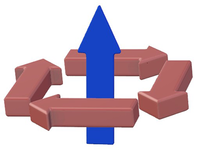
Time crystals are proposed states of matter that spontaneously break time translation symmetry. Despite much recent interest, there is no settled definition for such states and existing definitions only tangentially refer to the well-established foundations of spontaneous symmetry breaking. We offer a definition of time crystals, which treats time translation much like any other symmetry and follows the traditional recipe for defining Wigner symmetries and order parameters. Using our definition, we find: (i) systems with time independent Hamiltonians should not exhibit time translation symmetry breaking, and (ii) the many-body localized π spin glass/Floquet time crystal can be viewed as breaking both a global internal symmetry and the time translation symmetry, as befits the two aspects of its name.

Universality of low-energy Rashba scattering

Joel Hutchinson and Joseph Maciejko

Phys. Rev. B 96, 125304 (2017) - Published 18 September, 2017

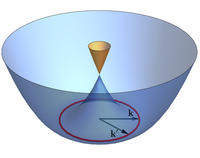
Materials with Rashba spin-orbit coupling have long been known to exhibit interesting transport properties due to their unique spin-momentum locking. However, the topology of the dispersion itself has an even more striking impact on electron-impurity scattering, which is only observable at ultralow energies. The authors investigate the universal properties of 2D electron scattering off of circularly symmetric potentials in this regime by deriving nonperturbative approximations for the low-energy scattering quantities, including the T-matrix, S-matrix, and scattering cross section. As the energy of the electron approaches the bottom of the lowest spin-split band, a number of unusual features appear: the low-energy S and T matrices become independent of the potential, all partial waves contribute equally, and the total scattering cross section exhibits quantized plateaus.

Optical signatures of the superconducting Goldstone mode in granular aluminum: Experiments and theory

Uwe S. Pracht, Tommaso Cea, Nimrod Bachar, Guy Deutscher, Eli Farber, Martin Dressel, Marc Scheffler, Claudio Castellani, Antonio M. García-García, and Lara Benfatto

Phys. Rev. B 96, 094514 (2017) - Published 15 September, 2017

In ordinary superconductors the two collective modes of the complex order parameter are usually strongly resilient to the spectroscopic observation. The amplitude or Higgs mode is weakly coupled to the electromagnetic field and it overlaps with the continuum of single-particle excitations at 2Δ, which buries its signal. The phase or Goldstone mode is optically inert, and it is boosted to the plasma frequency by Coulomb interactions. In the present work, terahertz experiments and theoretical calculations are combined in order to demonstrate the existence of an alternative route for the optical visibility of the Goldstone mode in a nanostructured granular Al thin film. The Coulomb screening due to the grains self-capacitance and the intrinsic inhomogeneity of the local superfluid stiffness due to shell effects lead to finite-frequency subgap absorption of the phase modes, showing that nanograins arrays are a promising setting to control the Goldstone mode via optical means.

Magnetic order, hysteresis, and phase coexistence in magnetoelectric LiCoPO4

Ellen Fogh, Rasmus Toft-Petersen, Eric Ressouche, Christof Niedermayer, Sonja Lindahl Holm, Maciej Bartkowiak, Oleksandr Prokhnenko, Steffen Sloth, Frederik Werner Isaksen, David Vaknin, and Niels Bech Christensen

Phys. Rev. B 96, 104420 (2017) - Published 15 September, 2017

Magnetoelectric materials are characterized by a coupling of electric and magnetic degrees of freedom, which can be brought about when magnetic ordering breaks inversion symmetry. This is the case in LiCoPO4, which displays one of the largest magnetoelectric effects among transition metal compounds. Using neutron diffraction in combination with state-of-the-art high-field magnet technology, the authors of this paper study the magnetic structures and phase diagram of LiCoPO4 in fields up to 25.9 T. It is shown that the known magnetoelectric response is tied to commensurate magnetic order, while an incommensurate cycloid phase allows electric polarization along a direction yet to be probed experimentally.

Three-band Hubbard model for Na2IrO3: Topological insulator, zigzag antiferromagnet, and Kitaev-Heisenberg material

Manuel Laubach, Johannes Reuther, Ronny Thomale, and Stephan Rachel

Phys. Rev. B 96, 121110(R) (2017) - Published 14 September, 2017

Na2IrO3 is a promising material to realize Kitaev physics in nature. Even though it shows long-range magnetic order of antiferromagnetic zigzag type at low temperature, the Kitaev interaction has been predicted to be significant. The origin of zigzag order, however, is currently still debated. Here, the authors suggest that adding charge fluctuations to the Kitaev-Heisenberg (KH) model represents an interesting explanation of zigzag antiferromagnetism. Moreover, their phenomenological three-band Hubbard model puts this material into a larger context as it combines topological insulator physics for weak electron interactions and KH physics for strong ones.

Sign In to Your Journals Account

Filter

Section

Filter

Article Lookup

Enter a citation