Highlights

Entanglement spectroscopy on a quantum computer

Sonika Johri, Damian S. Steiger, and Matthias Troyer

Phys. Rev. B 96, 195136 (2017) - Published 20 November, 2017

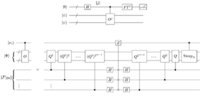
The efficient simulation of many-body quantum systems is an important application of quantum computers. However, extracting useful information from a system of qubits is not straightforward. The quantum computing equivalent of the vast array of diagnostic tools that extract information from classical numerical simulation are still being developed. This paper addresses the efficient calculation of quantities that characterize entanglement between different parts of a quantum state using a quantum computer. Illustrative examples of applications as diverse as many-body localization and fractional quantum Hall effect are discussed.

Optical conductivity of a two-dimensional metal near a quantum critical point: The status of the extended Drude formula

Andrey V. Chubukov and Dmitrii L. Maslov

Phys. Rev. B 96, 205136 (2017) - Published 20 November, 2017

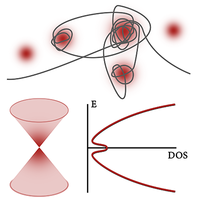
This paper is devoted to the analysis of the frequency dependence of the optical conductivity, σ′(Ω), of a metal near a quantum critical point (QCP). According to general reasoning, the frequency dependence of σ′(Ω) may come via the scattering time and the effective mass, m⋆, but not via the quasiparticle residue Z, because the conductivity probes quasiparticles rather than bare electrons. However, in local theories of QCPs, m⋆/m, coincides with 1/Z, and it is not straightforward to separate the two quantities. The authors use a direct diagrammatic approach, in which m⋆/m and Z are treated separately. They compute the optical conductivity σ′(Ω) near two-dimensional nematic and spin-density wave (SDW) QCPs. They explicitly demonstrate that the Z factor is canceled out by series of vertex corrections, and m⋆/m does not appear separately from Z. As a result, σ′(Ω) diverges as 1/Ω2/3 in the nematic case and as 1/Ω (up to logarithmic factors) in the SDW case.

Intrinsic ac anomalous Hall effect of nonsymmorphic chiral superconductors with an application to UPt3

Zhiqiang Wang, John Berlinsky, Gertrud Zwicknagl, and Catherine Kallin

Phys. Rev. B 96, 174511 (2017) - Published 16 November, 2017

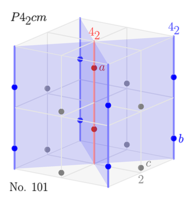
The polar Kerr effect, or equivalently the ac anomalous Hall effect, is a signature of time-reversal symmetry breaking in chiral superconductors. Seeing it requires additional ingredients, such as disorder or multiple bands. The simplest model of chiral superconductivity in UPt3, which is thought to be f wave, would not exhibit a Kerr effect. Here, it is shown that the “starfish” Fermi surface, where the bands stick together at the top and bottom of the Brillouin zone, can exhibit a Kerr effect due to multiband effects and to mixing of f- and d-wave order parameters that are respectively even and odd in the hcp sublattice index.

Charge puddles in the bulk and on the surface of the topological insulator BiSbTeSe2 studied by scanning tunneling microscopy and optical spectroscopy

T. Knispel, W. Jolie, N. Borgwardt, J. Lux, Zhiwei Wang, Yoichi Ando, A. Rosch, T. Michely, and M. Grüninger

Phys. Rev. B 96, 195135 (2017) - Published 16 November, 2017

The peculiar surface transport properties of topological insulators often require tuning of the Fermi level close to the Dirac point. This, however, reduces the screening capabilities of the Dirac-like surface carriers and thus enhances the sensitivity to Coulomb disorder present in compensated materials. Coulomb disorder drives the formation of puddles, local accumulations of charge carriers both in the bulk and on the surface. In the topological insulator BiSbTeSe2, the coexistence of surface puddles and bulk puddles is revealed by scanning tunneling spectroscopy and optical spectroscopy. Quantitative analysis shows that bulk puddles contribute to the screening of surface potential fluctuations in this undoped compound. Understanding and controlling the puddles will be a key to realizing novel phenomena in 3D topological materials.

Quantized charge transport in chiral Majorana edge modes

Stephan Rachel, Eric Mascot, Sagen Cocklin, Matthias Vojta, and Dirk K. Morr

Phys. Rev. B 96, 205131 (2017) - Published 16 November, 2017

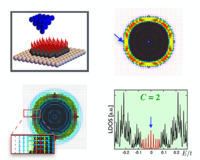
Lattices of magnetic adatoms deposited on the surface of s-wave superconductors (Shiba lattices) have been proposed as a new platform for topological superconductivity, allowing for the local manipulation and detection of Majorana modes via scanning-probe techniques. The authors demonstrate that the topological Majorana edge modes of nanoscopic Shiba islands display universal electronic and transport properties. Most remarkably, these Majorana modes possess a quantized charge conductance that is proportional to the topological Chern number (C), and carry a supercurrent whose chirality reflects the sign of C. These results establish nanoscopic Shiba islands as promising components in future topology-based devices.

Generalization of Bloch's theorem for arbitrary boundary conditions: Theory

Abhijeet Alase, Emilio Cobanera, Gerardo Ortiz, and Lorenza Viola

Phys. Rev. B 96, 195133 (2017) - Published 15 November, 2017

Can one steer a material by its surface? A generalization of Bloch’s theorem to arbitrary boundary conditions reveals actionable links going from surface physics towards changing overall electronic properties. Furthermore, it predicts the existence, in short-range systems, of topological zero-energy modes with power-law corrections, and answers basic questions about system sizes, for which bulk and surface properties merge. The theorem yields exact inversion-free diagonalization algorithms, potentially of interest for large-scale band-structure calculations, by leveraging two new constructs: the analytic continuation of the Bloch Hamiltonian off the Brillouin zone and the boundary matrix that efficiently encodes the interplay between bulk and boundary conditions.

Topological edge-state engineering with high-frequency electromagnetic radiation

Mehedi Hasan, Dmitry Yudin, Ivan Iorsh, Olle Eriksson, and Ivan Shelykh

Phys. Rev. B 96, 205127 (2017) - Published 15 November, 2017

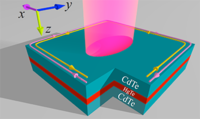
Strong interaction with light may modify quantitatively the electronic properties of condensed matter systems. Here, the authors consider the classical example of topological electron states in a CdTe/HgTe/CdTe heterostructure and demonstrate that the coupling between electrons in a two-dimensional region and an external electromagnetic wave controls with high accuracy the normal and topological phases in the system. The electromagnetic radiation also modifies the properties of the edge states, which leads to the reversal of the edge spin currents. Importantly, all these effects can be realized in controllable and reversible way, and this has high potential impact for their integration of spintronics and optoelectronics.

Electronic properties of disordered Weyl semimetals at charge neutrality

Tobias Holder, Chia-Wei Huang, and Pavel M. Ostrovsky

Phys. Rev. B 96, 174205 (2017) - Published 13 November, 2017

Weyl semimetals are bulk materials with extreme spin-orbit coupling giving rise to gapless Dirac-like excitations. They exhibit a number of peculiar electronic properties owing to the topological nature of the spectrum. While weak disorder is known to be irrelevant in Weyl semimetals, recent theoretical studies have suggested that scattering from rare regions can give rise to a finite density of states at charge neutrality. The authors present a self-consistent theory, taking into account coherent scattering on multiple resonant impurities. The theory predicts relatively high density of states and conductivity at the Weyl point with a nonanalytic dependence on the impurity concentration.

Correlation-driven metal-insulator transition in proximity to an iron-based superconductor

A. Charnukha, Z. P. Yin, Y. Song, C. D. Cao, Pengcheng Dai, K. Haule, G. Kotliar, and D. N. Basov

Phys. Rev. B 96, 195121 (2017) - Published 9 November, 2017

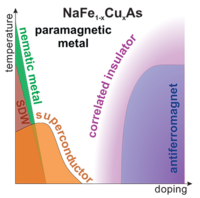
The search for higher-Tc superconductivity is in the vanguard of contemporary physics. Most unconventional high-Tc superconductors exist near a correlated-insulator phase. Unexpectedly, no such phase has been discovered in the family of unconventional iron-based high-temperature superconductors despite almost a decade of intensive search. Here, the authors perform detailed optical spectroscopy and ab initio studies of NaFe1-xCuxAs that reveal the existence of critically strong electronic correlations in this family of iron-based materials, culminating in a novel correlation-driven insulating parent phase with a large spectroscopic gap in the excitation spectrum. These results may lead to the discovery of new types of superconductivity in proximity to the novel correlated insulator.

Out-of-equilibrium dynamics in a quantum impurity model: Numerics for particle transport and entanglement entropy

Kemal Bidzhiev and Grégoire Misguich

Phys. Rev. B 96, 195117 (2017) - Published 8 November, 2017

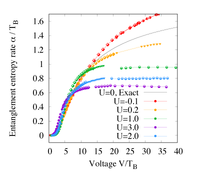
Here, the authors investigate the out-of-equilibrium properties of a simple quantum impurity model: the interacting resonant level model. They focus on the scaling regime, where the bandwidth of the fermions in the leads is larger than all the other energies, so that the lattice and the continuum versions of the model become equivalent. Using time-dependent density matrix renormalization group simulations, the new results cover a range of parameters, complementing previous analytical results that exist for only a few points in parameter space. The chief results are a demonstration of scaling collapse for I-V curves and for entanglement in terms of the Kondo temperature.

Chiral liquid phase of simple quantum magnets

Zhentao Wang, Adrian E. Feiguin, Wei Zhu, Oleg A. Starykh, Andrey V. Chubukov, and Cristian D. Batista

Phys. Rev. B 96, 184409 (2017) - Published 7 November, 2017

A current challenge in condensed matter physics is the search for novel quantum states of matter. In this paper, the authors provide a simple guiding principle for finding quantum spin liquids in real materials. Like in the case of unconventional superconductivity that involves pairing of two fermions into a bound state, it is shown here that chiral quantum liquids naturally emerge in the vicinity of a class of magnetic quantum critical points, due to pairing of two bosons into a bound state of zero total spin.

Radiation damping in ferromagnetic resonance induced by a conducting spin sink

Mohammad M. Qaid, Tim Richter, Alexander Müller, Christoph Hauser, Camillo Ballani, and Georg Schmidt

Phys. Rev. B 96, 184405 (2017) - Published 6 November, 2017

Spin pumping describes the flow of a spin current from a ferromagnet into an adjacent conductor due to spin precession or thermal gradients in the ferromagnet. To measure its magnitude, often the damping of the ferromagnet in ferromagnetic resonance is investigated, which increases when spin pumping takes place. However, in the experiments shown here, it is shown that electromagnetic interactions between the ferromagnet and the conducting nonmagnet with the exciting magnetic radio-frequency field can also cause additional damping. This so-called radiation damping can mimic spin pumping where none exists or at least considerably falsify the results obtained from the standard evaluation of the experiment.

Valley surface-wave photonic crystal and its bulk/edge transport

Zhen Gao, Zhaoju Yang, Fei Gao, Haoran Xue, Yahui Yang, Jianwen Dong, and Baile Zhang

Phys. Rev. B 96, 201402(R) (2017) - Published 6 November, 2017

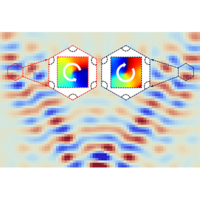
The valley Hall effect and topological valley edge states are two fundamental properties in gapped valleytronic materials, such as MoS2 and biased bilayer graphene. Such properties have paved the way for applications in valleytronics. Here, the authors experimentally demonstrate a valley surface-wave photonic crystal on a single metal surface, as the photonic analog of the valley-Hall topological insulator phase. The photonic valley-Hall effect with valley-chirality locked beam splitting, and topological valley-polarized edge states, are demonstrated for the first time on a photonic platform.

Building crystalline topological phases from lower-dimensional states

Sheng-Jie Huang, Hao Song, Yi-Ping Huang, and Michael Hermele

Phys. Rev. B 96, 205106 (2017) - Published 6 November, 2017

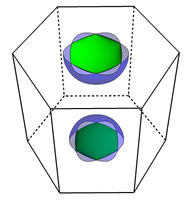
Topological phases protected by the geometrical symmetries of crystal lattices turn out to be surprisingly simple. They can be built from simpler lower-dimensional states, arranged in a crystalline pattern.

Circularly polarized vacuum field in three-dimensional chiral photonic crystals probed by quantum dot emission

S. Takahashi, Y. Ota, T. Tajiri, J. Tatebayashi, S. Iwamoto, and Y. Arakawa

Phys. Rev. B 96, 195404 (2017) - Published 3 November, 2017

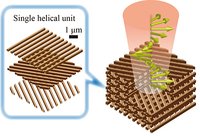
The modification of a circularly polarized vacuum field in three-dimensional chiral photonic crystals was measured by spontaneous emission from quantum dots in the structures. Due to the circularly polarized eigenmodes along the helical axis in the GaAs-based mirror-asymmetric structures involved, the authors observed highly circularly-polarized emission from the quantum dots. Both spectroscopic and time-resolved measurements confirmed that the obtained circularly-polarized light was influenced by a large difference in the photonic density of states between the orthogonal components of the circular polarization in the vacuum field.

Spectroscopic perspective on the interplay between electronic and magnetic properties of magnetically doped topological insulators

J. A. Krieger, Cui-Zu Chang, M.-A. Husanu, D. Sostina, A. Ernst, M. M. Otrokov, T. Prokscha, T. Schmitt, A. Suter, M. G. Vergniory, E. V. Chulkov, J. S. Moodera, V. N. Strocov, and Z. Salman

Phys. Rev. B 96, 184402 (2017) - Published 2 November, 2017

The quantum anomalous Hall (QAH) effect involves spin-polarized, dissipation-free chiral edge state transport in the absence of an external magnetic field. This effect has been realized in magnetically doped topological insulators, such as Cr- and V-doped (Bi,Sb)2Te3 thin films. To date, the observation of the QAH effect in these materials is limited to millikelvin temperatures deep below their ferromagnetic transition temperature. In this report, the authors provide complementary magnetic and electronic study of such systems using muon spin and photoemission spectroscopies. They show that the topological insulator layers become fully ferromagnetic only at much lower temperature than the onset temperature for ferromagnetism and demonstrate the presence of a magnetic impurity band with a finite density of states at the Fermi level. Both properties may be responsible for the low temperature needed for observing the QAH effect.

Observation of Volkov-Pankratov states in topological HgTe heterojunctions using high-frequency compressibility

A. Inhofer, S. Tchoumakov, B. A. Assaf, G. Fève, J. M. Berroir, V. Jouffrey, D. Carpentier, M. O. Goerbig, B. Plaçais, K. Bendias, D. M. Mahler, E. Bocquillon, R. Schlereth, C. Brüne, H. Buhmann, and L. W. Molenkamp

Phys. Rev. B 96, 195104 (2017) - Published 1 November, 2017

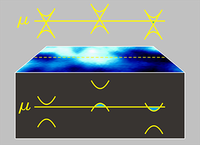
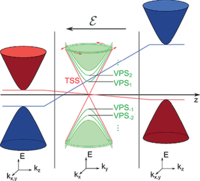
A smooth heterojunction between a topological (left panel of figure) and a trivial (right panel) hosts not only chiral Dirac states but also massive Volkov-Pankratov states (VPSs). The authors show that VPSs behave in a relativistic manner in a strong electric field: not only are they populated in increasing chemical potential, but their energy is lowered in a Lorentz boost by the electric field thus enhancing their visibility. Signatures of this relativistic field effect are reported in HgTe/CdHgTe heterojunctions using high-frequency transport measurements. These include anomalous charge screening (Dirac screening), its breakdown at the VPS band edge, and evidence of multiple VPSs.

Nonlocal transport and the Hall viscosity of two-dimensional hydrodynamic electron liquids

Francesco M. D. Pellegrino, Iacopo Torre, and Marco Polini

Phys. Rev. B 96, 195401 (2017) - Published 1 November, 2017

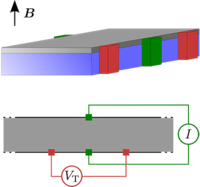
Hydrodynamics is a powerful theory for the description of transport in materials where the electron-electron mean-free path is much smaller than all the other length scales of the problem. Such a nonperturbative theory relies on a small number of coefficients, such as bulk and shear viscosities and thermal conductivity. When time-reversal symmetry is broken, a new dissipationless term, controlled by the Hall viscosity, appears in the Navier-Stokes equation. Here, the authors demonstrate that measurements of nonlocal resistances in multiterminal Hall-bar devices allow one to access the Hall viscosity of a two-dimensional electron liquid.

Electron teleportation and statistical transmutation in multiterminal Majorana islands

Karen Michaeli, L. Aviad Landau, Eran Sela, and Liang Fu

Phys. Rev. B 96, 205403 (2017) - Published 1 November, 2017

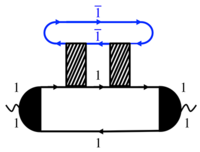
Majorana zero modes are localized zero-energy degrees of freedom in topological superconductors that can store quantum information in a protected manner. Finding a direct proof of the Majorana identity of zero-energy states has been a challenge. The authors show that, in a Coulomb blockaded superconductor island coupled to normal metal leads, Majorana zero modes on the island bind with electrons in the leads to form a charge-e boson, thereby converting the quantum statistics of charge carriers. This statistical transmutation leads to unusual temperature and voltage dependence of the tunneling current as a unique signature of the Majorana zero modes.

Narrow optical linewidths and spin pumping on charge-tunable close-to-surface self-assembled quantum dots in an ultrathin diode

Matthias C. Löbl, Immo Söllner, Alisa Javadi, Tommaso Pregnolato, Rüdiger Schott, Leonardo Midolo, Andreas V. Kuhlmann, Søren Stobbe, Andreas D. Wieck, Peter Lodahl, Arne Ludwig, and Richard J. Warburton

Phys. Rev. B 96, 165440 (2017) - Published 30 October, 2017
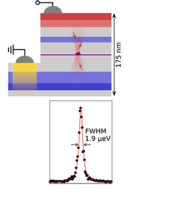
Quantum dots in photonic crystal membrane structures are an attractive platform for on-chip quantum photonics. However, charge control of quantum dots in thin membranes is challenging. The widely used p-i-n diodes operate typically at high bias, resulting in high leakage currents. Here, a modified diode design is presented, fully compatible with the fabrication of photonic crystals, that enables deterministic charging of embedded quantum dots at small biases and, hence, small currents. Narrow optical linewidths and optical spin pumping are demonstrated on quantum dots in this ultrathin diode structure.

Sign In to Your Journals Account

Filter

Section

Filter

Article Lookup

Enter a citation