Highlights

Intuitive approach to the unified theory of spin relaxation

Lénárd Szolnoki, Balázs Dóra, Annamária Kiss, Jaroslav Fabian, and Ferenc Simon

Phys. Rev. B 96, 245123 (2017) - Published 18 December, 2017

There are two main mechanisms of spin relaxation in conductors. The Elliott-Yafet (EY) mechanism describes spin-flip scattering, while the D’yakonov-Perel’ (DP) mechanism relies on spin precession and motional narrowing. While both need spin-orbit coupling, historically the two mechanisms have been treated differently. It is now demonstrated, using an intuitive generic model, that the two mechanisms can be cast in the same language based on motional narrowing in the presence of an effective, spin-orbit related magnetic field. This shows an intimate relationship between spin flip and spin precession and enables use of the same, readily programmable formalism for both regimes. The technique is demonstrated for MgB2, which shows an anomalous spin-relaxation behavior that cannot be explained by conventional models.

No evidence for orbital loop currents in charge-ordered YBa2Cu3O6+x from polarized neutron diffraction

T. P. Croft, E. Blackburn, J. Kulda, Ruixing Liang, D. A. Bonn, W. N. Hardy, and S. M. Hayden

Phys. Rev. B 96, 214504 (2017) - Published 15 December, 2017

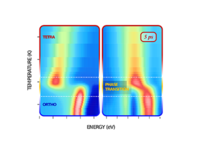
An ubiquitous feature of cuprate superconductors is the existence of a normal-state pseudogap for underdoped compositions. Several experiments suggest that there may be a phase transition to the pseudogap state in which a symmetry is broken. One proposed scenario is that the pseudogap state breaks time-reversal symmetry due to the formation of circulating currents within each unit cell. The authors study underdoped YBa2Cu3O6+x using polarized neutron scattering and show that this scenario is unlikely.

Radical chiral Floquet phases in a periodically driven Kitaev model and beyond

Hoi Chun Po, Lukasz Fidkowski, Ashvin Vishwanath, and Andrew C. Potter

Phys. Rev. B 96, 245116 (2017) - Published 12 December, 2017

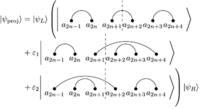
Chiral topological phases, like quantum Hall states, are characterized by anomalous unidirectional edge transport arising from a nontrivial insulating bulk. Recent developments suggest that they can be extended to periodically driven (Floquet) systems, where quantum information is pumped in lieu of charge or energy. The authors uncover a new chiral Floquet phase of quantum dynamics, whose edge pumps quantized units of fractionalized excitations. These phases are “radical,” in that the quantum dimension pumped is the square root of an integer. Unexpectedly, such edge borders a bulk with dynamical anyon transmutation, demonstrating a novel form of bulk-boundary correspondence.

Electric multipole moments, topological multipole moment pumping, and chiral hinge states in crystalline insulators

Wladimir A. Benalcazar, B. Andrei Bernevig, and Taylor L. Hughes

Phys. Rev. B 96, 245115 (2017) - Published 11 December, 2017

The Berry phase provides a modern formulation of electric polarization in crystals. Recently, this formulation was extended by the authors to higher electric multipole moments. In quantum mechanical crystalline insulators, such higher multipole moments manifest themselves by the presence of boundary-localized moments of lower dimension. In the presence of certain symmetries, these moments are quantized, and their boundary signatures are fractionalized. Here, the authors elaborate in detail on the theory of higher multipole moments and discuss associated topological pumping phenomena, as well as higher-order topological insulators derived from them.

NMR in an electric field: A bulk probe of the hidden spin and orbital polarizations

Jorge Ramírez-Ruiz, Samuel Boutin, and Ion Garate

Phys. Rev. B 96, 235201 (2017) - Published 8 December, 2017

The recent discovery of spin and orbital textures in nonmagnetic crystals with inversion symmetry has broadened the scope for spintronics applications. These so-called hidden polarizations are however difficult to probe, in part because they average to zero within each unit cell. In this work, the authors show that a bulk detection of intra-unit cell spin and orbital textures can be achieved with nuclear magnetic resonance by splitting, with an electric current, the resonance peak of inversion partner nuclei. The proposal is illustrated with numerical results for Bi2Se3 and Bi2Te3, and other promising materials are identified on the basis of their crystal symmetries.

Electron charge and spin delocalization revealed in the optically probed longitudinal and transverse spin dynamics in n-GaAs

V. V. Belykh, K. V. Kavokin, D. R. Yakovlev, and M. Bayer

Phys. Rev. B 96, 241201(R) (2017) - Published 7 December, 2017

The spin dynamics of localized electrons in solids is drastically different from that of mobile electrons. One of the main features characteristic for localized spins is the prominent difference between the longitudinal and transverse spin relaxation times T1 and T2⋆ in magnetic fields. While up till now these times were believed to be of different nature, here the authors find the surprising relation T1 × T2⋆ ≈ constant for electrons localized on donors in n-GaAs. This is explained by the impact of the magnetic field on spin diffusion. On the other hand, mobile electrons are characterized by a single spin lifetime in the motional-narrowing regime. Upon rising temperature or donor concentration, the authors observe a striking 100-fold increase of T2* due to the onset of motional narrowing.

Anderson localization transitions with and without random potentials

Trithep Devakul and David A. Huse

Phys. Rev. B 96, 214201 (2017) - Published 6 December, 2017

Anderson localization of noninteracting particles has traditionally been viewed as being due to random potentials. However, random potentials are not needed, and localization due to nonrandom quasiperiodic potentials is well studied in one dimension. The authors extend this work to higher dimensions. A quantum particle in a quasiperiodic potential in three dimensions has three “eigenstate phases”: a localized phase at strong potential, a ballistic phase at weak potential, and a diffusive phase in between. They find that the universality class of the Anderson localization transitions in three dimensions is insensitive to whether or not the potential is random, which is not true in fewer dimensions.

Domain-size effects on the dynamics of a charge density wave in 1T−TaS2

G. Lantz, C. Laulhé, S. Ravy, M. Kubli, M. Savoini, K. Tasca, E. Abreu, V. Esposito, M. Porer, A. Ciavardini, L. Cario, J. Rittmann, P. Beaud, and S. L. Johnson

Phys. Rev. B 96, 224101 (2017) - Published 6 December, 2017

The phase diagram of 1T-TaS2 involves many different solid-state phases, including several different kinds of charge-density-wave (CDW) phase both commensurate and incommensurate with the underlying lattice. Recent experiments have shown that it is possible to drive transitions between these phases with intense femtosecond pulses of light. This work focuses on the light-driven transition from the nearly commensurate CDW phase to the incommensurate phase, using time-resolved x-ray diffraction. The authors find that the new incommensurate domains grow in a self-similar way. They also employ a double-pump method to study the dynamics and stability of the novel incommensurate phase during growth.

Nodal-line semimetals from Weyl superlattices

Jan Behrends, Jun-Won Rhim, Shang Liu, Adolfo G. Grushin, and Jens H. Bardarson

Phys. Rev. B 96, 245101 (2017) - Published 1 December, 2017

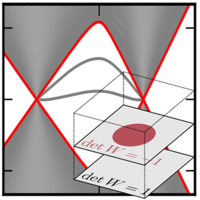
The band crossings at the Fermi level of a Weyl semimetal are generally stable against disorder. The only way to open a gap in the spectrum is by annihilating pairs of Weyl nodes. Here, the authors show that coupling Weyl nodes by a superlattice does not always lead to gap opening, but does lead to a variety of different phases, including a nodal-line semimetal. The authors uncover a novel mechanism that protects the nodal line, a combination of a fractional lattice translation and charge-conjugation symmetry, and show that its in-gap surface states are not necessarily exponentially localized.

Fermi arc plasmons in Weyl semimetals

Justin C. W. Song and Mark S. Rudner

Phys. Rev. B 96, 205443 (2017) - Published 29 November, 2017

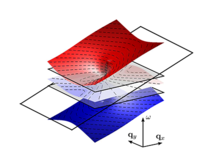
Weyl semimetals, prototypical three dimensional topological metals, possess a unique band structure that has enriched the “standard model” of metallic behavior. This work unveils how the unusual topological surface states of Weyl semimetals radically alter their plasmonic characteristics, yielding intrinsic hyperbolic surface plasmons. These Fermi-arc plasmons have a rich phenomenology, and arise from the coupled dynamics of carriers both on the unusual open-segment surface Fermi arc and the bulk Fermi surface, clearly demonstrating the intricate interplay of bulk and surface. While Fermi-arc plasmons are fascinating in their own right, the essential role that the open-segment Fermi arcs play also indicates more broadly that Weyl semimetals may host new types of interacting phenomena not realizable in conventional metals − an exciting prospect for future developments.

Spin Seebeck effect in the polar antiferromagnet α−Cu2V2O7

Y. Shiomi, R. Takashima, D. Okuyama, G. Gitgeatpong, P. Piyawongwatthana, K. Matan, T. J. Sato, and E. Saitoh

Phys. Rev. B 96, 180414(R) (2017) - Published 28 November, 2017

Spin currents in antiferromagnetic materials have recently attracted much interest in the field of spintronics. Although the thermal generation effect of spin currents, as in the spin Seebeck effect (SSE), is powerful for their study, the SSE in antiferromagnets has been experimentally studied only for Cr2O3 and MnF2. In this work, the authors experimentally observe the SSE in the polar antiferromagnet α-Cu2V2O7. Comparison of the experimental results with calculations using magnetic parameters determined by neutron scattering studies reveals that the magnon scattering plays an important role in the antiferromagnetic SSE observed in α-Cu2V2O7.

Cuprate phase diagram and the influence of nanoscale inhomogeneities

N. Zaki, H.-B. Yang, J. D. Rameau, P. D. Johnson, H. Claus, and D. G. Hinks

Phys. Rev. B 96, 195163 (2017) - Published 28 November, 2017

The phase diagram associated with cuprate superconductors is complicated by an array of different ground states. The parent material represents an antiferromagnetic insulator, but becomes a high-temperature superconductor upon doping. The underdoped region of the phase diagram is dominated by the so-called pseudogap phenomena, whose understanding presents one of the great challenges for the field. However, another aspect of these complex systems that is frequently overlooked is the tendency to phase separate into nanoscale regions upon hole doping. The overdoped region allowed the authors to examine the influence of the latter on the overall structure of the phase diagram.

Ultrafast optical snapshots of hybrid perovskites reveal the origin of multiband electronic transitions

Kannatassen Appavoo, Wanyi Nie, Jean-Christophe Blancon, Jacky Even, Aditya D. Mohite, and Matthew Y. Sfeir

Phys. Rev. B 96, 195308 (2017) - Published 28 November, 2017

Hybrid organic-inorganic perovskites are a promising class of materials for low-temperature solution-processed thin-film optoelectronic technologies. Here, the authors assign the visible and near-infrared optical transitions in large-grain thin films, using variable temperature transient absorption measurements that provide a sensitive probe of the electronic energy levels. These studies address an ongoing controversy concerning the nature of higher-order subband transitions. The strong visible absorption band is assigned to nearly degenerate transitions originating from different momentum states within the multivalley electronic band structure using symmetry analysis and the response of the optical resonances during the low-temperature structural phase transition.

Nuclear spin cooling by helicity-alternated optical pumping at weak magnetic fields in n-GaAs

P. S. Sokolov, M. Yu. Petrov, K. V. Kavokin, A. S. Kurdyubov, M. S. Kuznetsova, R. V. Cherbunin, S. Yu. Verbin, N. K. Poletaev, D. R. Yakovlev, D. Suter, and M. Bayer

Phys. Rev. B 96, 205205 (2017) - Published 28 November, 2017

Optical cooling of a mesoscopic nuclear spin ensemble in a semiconductor is a complex process that involves transferring angular momentum and energy between nuclear spins and optically oriented localized electrons. The established spin temperature is sensitive to the balance between pumping and losses as well as to the heat capacity of the nuclear spin ensemble. This property allows one to determine the zero-frequency value of the correlator of nuclear spin fluctuations and thus to estimate the spin-spin relaxation time T2 at low magnetic fields from the frequency response of the electron-nuclear spin ensemble to a modulated optical pumping.

Spin dynamics in the high-field phases of volborthite

M. Yoshida, K. Nawa, H. Ishikawa, M. Takigawa, M. Jeong, S. Krämer, M. Horvatić, C. Berthier, K. Matsui, T. Goto, S. Kimura, T. Sasaki, J. Yamaura, H. Yoshida, Y. Okamoto, and Z. Hiroi

Phys. Rev. B 96, 180413(R) (2017) - Published 27 November, 2017

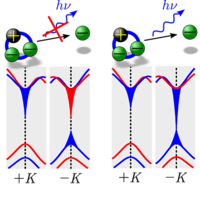
In a frustrated magnet with competing ferromagnetic and antiferromagnetic interactions, a spin-nematic state can be realized due to the condensation of two magnon bound stats. Volborthite Cu3V2O7(OH)2⋅2H2O is a promising candidate. The authors study the spin dynamics in the high-field phases of volborthite. In the magnetization plateau state, the nuclear relaxation rates indicate an excitation gap with a large effective g factor, pointing to magnon bound states. The relaxation rates also indicate unusual spin fluctuations with slow time scales. These findings suggest that an exotic spin state caused by the condensation of magnon bound states is realized below the magnetization plateau.

Quantum disentangled liquid in the half-filled Hubbard model

Thomas Veness, Fabian H. L. Essler, and Matthew P. A. Fisher

Phys. Rev. B 96, 195153 (2017) - Published 27 November, 2017

Our expectation of thermalization is one borne of experience, and it is interesting to understand how conventional statistical mechanics may fail. The so-called quantum disentangled liquid (QDL) is a paradigm outside of the (Generalized) Gibbs description, but also without spatial disorder, precluding many-body localization. In this paper, the authors provide evidence that this QDL behavior exists in the Hubbard model. The QDL diagnostic involves bipartite entanglement entropies after a partial measurement. Both integrability in 1D and strong-coupling techniques are used to argue that the QDL diagnostic is indeed satisfied.

Dark excitations in monolayer transition metal dichalcogenides

Thorsten Deilmann and Kristian Sommer Thygesen

Phys. Rev. B 96, 201113(R) (2017) - Published 27 November, 2017

To date, most studies on electronic excitations in 2D materials have focused on the optically active excitations, but recent experiments have highlighted the existence of dark states, which are equally important in many respects. Here, the authors use ab initio many-body calculations to unravel the nature of the dark excitations in monolayer MoSe2, MoS2, WSe2, and WS2. The lowest neutral and charged excitations are found to be dark. In accordance with experiment, dark trions are weaker bound than bright trions.

Microscopic origin of the Drude-Smith model

T. L. Cocker, D. Baillie, M. Buruma, L. V. Titova, R. D. Sydora, F. Marsiglio, and F. A. Hegmann

Phys. Rev. B 96, 205439 (2017) - Published 27 November, 2017

Terahertz spectroscopy of nanomaterials is one of the most active areas of terahertz physics thanks to its ability to reveal charge-carrier confinement on length scales of tens to hundreds of nanometers. Structural confinement modifies the experimental complex conductivity, such that it is Drude-like at high frequencies but suppressed at low frequencies. This response is often described as a consequence of carrier backscattering off nanoparticle boundaries and modeled using the sometimes controversial Drude-Smith formula. In this paper, it is demonstrated that the terahertz conductivity of a structurally confined Drude gas of electrons is actually suppressed at low frequencies due to carrier confinement on the diffusion length scale and not due to backscattering. A new conductivity formula is derived based on diffusion that is found to be very similar to the Drude-Smith conductivity formula, thereby explaining many of the previous successes of the Drude-Smith model.

Electron temperature and tunnel coupling dependence of zero-bias and almost-zero-bias conductance peaks in Majorana nanowires

F. Setiawan, Chun-Xiao Liu, Jay D. Sau, and S. Das Sarma

Phys. Rev. B 96, 184520 (2017) - Published 22 November, 2017

A key signature of a topological Majorana zero mode is the 2e2/h quantized zero-temperature zero-bias conductance of a metal-superconductor tunnel junction. This theoretical work shows that the finite-temperature Majorana conductance obeys a scaling relation with respect to a single dimensionless parameter, given by the ratio of the temperature and tunnel coupling, but only in the limit of weak tunneling and low temperature. Unfortunately, exactly the same scaling also applies to the zero-bias conductance arising from trivial Andreev bound states. This implies that a clear distinction between topological and trivial physics is not feasible based on such scaling plots.

Machine learning topological states

Dong-Ling Deng, Xiaopeng Li, and S. Das Sarma

Phys. Rev. B 96, 195145 (2017) - Published 22 November, 2017

Machine learning, the core of artificial intelligence and data science, is a very active field, with vast applications throughout science and technology. Recently, machine learning techniques have been adopted to tackle intricate quantum many-body problems and phase transitions. In this work, the authors construct exact mappings from exotic quantum states to machine learning network models. This work shows for the first time that the restricted Boltzmann machine can be used to study both symmetry-protected topological phases and intrinsic topological order. The exact results are expected to provide a substantial boost to the field of machine learning of phases of matter.

Sign In to Your Journals Account

Filter

Section

Filter

Article Lookup

Enter a citation