Highlights

Electron-phonon coupling in graphene placed between magnetic Li and Si layers on cobalt

Dmitry Yu. Usachov, Alexander V. Fedorov, Oleg Yu. Vilkov, Ilya I. Ogorodnikov, Mikhail V. Kuznetsov, Alexander Grüneis, Clemens Laubschat, and Denis V. Vyalikh

Phys. Rev. B 97, 085132 (2018) - Published 21 February, 2018

Superconductivity in two-dimensional materials remains largely unexplored and attracts much attention. Although graphene is not a superconductor, adsorption of alkali metals on its surface may enhance electron-phonon coupling (EPC) sufficiently to induce superconductivity. Here, using photoemission spectroscopy, the authors study the electronic structure and EPC in a Li-doped graphene monolayer weakly bonded to a cobalt substrate. It is shown that EPC is high enough to create superconductivity in graphene, however the nonmagnetic graphene layer is clamped between two oppositely magnetized atomic layers. This condition makes the studied system a promising platform for understanding the influence of magnetic environment on superconductivity at low dimensions.

Polarized single crystal neutron diffraction study of the zero-magnetization ferromagnet Sm1−xGdxAl2 (x=0.024)

T. Chatterji, A. Stunault, and P. J. Brown

Phys. Rev. B 97, 064417 (2018) - Published 20 February, 2018

The unique properties of zero-magnetization ferromagnets (ZMF) are well suited for device applications to process the spin of charged particles. The present paper is the first single-crystal polarized neutron diffraction study of the orbital and spin magnetic moments as a function of temperature through the compensation point of the ZMF Sm1-xGdxAl2. This study is difficult because of enormous absorption of both Sm and Gd with thermal neutrons and was therefore not undertaken before. By using hot polarized neutrons and an applied magnetic field of 8 Tesla, the authors successfully determined spin and orbital moments of Sm3+ ions separately with high accuracy. This study enables a better understanding of the basic microscopic mechanism of ZMF materials.

Localization enhanced and degraded topological order in interacting p-wave wires

G. Kells, N. Moran, and D. Meidan

Phys. Rev. B 97, 085425 (2018) - Published 20 February, 2018

Interest in quantum memory devices based on topological superconductors and their non-Abelian zero modes is motivated by the observation that at zero temperature the information stored in these devices is exponentially protected. In noninteracting systems, due to the fact that the system can be described using normal modes, much of this protection also exists at higher temperatures. The authors examine here how this picture gradually breaks down at higher temperatures when interactions are present, and explore the conjecture that the topological protection may be recovered by disorder-induced localization. They see that the disorder triggers multiple mechanisms which, depending on the parameters of the system, can both enhance and degrade the stability of the topological zero modes.

Domain-wall excitations in the two-dimensional Ising spin glass

Hamid Khoshbakht and Martin Weigel

Phys. Rev. B 97, 064410 (2018) - Published 16 February, 2018

The Ising spin glass in two dimensions is a model system with extraordinarily rich behavior. Although it does not show a spin-glass phase at finite temperatures, it exhibits many of the salient features of fully fledged spin glass systems. The authors use recently developed mappings to graph-theoretic problems together with highly efficient implementations of combinatorial optimization algorithms to determine exact ground states for systems with up to 10,000×10,000 spins. These and further results from new algorithms for fully periodic lattices and for systems with degeneracies allow for the determination of critical exponents with unprecedented accuracy.

Inducing coherent quantum dot interactions

Eric W. Martin and Steven T. Cundiff

Phys. Rev. B 97, 081301(R) (2018) - Published 15 February, 2018

Semiconductor quantum dots (QDs) are typically entirely uncoupled, and interfacial QDs are no exception. However, exciting higher-energy quantum-well states can turn on QD interactions. Here, the authors measure individual QDs with a coherent spectroscopy that is extremely sensitive to interactions. They demonstrate an induced binding between two distinct QDs with a very weak excitation of delocalized quantum-well states. This interaction is presented as a possible method for turning on coupling between quantum states and for measuring fundamental processes in semiconductors with nanometer spatial resolution.

Experimental evidence for the microscopic mechanism of the unusual spin-induced electric polarization in GdMn2O5

G. Yahia, F. Damay, S. Chattopadhyay, V. Balédent, W. Peng, S. W. Kim, M. Greenblatt, M.-B. Lepetit, and P. Foury-Leylekian

Phys. Rev. B 97, 085128 (2018) - Published 15 February, 2018

The spin induced ferroelectricity of the RMn2O5 family is ascribed to an exchange-striction mechanism related to the frustrated Mn3+-Mn4+ antiferromagnetic interactions. From an accurate powder neutron diffraction experiment on an isotope-enriched sample of GdMn2O5, the authors detect in this compound a supplementary exchange-striction mechanism responsible for its exceptionally large electric polarization. This additional contribution comes from the release of the frustration between the huge and isotropic Gd3+ moments and the Mn3+/Mn4+ spins. The key ingredients to the atomic displacements are the isotropic Gd3+ electronic structure and the mediation of the Gd/Mn magnetic interactions by the oxygens. This results in a differential dependence of the Gd/Mn magnetic exchanges to the Mn-O distances and not the Gd-Mn ones, as predicted.

Coherent spin dynamics of ytterbium ions in yttrium orthosilicate

Hee-Jin Lim, Sacha Welinski, Alban Ferrier, Philippe Goldner, and J. J. L. Morton

Phys. Rev. B 97, 064409 (2018) - Published 14 February, 2018

Rare-earth spins in optical crystals like yttrium orthosilicate (YSO) are of much interest for providing coherent interfaces with both microwave and optical photons. Here, the authors study the spin dynamics of a new system, Yb in YSO, which has favorable optical properties and strong hyperfine coupling to the 171Yb (spin-1/2) and 173Yb (spin-5/2) isotopes. The results demonstrate long coherence times for both the electron and nuclear spins (~1 ms). Employing a range of pulsed electron spin resonance measurements as well as comparison with relevant theory, the study elucidates a number of spin relaxation and decoherence mechanisms at work.

Critical chiral Heisenberg model with the functional renormalization group

Benjamin Knorr

Phys. Rev. B 97, 075129 (2018) - Published 14 February, 2018

The critical properties of the spin-density-wave/semimetal phase transition in Dirac materials are still under debate despite all the efforts from continuum and lattice methods. Using state-of-the-art functional renormalization group methods, the author provides improved estimates of the leading critical exponents. They are in line with earlier results obtained with the same method and in disagreement with recent quantum Monte Carlo estimates. The study supports the conjecture the only adequate nonperturbative treatment of the different universality classes, related to this phase transition, is via the functional renormalization group.

Effects of non-Hermitian perturbations on Weyl Hamiltonians with arbitrary topological charges

Alexander Cerjan, Meng Xiao, Luqi Yuan, and Shanhui Fan

Phys. Rev. B 97, 075128 (2018) - Published 13 February, 2018

Understanding the properties of non-Hermitian topological systems is of critical importance for photonic and acoustic systems, where it is relatively easy to add material gain and absorption. Here, the authors provide a systematic study of the effects of adding gain and loss to Weyl semimetals, whereby Weyl points with arbitrary charge expand into topologically charged rings of degeneracies. This yields a new class of topological transitions, which occur by changing the strength of the gain and loss, rather than altering the symmetry of the system.

Stabilization of magnetic skyrmions by RKKY interactions

Alla V. Bezvershenko, Alexei K. Kolezhuk, and Boris A. Ivanov

Phys. Rev. B 97, 054408 (2018) - Published 6 February, 2018

Magnetic skyrmions are topological spin textures with potential applications in future spintronic devices, but they have a tendency to collapse that can be cured only by a subtle interplay of weak interactions. Here, the authors propose a novel mechanism to stabilize skyrmions in a magnetic monolayer by placing the system on a conducting substrate, such as a normal metal or graphene. This makes the spins interact via the long-range Ruderman-Kittel-Kasuya-Yosida exchange. With a metallic substrate, skyrmions can be stabilized by fine tuning the Fermi surface parameters, while with a graphene substrate the stabilization occurs naturally in several geometries.

Time-dependent first-principles study of angle-resolved secondary electron emission from atomic sheets

Yoshihiro Ueda, Yasumitsu Suzuki, and Kazuyuki Watanabe

Phys. Rev. B 97, 075406 (2018) - Published 6 February, 2018

Angle-resolved secondary electron emission (ARSEE) spectra of atomic sheets have been considered to reflect the unoccupied energy bands of the targets. However, far less is known about the dynamics of electron excitation from the valence bands to the unoccupied bands upon electron impact, leading to emission into the vacuum. Here, the authors keep track of the electrons excited to the unoccupied bands and emitted to the vacuum in real time, position space, and k-space simultaneously by a time-dependent density-functional theory simulation.

Symmetry breaking and the fermionic fractional Chern insulator in topologically trivial bands

Stefanos Kourtis

Phys. Rev. B 97, 085108 (2018) - Published 5 February, 2018

Subjecting a topologically nontrivial class of noninteracting electronic states to interactions can sometimes yield a “fractional” topologically ordered version of that class. For example, electrons in topological bands with integer-quantized Hall conductivity can generate fractional quantum Hall (FQH) states upon addition of repulsive interactions. However, of all existing material band structures, the topologically nontrivial ones are rare. Here, the author demonstrates theoretically in a minimal setting how strong interactions and symmetry breaking can induce FQH-type topological order even in topologically trivial bands. This finding shows that even topologically trivial band structures – the vast majority – can host topological order.

Nonmonotonic magnetoresistance of a two-dimensional viscous electron-hole fluid in a confined geometry

P. S. Alekseev, A. P. Dmitriev, I. V. Gornyi, V. Yu. Kachorovskii, B. N. Narozhny, and M. Titov

Phys. Rev. B 97, 085109 (2018) - Published 5 February, 2018

The last few years have seen an explosion of interest in hydrodynamic effects in interacting electron systems in ultrapure materials, where the collective motion of charge carriers may resemble the flow of a viscous fluid. In a confined geometry, such as that provided by ultrahigh quality nanostructures, one expects the electronic fluid to exhibit Poiseuille-type flow profile. Here, the authors show that in two-component systems near charge neutrality the hydrodynamic viscous flow is strongly affected by the mutual friction and recombination between the two constituents leading to a strongly nonuniform current density and nonmonotonic magnetoresistance that happens to be negative (positive) in low (high) magnetic fields.

Equivalence of restricted Boltzmann machines and tensor network states

Jing Chen, Song Cheng, Haidong Xie, Lei Wang, and Tao Xiang

Phys. Rev. B 97, 085104 (2018) - Published 2 February, 2018

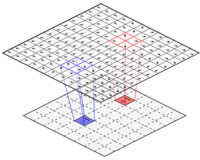
The restricted Boltzmann machine is a fundamental building block of deep learning. The authors demonstrate its equivalence with tensor network states with explicit mappings, thus drawing a constructive connection between deep learning and quantum physics. On one side, deep learning approaches can be used to study novel states of matter. In return, investigations of tensor network states and their expressibility can be adapted to guide neural network architecture design.

Size effects on supercooling phenomena in strongly correlated electron systems: IrTe2 and θ−(BEDT−TTF)2RbZn(SCN)4

H. Oike, M. Suda, M. Kamitani, A. Ueda, H. Mori, Y. Tokura, H. M. Yamamoto, and F. Kagawa

Phys. Rev. B 97, 085102 (2018) - Published 1 February, 2018

Sample miniaturization has been recognized to be helpful in obtaining deeply supercooled liquids or metastable crystalline solids. Here, the authors generalize the idea of the size effect with phenomenological simulations, and show that it certainly works in two distinct correlated electron systems. Because the validity of the size effects does not rely on microscopic details of each material, they are expected to be applicable to other correlated electron systems, potentially facilitating the creation of metastable electronic states.

Universal interaction-driven gap in metallic carbon nanotubes

Mitchell J. Senger, Daniel R. McCulley, Neda Lotfizadeh, Vikram V. Deshpande, and Ethan D. Minot

Phys. Rev. B 97, 035445 (2018) - Published 31 January, 2018

Clean experimental testing grounds for strongly interacting electrons confined to one dimension are hard to find. Thus, suspended carbon nanotubes (CNTs) are a unique model system. Previous work showed that electron transport in suspended metallic CNTs can be frozen by strong electron-electron interactions. However, a detailed understanding of this exotic insulating phase has remained elusive. Here, the authors characterize the energy gap associated with the insulating phase in nominally metallic CNTs, and compare the gap to precise measurements of CNT diameter and chirality.

Machine learning spatial geometry from entanglement features

Yi-Zhuang You, Zhao Yang, and Xiao-Liang Qi

Phys. Rev. B 97, 045153 (2018) - Published 31 January, 2018

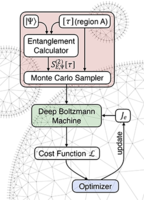
Machine learning is a fast developing area that finds applications in all disciplines of science. Here, the authors demonstrate that the machine learning (in particular deep learning) technique can be applied to understand the emergence of spatial geometry from learning the features of quantum many-body entanglement, an idea that was proposed in a recent study of the holography duality in quantum gravity. This work is the first to successfully demonstrate the idea of “geometry emerging from learning”.

Direct measurement of the static and transient magneto-optical permittivity of cobalt across the entire M-edge in reflection geometry by use of polarization scanning

Dmitriy Zusin, Phoebe M. Tengdin, Maithreyi Gopalakrishnan, Christian Gentry, Adam Blonsky, Michael Gerrity, Dominik Legut, Justin M. Shaw, Hans T. Nembach, T. J. Silva, Peter M. Oppeneer, Henry C. Kapteyn, and Margaret M. Murnane

Phys. Rev. B 97, 024433 (2018) - Published 30 January, 2018

It has long been known that the magnetic order in a material can be transiently disrupted by an intense laser pulse, on surprisingly fast sub-picosecond timescales. However, two decades after its discovery, the microscopic physics underlying this behavior is still not completely understood. Here, the authors develop a new extreme ultraviolet (EUV) magneto-optical spectroscopy that allows them to extract the full dynamic complex magneto-optical permittivity of a material. By exciting a Co film with a femtosecond laser pulse, and then scanning both the polarization and arrival time of a high-harmonic probe beam, they extract the instantaneous complex magneto-optical constant of Co across the M2,3 absorption edge. Through a direct comparison with ab initio theory, they show that the observed demagnetization is dominated by the excitation of magnons, with a possible small contribution from a reduction of the exchange splitting. This work further demonstrates the deepened insight on magnetism obtained through the recent application of tabletop-scale femtosecond EUV light sources.

Energetics of oxygen-octahedra rotations in perovskite oxides from first principles

Peng Chen, Mathieu N. Grisolia, Hong Jian Zhao, Otto E. González-Vázquez, L. Bellaiche, Manuel Bibes, Bang-Gui Liu, and Jorge Íñiguez

Phys. Rev. B 97, 024113 (2018) - Published 26 January, 2018

From superconductivity to magnetoelectricity, perovskite oxides exhibit a wealth of appealing physical properties, often controlled by subtle structural details. Especially critical are the ‘tilt’ distortion modes involving rotations of the oxygen octahedra that constitute the backbone of the perovskite lattice, which motivates today’s interest in better understanding and tuning such tilts. Here, the authors present a thorough first-principles investigation of the energy landscape relevant to this matter, revealing the main competitors among different tilt modes as well as their trends across the perovskite family.

Machine learning vortices at the Kosterlitz-Thouless transition

Matthew J. S. Beach, Anna Golubeva, and Roger G. Melko

Phys. Rev. B 97, 045207 (2018) - Published 25 January, 2018

The authors extend the recent successful application of neural networks fordistinguishing phases of matter to the case of topologically driven phase transitions. They demonstrate that supervised networks correctly identify the Kosterlitz-Thouless transition in the two-dimensional classical XY model. However, their analysis suggests that a naive classification of phases is based on bulk features, rather than on detecting local topological defects. While they show that it is possible to fine-tune a network to recognize vortices, it generally remains a difficult task to detect topological defects without apriori knowledge.

Sign In to Your Journals Account

Filter

Section

Filter

Article Lookup

Enter a citation