Highlights

Electron spin resonance study of atomic hydrogen stabilized in solid neon below 1 K

S. Sheludiakov, J. Ahokas, J. Järvinen, L. Lehtonen, S. Vasiliev, Yu. A. Dmitriev, D. M. Lee, and V. V. Khmelenko

Phys. Rev. B 97, 104108 (2018) - Published 21 March, 2018

The freezing temperature of solid hydrogen may be significantly lowered below its bulk value by encapsulating the sample in a restricted geometry. The authors report on an electron-spin resonance (ESR) study of H atoms, stabilized in highly porous solid mixtures of neon and molecular hydrogen at temperatures below 1 K. The ESR analysis shows that H atoms stabilize into two different substitutional sites of the Ne lattice and into H2 clusters, formed in solid neon. The hydrogen atoms in H2 clusters rapidly recombine upon raising the temperature from 0.1 to 0.3–0.6 K, which is attributed to a solid-liquid transition in the H2 clusters formed in solid Ne.

Role of electron tunneling in the nonlinear response of plasmonic nanogaps

Garikoitz Aguirregabiria, Dana Codruta Marinica, Ruben Esteban, Andrey K. Kazansky, Javier Aizpurua, and Andrei G. Borisov

Phys. Rev. B 97, 115430 (2018) - Published 19 March, 2018

In plasmonic dimers, tunneling of electrons through the gap between the nanoparticles is often seen as a major disadvantage due to the quenching of the near fields associated to it. Nevertheless, tunneling is a highly nonlinear process and thus it might be advantageous for certain nonlinear applications. Using time-dependent density functional theory, the authors investigate how the second- and third-harmonic generation is influenced by electron tunneling in plasmonic dimers. They show that the nonlinear currents associated to the tunneling process in ultranarrow gaps can strongly enhance the high-harmonic generation.

Analytic understanding and control of dynamical friction

Emanuele Panizon, Giuseppe E. Santoro, Erio Tosatti, Gabriele Riva, and Nicola Manini

Phys. Rev. B 97, 104104 (2018) - Published 15 March, 2018

Friction between sliding objects is a phenomenon so ubiquitous that it is easily forgotten how few of its microscopic details are properly understood. To gain new insight into the dynamical mechanism of sliding dissipation, the authors investigate a minimal model of a rigid slider traveling over a harmonic substrate. With the analytical tools of linear response theory, the authors obtain an expression for the dynamical friction that depends on known static physical quantities. This result sheds new light on the physical intertwining between dissipation and the phononic degrees of freedom of the substrate.

Modal expansions in periodic photonic systems with material loss and dispersion

Christian Wolff, Kurt Busch, and N. Asger Mortensen

Phys. Rev. B 97, 104203 (2018) - Published 15 March, 2018

Periodic photonic structures such as metamaterials, plasmonic lattices, and excitons strongly coupled to photonic crystals are governed by non-Hermitian wave operators with explicitly energy-dependent potentials. The resulting eigenstates no longer form a basis of the vector space of physical states, nor are they normalizable via the common scalar product. This poses particular problems for the calculation of Green functions and densities of states. Here, the authors solve this challenge via the adjoint operator and modes for arbitrary dispersive and lossy periodic systems. This work can be readily adapted to nonoptical complex band-structure problems with energy-dependent potentials, e.g., within solid-state theory.

Two-dimensional Dirac fermions in thin films of Cd3As2

Luca Galletti, Timo Schumann, Omor F. Shoron, Manik Goyal, David A. Kealhofer, Honggyu Kim, and Susanne Stemmer

Phys. Rev. B 97, 115132 (2018) - Published 15 March, 2018

Three-dimensional topological Dirac semimetals are a new state of matter. The authors report on experiments that directly access the electronic structure of two-dimensional states in the prototype topological Dirac semimetal Cd3As2. By modulating the carrier density of very thin, epitaxial Cd3As2 films, using the electric field effect, the authors tune the electronic states through a two-dimensional Dirac point, as evidenced by a minimum in the density of states. Moreover, the linear energy dispersion and the presence of a zero-energy Landau level establish the topological nature of the two-dimensional states in this three-dimensional Dirac semimetal.

Majorana spin in magnetic atomic chain systems

Jian Li, Sangjun Jeon, Yonglong Xie, Ali Yazdani, and B. Andrei Bernevig

Phys. Rev. B 97, 125119 (2018) - Published 15 March, 2018

Magnetic atomic chains grown on top of conventional superconductors may form an interesting and promising platform for the study of Majorana zero modes. Despite the strong evidence already provided with a state-of-art scanning tunneling microscope (STM) technique, clear features beyond the energetic and spatial ones are required to exclude the only remaining alternative interpretation of the zero modes as trivial Shiba states accidentally occurring at zero energy. The authors here propose a robust spin signature for this purpose. This signature is rooted in two sum rules that dictate the distribution of spin densities in a superconducting state with respect to a normal state, and has been recently detected with spin-polarized STM technique that implicitly takes advantage of the sum rules.

Band structure evolution and the origin of magnetism in (Ga,Mn)As: From paramagnetic through superparamagnetic to ferromagnetic phase

L. Gluba, O. Yastrubchak, J. Z. Domagala, R. Jakiela, T. Andrearczyk, J. Żuk, T. Wosinski, J. Sadowski, and M. Sawicki

Phys. Rev. B 97, 115201 (2018) - Published 13 March, 2018

The authors investigate the development of magnetic phases in (Ga,Mn)As – the canonical dilute ferromagnetic semiconductor – in a thoroughly prepared set of high-quality layers grown by molecular beam epitaxy. The Mn content in the (Ga,Mn)As solid solution extends from the extremely diluted (0.0007% Mn) to the medium Mn content of 1.6%. The authors trace simultaneously the evolution of magnetic and electronic properties of (Ga,Mn)As by comprehensive magnetic (SQUID magnetometry) optical (Raman scattering and photoreflectance) and ARPES measurements. The onset of a low-temperature ferromagnetic phase in (Ga,Mn)As is revealed for 1.6% Mn, the composition just slightly above the one displaying purely superparamagnetic behavior (0.9% Mn). No signature of a Mn-related impurity band has been identified in superparamagnetic and ferromagnetic (Ga,Mn)As.

Angle-resolved photoemission spectroscopy with quantum gas microscopes

A. Bohrdt, D. Greif, E. Demler, M. Knap, and F. Grusdt

Phys. Rev. B 97, 125117 (2018) - Published 13 March, 2018

Quantum gas microscopes are a promising tool to study interacting quantum many-body systems and bridge the gap between theoretical models and real materials. One of the most powerful experimental methods in solids is angle-resolved photoemission spectroscopy (ARPES), which measures the single-particle spectral function. The authors propose a measurement scheme to experimentally access the momentum- and energy-resolved spectral function in a quantum gas microscope. As an example for possible applications, the spectrum of a single hole excitation in one-dimensional t-J models is calculated and analyzed. A sharp asymmetry in the distribution of spectral weight, reminiscent of the Fermi arcs observed in the pseudogap phase of cuprates, appears in the case of an isotropic Heisenberg spin chain.

Thickness-dependent phase transition in graphite under high magnetic field

Toshihiro Taen, Kazuhito Uchida, and Toshihito Osada

Phys. Rev. B 97, 115122 (2018) - Published 12 March, 2018

An insulating state in graphite, which appears in a strong magnetic field around 30 T, may have its origin in an exotic density-wave state - a valley-density wave state. Experimental verification, however, has been a challenging problem. By reducing the thickness of graphite, the authors demonstrate that this insulator state becomes unstable. This thickness dependence implies evolution of the ordered state along the out-of-plane direction. The phase transition lines of each thickness can be qualitatively reproduced by the density-wave model. This thinning approach, free from introducing defects or carriers, will help understand the entire phase diagram of graphite.

Disorder-induced half-integer quantized conductance plateau in quantum anomalous Hall insulator-superconductor structures

Yingyi Huang, F. Setiawan, and Jay D. Sau

Phys. Rev. B 97, 100501(R) (2018) - Published 9 March, 2018

Recent experiments [Science 357, 294 (2017)] have observed a half-quantized electrical conductance plateau, a proposed signature of chiral Majorana fermions. Such Majoranas have been argued to occur generically when a quantum anomalous Hall insulator is tuned to its plateau transition and proximitized by a superconductor. The authors show here that such half-quantized conductance can also occur in this system even in the absence of chiral Majorana fermions, once experimental disorder and temperature are considered. This work therefore motivates the search for more compelling evidence of chiral Majorana fermions in this system, such as quantum coherent interferometry or half-quantized thermal conductance.

Quantum phase transition of chiral Majorana fermions in the presence of disorder

Biao Lian, Jing Wang, Xiao-Qi Sun, Abolhassan Vaezi, and Shou-Cheng Zhang

Phys. Rev. B 97, 125408 (2018) - Published 9 March, 2018

Two-dimensional chiral topological superconductors can be realized in clean quantum anomalous Hall insulators under s-wave superconducting proximity, as is predicted by band theory. Under disorder, random domain walls hosting chiral Majorana fermion arise in space, and conventional band theory becomes invalid. Employing percolation theory and the renormalization group method, the authors show that the disordered system still has a stable chiral topological superconductor phase, and exhibits a half-quantized conductance plateau as a feature. The critical exponents and temperature dependence of the conductance plateau and transitions are obtained, which can be tested by experiment.

Nanomechanical control of optical field and quality factor in photonic crystal structures

Michele Cotrufo, Leonardo Midolo, Žarko Zobenica, Maurangelo Petruzzella, Frank W. M. van Otten, and Andrea Fiore

Phys. Rev. B 97, 115304 (2018) - Published 8 March, 2018

The control of localized light modes is extremely important both for fundamental studies and for practical applications. Most past studies focused on gaining control over the mode frequency, while the mode spatial distribution, which is equally important in governing radiative interactions, has usually been harder to manipulate. Here, the authors have investigated theoretically and experimentally a photonic crystal device where a sub-100 nm displacement, controlled by an applied voltage, can strongly reshape the field profiles. As a first application, the authors demonstrated that this effect can be used to strongly modify the optical Q factors. A loss modulation by more than a factor five is measured experimentally, a value that could be increased further with the help of optimized fabrication.

Theory of many-body radiative heat transfer without the constraint of reciprocity

Linxiao Zhu, Yu Guo, and Shanhui Fan

Phys. Rev. B 97, 094302 (2018) - Published 7 March, 2018

Understanding electromagnetic heat transfer in many-body systems is critical to exploring new physics effects that can arise in reciprocal and nonreciprocal many-body systems. Here, the authors develop explicit and compact formulas for electromagnetic heat transfer in systems consisting of a large number of bodies without the constraint of reciprocity. They go on to demonstrate the emergence of a persistent heat current at thermal equilibrium and a directional heat flow at nonequilibrium in systems composed of multiple magneto-optical particles. This opens up possibilities for controlling near-field electromagnetic heat transfer using complex reciprocal and nonreciprocal systems.

Evolution of the properties of helium nanobubbles during in situ annealing probed by spectrum imaging in the transmission electron microscope

K. Alix, M.-L. David, J. Dérès, C. Hébert, and L. Pizzagalli

Phys. Rev. B 97, 104102 (2018) - Published 7 March, 2018

Helium bubbles can form in a wide variety of materials and are of significance in a great variety of circumstances, ranging from electronics through nuclear physics or geology to outer-space exploration. However, their properties remain elusive, especially at the nanometer scale. Here, the authors study by means of transmission electron microscopy the structural modification and, simultaneously, the helium emission from individual nanosized bubbles in silicon during insitu annealing. It is shown that, surprisingly, helium emission takes place at temperatures where bubble migration has barely begun. Analytical modeling of helium emission suggests that helium is in its solid state in the most highly pressurized bubbles.

Exploring one-particle orbitals in large many-body localized systems

Benjamin Villalonga, Xiongjie Yu, David J. Luitz, and Bryan K. Clark

Phys. Rev. B 97, 104406 (2018) - Published 7 March, 2018

Disorder and interactions can lead to the breakdown of statistical mechanics in quantum systems by transitioning to a many-body localized (MBL) phase. The thermal-to-MBL transition occurs by either increasing the amount of disorder present in a system or by decreasing its energy until it crosses the so-called mobility edge. The authors construct a set of approximate integrals of motion that are quasi-universal across the energy spectrum and, thus, across the mobility edge, too. Interestingly, MBL eigenstates under the mobility edge are aware of the existence of a thermal phase at a higher energy. The phase diagram is probed close to the transition and in the MBL phase. One finds a universal distribution of the strength of the couplings of the integrals of motion in the strong disorder limit.

Microscopic theory of cavity-enhanced single-photon emission from optical two-photon Raman processes

Dominik Breddermann, Tom Praschan, Dirk Heinze, Rolf Binder, and Stefan Schumacher

Phys. Rev. B 97, 125303 (2018) - Published 6 March, 2018

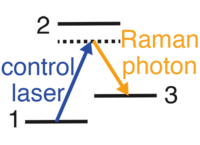
During the last two decades, single-photon emission from two-photon Raman processes has been extensively studied both experimentally and theoretically in atomic as well as in quantum-dot multilevel systems. However, despite theoretical predictions on-demand emission, which is crucial for quantum networking, has not been achieved in experiments yet. Based on the cluster-expansion approach, the authors have performed an in-depth microscopic analysis of the Raman transition in fundamental three-level configurations. They find that excitation-induced destructive quantum interference and Stark shifts of the Raman resonance have to be taken into account in order to close in on on-demand single-photon emission.

Origins of n-type doping difficulties in perovskite stannates

L. Weston, L. Bjaalie, K. Krishnaswamy, and C. G. Van de Walle

Phys. Rev. B 97, 054112 (2018) - Published 26 February, 2018

Materials that are simultaneously transparent and electrically conductive play a key role in optoelectronic devices. Barium stannate has recently come to the forefront as a promising new transparent conductor, but its conductivity has been difficult to control. The authors have performed computational studies to determine the mechanisms that limit doping. They find that atomic-scale defects, such as vacancies in the crystal lattice, are responsible, but their formation can be controlled by tailoring the growth conditions. The authors also investigated related materials, such as strontium stannate and calcium stannate, which are transparent even in the ultraviolet. Calcium stannate is found to always be insulating, but guidelines are provided for maximizing the conductivity of the strontium compound.

Electron spectral functions in a quantum dimer model for topological metals

Sebastian Huber, Johannes Feldmeier, and Matthias Punk

Phys. Rev. B 97, 075144 (2018) - Published 23 February, 2018

Many properties of the copper oxide high-temperature superconductors are still poorly understood, despite more than thirty years of research. This is true in particular for the metallic “pseudogap” state, out of which the well-known superconducting phase develops upon increasing the concentration of hole-like charge carriers. Here, the authors analyze the single-electron spectral function of a recently introduced quantum dimer model, which features a very interesting metallic ground state with topological order: a so-called fractionalized Fermi liquid. Earlier works have argued that this model describes several key properties of the pseudogap metal, such as Fermi-arc like features in photoemission experiments. Using a combination of numerical and analytical methods, the authors show that this model indeed features a sizable antinodal pseudogap with an angular dependence deviating from a simple d-wave form, in accordance with various experimental results on underdoped cuprates.

Large spin relaxation anisotropy and valley-Zeeman spin-orbit coupling in WSe2/graphene/h-BN heterostructures

Simon Zihlmann, Aron W. Cummings, Jose H. Garcia, Máté Kedves, Kenji Watanabe, Takashi Taniguchi, Christian Schönenberger, and Péter Makk

Phys. Rev. B 97, 075434 (2018) - Published 22 February, 2018

One of the key properties of graphene for spintronics is its capability to transport spins over long distances unaltered. However, the need to manipulate the spins for information processing and storage is also of fundamental importance. The two-dimensional heterostructure composed of tungsten diselenide and graphene allows for manipulating the spins while preserving graphene’s exceptional electron properties. Using weak antilocalization measurements, the authors find an anisotropic spin lifetime with out-of-plane spins living much longer than in-plane spins. This originates from a special spin-orbit coupling that leads to a Zeeman field of opposite sign in the two valleys K and K′.

Dynamical generation of topological masses in Dirac fermions

Yuan-Yao He, Xiao Yan Xu, Kai Sun, Fakher F. Assaad, Zi Yang Meng, and Zhong-Yi Lu

Phys. Rev. B 97, 081110(R) (2018) - Published 22 February, 2018

Using large-scale quantum Monte Carlo simulations, the authors unbiasedly demonstrate the existence of a topological Mott insulator – an interaction-driven topological insulator emerging from a strongly correlated Dirac semimetal. The model designed here consists of Dirac fermions and fluctuating Ising fields mediating interactions between fermions. By tuning the fluctuation strength of the Ising fields, the authors show the existence of a topological quantum phase transition between the topological Mott insulator phase and the Dirac-semimetal phase. Furthermore, the quantum critical point was found to be in the (2+1)D N=8 Chiral Ising universality class.

Sign In to Your Journals Account

Filter

Section

Filter

Article Lookup

Enter a citation