Highlights

Giant nonlinear interaction between two optical beams via a quantum dot embedded in a photonic wire

H. A. Nguyen, T. Grange, B. Reznychenko, I. Yeo, P.-L. de Assis, D. Tumanov, F. Fratini, N. S. Malik, E. Dupuy, N. Gregersen, A. Auffèves, J.-M. Gérard, J. Claudon, and J.-Ph. Poizat

Phys. Rev. B 97, 201106(R) (2018) - Published 11 May, 2018

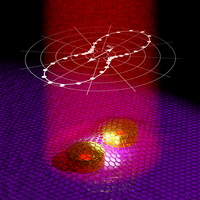
Optical nonlinearities usually occur at large intensities, but discrete transitions allow for giant nonlinearities operating at the single-photon level. Here, the authors demonstrate a two-mode giant nonlinearity with a single semiconductor quantum dot, embedded in a broadband photonic wire antenna. They exploit two detuned optical transitions associated with the exciton-biexciton quantum-dot level scheme. The reflection of one laser beam is controlled by the other beam with a threshold power as low as ten photons per exciton lifetime (1.6 nW). Such a two-color nonlinearity opens up appealing perspectives for the realization of integrated ultralow-power logical gates and optical quantum gates.

Classification of symmetry-protected phases for interacting fermions in two dimensions

Meng Cheng, Zhen Bi, Yi-Zhuang You, and Zheng-Cheng Gu

Phys. Rev. B 97, 205109 (2018) - Published 9 May, 2018

The authors deal with the fundamental problem of a rigorous classification of quantum topological phases. Here, they extend to the realm of interacting fermions in two dimensions techniques, developed for bosons, whereby they introduce extrinsic defects carrying symmetry fluxes into the topological phase. The result is a complete classification of symmetry-protected topological phases of interacting fermions in two dimensions. In addition, the classification of interacting fermion systems with time-reversal symmetry is also developed. The advances, reported here, are immediately relevant for the selection of reliable candidates for topologically protected storage and communication.

Learning disordered topological phases by statistical recovery of symmetry

Nobuyuki Yoshioka, Yutaka Akagi, and Hosho Katsura

Phys. Rev. B 97, 205110 (2018) - Published 9 May, 2018

Understanding the phases of a model usually requires knowledge of their characteristic features, which are nonlocal in topologically ordered systems. Here, the authors reframe the phase classification problem in disordered topological superconductors as a data-driven task, motivated by the recent surge of interest in the application of machine-learning techniques including deep learning. It is demonstrated that an artificial neural network learns to extract the essence of the clean system and successfully distinguishes phases even under disorder by statistical recovery of translational symmetry.

Optical properties of silicene, Si/Ag(111), and Si/Ag(110)

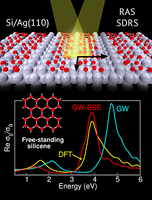
C. Hogan, O. Pulci, P. Gori, F. Bechstedt, D. S. Martin, E. E. Barritt, A. Curcella, G. Prevot, and Y. Borensztein

Phys. Rev. B 97, 195407 (2018) - Published 7 May, 2018

Silver is a popular choice of substrate for the growth of nanostructured 1D and 2D silicon – possibly silicenelike – layers. First-principles simulations and measurements of reflectance anisotropy and surface differential reflectivity spectroscopy are applied to the study of single monolayer Si/Ag(111) and Si/Ag(110) interfaces. The authors demonstrate the absence of structural and electronic properties of freestanding, graphenelike silicene, finding evidence for strong Si-Ag bonding in the Si/Ag(111) case and the formation of pentagonal nanoribbons on Si/Ag(110). Many-body effects in the optical response of silicene are found to cancel out.

Cubic anisotropy in (Ga,Mn)As layers: Experiment and theory

M. Sawicki, O. Proselkov, C. Sliwa, P. Aleshkevych, J. Z. Domagala, J. Sadowski, and T. Dietl

Phys. Rev. B 97, 184403 (2018) - Published 3 May, 2018

The authors observe unreported features of magnetic anisotropy in the dilute ferromagnetic semiconductor (Ga,Mn)As. Magnetization and ferromagnetic resonance studies provide experimental evidence that, in a specific range of temperatures and hole concentrations, the <110> in-plane directions become the easy axes of the cubic contribution to magnetic anisotropy in (Ga,Mn)As(001). This result has significant supportive value for the theoretical description of ferromagnetism in (III,Mn)V dilute ferromagnetic semiconductors by the p-d Zener model. However, to provide a comprehensive quantitative account of these findings, incorporation of scattering broadening of the hole density of states, single-ion magnetic anisotropy of Mn, and disorder-driven nonuniformities of the carrier density have to be accomplished.

Three-dimensional superconducting gap in FeSe from angle-resolved photoemission spectroscopy

Y. S. Kushnirenko, A. V. Fedorov, E. Haubold, S. Thirupathaiah, T. Wolf, S. Aswartham, I. Morozov, T. K. Kim, B. Büchner, and S. V. Borisenko

Phys. Rev. B 97, 180501(R) (2018) - Published 2 May, 2018

Detailed knowledge of the gap function in iron-based superconductors is a requisite to identify the mechanism of superconductivity in these materials. Here, the authors present a systematic study of the superconducting gap distribution on the three-dimensional Fermi surfaces of FeSe using synchrotron-based angle-resolved photoemission spectroscopy. The results imply a significant anisotropy of the superconducting gap on all parts of the FeSe Fermi surface not only in-plane, but also as a function of kz. The observed in-plane anisotropy can be qualitatively understood in terms of orbital-selective Cooper pairing and nematicity-induced mixing of s- and d-pairing channels.

Two-color Fermi-liquid theory for transport through a multilevel Kondo impurity

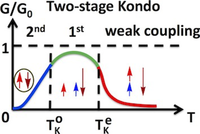
D. B. Karki, Christophe Mora, Jan von Delft, and Mikhail N. Kiselev

Phys. Rev. B 97, 195403 (2018) - Published 2 May, 2018

A multiorbital quantum impurity with effective spin S>1/2 connected to several reservoirs of conduction electrons can lead to a Kondo effect, exhibiting multistage screening. The ground state of a prototypical nanoscale device consisting of an S=1 quantum impurity connected to two conducting reservoirs is a spin singlet, formed via a two-stage Kondo screening mechanism. Understanding the equilibrium and nonequilibrium properties of the strong-coupling regime resulting from this two-stage screening has been an open problem for many years. Here, the authors offer a detailed description in terms of an effective local two-color Fermi liquid theory.

Quantum computing with Majorana fermion codes

Daniel Litinski and Felix von Oppen

Phys. Rev. B 97, 205404 (2018) - Published 2 May, 2018

Majorana-based qubits are candidates for qubits with long coherence times. Just like conventional qubits, these qubits require active error correction in order to run arbitrarily long quantum computations. Unlike conventional quits though, Majorana-based qubits can use not only qubit-based codes, but also Majorana fermion codes for error correction. Several proposals for Majorana-based quantum computing with and without error correction exist, each featuring individual strategies to implement a universal set of gates. This paper unites all these approaches in a general framework, in which a certain set of operations—Clifford gates—are implemented with zero time overhead.

P31 NMR study of discrete time-crystalline signatures in an ordered crystal of ammonium dihydrogen phosphate

Jared Rovny, Robert L. Blum, and Sean E. Barrett

Phys. Rev. B 97, 184301 (2018) - Published 1 May, 2018

Periodic driving of an interacting spin system may lead to unusual out-of-equilibrium states of matter, such as the discrete time crystal (DTC). Two recent experiments have reported a key signature of the DTC: for long enough interaction times, the system’s response becomes rigidly locked to one half of the driving frequency. Using nuclear magnetic resonance, the authors observe this DTC signature in the most unexpected system to date: a three-dimensional, spatially ordered crystal. This challenges the paradigm that the DTC arises from many-body localization. Furthermore, hidden coherence in the system is revealed by the “DTC echo” experiment, and the effect of interactions during drive pulses is demonstrated.

Reinvestigating the surface and bulk electronic properties of Cd3As2

S. Roth, H. Lee, A. Sterzi, M. Zacchigna, A. Politano, R. Sankar, F. C. Chou, G. Di Santo, L. Petaccia, O. V. Yazyev, and A. Crepaldi

Phys. Rev. B 97, 165439 (2018) - Published 30 April, 2018

Cd3As2 with its linearly dispersing bulk state is generally considered an archetype of the three-dimensional Dirac semimetal phase. The present investigation of its electronic properties calls for a revision of this crude assumption. Indeed, Cd3As2 exhibits both a surface state and two bulk bands, dispersing across the Fermi level. Hence, all these states must contribute to the unique material electrical transport properties, but with very different effective masses, band velocities, and different binding energies with respect to the chemical potential. This results in possible ambipolar charge carrier transport at the surface.

Manifolds of magnetic ordered states and excitations in the almost Heisenberg pyrochlore antiferromagnet MgCr2O4

S. Gao, K. Guratinder, U. Stuhr, J. S. White, M. Mansson, B. Roessli, T. Fennell, V. Tsurkan, A. Loidl, M. Ciomaga Hatnean, G. Balakrishnan, S. Raymond, L. Chapon, V. O. Garlea, A. T. Savici, A. Cervellino, A. Bombardi, D. Chernyshov, Ch. Rüegg, J. T. Haraldsen, and O. Zaharko

Phys. Rev. B 97, 134430 (2018) - Published 27 April, 2018

A remarkable feature of the excitation spectrum of chromite spinels, where antiferromagnetically coupled Cr3+ ions form a highly frustrated pyrochlore lattice, is the existence of so-called resonance modes. These resonances resemble the zero-energy modes that have been theoretically predicted for the pyrochlore Heisenberg antiferromagnet and other highly frustrated systems. Here, the authors investigate the complicated structural and magnetic states in MgCr2O4 spinel, interpret the magnetic excitations as acoustic and optical spin wave branches, and show that the neutron scattering cross sections of transitions within a unit of two corner-sharing tetrahedra match the observed intensity distribution of the resonances.

Recoverable information and emergent conservation laws in fracton stabilizer codes

A. T. Schmitz, Han Ma, Rahul M. Nandkishore, and S. A. Parameswaran

Phys. Rev. B 97, 134426 (2018) - Published 26 April, 2018

In this paper, the authors introduce the concept of recoverable information, which is well-defined for any stabilizer code. The concept illuminates universal properties of a phase analogous to that captured by entanglement entropy, since each bit of recoverable information is related to an independent Z2 Gauss-law type relation for excitations as satisfied by the entanglement surface. Since the interpretation of entanglement structure is poorly understood in three-dimensional fracton models, the authors calculate recoverable information for type-I and type-II stabilizer fracton models via three different methods, demonstrating the topological properties such models possess.

Semiclassical theory of Landau levels and magnetic breakdown in topological metals

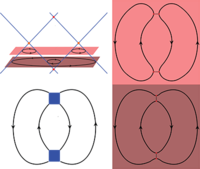
A. Alexandradinata and Leonid Glazman

Phys. Rev. B 97, 144422 (2018) - Published 26 April, 2018

The Bohr-Sommerfeld quantization rule lies at the heart of the semiclassical theory of a Bloch electron in a magnetic field. This rule is predictive of Landau levels and quantum oscillations for conventional metals as well as for a host of topological metals, which have emerged in the recent synergy between band theory, crystalline symmetries, and topology. Here, the authors systematically formulate quantization rules that apply to energy-degenerate bands and to orbits that intersect at saddle points and type-II Dirac points where quantum tunneling is unavoidable. The formulation extends previous work by incorporating the orbital magnetic moment and the geometric Berry phase. The latter is an indispensable property of topological metals.

All-electrical manipulation of silicon spin qubits with tunable spin-valley mixing

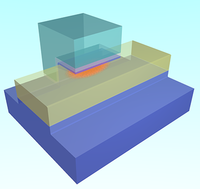
Léo Bourdet and Yann-Michel Niquet

Phys. Rev. B 97, 155433 (2018) - Published 26 April, 2018

Silicon qubits can show a strong interplay between spin and valley physics. The spin is much more robust to decoherence than the valley degree of freedom, but is more difficult to address electrically. Here, the authors show via atomistic simulations that a spin qubit can be continuously transformed into a valley qubit for manipulation, then brought back to the spin regime to benefit from the longer lifetimes. This transformation relies on intrinsic spin-orbit coupling and suitable engineering of the electric field in the device. This opens up new possibilities for the design of robust and electrically addressable silicon qubits.

Controlling laser-induced magnetization reversal dynamics in a rare-earth iron garnet across the magnetization compensation point

Marwan Deb, Pierre Molho, Bernard Barbara, and Jean-Yves Bigot

Phys. Rev. B 97, 134419 (2018) - Published 19 April, 2018

The ultrafast manipulation of the magnetization using femtosecond laser pulses is of utmost importance for both fundamental physics and technological applications. Here, the authors investigated the laser-induced ultrafast magnetization dynamics in a rare-earth iron garnet over a broad temperature range including the magnetization compensation point TM. They find that the heat energy resulting from exciting the phonon-assisted d-d transitions induces large-amplitude magnetization dynamics at temperatures slightly below TM. They also demonstrate that the speed and the amplitude of the magnetization dynamics can be controlled by tuning either the laser energy density or the amplitude of the external magnetic field. The obtained results are explained by a magnetization reversal process across TM.

A-cation control of magnetoelectric quadrupole order in A(TiO)Cu4(PO4)4(A=Ba,Sr,and Pb)

K. Kimura, M. Toyoda, P. Babkevich, K. Yamauchi, M. Sera, V. Nassif, H. M. Rønnow, and T. Kimura

Phys. Rev. B 97, 134418 (2018) - Published 18 April, 2018

A material with broken space-inversion and time-reversal symmetries can exhibit symmetry-dependent unique phenomena such as the magnetoelectric effect. Ferroic order of magnetic quadrupoles fulfills this symmetry condition. The authors report here the discovery of ferroic magnetic quadrupole order and its magnetoelectric activity in the novel compound Pb(TiO)Cu4(PO4)4, which is in contrast with isostructural Ba(TiO)Cu4(PO4)4 and Sr(TiO)Cu4(PO4)4 in exhibiting antiferroic quadrupole order. Their first-principles calculations reveal that s2 electrons in Pb2+ ions alter specific magnetic interactions and consequently switch the quadrupole order from antiferroic to ferroic. This result provides not only an opportunity to explore magnetoelectric phenomena arising from magnetic quadrupoles, but also a useful way of fine-tuning magnetic interactions with s2 electrons.

Modeling of the gate-controlled Kondo effect at carbon point defects in graphene

Daniel May, Po-Wei Lo, Kira Deltenre, Anika Henke, Jinhai Mao, Yuhang Jiang, Guohong Li, Eva Y. Andrei, Guang-Yu Guo, and Frithjof B. Anders

Phys. Rev. B 97, 155419 (2018) - Published 18 April, 2018

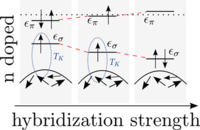
Carbon point defects in graphene induce local magnetic moments in the unbound σ orbital as well as in a ferromagnetically coupled bound state in the π conduction band. The local curvature of the graphene sheet determines the hybridization strength to the originally orthogonal conduction band. Here, the authors investigate a two-orbital model, comprising the two localized orbitals as a function of the gate-controlled chemical potential. They identify three different low-temperature regimes. The corresponding distinct spectral functions agree well with recent scanning tunneling data, obtained on different carbon point defects.

Graphene as a local probe to investigate near-field properties of plasmonic nanostructures

Sören Wasserroth, Timo Bisswanger, Niclas S. Mueller, Patryk Kusch, Sebastian Heeg, Nick Clark, Fredrik Schedin, Roman Gorbachev, and Stephanie Reich

Phys. Rev. B 97, 155417 (2018) - Published 17 April, 2018

Surface-enhanced Raman scattering (SERS) describes the huge enhancement of the Raman intensity by plasmonic near-fields. The authors investigate SERS caused by a localized surface plasmon by coupling a plasmonic gold nanodimer with the nonresonant Raman scatterer graphene. They perform comprehensive Raman scattering experiments on the coupled system to understand polarization and wavelength dependence of plasmonic enhancement. Remarkably, the near-field resonance from Raman scattering differs by almost 0.2 eV from the far-field resonance measured by dark-field spectroscopy, which is well beyond the expected difference. Graphene is an excellent material to fundamentally study the effects and interactions that give rise to SERS.

Charge and current orders in the spin-fermion model with overlapping hot spots

Pavel A. Volkov and Konstantin B. Efetov

Phys. Rev. B 97, 165125 (2018) - Published 16 April, 2018

Recent experiments have revealed a variety of symmetry-breaking phenomena inherent to the pseudogap state of underdoped cuprates. The authors consider emergent phases in a model where the interaction between fermions and antiferromagnetic fluctuations affects two extended regions of the Fermi surface instead of isolated ‘hot spots.’ Surprisingly, this leads to a rich phase diagram including various charge and staggered bond current orders. The uncovered phases share some features with the experimental signatures of the pseudogap state. The results open up perspectives for new types of particle-hole order in itinerant systems with strong spin fluctuations.

Deciphering the nonlocal entanglement entropy of fracton topological orders

Bowen Shi and Yuan-Ming Lu

Phys. Rev. B 97, 144106 (2018) - Published 12 April, 2018

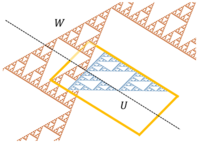
The authors discuss a lower bound of nonlocal entanglement entropy (a generalization of topological entanglement entropy). The lower bound applies to Abelian conventional topological order as well as to type-I and type-II fracton models. It provides the physical intuition that each type of topological excitation, created by a deformable string, membrane, or fractal operator, gives a contribution to the nonlocal entanglement entropy. For fracton models, the lower bound is geometry dependent; it can take extensive values.

Sign In to Your Journals Account

Filter

Section

Filter

Article Lookup

Enter a citation