Highlights

Quantum confinement effects in Pb nanocrystals grown on InAs

Tianzhen Zhang, Sergio Vlaic, Stéphane Pons, Alexandre Assouline, Alexandre Zimmers, Dimitri Roditchev, Hervé Aubin, Guy Allan, Christophe Delerue, Christophe David, Guillemin Rodary, and Jean-Christophe Girard

Phys. Rev. B 97, 214514 (2018) - Published 19 June, 2018

In this article, the authors show that the two-dimensional electron gas at the surface of InAs provides a remarkable substrate for the growth of Pb nanocrystals. This is used to study the quantum confinement effects in such nanocrystals - since the Fermi wavelength of the two-dimensional electron gas is larger than the lateral size of the nanocrystal, the quantum constriction of the wavefunction at the interface leads to a weak coupling between the nanocrystal and the substrate and so preserves the quantum confinement effects within the nanocrystal. The researchers are able to observe the superconducting parity effect and the mapping of electronic wave functions via scanning tunneling spectroscopy.

Truncating the memory time in nonequilibrium dynamical mean field theory calculations

Michael Schüler, Martin Eckstein, and Philipp Werner

Phys. Rev. B 97, 245129 (2018) - Published 19 June, 2018

Nonequilibrium dynamical mean-field theory (DMFT) is one of the most powerful theoretical tools to study the dynamics in strongly correlated systems. In practice, however, the method is limited by its considerable computational cost. Here, the authors systematically investigate how the computational effort can be reduced by at least an order of magnitude while retaining high accuracy. The key idea is the controlled truncation of the time scale on which the system “remembers” its initial state. Applying this idea to paradigmatic model systems, the authors map out the optimal regimes in which this truncation yields an accurate description of the relevant observables. This approach makes fundamental long-time processes such as prethermalization and thermalization accessible to DMFT simulations.

Resonant electron-lattice cooling in graphene

Jian Feng Kong, Leonid Levitov, Dorri Halbertal, and Eli Zeldov

Phys. Rev. B 97, 245416 (2018) - Published 19 June, 2018

Novel ways to manipulate electron-lattice cooling in solids are of wide interest for both fundamental and applied research. This article describes a mechanism of tunable electron-lattice cooling mediated by defects in a graphene lattice, representing resonant scatterers with energy levels close to the Dirac point. The defects produce a resonant enhancement of cooling, which is analogous to the well-known Purcell effect in optics. Namely, the emission rate of phonons is greatly enhanced when the electronic Fermi energy is tuned to match the defect resonance energy. The ability to control both the cooling rate through electronic gating and the spatial location of cooling through precise defect engineering opens a route to designing cooling pathways in nanodevices.

Native point defects and impurities in hexagonal boron nitride

L. Weston, D. Wickramaratne, M. Mackoit, A. Alkauskas, and C. G. Van de Walle

Phys. Rev. B 97, 214104 (2018) - Published 18 June, 2018

Hexagonal boron nitride (h-BN) is a technologically important electronic and dielectric material. Recently, research into this material has intensified due to the discovery of bright single-photon-emitting color centers in the form of point defects, with potential applications in advanced quantum technologies. Despite this technological promise, the defect physics of this material is still largely unexplored. Here, the authors have performed detailed first-principles investigations of the defect properties of h-BN, finding that the defect physics of this material is dictated by impurities, in particular carbon, oxygen, and hydrogen. They show how the defect properties of this material can be selectively engineered by growth or processing conditions. These insights will be fundamental to controlled generation of single-photon emitters and for general defect engineering of this material.

Coexistence of superconductivity and short-range double-stripe spin correlations in Te-vapor annealed FeTe1−xSex (x≤0.2)

Zhijun Xu, J. A. Schneeloch, Ming Yi, Yang Zhao, Masaaki Matsuda, D. M. Pajerowski, Songxue Chi, R. J. Birgeneau, Genda Gu, J. M. Tranquada, and Guangyong Xu

Phys. Rev. B 97, 214511 (2018) - Published 14 June, 2018

The single-stripe antiferromagnetic (SAF) spin correlations found in many iron-based superconductors are believed to be important to the development of superconductivity in these system. By contrast, the double-stripe antiferromagnetic (DSAF) spin correlations are always found to be present in the nonsuperconducting region of Fe1+yTe1−xxSex systems with small x values. Here, the authors study bulk crystals of Fe1+yTe1−xSex with x = 0.1 and 0.2, when superconductivity can be induced by annealing in Te vapor. Inelastic neutron scattering measurements reveal low-energy magnetic excitations consistent with short-range correlations with a mixed single-stripe/double-stripe character. The mixed magnetic character of these superconducting samples does not appear to be trivially explainable by inhomogeneity, and suggest that superconductivity in Fe1+yTe1−xSex systems can indeed emerge in an environment where the spin correlation is not dominated by SAF.

Higher-dimensional Sachdev-Ye-Kitaev non-Fermi liquids at Lifshitz transitions

Arijit Haldar, Sumilan Banerjee, and Vijay B. Shenoy

Phys. Rev. B 97, 241106(R) (2018) - Published 14 June, 2018

Some of the most interesting phenomena in condensed matter occur in high-temperature superconductors and heavy fermions, and arise from a parent non-Fermi-liquid background. Although the non-Fermi-liquid phase has metallic character, it is very different from typical metals in that the electronic excitations are not particlelike (no quasiparticles), and this has lead to these phases eluding a clear theoretical description. Here, the authors develop a model that provides a route to describe non-Fermi liquids realized in condensed matter systems. Building on the zero-dimensional Sachdev-Ye-Kitaev model that is inspired by connections between a non-Fermi liquid and black holes, the authors construct a model in a lattice system where the bands touch to give a divergent density of states (Lifshitz point). The resulting non-Fermi-liquid phases exhibit intriguing properties such as scaling symmetry, nontrivial power-law dependence of entropy on temperature, and fast information scrambling with rate linear in temperature, as well as dynamical transitions to more conventional phases with well-defined quasiparticles.

Intrinsic hysteresis due to the surface barrier for chiral solitons in monoaxial chiral helimagnets

M. Shinozaki, Y. Masaki, R. Aoki, Y. Togawa, and Y. Kato

Phys. Rev. B 97, 214413 (2018) - Published 13 June, 2018

Chiral solitons in monoaxial chiral magnets undergo a surface barrier, which is analogous to the Bean-Livingston barrier in type-II superconductors. The authors argue here that the surface barrier is the main mechanism for large hysteresis observed in magnetoresistance (MR) measurements on micrometer-sized samples of CrNb3S6. In the MR hysteresis, a conspicuous jump is observed at the field Hb for decreasing fields. Experimental results for Hb∼0.4Hc (with thermodynamic critical field Hc) and the theoretical result Hb/Hc=4/π2 are in good agreement with each other. The surface barrier is regarded as a common property of systems (superconductors, chiral magnets, and chiral liquid crystals) that exhibit continuous transitions of the nucleation type.

Absence of superconductivity in iron polyhydrides at high pressures

Christoph Heil, Giovanni B. Bachelet, and Lilia Boeri

Phys. Rev. B 97, 214510 (2018) - Published 13 June, 2018

The recently reported formation of the new iron polyhydride FeH5 at megabar pressures raised hopes about its potential high-Tc superconductivity because of an alleged layer of dense metallic hydrogen. Using electronic structure calculations, the present work shows that FeH5 displays no conventional superconductivity, since the electronic states at the Fermi level do not exhibit appreciable electron-phonon coupling. Superconductivity may be attained by partially filling empty Fe–H hybrid bands by adding more electrons, but critical temperatures would remain relatively low, because the d-metal bonding, and not the metallic hydrogen, dominates the electrons and phonons involved in the superconducting pairing.

Direct Rashba spin-orbit interaction in Si and Ge nanowires with different growth directions

Christoph Kloeffel, Marko J. Rančić, and Daniel Loss

Phys. Rev. B 97, 235422 (2018) - Published 13 June, 2018

A strong and electrically tunable spin-orbit interaction is crucial in modern condensed-matter fields, such as spintronics, topological quantum matter, and spin-based quantum computing. Such a tunable spin-orbit interaction of novel origin and high strength was recently discovered for holes in Ge/Si core/shell nanowires [Phys. Rev. B 84, 195314 (2011)]. Here, the authors consider Si and Ge nanowires of rectangular cross section. The hole spectra are calculated and their parameter dependences analyzed, including growth directions, dimensions, strain, and electric and magnetic fields. Unusually large Rashba spin-orbit energies (meV) are found not only for Ge but also for Si nanowires, provided that their growth direction differs from that of current complementary metal-oxide semiconductor devices.

Onset of Floquet thermalization

Asmi Haldar, Roderich Moessner, and Arnab Das

Phys. Rev. B 97, 245122 (2018) - Published 13 June, 2018

Interacting many-body quantum systems are believed to heat up unboundedly under a periodic drive as there is no local conservation law to prevent this from happening. Here, the authors show that this belief may not be generally true. Their results indicate that under strong periodic driving quantum interference may suppress the heating and may lead to a nonthermal state, remembering properties of the initial state until infinite time. This is accounted for by the emergence of an approximately conserved local quantity. The freezing is more pronounced for smaller drive frequencies, putting it beyond the scope of conventionally used high-frequency expansions.

Quasiparticle tunneling in the lowest Landau level

Szymon Hennel, Patrick Scheidegger, Max Kellermeier, Andrea Hofmann, Tobias Krähenmann, Christian Reichl, Werner Wegscheider, Thomas Ihn, and Klaus Ensslin

Phys. Rev. B 97, 245305 (2018) - Published 11 June, 2018

Tunneling between two close-by edge states is a potentially powerful probe of topological order in the fractional quantum Hall effect. A fit to experimental data is believed to yield the effective charge and the interaction parameter of current-carrying quasiparticles. However, the robustness of this method has yet to be established. Here, the authors consider the well-understood state at ν=1/3 and check whether quasiparticle tunneling measures the expected parameters. While a charge of e/3 is observed, the interaction parameter is not universal, and the currently available theory cannot describe data obtained for high channel transmission. At ν=4/3, the data suggest that only an inner Laughlin edge mode contributes to tunneling.

Higgs mechanism in higher-rank symmetric U(1) gauge theories

Daniel Bulmash and Maissam Barkeshli

Phys. Rev. B 97, 235112 (2018) - Published 8 June, 2018

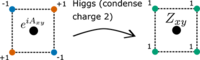
Subdimensional motion occurs when excitations of a system can only move in a lower-dimensional subspace of the full system. This phenomenon occurs both in a class of generalized U(1) gauge theories and in “fracton” phases found in certain exactly solvable gapped spin models. Here, the authors present and analyze a more general class of symmetric higher-rank U(1) gauge theories and show how these two cases of subdimensional motion are connected via the Higgs mechanism, which often yields conventional phases but in special cases can drive a symmetric higher-rank U(1) gauge theory into a fracton phase.

Do the surface Fermi arcs in Weyl semimetals survive disorder?

Justin H. Wilson, J. H. Pixley, David A. Huse, Gil Refael, and S. Das Sarma

Phys. Rev. B 97, 235108 (2018) - Published 7 June, 2018

Weyl semimetals are exotic topological materials that host massless (pseudo)relativistic quasiparticle excitations that mimic Weyl fermions and possess topological surface states, which form a “Fermi arc” and which, it has been argued, are protected against weak interactions and disorder. Recent experiments as, for instance, those on TaAs demonstrate the existence of Weyl semimetals and their exotic surface states. Using high-performance numerics, the authors show that disorder destroys the topological protection of the surface states by promoting hybridization with rare resonances in the bulk. It is shown here that the surface currents resulting from the Fermi arc are remarkably robust, which demonstrates their experimental signatures and technological applicability even in dirty samples.

Observation of interlayer excitons in MoSe2 single crystals

Jason Horng, Tineke Stroucken, Long Zhang, Eunice Y. Paik, Hui Deng, and Stephan W. Koch

Phys. Rev. B 97, 241404(R) (2018) - Published 7 June, 2018

So far, spatially indirect or charge transfer excitons are only known to exist in certain heterostructures. Here, via confocal reflection spectroscopy and quantitative comparison with theoretical analysis using the Dirac-Bloch equations, the authors identify a previously unknown species of spatially indirect exciton in bilayer to multilayer MoSe2 single crystals. They coexist with spatially direct ones at a lower energy, stable only because of the two-dimensional nature of electrons in layered materials. The interlayer exciton binding energy and oscillator strength are comparatively large, enabling convenient optical access to dipolar systems and potentially powerful cavity effects.

Helical magnetic structure and the anomalous and topological Hall effects in epitaxial B20 Fe1−yCoyGe films

Charles S. Spencer, Jacob Gayles, Nicholas A. Porter, Satoshi Sugimoto, Zabeada Aslam, Christian J. Kinane, Timothy R. Charlton, Frank Freimuth, Stanislav Chadov, Sean Langridge, Jairo Sinova, Claudia Felser, Stefan Blügel, Yuriy Mokrousov, and Christopher H. Marrows

Phys. Rev. B 97, 214406 (2018) - Published 6 June, 2018

Magnetic materials with chiral lattices are known to support chiral spin textures such as skyrmions and chiral bobbers. These give rise to transport properties, intrinsically linked to their nontrivial topology. Here, the authors study epitaxial films of Fe1−yCoyGe across the entire range from the well-known chiral magnet FeGe to the nonmagnetic CoGe. The measured magnetic and transport properties are compared with the results of ab initio electronic structure calculations. Theory and experiment agree on a change in sign of the chiral Dzyaloshinskii-Moriya interaction at y∼0.45. Nevertheless, the observed topological Hall effect for neighboring values of y is far larger than theory predicts. This discrepancy points to the need for a deeper understanding of transport in disordered half-metallic chiral magnets.

Infinite family of three-dimensional Floquet topological paramagnets

Andrew C. Potter, Ashvin Vishwanath, and Lukasz Fidkowski

Phys. Rev. B 97, 245106 (2018) - Published 6 June, 2018

In thermal equilibrium, the interplay of symmetry and topology leads to a handful of topological insulating phases of matter with robust properties governed by topological invariants. This work investigates the nonequilibrium dynamics of three-dimensional systems of bosons, spins, or qubits, subject to time-periodic driving, and theoretically discovers an infinite family of new dynamical topological insulating phases that would not be possible in thermal equilibrium settings. These phases, called “Floquet topological paramagnets”, display anomalous surface dynamics, including magnetic domain walls that transport unidirectionally precisely quantized packets of quantum information per driving period, and new types of dynamically enriched topological orders.

Thermoelectric anisotropy in the iron-based superconductor Ba(Fe1−xCox)2As2

Marcin Matusiak, Krzysztof Rogacki, and Thomas Wolf

Phys. Rev. B 97, 220501(R) (2018) - Published 5 June, 2018

Nematicity turns out to be a surprisingly common form of self-organization in strongly correlated electronic systems. Its presence along with superconductivity raises the question about a mutual relation between these two types of electronic order as well as about mechanisms that leads to their formation. Here, the authors show that the in-plane anisotropy of the Nernst effect (Δν/T) in detwinned Ba(Fe1−xCox)2As2 single crystals emerges at a temperature much higher than the temperature of the magnetic transition (TSDW). Furthermore, the temperature dependence of Δν/T retains its exponential character below and above TSDW, which suggests that the origin of nematicity might be something different from magnetic.

Valley switch in a graphene superlattice due to pseudo-Andreev reflection

C. W. J. Beenakker, N. V. Gnezdilov, E. Dresselhaus, V. P. Ostroukh, Y. Herasymenko, İ. Adagideli, and J. Tworzydło

Phys. Rev. B 97, 241403(R) (2018) - Published 5 June, 2018

In valleytronics, one seeks to employ the valley index of Dirac electrons in graphene as a carrier of information. This work shows that reflection from a superlattice potential can provide a valley switch: electrons in valley K approaching the superlattice near normal incidence are reflected into valley K′. The authors identify the topological origin of this effect, by mapping onto Andreev reflection from a topological superconductor. The valley switch is ideal at a symmetry point of the superlattice potential, yet remains close to 100% over a broad parameter range.

Photoluminescence and gain/absorption spectra of a driven-dissipative electron-hole-photon condensate

Ryo Hanai, Peter B. Littlewood, and Yoji Ohashi

Phys. Rev. B 97, 245302 (2018) - Published 1 June, 2018

An exciton-polariton condensate provides a unique platform to study many-body physics in an optical device. The crucial novelty of this system is the lossy nature of photons which is compensated by continuous pumping of the carriers, driving the system into an intrinsic nonequilibrium state. Here, the authors theoretically study the driven-dissipative nature of an electron-hole-photon condensate, by extending the generalized random phase approximation to the Keldysh formalism. They show that nonequilibrium effects strongly suppress quantum depletion, characterized by the suppression of the spectral weight from the negative energy branch (the “ghost branch”) in optical quantities. The results are in semiquantitative agreement with the photoluminescence experiments.

Quantum dynamics in sine-square deformed conformal field theory: Quench from uniform to nonuniform conformal field theory

Xueda Wen and Jie-Qiang Wu

Phys. Rev. B 97, 184309 (2018) - Published 31 May, 2018

Sine-square deformed conformal field theory has received extensive attention in both condensed matter physics and high-energy physics recently. This is due to its unusual properties, such as having a continuous Virasoro algebra. Here, the authors investigate its nonequilibrium dynamics by studying the entanglement evolution after a quantum quench. New physical effects, such as the absence of revivals in entanglement evolution, are observed in both analytical and numerical calculations. This effect could potentially be used when engineering a gapless system with cold atoms, in order to reduce finite-size effects. The work here also sheds new light on the nonequilibrium dynamics of conformal field theory in curved spacetime.

Sign In to Your Journals Account

Filter

Section

Filter

Article Lookup

Enter a citation