Highlights

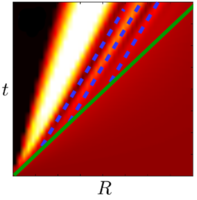
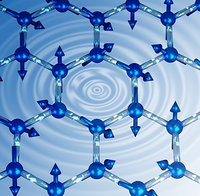
Classical and quantum spin dynamics of the honeycomb Γ model

Anjana M. Samarakoon, Gideon Wachtel, Youhei Yamaji, D. A. Tennant, Cristian D. Batista, and Yong Baek Kim

Phys. Rev. B 98, 045121 (2018) - Published 16 July, 2018

The spin of an electron is an inherently quantum-mechanical object as it is quantized as half-integer values in the unit of the Planck’s constant. Indeed, a variety of magnetism phenomena arising from interacting spins in crystalline solids are direct consequences of this quantization. Yet the present study reveals that the classical dynamics of spins in frustrated magnets with strong spin-orbit coupling can describe their quantum dynamics at finite temperature. The authors show that this peculiar classical-quantum correspondence originates from the constraints on the relativemotion of spins on the crystalline lattice.

Charge density wave phase, Mottness, and ferromagnetism in monolayer 1T−NbSe2

Diego Pasquier and Oleg V. Yazyev

Phys. Rev. B 98, 045114 (2018) - Published 10 July, 2018

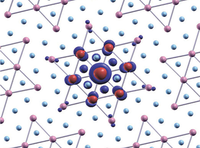
The metastable 1T polymorph of NbSe2 was recently successfully synthesized in monolayer form. The observation of a superlattice and insulating behavior suggests an analogy with 1T-TaS2, an extensively investigated system known for its complex phase diagram that has recently been suggested to realize a possible quantum spin-liquid ground state. Here, a series of ab initio techniques, from density functional theory (DFT) to dynamical mean-field theory (DMFT), finds that the star-of-David phase in 1T-NbSe2 is the most stable commensurate charge density wave phase and that its electronic character is a Mott insulator. DFT calculations also predict weak nearest-neighbor ferromagnetic coupling, which would disfavor a quantum spin liquid phase but suggest a flat-band ferromagnetism scenario.

Mapping of the dark exciton landscape in transition metal dichalcogenides

Gunnar Berghäuser, Philipp Steinleitner, Philipp Merkl, Rupert Huber, Andreas Knorr, and Ermin Malic

Phys. Rev. B 98, 020301(R) (2018) - Published 9 July, 2018

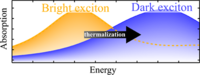
Transition-metal dichalcogenides (TMDs) exhibit a remarkable exciton landscape with a majority of optically forbidden dark excitonic states. Here, the authors present a study that combines microscopic theory with femtosecond infrared spectroscopy. It allows to map the excitonic landscape of an arbitrary TMD material by investigating the temporal evolution of the intraexcitonic 1s-2p transition. By resolving the optical response shortly after the excitation and after the exciton thermalization, the authors reveal the relative position of bright and dark excitonic states. The theoretical prediction is confirmed on the exemplary WSe2 material as shown in the picture.

Coexistence of classical snake states and Aharonov-Bohm oscillations along graphene p−n junctions

Péter Makk, Clevin Handschin, Endre Tóvári, Kenji Watanabe, Takashi Taniguchi, Klaus Richter, Ming-Hao Liu (劉明豪), and Christian Schönenberger

Phys. Rev. B 98, 035413 (2018) - Published 9 July, 2018

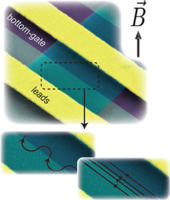
Graphene provides an ideal platform for engineering electron optical elements and electronic interferometers. The central building blocks of many of these devices are p-n junctions formed by electrostatic gating. These junctions show a rich behavior when placed in magnetic field as a variety of magneto-oscillations emerges. Some of these oscillations are due to quasiclassical snake states, whereas others can be attributed to edge-state Aharonov-Bohm interference. Here, the authors demonstrate the surprising coexistence of these oscillations and identify them via their detailed dependencies on several parameters.

Topological order from disorder and the quantized Hall thermal metal: Possible applications to the ν=5/2 state

Chong Wang, Ashvin Vishwanath, and Bertrand I. Halperin

Phys. Rev. B 98, 045112 (2018) - Published 9 July, 2018

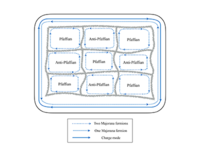
This work addresses the apparent discrepancy between the recent observation of a quantized thermal conductance with thermal quantum number K=5/2 in the quantum Hall state at filling fraction n=5/2 and the numerical simulations of the same system during the past two decades. The authors show that under certain conditions a quantized phase with K=5/2 could be stabilized by disorder, a direction not previously appreciated, but under other conditions (such as an altered disorder strength) disorder could lead to a new exotic phase with quantized electrical conductance, yet with metallic thermal conduction, which the authors term a “quantized Hall thermal metal.”

Evidence for a topological “exciton Fermi sea” in bilayer graphene

Michael P. Zaletel, Scott Geraedts, Zlatko Papić, and Edward H. Rezayi

Phys. Rev. B 98, 045113 (2018) - Published 9 July, 2018

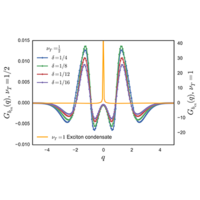
The authors report on the discovery of a new state of matter, a topological exciton Fermi sea, which is found to live in bilayer graphene. There, the nature of the fractionalized quantum Hall states at suitable fillings provides for the emergence of nontrivial fermionic excitons in addition to the usual bosonic ones, made of bound electron-hole pairs.

Universal scaling laws for correlation spreading in quantum systems with short- and long-range interactions

Lorenzo Cevolani, Julien Despres, Giuseppe Carleo, Luca Tagliacozzo, and Laurent Sanchez-Palencia

Phys. Rev. B 98, 024302 (2018) - Published 5 July, 2018

The ability of many-body systems to spread out information has fundamental impact on quantum information, thermodynamics, and transport dynamics. Long-range interactions are particularly appealing as they pave the way to nonballistic dynamics, and recent observations challenge existing bounds. Here, the authors develop a general theory based on quasiparticles that unifies short-range and long-range systems. They show that, in general, two signals coexist and carry complementary information about the many-body spectrum. One of the signals is subballistic while the other may be superballistic. This result has fundamental implications on the interpretation of experiments and offers tools to probe many-body systems.

Characterization of Yb3+171:YVO4 for photonic quantum technologies

Jonathan M. Kindem, John G. Bartholomew, Philip J. T. Woodburn, Tian Zhong, Ioana Craiciu, Rufus L. Cone, Charles W. Thiel, and Andrei Faraon

Phys. Rev. B 98, 024404 (2018) - Published 5 July, 2018

Rare-earth ion crystals are a promising platform for implementing solid-state quantum interfaces, yet there are few combinations of rare-earth and host crystals that simultaneously deliver large optical absorption, narrow inhomogeneous linewidths, and long coherence times. This work investigates the optical and spin properties of 171Yb3+ ions in YVO4. The observed properties and simple energy-level structure of the 171Yb3+ ion show that this material has significant potential for creating efficient quantum interfaces, such as ensemble-based memories, microwave-to-optical transducers, and optically addressable single rare-earth ion spin qubits.

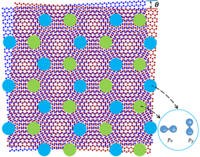
Model for the metal-insulator transition in graphene superlattices and beyond

Noah F. Q. Yuan and Liang Fu

Phys. Rev. B 98, 045103 (2018) - Published 3 July, 2018

In bilayer graphene with a small twist angle, the moiré pattern creates a superlattice with over 10000 atoms per supercell and complex minibands with a small bandwidth. The low-energy narrow bands host correlated insulating and unconventional superconducting phases discovered recently. Here, the authors introduce a two-orbital tight-binding and Hubbard model on a honeycomb lattice to capture the physics of these narrow bands. This model provides a starting point for studying the metal-insulator transition, Landau level degeneracy lifting, and superconductivity in twisted bilayer graphene.

Persistent low-energy phonon broadening near the charge-order q vector in the bilayer cuprate Bi2Sr2CaCu2O8+δ

Y. He et al.

Phys. Rev. B 98, 035102 (2018) - Published 2 July, 2018

Charge order in underdoped high-Tc cuprate superconductors are known to be intimately related to various phonon anomalies. Via combined photoemission, Raman, and x-ray scattering techniques, a low-energy phonon broadening is identified near the common charge-order momentum, even in deeply overdoped Bi2Sr2CaCu2O8+δ, where no static charge order was observed. The phonon anomaly’s potential precursory role to the charge order sheds light on the temperature dependence and incommensurability of the charge-order momentum, potentially demonstrating a lattice-enhanced electronic correlation phenomenon besides the recently discovered interfacial superconductivity in FeSe/STO.

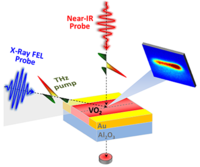
Ultrafast terahertz field control of electronic and structural interactions in vanadium dioxide

A. X. Gray et al.

Phys. Rev. B 98, 045104 (2018) - Published 2 July, 2018

In this study, the authors show that multiple interrelated processes in the nonequilibrium electronic and structural dynamics in vanadium dioxide can be disentangled experimentally in the time domain. This is accomplished by using both near-infrared and hard x-ray pulses to track the dynamics following excitation with an intense nonresonant terahertz pulse, which initiates the insulator-metal transition. Electronic structure switching is observed to be virtually simultaneous with the subpicosecond metamaterial-enhanced terahertz pulse; it is induced by electric-field-assisted tunneling of valence electrons into the conduction band. For sufficiently high electric fields, this triggers the onset of the full transition to the rutile metallic state.

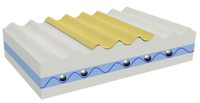
Solid-state magnetic traps and lattices

J. Knörzer, M. J. A. Schuetz, G. Giedke, H. Huebl, M. Weiler, M. D. Lukin, and J. I. Cirac

Phys. Rev. B 97, 235451 (2018) - Published 29 June, 2018

This work examines the feasibility of magnetic traps and lattices for electrons in semiconductors. The authors provide a general theoretical framework and show that thermally stable traps can be generated by magnetically driving the particle’s internal spin transition, akin to optical dipole traps for ultracold atoms. In close analogy to optical lattices, arrays of magnetic traps, i.e. magnetic lattices, are proposed as a platform for quantum simulation of exotic Hubbard models. Furthermore, two specific implementations are discussed in detail, one based on a superconducting circuit and another one based on surface acoustic waves.

Pressure-induced melting of magnetic order and emergence of a new quantum state in α−RuCl3

Zhe Wang, Jing Guo, F. F. Tafti, Anthony Hegg, Sudeshna Sen, Vladimir A. Sidorov, Le Wang, Shu Cai, Wei Yi, Yazhou Zhou, Honghong Wang, Shan Zhang, Ke Yang, Aiguo Li, Xiaodong Li, Yanchun Li, Jing Liu, Youguo Shi, Wei Ku, Qi Wu, Robert J. Cava, and Liling Sun

Phys. Rev. B 97, 245149 (2018) - Published 29 June, 2018

A quantum spin liquid is an exotic quantum state of matter that does not exhibit any classical magnetic ordered ground state. The realization of such a state in actual materials is of significant importance as it would provide a path to protected states for quantum information applications and also to Majorana fermions - both areas of vigorous current activity and interest in condensed matter physics. However, no solid evidence for the existence of such materials has been established in the laboratory, despite a decades-long search. Here, the authors report the pressure-induced melting of magnetic order and emergence of a new quantum state in α-RuCl3, a candidate compound in the proximity of a quantum spin-liquid state. The high-pressure phase is found to be extremely robust against applied pressure up to ~140 GPa.

Large tunneling anisotropic magnetoresistance mediated by surface states

Marie Hervé, Timofey Balashov, Arthur Ernst, and Wulf Wulfhekel

Phys. Rev. B 97, 220406(R) (2018) - Published 27 June, 2018

The tunneling anisotropic magnetoresistance (TAMR) effect, which is caused by a change in the tunneling density of state of a magnetic layer with change of magnetization direction, has great potential in application in magnetic data storage devices as it only requires one of the electrodes of a tunneling junction to be magnetic. Unfortunately, experimental TAMR values are currently limited to about 10%, requiring improvement for practical use. Here, the authors show that the TAMR in hcp Co can be boosted to 30% by magnetization-dependent hybridization of surface and bulk states. This effect is a general property of hcp Co and can be used in structures suitable for applications.

Ramsey fringes in a room-temperature quantum-dot semiconductor optical amplifier

I. Khanonkin, A. K. Mishra, O. Karni, S. Banyoudeh, F. Schnabel, V. Sichkovskyi, V. Mikhelashvili, J. P. Reithmaier, and G. Eisenstein

Phys. Rev. B 97, 241117(R) (2018) - Published 26 June, 2018

Ramsey interference that enables careful control over quantum states is demonstrated here in an inhomogeneously broadened ensemble of quantum dots, which serve as the gain medium of a semiconductor waveguide operating at room temperature. A subfemtosecond-resolution pump-probe scheme reveals a clear oscillatory behavior of the amplitude and instantaneous frequency of the probe pulse. A unique phenomenon is also observed, whereby the temporal position of the output probe pulse also oscillates with the same periodicity. The latter cannot be observed in single-dot systems since it results from the distributed nature of the amplifier.

Universal phase diagram of superconductivity and charge density wave versus high hydrostatic pressure in pure and Se-doped 1T−TaS2

Bosen Wang, Yu Liu, Xuan Luo, Kento Ishigaki, Kazuyuki Matsubayashi, Wenjian Lu, Yuping Sun, Jinguang Cheng, and Yoshiya Uwatoko

Phys. Rev. B 97, 220504(R) (2018) - Published 25 June, 2018

Various phase diagrams of charge density wave (CDW) and superconductivity (SC) have been reported in layered transition-metal dichalcogenides. Some of the ordered phases in these diagrams are not universal because they rely on different critical factors, leading to the proliferation of contradictory arguments about CDWs and SC. Here, the authors use cubic anvil high-pressure apparatus to explore the intrinsic pressure phase diagrams of 1T-Ta(S, Se)2. A universal superconducting phase diagram is revealed on the border of the CDW domain of existence. Pressure-induced bulk SC emerges along with the complete collapse of various CDWs. The superconducting transition temperature increases up to 15 GPa without the usually reported dome.

Attractive Coulomb interactions in a triple quantum dot

Changki Hong, Gwangsu Yoo, Jinhong Park, Min-Kyun Cho, Yunchul Chung, H.-S. Sim, Dohun Kim, Hyungkook Choi, Vladimir Umansky, and Diana Mahalu

Phys. Rev. B 97, 241115(R) (2018) - Published 22 June, 2018

This work demonstrates that electron pairing can be achieved purely by the Coulomb interactions in a triple quantum dot. Such a pairing mechanism is different from that of a Cooper pair. The electron pairing in two dots of the triple dot is mediated by the other (third) dot, when the third dot strongly couples with the two via Coulomb repulsion. By measuring electron conductance through each individual dot, the authors find the degeneracy for the pairing, the condition for the degeneracy, and nontrivial transport behavior by the pairing. These findings may be exploited to design quantum devices with nontrivial electron correlations and functionalities.

Entanglement and quantum transport in integrable systems

Vincenzo Alba

Phys. Rev. B 97, 245135 (2018) - Published 22 June, 2018

Understanding the entanglement structure of out-of-equilibrium many-body systems is a challenging, yet revealing task. Here, the author investigates the entanglement dynamics after a quench from a piecewise homogeneous state. This is the prototypical setup for studying quantum transport. By using a generalized hydrodynamic approach for integrable models and the quasiparticle picture for the entanglement dynamics, he conjectures a formula for the entanglement production rate after joining two semi-infinite homogeneous states, as well as for the steady-state entanglement entropy of a finite region. Interestingly, both quantities are determined by the physics, describing the interface between the two reservoirs.

Selection rules for cavity-enhanced Brillouin light scattering from magnetostatic modes

J. A. Haigh, N. J. Lambert, S. Sharma, Y. M. Blanter, G. E. W. Bauer, and A. J. Ramsay

Phys. Rev. B 97, 214423 (2018) - Published 20 June, 2018

Brillouin light scattering (BLS) is a useful tool for studying magnons, the elementary excitations of magnetic order. However, this process is typically quite weak. In order to enhance BLS, optical cavity modes, such as the whispering gallery modes in a sphere of transparent magnetic material, can be exploited. Here, the authors study cavity-enhanced BLS from magnons in a range of different magnetostatic modes. The selection rules that govern the process are identified and understood based on recent theoretical predictions (Phys. Rev. B 96, 094412 (2017)). Additional enhancement of BLS can be achieved through the better spatial overlap of higher-order magnetic modes with the optical modes.

Complete electrodynamics of a BCS superconductor with μeV energy scales: Microwave spectroscopy on titanium at mK temperatures

Markus Thiemann, Martin Dressel, and Marc Scheffler

Phys. Rev. B 97, 214516 (2018) - Published 20 June, 2018
Titanium is generally considered a conventional superconductor, but due to the experimental challenges that come with its low critical temperature Tc ≈ 0.5 K its superconducting properties have been only barely characterized so far. The authors apply a novel multimode microwave resonator technique to determine the complete optical response of superconducting titanium at extremely low energy scales (GHz frequencies and mK temperatures). The superconducting energy gap, superfluid density, and penetration depth are quantified, and it is demonstrated that titanium closely follows the electrodynamics predicted by BCS theory.

Sign In to Your Journals Account

Filter

Section

Filter

Article Lookup

Enter a citation