Highlights

Infrared phonon spectra of quasi-one-dimensional Ta2NiSe5 and Ta2NiS5

T. I. Larkin, R. D. Dawson, M. Höppner, T. Takayama, M. Isobe, Y.-L. Mathis, H. Takagi, B. Keimer, and A. V. Boris

Phys. Rev. B 98, 125113 (2018) - Published 7 September, 2018

There is growing interest in the quasi-one-dimensional chalcogenide Ta2NiSe5 due to proposals that its ground state is an excitonic insulator. Here, the authors report a comparative spectroscopic study of Ta2NiSe5 and Ta2NiS5 single crystals and show that the excited states of Ta2NiSe5 can be described in terms of strongly overlapping exciton complexes along the Ta-Ni chains – conditions highly conducive for the formation of an excitonic condensate. Their results offer a wealth of information on lattice and quasiparticle dynamics, as well as on excitons and their many-body interactions, that will support detailed assessments of the excitonic insulator hypothesis.

Ingredients for the electronic nematic phase in FeSe revealed by its anisotropic optical response

M. Chinotti, A. Pal, L. Degiorgi, A. E. Böhmer, and P. C. Canfield

Phys. Rev. B 98, 094506 (2018) - Published 6 September, 2018

The authors have found evidence from one single experiment of all relevant ingredients determining the anisotropy in the charge dynamics as well as in the dc transport properties of FeSe, a prominent iron-based superconductor. Scattering by spin fluctuations turns out to be the most decisive effect with respect to the anisotropic nematic properties. FeSe has lately acquired a central place among superconductors, since it harbors a key nematic phase below 90 K. This work describes novel results from reflectivity measurements, from the far-infrared up to the ultraviolet, that probe the optical response as a function of the tunable symmetry-breaking field (stress). The data suggest that the charge scattering rather than the Fermi surface parameters seems to be most influential with respect to nematicity. These findings may support theoretical proposals advocating a close connection between spin fluctuations, nematicity, and superconductivity.

Path-integral approach for nonequilibrium multitime correlation functions of open quantum systems coupled to Markovian and non-Markovian environments

M. Cosacchi, M. Cygorek, F. Ungar, A. M. Barth, A. Vagov, and V. M. Axt

Phys. Rev. B 98, 125302 (2018) - Published 6 September, 2018

The memory induced by the environment is of utmost importance for many few-level quantum systems in condensed matter. Here, the authors show how a real-time path-integral approach can be used to calculate nonequilibrium multitime correlation functions of open few-level quantum systems without any approximation to the model, dealing consistently with non-Markovian and Markovian reservoirs. This method avoids using the quantum regression theorem that is not valid when memory matters. The authors illustrate the new scheme by calculating the emission spectrum of a quantum dot and the second-order photonic two-time correlation function of a quantum dot-cavity system.

Dynamical response and dimensional crossover for spatially anisotropic antiferromagnets

Maxime Dupont, Sylvain Capponi, Nicolas Laflorencie, and Edmond Orignac

Phys. Rev. B 98, 094403 (2018) - Published 5 September, 2018

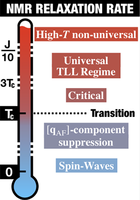
At low temperature, critical one-dimensional (1D) quantum systems, such as spin chains, are theoretically described by the Tomonaga-Luttinger liquid (TLL) theory. In realistic quasi-1D materials, however, residual couplings are always present, and these systems eventually escape the theoretical 1D world to get eventually ordered at lower temperature. In order to define a genuine “1D temperature window” in quasi-1D systems for dynamical quantities such as the NMR relaxation rate or the dynamical structure factor that is probed by inelastic neutron scattering, the authors present a comprehensive theoretical study based on analytical as well as numerical approaches. They are able to describe the full temperature crossover for weakly coupled chains and, in particular, the universal 1D window where the TLL picture can be experimentally observed.

Geometric and nongeometric contributions to the surface anomalous Hall conductivity

Tomáš Rauch, Thomas Olsen, David Vanderbilt, and Ivo Souza

Phys. Rev. B 98, 115108 (2018) - Published 5 September, 2018

A static electric field generates circulating currents at the surfaces of a magnetoelectric insulator. Remarkably, the anomalous Hall (transverse) part of the surface conductivity can change by multiples of e2/h depending on the insulating surface preparation, and a bulk calculation does not fix its quantized part. To resolve this ambiguity, the authors have developed a formalism for calculating the full surface anomalous Hall conductivity in a slab geometry. They identified a Berry-curvature term whose value can change by quantized amounts by adjusting the surface Hamiltonian, and a nongeometric term that does not depend on the surface preparation.

Critical behavior of Dirac fermions from perturbative renormalization

Bernhard Ihrig, Luminita N. Mihaila, and Michael M. Scherer

Phys. Rev. B 98, 125109 (2018) - Published 5 September, 2018

Near the critical point of a phase transition, physical observables are characterized by a set of pure numbers – the critical exponents – which are identical for a whole class of transitions defining a “universality class”. Novel Dirac materials exhibit quantum critical points, which are not captured by conventional universality classes and their description defines new challenges for theory. The authors present here a comprehensive renormalization group study and give quantitative predictions for universality classes of Dirac fermions, as relevant to semimetal-insulator transitions in graphene and emergent supersymmetry in topological insulators. The authors also compare to independent conformal bootstrap results and quantum Monte Carlo estimates.

Doping of BiFeO3: A comprehensive study on substitutional doping

Julian Gebhardt and Andrew M. Rappe

Phys. Rev. B 98, 125202 (2018) - Published 5 September, 2018

The authors investigate the effects of substitutional metal doping on BiFeO3 by accurate first-principles calculations. In a high-throughput fashion, they screen large parts of the periodic table, providing a unique view on site preference, doping type, and oxidation states, enabling doping strategies for future multifunctional oxide electronics.

Carrier dynamics in doped bilayer iridates near magnetic quantum criticality

Shouryya Ray and Matthias Vojta

Phys. Rev. B 98, 115102 (2018) - Published 4 September, 2018

Iridium oxide compounds form a fascinating class of materials, as their electronic properties are characterized by the simultaneous presence of strong electron-electron repulsion and strong spin-orbit coupling. Recent photoemission experiments on the carrier-doped bilayer iridate (Sr1−xLax)3Ir2O7 have shown the presence of small double Fermi pockets. Here, the authors provide a theoretical description of the dynamics of doped electrons in bilayer magnets in the presence of spin-orbit coupling, focusing on the vicinity of the magnetic bilayer quantum critical point. For experimentally relevant parameters, the combination of octahedral rotation and spin-orbit coupling induces a band folding that results in a Fermi surface of small double electron pockets, in striking agreement with experiment.

Berry electrodynamics: Anomalous drift and pumping from a time-dependent Berry connection

Swati Chaudhary, Manuel Endres, and Gil Refael

Phys. Rev. B 98, 064310 (2018) - Published 31 August, 2018

The Berry connection and curvature encode the geometry of a particle’s wave functions, and they can modify the motion of particles in a nontrivial manner. They are also dual to the vector potential and magnetic field. A little-explored avenue is what happens when the Berry connection changes with time. This must have an effect on the anomalous velocity of particles, just as the time dependence of the vector potential produces an electric field in standard electrodynamics. In this work, the authors outline how these ‘Berry-electrodynamics’ effects can be measured, how they relate to shift currents, and how both could be put together to produce a pumping cycle in honeycomb lattices.

Effect of boundary-induced chirality on magnetic textures in thin films

Jeroen Mulkers, Kjetil M. D. Hals, Jonathan Leliaert, Milorad V. Milošević, Bartel Van Waeyenberge, and Karin Everschor-Sitte

Phys. Rev. B 98, 064429 (2018) - Published 31 August, 2018

In the quest for miniaturizing magnetic devices, the effects of broken symmetries as well as boundaries and surfaces become increasingly important. In magnets with broken inversion symmetry, the Dzyaloshinskii-Moriya interaction (DMI) stabilizes unique spin textures such as chiral domain walls and skyrmions. Here, the authors thoroughly examine the emergent three-dimensional configurations in a thin chiral magnetic film in the presence of this boundary-induced DMI. In the case of skyrmions, the three-dimensional deformation leads to a depth-dependent radius with an overall increased skyrmion size, which suggests that the boundary-induced DMI contributes to the skyrmion stability.

Spatial extent of the excited exciton states in WS2 monolayers from diamagnetic shifts

Jonas Zipfel, Johannes Holler, Anatolie A. Mitioglu, Mariana V. Ballottin, Philipp Nagler, Andreas V. Stier, Takashi Taniguchi, Kenji Watanabe, Scott A. Crooker, Peter C. M. Christianen, Tobias Korn, and Alexey Chernikov

Phys. Rev. B 98, 075438 (2018) - Published 31 August, 2018

Excitons in van der Waals monolayer materials have attracted broad interest due to their high binding energies, strong light-matter interaction, and intriguing spin-valley physics, motivating the question of their appropriate description. Using magneto-optical spectroscopy, the authors explore the spatial extent of the excitons in WS2 monolayers, focusing on the properties of the excited states, including valley Zeeman and diamagnetic effects. The results further confirm the Wannier-Mott nature of the excitons in semiconducting monolayer materials and the assignment of the optical resonances. They provide additional support for the applicability of the effective mass models, based on the thin-film Coulomb potential.

Probing short-range magnetic order in a geometrically frustrated magnet by means of the spin Seebeck effect

Changjiang Liu, Stephen M. Wu, John E. Pearson, J. Samuel Jiang, N. d'Ambrumenil, and Anand Bhattacharya

Phys. Rev. B 98, 060415(R) (2018) - Published 28 August, 2018

The spin Seebeck effect (SSE) can be used for generating pure spin currents in insulating magnetic materials using thermal gradients. Here, the authors exploit the sensitivity of SSE to local magnetic correlations to probe magnetic short-range order (SRO) in a geometrically frustrated paramagnet Gd3Ga5O12 (GGG). The authors find that the magnetic SRO in GGG exists at temperatures far above where the corresponding antiferromagnetic long-range order can be detected using neutron scattering. Many fundamentally interesting states such as quantum spin liquids and spin ice arise in geometrically frustrated magnets. However, characterizing magnetic order within these materials in the absence of long-range order has been technically challenging, with insights derived mostly from neutron scattering measurements. This work suggests that the SSE may be an effective probe of magnetic SRO in geometrically frustrated systems, complementary to neutron and x-ray scattering.

Current-density implementation for calculating flexoelectric coefficients

Cyrus E. Dreyer, Massimiliano Stengel, and David Vanderbilt

Phys. Rev. B 98, 075153 (2018) - Published 28 August, 2018

Flexoelectricity, where a voltage is induced in an insulator by a strain gradient, becomes increasingly important as electronic devices shrink to the nanoscale. In order to develop a quantitative understanding of the flexoelectric effect in materials, the authors have developed and implemented a first-principles methodology based on density functional perturbation theory to calculate the flexoelectric response. The strategy of mapping a strain gradient onto a long-wavelength acoustic phonon, and calculating the electrical response via the current density, allows the full flexoelectric tensor to be determined with unprecedented accuracy and efficiency. This paves the way for an improved understanding of the underlying mechanisms responsible for flexoelectric effects, thus promising improved control of these effects in the context of nanoelectronic devices.

Phases of a phenomenological model of twisted bilayer graphene

J. F. Dodaro, S. A. Kivelson, Y. Schattner, X. Q. Sun, and C. Wang

Phys. Rev. B 98, 075154 (2018) - Published 28 August, 2018

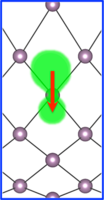
Recent measurements in magic-angle twisted bilayer graphene find a correlated insulator flanked by superconducting domes upon tuning the gate voltage. These results have prompted an analogy with the high-Tc cuprates and the physics of doped Mott insulators. Here, the authors instead propose an analogy with alkali-doped C60 and a violation of Hund’s first rule, whereby the resultant attractive interactions, as opposed to a large repulsive Hubbard U, are responsible for superconductivity. A two-band phenomenological model for twisted bilayer graphene is studied, which includes nematic orbital ferromagnet and orbital-triplet spin-singlet superconducting broken-symmetry phases.

Band structure of twisted bilayer graphene: Emergent symmetries, commensurate approximants, and Wannier obstructions

Liujun Zou, Hoi Chun Po, Ashvin Vishwanath, and T. Senthil

Phys. Rev. B 98, 085435 (2018) - Published 28 August, 2018

Motivated by the exciting discovery of correlated insulating behavior and superconductivity in magic-angle bilayer graphene, the authors discuss here the salient features of the band structure of this system. A remarkable feature is the appearance of isolated, nearly flat bands around the magic angles. The authors discuss the importance of emergent symmetries of this system and clarify some potential confusion regarding commensurate structures of twisted bilayer graphene. Furthermore, they discuss the band topology, which leads to obstructions to constructing well-localized Wannier functions of the nearly flat bands, and give directions towards overcoming the difficulties.

Macroscopic electric polarization and microscopic electron dynamics: Quantitative insight from femtosecond x-ray diffraction

Christoph Hauf, Michael Woerner, and Thomas Elsaesser

Phys. Rev. B 98, 054306 (2018) - Published 24 August, 2018

Phenomena in the macroscopic world are described by classical physics while processes at the microscopic atomic scale are governed by the laws of quantum mechanics. The connection between microscopic and macroscopic physical quantities is far from being trivial and remains partly unexplained. This study presents a novel theoretical approach for calculating macroscopic polarizations from transient microscopic charge densities that are derived from ultrafast time-resolved x-ray diffraction experiments. This is important for understanding the properties of polar and ionic materials and, in particular, those of ferroelectrics with widespread technical applications.

Trends in pressure-induced layer-selective half-collapsed tetragonal phases in the iron-based superconductor family AeAFe4As4

Vladislav Borisov, Paul C. Canfield, and Roser Valentí

Phys. Rev. B 98, 064104 (2018) - Published 24 August, 2018

A structural collapse transition induced by pressure or strain is ubiquitous among the ThCr2Si2-type Fe-based pnictides and dramatically affects their magnetic, superconducting, and elastic properties. The recently discovered CaKFe4As4, belonging to the 1144-type compounds, shows two separate half-collapsed tetragonal (hcT) transitions where As-As bonds form across different layers at distinct critical pressures. The present work uses state-of-the-art first-principles simulations to predict the hcT transitions and reveal general trends for all known 1144 pnictides, including the ferromagnetic superconductors EuRbFe4As4 and EuCsFe4As4. In the Eu-based systems, magnetism of the localized 4f electrons appears to be stable across both hcT transitions, while the magnetic pattern may be affected by pressure.

Scanning gate experiments: From strongly to weakly invasive probes

R. Steinacher, C. Pöltl, T. Krähenmann, A. Hofmann, C. Reichl, W. Zwerger, W. Wegscheider, R. A. Jalabert, K. Ensslin, D. Weinmann, and T. Ihn

Phys. Rev. B 98, 075426 (2018) - Published 24 August, 2018

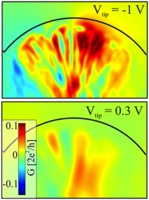
One of the fundamental aims of scanning gate microscopy is to measure local properties of high-mobility two-dimensional electronic systems. Here, the authors present a study which sheds light on the invasiveness of the scanning probe. The two-dimensional system is shaped into a ballistic cavity, which progressively concentrates the local density of states in order to study the transition from weakly to strongly invasive measurements. A good agreement between experiment and theory allows for the identification of the imaging mechanisms according to the strength of the tip potential. The insights gained lead to a deeper understanding of weakly invasive scanning gate imaging.

Spin hydrodynamics in amorphous magnets

Héctor Ochoa, Ricardo Zarzuela, and Yaroslav Tserkovnyak

Phys. Rev. B 98, 054424 (2018) - Published 23 August, 2018

The authors propose insulating amorphous magnets as platforms for superfluid spin transport. The key observation is that structural disorder in this class of materials can average out the effect of anisotropies, which usually inhibit the onset of spin superfluidity. A hydrodynamical description of the flow of angular momentum injected by spin accumulation in adjacent heavy metals is developed. The theory is valid for a broad class of magnets with frustrated interactions, where spin currents are defined in terms of coherent rotations of a noncollinear texture. Their stability, ascribed to the topology of the emergent SO(3) order parameter, resembles the phenomenology of chiral superfluids like 3He-A or spinor condensates with ferromagnetic order. Viewing SO(3) as the projective space RP3, one can see that the elementary relaxation processes for the spin superflow are provided by 4π phase slips.

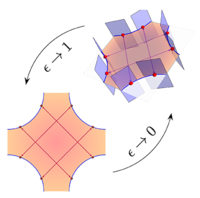
Noncommutativity between the low-energy limit and integer dimension limits in the ε expansion: A case study of the antiferromagnetic quantum critical metal

Andrés Schlief, Peter Lunts, and Sung-Sik Lee

Phys. Rev. B 98, 075140 (2018) - Published 23 August, 2018

In this work, the quantum field theory that describes non-Fermi liquids realized at antiferromagnetic quantum critical points in space dimensions between two and three has been solved nonperturbatively. Using the solvable theory as a model system, the dimensional regularization scheme is put to the test. While the perturbative solution proves to be useful in constructing the nonperturbative solution, it reveals one subtlety: the low-energy limit and the integer dimension limits do not commute due to crossover energy scales that vanish at the physical dimensions.

Sign In to Your Journals Account

Filter

Section

Filter

Article Lookup

Enter a citation