Highlights

Longitudinal conductivity and Hall coefficient in two-dimensional metals with spiral magnetic order

Johannes Mitscherling and Walter Metzner

Phys. Rev. B 98, 195126 (2018) - Published 20 November, 2018

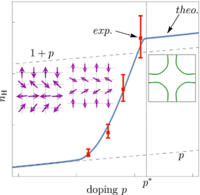
The onset of planar spiral magnetic order can explain the change in the Hall number nH seen in recent high magnetic field experiments on cuprate high-Tc superconductors [Badoux et al., Nature (London) 531, 210 (2016)]. So far, the formula for the Hall conductivity of a spiral magnetic two-dimensional metal was derived only for small relaxation rates Γ. As experiments suggest a sizable relaxation rate, the authors compute here the conductivities for arbitrary momentum-independent Γ, including all so-called interband contributions. This allows the assessment of the importance of these additional contributions and yields criteria when simplified formulas can be applied. It is shown that the observed Hall number drop in cuprates can be fitted with realistic parameters.

Photoinduced electric currents in Bose-Einstein condensates

V. M. Kovalev and I. G. Savenko

Phys. Rev. B 98, 201405(R) (2018) - Published 19 November, 2018

The authors suggest an alternative way to monitor the formation of a Bose-Einstein condensate of compound particles, such as indirect excitons, by measuring the spectrum of electric current under the action of an external electromagnetic field. The current consists of two principal components. One of them is specific for condensates, being mediated by the emission of Bogoliubov quasiparticles. The outstanding result of this paper is that this component soon becomes predominant when the frequency of light exceeds the ionization potential.

Dynamical signature of fractionalization at a deconfined quantum critical point

Nvsen Ma, Guang-Yu Sun, Yi-Zhuang You, Cenke Xu, Ashvin Vishwanath, Anders W. Sandvik, and Zi Yang Meng

Phys. Rev. B 98, 174421 (2018) - Published 16 November, 2018

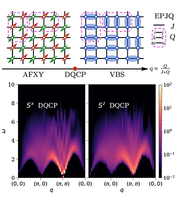
Recent theoretical research has focused on exciting new types of phase transitions that do not appear to fit within standard paradigms. In so-called deconfined quantum phase transitions, the conventional quasiparticle used in standard mathematical descriptions must be replaced by fractionalized (“split-up”) quasiparticles. Here, the authors present calculations aimed directly at the most promising experimental investigations, where the quasiparticles or their fractionalized parts are directly probed, for example, by neutron scattering. They present calculations of the spectral functions measured in such experiments to exhibit the deconfined transition and fractionalization phenomenon therein between a magnetic and a nonmagnetic phase. These results are useful for interpreting experimental results and guiding searches for deconfined phase transitions in quantum materials consisting of layered structures, in which the interactions between electrons are strong and lead to unconventional electronic and magnetic properties.

Tuning spin-charge interconversion with quantum confinement in ultrathin bismuth films

C. Zucchetti, M.-T. Dau, F. Bottegoni, C. Vergnaud, T. Guillet, A. Marty, C. Beigné, S. Gambarelli, A. Picone, A. Calloni, G. Bussetti, A. Brambilla, L. Duò, F. Ciccacci, P. K. Das, J. Fujii, I. Vobornik, M. Finazzi, and M. Jamet

Phys. Rev. B 98, 184418 (2018) - Published 16 November, 2018

Spin-charge interconversion (SCI) phenomena are now at the core of the field of spin-orbitronics. They allow to generate or detect spin currents in nonmagnetic materials and to manipulate the magnetization of nanomagnets by spin-orbit torque. Here, the authors show that spin-charge interconversion can be tuned by quantum size effects in ultrathin bismuth films. Epitaxially grown on germanium, bismuth first forms nanocrystals with a size less than the electron Fermi wavelength. Quantum confinement in these nanocrystals leads to high bulk resistance which can be interpreted as a semimetal-to-semiconductor transition. They also exhibit metallic surface states with a characteristic helical spin texture at the Fermi contour as shown by spin-resolved photoemission spectroscopy. Hence, when generating a spin current in germanium, it is converted into a charge current uniquely in the bottom surface states of bismuth nanocrystals. When increasing the amount of deposited bismuth, nanocrystals grow and begin to form a continuous semimetallic film suppressing quantum confinement. The spin-to-charge conversions into the top and bottom surfaces cancel each other. Thus, quantum confinement can turn on and off SCI in ultrathin bismuth films.

Random-field Ising-like effective theory of the glass transition. I. Mean-field models

Giulio Biroli, Chiara Cammarota, Gilles Tarjus, and Marco Tarzia

Phys. Rev. B 98, 174205 (2018) - Published 15 November, 2018

Almost any liquid when cooled fast enough forms an amorphous solid, called a glass. Here, the authors develop an effective theory of the glass transition that is able to include nonperturbative fluctuations due to self-induced disorder. Their approach allows a reformulation of the problem in terms of simpler models originally introduced to describe disordered magnetic systems. The authors discuss the physical implications of such a mapping, including the possibility to determine the existence or not of an underlying finite-temperature thermodynamic glass transition in supercooled liquids.

Random field Ising-like effective theory of the glass transition. II. Finite-dimensional models

Giulio Biroli, Chiara Cammarota, Gilles Tarjus, and Marco Tarzia

Phys. Rev. B 98, 174206 (2018) - Published 15 November, 2018

Almost any liquid when cooled fast enough forms an amorphous solid, called a glass. Here, the authors develop an effective theory of the glass transition that is able to include nonperturbative fluctuations due to self-induced disorder. Their approach allows a reformulation of the problem in terms of simpler models originally introduced to describe disordered magnetic systems. The authors discuss the physical implications of such a mapping, including the possibility to determine the existence or not of an underlying finite-temperature thermodynamic glass transition in supercooled liquids.

Induced versus intrinsic magnetic moments in ultrafast magnetization dynamics

M. Hofherr, S. Moretti, J. Shim, S. Häuser, N. Y. Safonova, M. Stiehl, A. Ali, S. Sakshath, J. W. Kim, D. H. Kim, H. J. Kim, J. I. Hong, H. C. Kapteyn, M. M. Murnane, M. Cinchetti, D. Steil, S. Mathias, B. Stadtmüller, M. Albrecht, D. E. Kim, U. Nowak, and M. Aeschlimann

Phys. Rev. B 98, 174419 (2018) - Published 14 November, 2018

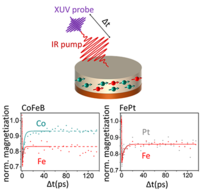
One of the ultimate goals for future spintronic applications is to manipulate magnetic states of matter on the shortest of timescales. Here, the authors investigate the optically induced ultrafast demagnetization and remagnetization dynamics of ferromagnetic alloys based on either intrinsic or induced magnetic moments. Using pump-probe spectroscopy in combination with dynamic spin model simulations, they find that a CoFeB alloy with intrinsic magnetic moments on the Fe and Co sites reveals a distinct asymptotic amplitude limit of the remagnetization process, while in FePt the induced moments of the Pt sites stay always proportional to those of Fe.

Scaling of the superconducting gap with orbital character in FeSe

Luke C. Rhodes, Matthew D. Watson, Amir A. Haghighirad, Daniil V. Evtushinsky, Matthias Eschrig, and Timur K. Kim

Phys. Rev. B 98, 180503(R) (2018) - Published 14 November, 2018

Spin fluctuations are often considered to be an important ingredient for superconductivity in the iron-based superconductors. Here, the authors use angle-resolved photoemission spectroscopy to study both the momentum dependence of the superconducting gap of FeSe and the orbital content of the bands. The experimental observation of a direct scaling between a particular orbital character and gap magnitude, paired with theoretical calculations, provides strong evidence in favor of spin fluctuation mediated superconductivity in FeSe.

Solution of the sign problem for the half-filled Hubbard-Holstein model

Seher Karakuzu, Kazuhiro Seki, and Sandro Sorella

Phys. Rev. B 98, 201108(R) (2018) - Published 14 November, 2018

Here, the Holstein-Hubbard model at one electron per site filling – a realistic model of superconductivity that includes electron correlation and electron-phonon coupling – is solved exactly in a relevant region of its phase diagram, by numerical simulations based on quantum Monte Carlo. Previous attempts were limited by exponential complexity in the number of electrons.

Nontopological parafermions in a one-dimensional fermionic model with even multiplet pairing

Leonardo Mazza, Fernando Iemini, Marcello Dalmonte, and Christophe Mora

Phys. Rev. B 98, 201109(R) (2018) - Published 14 November, 2018

Topological order and spontaneous symmetry breaking are typically thought of as paradigmatic, yet antipodal, phenomena in correlated quantum matter. Here, the authors show instead that they can concomitantly act to determine the ground-state properties of interacting systems, providing a novel angle for the discussion of topological phenomena and parafermions in one-dimensional fermionic systems. They show that topological Majorana modes can coexist with ℤn spontaneous symmetry breaking by discussing a lattice model of one-dimensional spinless fermions and thoroughly characterize the presence of nontopological parafermions.

Z4 parafermions in one-dimensional fermionic lattices

Alessio Calzona, Tobias Meng, Maura Sassetti, and Thomas L. Schmidt

Phys. Rev. B 98, 201110(R) (2018) - Published 14 November, 2018

Nonlocal (topological) order and local (Landau-type) order are often viewed as opposing principles. Here, the authors study strongly interacting quantum wires that exhibit hybrid order, composed of local Ising magnetization and a topological order parameter. Based on an exact mapping of the corresponding strongly interacting electronic Hamiltonian onto ℤn parafermions, they show that the system can be in a hybrid phase which is distinct from the topological and from the Ising phase. Moreover, the system has remarkable similarities to superconducting hybrid devices built from fractional quantum Hall edge states, which can host parafermions useful for quantum computation.

Spin transport in a graphene normal-superconductor junction in the quantum Hall regime

Tibor Sekera, Christoph Bruder, and Rakesh P. Tiwari

Phys. Rev. B 98, 195418 (2018) - Published 13 November, 2018

In graphene-superconductor heterostructures, superconductivity and the quantum Hall effect may coexist for an experimentally accessible range of magnetic fields. When the graphene edge states are coupled to a superconductor in the presence of a Zeeman field, the charge carriers with one spin projection get transmitted while the ones with the opposite spin projection get reflected within a certain energy region. This spin-filtering effect is a consequence of the interplay between specular Andreev reflections and Andreev retro-reflections. While the edge termination of graphene and the geometrical details do matter for the charge conductance, they have little effect on the spin polarization of the charge carriers.

Irreversible dynamics in quantum many-body systems

Markus Schmitt and Stefan Kehrein

Phys. Rev. B 98, 180301(R) (2018) - Published 9 November, 2018

The concept of irreversibility is necessary to justify the statistical description of many-body systems. Here, the authors study the dynamics of observable echoes in quantum many-body systems occurring when the time-evolution is effectively inverted. For nonintegrable systems they find that small imperfections in the time-reversal procedure that alter the state of the system lead to exponentially decaying echoes. As the corresponding decay rate is largely independent of the strength of the perturbation, an intrinsic sensitivity to the perturbation is revealed. This implies irreversibility of the dynamics for all practical purposes, similar to the situation in chaotic classical systems.

Fully gapped s-wave superconductivity enhanced by magnetic criticality in heavy-fermion systems

Rina Tazai and Hiroshi Kontani

Phys. Rev. B 98, 205107 (2018) - Published 5 November, 2018

Diverse multipole fluctuations inherent in heavy-fermion systems cause an amazing variety of superconducting states. Here, the authors discover theoretically that the electron-phonon coupling is strongly dressed and magnified owing to interference between multipole fluctuations. They achieve this by going beyond the conventional Migdal approximation. For this reason, even if the original electron-phonon interaction is small, phonon-mediated superconductivity can emerge near the magnetic criticality, contrary to expectations. This mechanism is responsible for the fully gapped s-wave superconductivity in CeCu2Si2.

Configuration-controlled many-body localization and the mobility emulsion

Michael Schecter, Thomas Iadecola, and Sankar Das Sarma

Phys. Rev. B 98, 174201 (2018) - Published 2 November, 2018

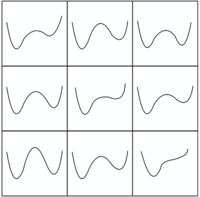
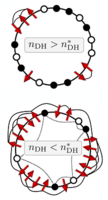
Many-body localization (MBL) is a scenario wherein a many-body quantum system retains memory of its initial state under unitary dynamics out to infinite time, contrary to expectations based on statistical mechanics. Here, the authors argue that there is another, distinct way in which statistical mechanics can fail, namely, certain initial configurations of particles can relax in the way predicted by statistical mechanics, while others fail to do so in a manner reminiscent of MBL. They dub such a system a “mobility emulsion” (ME). The authors demonstrate that an ME exists in a simple model and constitutes a distinct phase from the usual thermal and MBL phases. Furthermore, they show that the strong dependence of the system’s dynamics on its initial state can be understood as an emergent “spin-charge separation” resulting from the interplay of interactions and strong disorder, and has no analog in the case of noninteracting particles. The model for the ME discussed in this work can potentially be realized in synthetic quantum systems, such as cold atomic gases.

Emergent c-axis magnetic helix in manganite-nickelate superlattices

G. Fabbris, N. Jaouen, D. Meyers, J. Feng, J. D. Hoffman, R. Sutarto, S. G. Chiuzbăian, A. Bhattacharya, and M. P. M. Dean

Phys. Rev. B 98, 180401(R) (2018) - Published 2 November, 2018

Interfacial effects in transition metal oxide heterostructures can drive novel magnetism that is not observed in their bulk constituents. Here, the authors use resonant soft x-ray techniques to demonstrate that a helical magnetic structure occurs in the nickelate layers of the (LaNiO3)3/(La2/3Sr1/3MnO3)9 heterostructure. By measuring the Ni 3d electronic configuration, they suggest that the observed helical magnetism is derived from a spin density wave instability in the nickelate layer. This work thus provides important hints into how to drive new forms of magnetism in transition metal oxide heterostructure.

Elastic response of the electron fluid in intrinsic graphene: The collisionless regime

Julia M. Link, Daniel E. Sheehy, Boris N. Narozhny, and Jörg Schmalian

Phys. Rev. B 98, 195103 (2018) - Published 2 November, 2018

The frequency-dependent dynamic motion of electrons in graphene is similar to that of an elastic medium, exhibiting viscous flow. Here, the authors demonstrate that, in intrinsic graphene, the dynamical viscosity and the dynamical elastic constants are linked and control the nonlocal energy flow of the system. By computing graphene’s dynamic viscosity, the authors show that contributions due to single-particle motion – as in dilute gases – are comparable in magnitude to contributions due to many-body effects, similar to viscous substances like honey.

High-pressure spectroscopic investigation of multiferroic Ni3TeO6

Kenneth R. O'Neal, Amanda J. Clune, Nathan C. Harms, Sang-Wook Cheong, Junjie Yang, Zhenxian Liu, Turan Birol, and Janice L. Musfeldt

Phys. Rev. B 98, 184101 (2018) - Published 1 November, 2018

Here, a combined experimental and theoretical investigation of the properties of Ni3TeO6 under pressure reveals reduced compressibility near 4 GPa due to the unique behavior of one bond angle. This trend arises from a nearby cavity in the crystal structure that enhances tunability in this and other corrundumlike materials. Analysis of superexchange angles reveals enhanced antiferromagnetic interactions, in line with an increase in TN observed in magnetization. Magnetoelectric coupling likely enhances polarization under pressure. This work suggests that incorporating empty cavities into crystal structures provides a new route for control of multiferroic properties.

Localization with random time-periodic quantum circuits

Christoph Sünderhauf, David Pérez-García, David A. Huse, Norbert Schuch, and J. Ignacio Cirac

Phys. Rev. B 98, 134204 (2018) - Published 30 October, 2018

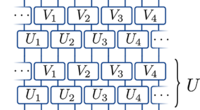
Driven quantum systems can exhibit very different physics, such as thermalization or localization, depending on the type and amount of disorder. Here, the authors study time-periodic unitary circuits (a discrete version of driven quantum systems) for both spin and fermionic systems. Using new analytical and numerical tools, they are able to identify conditions under which such systems exhibit localizing or thermalizing behavior, and characterize how the system transitions to an MBL phase as the disorder in the interactions is increased.

Beyond the quasiparticle approximation: Fully self-consistent GW calculations

Manuel Grumet, Peitao Liu, Merzuk Kaltak, Jiří Klimeš, and Georg Kresse

Phys. Rev. B 98, 155143 (2018) - Published 29 October, 2018

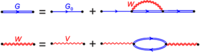
The GW method of Lars Hedin is the most popular approach to predict electron addition and removal energies in solids. To date, most GW calculations are performed assuming that the many-body system features sharp resonances, also known as quasiparticle peaks. The authors go beyond this approximation and determine the Green’s function G and the screened interaction W fully self-consistently in the GW approximation. They find strong broadening of the quasiparticle peaks. Somewhat disappointingly, the predicted band gaps are too large. This notwithstanding, the work is an important step towards a full solution of Hedin’s equations.

Sign In to Your Journals Account

Filter

Section

Filter

Article Lookup

Enter a citation