Highlights

High-temperature coherent transport in the XXZ chain in the presence of an impurity

Marlon Brenes, Eduardo Mascarenhas, Marcos Rigol, and John Goold

Phys. Rev. B 98, 235128 (2018) - Published 12 December, 2018

Numerical simulations show that the spin-½ XXZ chain in the presence of an impurity displays coherent (ballistic) spin transport at high temperature despite the fact that the model is quantum chaotic. Transport is studied on the nonequilibrium steady state, using a combination of tensor networks and open quantum system theory within Kubo’s linear response theory.

Mott, Floquet, and the response of periodically driven Anderson insulators

Dillon T. Liu, J. T. Chalker, Vedika Khemani, and S. L. Sondhi

Phys. Rev. B 98, 214202 (2018) - Published 7 December, 2018

Advances in cold atomic systems have recently provided direct access to the rich physics of Anderson localization and nonequilibrium phenomena. Here, the authors revisit the canonical problem of an Anderson insulator in a spatially uniform, oscillating electric field, studied famously by Mott. They go beyond his linear response analysis by a combination of perturbation theory, Rabi oscillation theory, Landau-Zener tunneling ideas, and Floquet theory. They identify three qualitatively distinct regimes beyond Mott’s frequency-dependent hopping and present detailed numerical simulations verifying their properties.

Finite-wave-vector electromagnetic response in lattice quantum Hall systems

Fenner Harper, David Bauer, T. S. Jackson, and Rahul Roy

Phys. Rev. B 98, 245303 (2018) - Published 6 December, 2018

In a quantum Hall system, the finite-wave-vector Hall conductivity displays an intriguing dependence on the Hall viscosity. Here, the authors study this connection for quantum Hall systems on a lattice and find that the neat continuum relation breaks down. In the process, they introduce a universal formalism for studying lattice quantum Hall systems and find that, in the low flux density limit, generic lattice wave functions connect smoothly to the Landau levels of the continuum. They also introduce a quantum mechanical method for calculating the electromagnetic response of such systems.

First-principles modeling of x-ray Raman scattering spectra

E. de Clermont Gallerande, D. Cabaret, G. Lelong, C. Brouder, M.-B. Attaiaa, L. Paulatto, K. Gilmore, Ch. J. Sahle, and G. Radtke

Phys. Rev. B 98, 214104 (2018) - Published 5 December, 2018

X-ray Raman scattering (XRS) spectroscopy is a rapidly developing synchrotron-based technique employed to probe the local electronic structure of condensed matter. The use of hard x-rays makes XRS particularly well-suited for studying low-energy edges of bulk materials, even under highly absorbing sample environments, opening up a wealth of possibilities for in situ experiments. Here, the authors propose an efficient method for calculating K-edge XRS spectra, developed within the framework of density functional theory and designed to fully account for the electric multipole transitions observed when a finite momentum is transferred to the photoelectron.

Disordered flat bands on the kagome lattice

Thomas Bilitewski and Roderich Moessner

Phys. Rev. B 98, 235109 (2018) - Published 5 December, 2018

In flat bands, the kinetic energy is fully quenched rendering interactions nonperturbative and resulting in complex many-body phenomena, such as the (fractional) quantum Hall effect. Here, the authors study the interplay of correlated disorder, topology, and interactions on the kagome lattice, which hosts a flat band with a quadratic-band touching point and Dirac cones. The authors find exact solutions and demonstrate how to introduce spectral gaps, thus establishing a prime platform to study topological and correlated flat-band physics.

Anomalous behavior of the electronic structure of (Bi1−xInx)2Se3 across the quantum phase transition from topological to trivial insulator

J. Sánchez-Barriga, I. Aguilera, L. V. Yashina, D. Y. Tsukanova, F. Freyse, A. N. Chaika, C. Callaert, A. M. Abakumov, J. Hadermann, A. Varykhalov, E. D. L. Rienks, G. Bihlmayer, S. Blügel, and O. Rader

Phys. Rev. B 98, 235110 (2018) - Published 5 December, 2018

The authors investigate the electronic and spin structure of topological surface states across a topological quantum phase transition. They find a surface band gap opening at the Dirac point of the topological surface states, giving rise to massive fermions with nonzero spin polarization on both sides of the phase transition. A mechanism of bulk-mediated scattering processes that increase with decreasing spin-orbit coupling strength is proposed as an explanation for the problem of the unconventional transformation between spin Dirac phases.

Cavity optomagnonics with magnetic textures: Coupling a magnetic vortex to light

Jasmin Graf, Hannes Pfeifer, Florian Marquardt, and Silvia Viola Kusminskiy

Phys. Rev. B 98, 241406(R) (2018) - Published 5 December, 2018

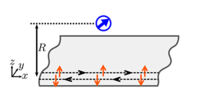
A unique feature of cavity optomagnonics is the possibility of coherently coupling light to spin excitations on top of magnetic textures. Here, the authors propose a cavity-optomagnonic system with a nonhomogeneous magnetic ground state, namely, a vortex in a magnetic microdisc. Using both analytical and computational methods, they study the cavity-enhanced coupling between optical whispering gallery modes and magnon modes, localized at the vortex. The results, both in terms of value and tunability of the coupling, point to the promise of engineered optomagnonic systems for quantum information platforms.

Higher-order symmetry-protected topological states for interacting bosons and fermions

Yizhi You, Trithep Devakul, F. J. Burnell, and Titus Neupert

Phys. Rev. B 98, 235102 (2018) - Published 3 December, 2018

Here, the authors propose a zoology of exotic materials that are gapped in their interior and on their surfaces but support gapless mode at corners or along hinges. Exemplifying a much richer bulk-boundary correspondence, this phenomenology is now termed a higher-order topological phase. The protected corner or hinge modes are a consequence of spatial symmetry, which traps and pins the low-energy modes localized at the high symmetric point.

Analytical investigation of singularities in two-particle irreducible vertex functions of the Hubbard atom

P. Thunström, O. Gunnarsson, Sergio Ciuchi, and G. Rohringer

Phys. Rev. B 98, 235107 (2018) - Published 3 December, 2018

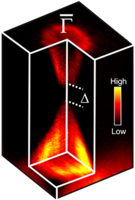
The local two-particle Green’s function and its generalized susceptibility are central building blocks in state-of-the-art theoretical descriptions of strongly correlated many-electron systems. The unexpected discovery of singular points in the generalized susceptibility, resulting in divergences of the two-particle irreducible vertex function and in multivaluedness of the Luttinger-Ward functional, has therefore attracted considerable interest. Unfortunately, almost no analytical results for irreducible vertices are available for correlated electrons. Here, the authors fill this gap by presenting fully analytical expressions for all irreducible vertex function of a simple, yet prototypical, correlated model, the single-orbital Hubbard atom. This gives highly relevant insights into the energy dependence of these functions.

Topological quadrupolar semimetals

Mao Lin and Taylor L. Hughes

Phys. Rev. B 98, 241103(R) (2018) - Published 3 December, 2018

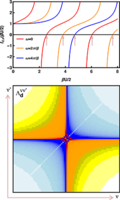
Conventional topological semimetals are characterized by the energy momentum separation of the bulk nodes in the energy spectrum. Here, the authors demonstrate a few types of topological semimetals that are gapped in the bulk, but host one or a half of a Dirac semimetal on multiple surfaces. They show that these semimetals can be characterized by the bulk nodes in the hybrid Wannier spectrum, rather than the energy spectrum. This works points to a new direction in studying the higher order topology in semimetallic systems.

Unconventional superconductivity in the extended Hubbard model: Weak-coupling renormalization group

Sebastian Wolf, Thomas L. Schmidt, and Stephan Rachel

Phys. Rev. B 98, 174515 (2018) - Published 28 November, 2018

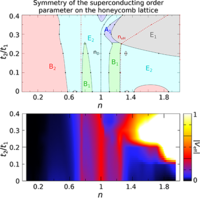
In superconducting phases, repulsive interactions between the electrons usually lead to higher-angular momentum Cooper pairing. Here, the authors employ the weak-coupling renormalization group approach to study unconventional superconducting phases emerging in the extended, repulsive Hubbard model on paradigmatic two-dimensional lattices. Among their findings are extended regions of chiral topological superconductivity on the square, triangular, and honeycomb lattices. They provide detailed superconducting phase diagrams as well as the coupling strengths that quantify the corresponding critical temperatures depending on the band-structure parameters, band filling, and interaction parameters. The importance of the resolution and accuracy of the numerical integration for the method is discussed and a way to higher numerical efficiency provided.

Evolution of helimagnetic correlations in Mn1−xFexSi with doping: A small-angle neutron scattering study

L. J. Bannenberg, R. M. Dalgliesh, T. Wolf, F. Weber, and C. Pappas

Phys. Rev. B 98, 184431 (2018) - Published 28 November, 2018

Tuning the interactions in magnetic materials by pressure or chemical substitution is a much visited route to discover new and exotic phases of condensed matter. A well known example is doping the archetype chiral magnet MnSi with Fe. Here, the authors use small-angle neutron scattering to track the evolution of the helimagnetic order in Mn1−xFexSi with Fe doping. They discover that the long-range helimagnetic order found in MnSi is suppressed already at x* ≈ 0.11, well before the critical concentration of x ≈ 0.17. Finite isotropic helimagnetic correlations persist for x > x* that can only be partly aligned by magnetic fields through a complex magnetization process.

An anomalous higher-order topological insulator

S. Franca, J. van den Brink, and I. C. Fulga

Phys. Rev. B 98, 201114(R) (2018) - Published 28 November, 2018

Topological phases of matter that have an insulating bulk and robust gapless boundary states can exist both in static materials and when system parameters are changed periodically in time. In the latter case, the periodic driving can lead to so called “anomalous” topological phases. Here, the authors show that, in the newly introduced higher-order topological insulators, anomalous phases can exist even if the system is static, and provide an example of such behavior using a two-dimensional model with topological corner charges. This work opens up the possibility of studying anomalous phases without the inherent difficulties associated with time-periodic changes of a material, such as the risk that it will “heat up” due to the driving field and lose its topological features.

Electronic properties of Pb islands on graphene: Consequences of a weak interface coupling from a combined STM and ab initio study

V. Cherkez, P. Mallet, T. Le Quang, L. Magaud, and J.-Y. Veuillen

Phys. Rev. B 98, 195441 (2018) - Published 27 November, 2018

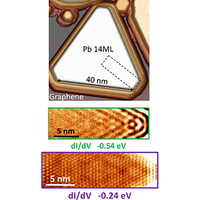
By using low-temperature scanning tunneling microscopy and spectroscopy, combined with ab initio calculations, the authors unravel the electronic properties of nanoscale Pb islands deposited on epitaxial graphene on SiC. Such electronic properties are dominated by (i) quantum well states due to electron confinement in the direction perpendicular to the surface and (ii) spatial in-plane periodic modulations related to quasiparticle interferences off the island edges. The authors conclude that the Pb islands behave as free-standing when lying on graphene on SiC.

Alternative to the topological interpretation of the transverse resistivity anomalies in SrRuO3

Daisuke Kan, Takahiro Moriyama, Kento Kobayashi, and Yuichi Shimakawa

Phys. Rev. B 98, 180408(R) (2018) - Published 26 November, 2018

Here, the authors clarify the physical origin of anomalies in transverse resistivity often observed in exotic materials, such as SrRuO3, where the Berry curvature is manifested in transport properties. Their thorough magnetotransport investigations and model formulations reveal that the previously attributed mechanism for the anomalies – the topological Hall effect – is not the only interpretation. They show that inhomogeneous magnetoelectric properties in the oxide, namely the coexistence of anomalous Hall effects having different polarities, are responsible for the emergence of the transport anomalies.

Zero-point motion and direct-indirect band-gap crossover in layered transition-metal dichalcogenides

Luciano Ortenzi, Luciano Pietronero, and Emmanuele Cappelluti

Phys. Rev. B 98, 195313 (2018) - Published 26 November, 2018

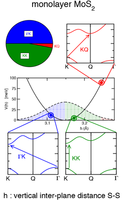
Conventional semiconductors are characterized either by a direct band gap or by an indirect one. This picture, based on the assumption of a frozen lattice, is challenged in transition metal dichalcogenides, e.g., MoS2, that present secondary band edges very close in energy. Here, the authors demonstrate that intrinsic quantum lattice fluctuations break down this paradigmatic scenario, allowing the system to dynamically span different electronic configurations with both direct- and indirect-gap character. This work suggests that many basic ideas in semiconductor physics need to be deeply revised for these materials.

Site- and spin-dependent coupling at the highly ordered h-BN/Co(0001) interface

Dmitry Yu. Usachov, Artem V. Tarasov, Kirill A. Bokai, Viktor O. Shevelev, Oleg Yu. Vilkov, Anatoly E. Petukhov, Artem G. Rybkin, Ilya I. Ogorodnikov, Mikhail V. Kuznetsov, Matthias Muntwiler, Fumihiko Matsui, Lada V. Yashina, Clemens Laubschat, and Denis V. Vyalikh

Phys. Rev. B 98, 195438 (2018) - Published 26 November, 2018

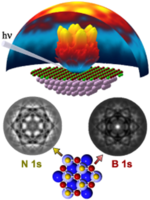
Spin injectors based on an insulating hexagonal boron nitride (h-BN) film and a ferromagnetic Co surface remain promising for spintronic applications. However, a sharp and well-defined interface is required for high performance. Here, the authors explore the structural and electronic properties of a h-BN monolayer epitaxially grown on a single-crystalline cobalt surface. They give a comprehensive description of the structure and uncover the peculiarities of interaction between the atoms at the interface.

Quantized excitation spectra by magnon confinement in quasi-one-dimensional S=1 spin systems

Takafumi Suzuki and Sei-ichiro Suga

Phys. Rev. B 98, 180406(R) (2018) - Published 21 November, 2018

Spinon confinement is key to the understanding of quantized excitation spectra in quasi-one-dimensional S = ½ spin systems. The authors investigate the quantization of the excitation continuum in quasi-one-dimensional S=1 antiferromagnetic spin systems with single-ion anisotropy D. When D < 0, the magnon continuum is quantized by the interchain interactions. This is due to magnon confinement. The present study suggests the possibility for observation of quantized spectra in many S=1 antiferromagnetic spin-chain compounds.

Probing one-dimensional systems via noise magnetometry with single spin qubits

Joaquin F. Rodriguez-Nieva, Kartiek Agarwal, Thierry Giamarchi, Bertrand I. Halperin, Mikhail D. Lukin, and Eugene Demler

Phys. Rev. B 98, 195433 (2018) - Published 21 November, 2018

Single spin qubits, such as nitrogen-vacancy (NV) centers in diamond, have recently emerged as a new generation of probes of quantum matter. Here, the authors present a theory describing how noise magnetometry with spin qubits can address several questions that have arisen in experimental studies of 1D systems. For instance, by tuning experimental parameters such as probe-sample distance, it is possible to measure correlations not accessible before, e.g. dynamic charge and spin susceptibilities with wave-vector resolution.

Noisy coupled qubits: Operator spreading and the Fredrickson-Andersen model

Daniel A. Rowlands and Austen Lamacraft

Phys. Rev. B 98, 195125 (2018) - Published 20 November, 2018
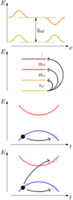
Conventional wisdom suggests that noise is antithetical to quantum entanglement. On the other hand, the evolution of a quantum system in the presence of classical noise is still unitary, so that entanglement may be present even if it is hard to detect in an average over noise trajectories. Here, the authors show how to describe the propagation of entanglement in a system of noisy coupled qubits using a mapping to a model of classical stochastic dynamics that originated in glass physics.

Sign In to Your Journals Account

Filter

Section

Filter

Article Lookup

Enter a citation