Highlights

Multiple topological transitions in twisted bilayer graphene near the first magic angle

Kasra Hejazi, Chunxiao Liu, Hassan Shapourian, Xiao Chen, and Leon Balents

Phys. Rev. B 99, 035111 (2019) - Published 7 January, 2019

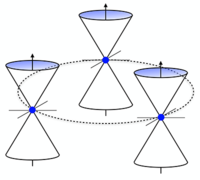
The noninteracting physics of electrons in twisted bilayer graphene is considered by varying the twist angle close to the magic angle using a continuum model. The magic angle is known to occur when the dispersion at the two Dirac cones of the two bands close to neutrality become quadratic. These are topological transitions, in which three moving Dirac points pass through each of the two immobile ones as the angle varies. Indeed, the motion of Dirac points is not limited to this and their participation in several topological transitions is very rich, which is the main subject of this study.

Bulk properties of the van der Waals hard ferromagnet VI3

Suhan Son, Matthew J. Coak, Nahyun Lee, Jonghyeon Kim, Tae Yun Kim, Hayrullo Hamidov, Hwanbeom Cho, Cheng Liu, David M. Jarvis, Philip A. C. Brown, Jae Hoon Kim, Cheol-Hwan Park, Daniel I. Khomskii, Siddharth S. Saxena, and Je-Geun Park

Phys. Rev. B 99, 041402(R) (2019) - Published 7 January, 2019

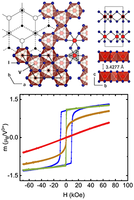
The study of two-dimensional materials has seen a huge surge following the advances made in graphene to isolate single atomic layers. Now the focus is on adding functionality, such as magnetism, into the mix to give us a powerful toolbox of 2D materials we can stack and combine in powerful ways. However, we are currently limited by a lack of diversity in the available materials. Here, the authors introduce a new tool to the collection: VI3 - a hard van der Waals ferromagnet.

Probing the Berry curvature and Fermi arcs of a Weyl circuit

Yuehui Lu, Ningyuan Jia, Lin Su, Clai Owens, Gediminas Juzeliūnas, David I. Schuster, and Jonathan Simon

Phys. Rev. B 99, 020302(R) (2019) - Published 4 January, 2019

Topology has recently emerged as a powerful tool in condensed matter physics to engineer materials whose macroscopic properties are robust to imperfections. Indeed, rather than measuring the “topological invariants” associated with the band structure of a material, the existence of such invariants is often inferred from observations of disorder robustness. Here, the authors directly measure such a topological invariant by building a “topological circuit” that exhibits Weyl points, one of the paradigmatic topological features of 3d band structures. The exaggerated size of the unit cell in the circuit allows for measurement of the complete band structure and Berry curvature of the circuit’s bands, and thus a direct measurement of the chiral charge of Weyl points.

Higher-order topological phases: A general principle of construction

Dumitru Călugăru, Vladimir Juričić, and Bitan Roy

Phys. Rev. B 99, 041301(R) (2019) - Published 4 January, 2019

The surface states of a d-dimensional conventional or first-order topological state of matter reside on a (d-1) dimensional boundary. However, its nth order incarnation, commonly known as a higher-order topological (HOT) phase, accommodates (d-n) dimensional boundary states, with corner and hinge modes standing as their representatives. Here, the authors introduce a general principle of systematically constructing the hierarchy of HOT phases by exploiting the symmetry of the system and the corresponding Clifford algebra. This procedure is applicable for insulating as well as gapless phases, and paves the route toward realizing a fourth-order nodal-loop semimetal, devoid of any surface bound state.

Finite-temperature auxiliary-field quantum Monte Carlo: Self-consistent constraint and systematic approach to low temperatures

Yuan-Yao He, Mingpu Qin, Hao Shi, Zhong-Yi Lu, and Shiwei Zhang

Phys. Rev. B 99, 045108 (2019) - Published 3 January, 2019

Ab initio computations of finite-temperature properties are important in fermion systems such as correlated models, ultracold Fermi atomic gases, and optical lattices, and realistic materials. Here, the authors present a highly accurate approach that eliminates the sign problem in standard determinantal quantum Monte Carlo (DQMC) using a gauge constraint in auxiliary-field space. The constraint can be systematically improved by a self-consistent procedure coupling the many-body computation with an independent-particle calculation. A benchmark is performed in the Hubbard model across the entire temperature range.

Lieb-Schultz-Mattis type theorem with higher-form symmetry and the quantum dimer models

Ryohei Kobayashi, Ken Shiozaki, Yuta Kikuchi, and Shinsei Ryu

Phys. Rev. B 99, 014402 (2019) - Published 2 January, 2019

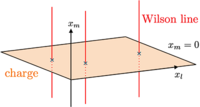
The authors construct a Lieb-Schultz-Mattis (LSM)-type theorem applicable for abelian gauge theories without matter. This theorem is based on generalized global symmetries acting on Wilson lines. It provides strong constraints on possible phases, realized in lattice gauge theories. The generalized LSM theorem is demonstrated on the example of a U(1) gauge theory that simulates the quantum dimer model on a bipartite lattice. The authors find a mixed ‘t Hooft anomaly involving the generalized global symmetry at the Rokhsar-Kivelson critical point that corresponds to the LSM constraint.

Symmetry analysis of current-induced switching of antiferromagnets

Hikaru Watanabe and Youichi Yanase

Phys. Rev. B 98, 220412(R) (2018) - Published 28 December, 2018

Antiferromagnetic metals have been attracting attention for future spintronics devices since the recent discovery of electric-current-induced antiferromagnetic domain switching. Here, the authors present a general symmetry analysis of current-induced switching of antiferromagnets in a group-theoretical way. The criterion for switchable antiferromagnets leads to the identification of a dozen of antiferromagnets as candidate materials and reveals a link with the toroidal moment in such materials. The link suggests possible functionalities of the switchable antiferromagnets and paves the way for perfect writing and reading of antiferromagnetic domains.

Nematic superconductivity in Cu1.5(PbSe)5(Bi2Se3)6

Lionel Andersen, Zhiwei Wang, Thomas Lorenz, and Yoichi Ando

Phys. Rev. B 98, 220512(R) (2018) - Published 28 December, 2018

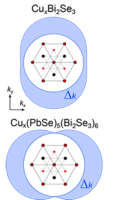
Nematic topological superconductors – CuxBi2Se3 is the first to be discovered – spontaneously break in-plane rotational symmetry and harbor helical Majorana fermions on the surface. Here, the authors find that the superconductor Cu1.5(PbSe)5(Bi2Se3})6 is also nematic, but its nematic axis is rotated from that in CuxBi2Se3. In the former compound, a weak uniaxial distortion of the trigonal Bi2Se3 lattice due to the presence of the square PbSe lattice dictates the nematic axis to lie in the mirror plane, giving its topological superconducting gap mirror-symmetry-protected nodes.

Finding purifications with minimal entanglement

Johannes Hauschild, Eyal Leviatan, Jens H. Bardarson, Ehud Altman, Michael P. Zaletel, and Frank Pollmann

Phys. Rev. B 98, 235163 (2018) - Published 28 December, 2018

Purification is a well-known tool to represent mixed quantum states as pure states on an enlarged Hilbert space. A purification of a given state is not unique and its spatial entanglement strongly depends on the particular choice. This entanglement is linked to how efficiently the purified state can be represented using matrix-product states (MPS). Here, the authors introduce an MPS-based method that allows the user to efficiently find the minimally entangled purification of a given mixed state and demonstrate that it can significantly reduce the entanglement in certain cases.

Cooling by Cooper pair splitting

Rafael Sánchez, Pablo Burset, and Alfredo Levy Yeyati

Phys. Rev. B 98, 241414(R) (2018) - Published 28 December, 2018

When the two electrons from a Cooper pair are separated into different reservoirs, the heat flow between the reservoirs is reverted, providing a quantum refrigerator. The process can be also used to define a nonlocal thermoelectric power generator. This is ultimately possible due to the quantum correlations of the pair. It, therefore, constitutes an experimentally accessible proposal of an entanglement-based quantum heat engine, able to optimally extract thermodynamic work from quantum many-body states.

Entanglement of exact excited states of Affleck-Kennedy-Lieb-Tasaki models: Exact results, many-body scars, and violation of the strong eigenstate thermalization hypothesis

Sanjay Moudgalya, Nicolas Regnault, and B. Andrei Bernevig

Phys. Rev. B 98, 235156 (2018) - Published 27 December, 2018

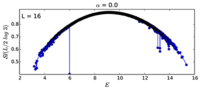
Here, the authors develop a general formalism to analytically compute the entanglement spectra of exact excited states and use it to obtain the entanglement spectra of the infinite tower of states of the spin-S AKLT models, which are the first analytical examples of what are now called quantum many-body scars. Located in the bulk of the spectrum, these states have a subthermal entanglement entropy, showing for the first time the violation of the strong eigenstate thermalization hypothesis (ETH) in a well-known translation-invariant nonintegrable model.

Higher angular momentum band inversions in two dimensions

Jörn W. F. Venderbos, Yichen Hu, and C. L. Kane

Phys. Rev. B 98, 235160 (2018) - Published 27 December, 2018

Aiming to realize many-body generalizations of topological band inversions, the authors construct and study a class of lattice models exhibiting higher angular momentum band inversion transitions protected by rotational symmetry. As a result of the non-vanishing density of states at such transitions, interactions are likely to affect the nature of the transition, possibly giving rise to interesting correlated states for electrons and holes. The models developed here represent a first and important step towards the identification of relevant materials.

Temperature dependence of the stacking-fault Gibbs energy for Al, Cu, and Ni

Xi Zhang, Blazej Grabowski, Fritz Körmann, Andrei V. Ruban, Yilun Gong, Roger C. Reed, Tilmann Hickel, and Jörg Neugebauer

Phys. Rev. B 98, 224106 (2018) - Published 26 December, 2018

Stacking fault energy (SFE) has significant impact on the deformation and mechanical properties of materials. The temperature dependence of the SFE for most elements has remained experimentally inaccessible due to technical difficulties. Here, the authors perform highly accurate ab initio calculations to investigate the temperature dependence of the SFE for three prototypical elements (Al, Cu, and Ni) and compare the outcome with an extensive set of previous theoretical and experimental data. The results clearly reveal a strong and unexpected reduction of the SFE with temperature and clarify the contribution of the different excitation mechanisms.

Lorentz ratio of a compensated metal

Songci Li and Dmitrii L. Maslov

Phys. Rev. B 98, 245134 (2018) - Published 21 December, 2018

Violation of the Wiedemann-Franz law in a metal can be quantified by comparing the Lorentz ratio with the universal Sommerfeld constant. Here, the authors obtain the Lorentz ratio of a clean compensated metal with carrier interaction as the dominant scattering mechanism by solving exactly a system of coupled kinetic equations. The Lorentz ratio is shown to assume a particular simple form in the forward-scattering limit, in which it can be arbitrarily small compared to the Sommerfeld constant. The same result can also be obtained without recourse to an exact solution. The authors discuss how a strong downward violation of the Wiedemann-Franz law in a type-II Weyl semimetal WP2 is explained within the proposed model.

Observation of interface superconductivity in a SnSe2/epitaxial graphene van der Waals heterostructure

Yi-Min Zhang, Jia-Qi Fan, Wen-Lin Wang, Ding Zhang, Lili Wang, Wei Li, Ke He, Can-Li Song, Xu-Cun Ma, and Qi-Kun Xue

Phys. Rev. B 98, 220508(R) (2018) - Published 19 December, 2018

A van der Waals heterostructure composed of graphitized SiC(0001) and the semiconductor SnSe2 shows conventional BCS-type superconductivity that is firmly corroborated by the presence of quantized vortices under an external magnetic field. Interface engineering has revealed that the observed superconductivity originates from a two-dimensional electron gas confined to the very interface between SnSe2 and graphene.

Quantum critical behavior of two-dimensional Fermi systems with quadratic band touching

Shouryya Ray, Matthias Vojta, and Lukas Janssen

Phys. Rev. B 98, 245128 (2018) - Published 19 December, 2018

At low temperatures, isotropic two-dimensional Fermi systems with quadratic band touching are unstable with respect to a symmetry-broken ground state when interactions are taken into account. Here, the authors demonstrate that in a setup with threefold symmetry only - as realized, for instance, in bilayer graphene - interactions induce a splitting of the quadratic band touching into four Dirac cones. This shifts the instability to a finite interaction strength and leads to a quantum critical point with emergent Lorentz invariance.

Topological zero-line modes in folded bilayer graphene

Tao Hou, Guanghui Cheng, Wang-Kong Tse, Changgan Zeng, and Zhenhua Qiao

Phys. Rev. B 98, 245417 (2018) - Published 19 December, 2018

A folded bilayer graphene device as an experimentally realizable platform to produce one-dimensional topological zero-line modes is proposed. The new scheme has the advantage that it completely obviates the conventional approach, which relies on the precise alignment of split gates, and is supported by the experimental fabrication of folded bilayer graphene with a well-controlled folding angle. These findings open up a new field for the application of folded graphene, and pave the way to realize low-power-consuming topological quantum devices.

Strong correlations and d+id superconductivity in twisted bilayer graphene

Dante M. Kennes, Johannes Lischner, and Christoph Karrasch

Phys. Rev. B 98, 241407(R) (2018) - Published 17 December, 2018

Recently, the experimental realization of flat bands in twisted bilayer graphene has attracted much attention as in these systems the kinetic energy is almost fully quenched, giving rise to prominent interaction effects. Indeed, experimental indications for correlation-induced insulating as well as superconducting phases show a striking similarity to the physics of unconventional high-Tc superconductors. Here, the authors employ an unbiased functional renormalization group scheme to connect to these findings from a theoretical side. A topological d-wave superconducting state as well as insulating behavior are found, depending on the parameters of the model.

Bogoliubov Fermi surfaces: General theory, magnetic order, and topology

P. M. R. Brydon, D. F. Agterberg, Henri Menke, and C. Timm

Phys. Rev. B 98, 224509 (2018) - Published 14 December, 2018

The authors present a general theory for Fermi surfaces of Bogoliubov quasiparticles in superconductors with broken time-reversal symmetry. These Fermi surfaces form two-dimensional nodes of the superconducting gap, which are unique to pairing states with a “nonunitary” structure. This generates a nonsuperconducting magnetic order intertwined with superconductivity, which is responsible for inflating the expected zero- or one-dimensional nodes into Bogoliubov Fermi surfaces. Such Fermi surfaces should be present in a large class of superconductors that break time-reversal symmetry.

Realization of continuous electron doping in bulk iron selenides and identification of a new superconducting zone

R. J. Sun, Y. Quan, S. F. Jin, Q. Z. Huang, H. Wu, L. Zhao, L. Gu, Z. P. Yin, and X. L. Chen

Phys. Rev. B 98, 214508 (2018) - Published 12 December, 2018
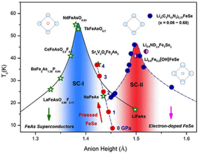
Iron selenide superconductors exhibit unique characteristics distinct from iron pnictides, especially in the electron-doped region. Here, the authors report the synthesis of a new family of Lix(C3N2H10)0.37FeSe materials, which features a continuous superconducting dome harboring a Lifshitz transition within the wide range of 0.06≤x≤0.68. Under electron doping, the anion height of FeSe layers deviates linearly away from the optimized values of pnictides. This feature leads to a new superconducting zone with unique electronic structures and strong orbital-selective electronic correlation.

Sign In to Your Journals Account

Filter

Section

Filter

Article Lookup

Enter a citation