Highlights

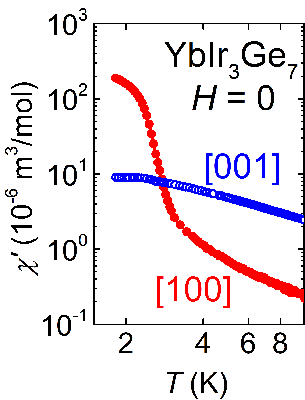
Ferromagnetic ordering along the hard axis in the Kondo lattice YbIr3Ge7

Binod K. Rai, Macy Stavinoha, J. Banda, D. Hafner, Katherine A. Benavides, D. A. Sokolov, Julia Y. Chan, M. Brando, C.-L. Huang, and E. Morosan

Phys. Rev. B 99, 121109(R) (2019) - Published 18 March, 2019

The authors report the discovery of a ferromagnetic Kondo lattice compound, YbIr3Ge7. The number of known ferromagnetic Kondo lattices is significantly smaller than the number of antiferromagnetic ones. The former show remarkable physical traits such as, for instance, magnetic order along the hard axis of the crystal electric field. With a low Curie temperature and in the presence of Kondo correlations, YbIr3Ge7 provides an excellent opportunity to explore the interplay between strong magnetocrystalline anisotropy and magnetic fluctuations. It also serves as a good candidate material for tuning towards a rare ferromagnetic quantum critical point.

General method for atomistic spin-lattice dynamics with first-principles accuracy

Johan Hellsvik, Danny Thonig, Klas Modin, Diana Iuşan, Anders Bergman, Olle Eriksson, Lars Bergqvist, and Anna Delin

Phys. Rev. B 99, 104302 (2019) - Published 15 March, 2019

Conservation of angular momentum implies that when a material changes its magnetic state, the resulting change in angular momentum must appear in some other form. In materials, the atomic magnetic moment and lattice degrees of freedom are coupled through the electronic subsystem. Here, the authors present a computationally efficient and general first-principles based method for spin-lattice simulations, opening the door for quantitative description and understanding of the microscopic origin of ultrafast demagnetization, magnetocalorics, and spincaloritronics.

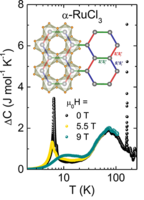
Thermodynamic evidence of fractionalized excitations in α−RuCl3

S. Widmann, V. Tsurkan, D. A. Prishchenko, V. G. Mazurenko, A. A. Tsirlin, and A. Loidl

Phys. Rev. B 99, 094415 (2019) - Published 14 March, 2019

In Kitaev spin liquids, S = ½ quantum spins on a honeycomb lattice with bond-dependent interactions fractionalize into Majorana fermions. Fingerprints of these fractionalized excitations can be detected via thermodynamic measurements. Here, the authors perform detailed heat capacity experiments on the spin-liquid candidate α-RuCl3 as function of temperature and magnetic field. To estimate the intrinsic phonon contribution, they measure the nonmagnetic reference compound RhCl3 and perform ab initio phonon calculations. Measurements and analysis provide experimental evidence of fractionalized excitations in good agreement with theoretical predictions.

Crystalline topological phases as defect networks

Dominic V. Else and Ryan Thorngren

Phys. Rev. B 99, 115116 (2019) - Published 14 March, 2019

In order to understand topological phases of matter that exist in crystalline solids, it is necessary to take into account their spatial symmetries, which gives a notion of crystalline topological phases. Here, the authors give a general picture for understanding such phases. The idea is that ground states in such phases can be schematically represented by a crystalline network of defects imprinted on a topological substrate. Equivalence classes of such defect networks under symmetric deformations correspond precisely to crystalline topological phases.

Acoustic flat lensing using an indefinite medium

M. Dubois, J. Perchoux, A. L. Vanel, C. Tronche, Y. Achaoui, G. Dupont, K. Bertling, A. D. Rakić, T. Antonakakis, S. Enoch, R. Abdeddaim, R. V. Craster, and S. Guenneau

Phys. Rev. B 99, 100301(R) (2019) - Published 13 March, 2019

Acoustic flat lensing is experimentally confirmed, using optical feedback interferometry, for a phononic array of rigid spheres placed in air. The array behaves as an indefinite medium characterized by tensors whose principal elements have different signs, allowing for effects such as negative refraction and high impedance surface reflection. Here, this behavior is achieved in a narrow frequency region around 10.6 kHz, where the acoustic band displays a hidden singularity unveiled by an unusual path in the irreducible Brillouin zone.

Partial ordering and phase elasticity in the MnGe short-period helimagnet

N. Martin, I. Mirebeau, C. Franz, G. Chaboussant, L. N. Fomicheva, and A. V. Tsvyashchenko

Phys. Rev. B 99, 100402(R) (2019) - Published 13 March, 2019

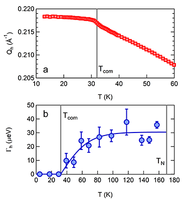
The authors report on a transition from a commensurate (C) to an incommensurate (IC) helimagnetic state as seen in both the static and dynamic properties of the MnGe alloy. Using high-resolution neutron spectroscopy, they observe gapless spin fluctuations with a typical lifetime τh=ℏ/Γh ≈ 20 ps in the IC phase. They continuously vanish upon approaching the C phase, where the helical wavelength λh=2π/Qh saturates to a value close to six lattice constants. Noting that the onset of this peculiar dynamics coincides with the sign reversal of the anomalous Hall effect, this work underscores the crucial role of spin fluctuations in the physics of “skyrmiogenic” compounds.

Stokes–anti-Stokes correlated photon properties akin to photonic Cooper pairs

Filomeno S. de Aguiar Júnior, André Saraiva, Marcelo F. Santos, Belita Koiller, Reinaldo de Melo e Souza, Arthur Patrocínio Pena, Raigna A. Silva, Carlos H. Monken, and Ado Jorio

Phys. Rev. B 99, 100503(R) (2019) - Published 13 March, 2019

Photons interact in condensed matter through the same mechanism that forms Cooper pairs in superconductors. The production rate depends on the energy shifts, which in the BCS theory determines whether interaction is attractive or repulsive. Only correlated photons in the case of attractive interactions are observed. While traditional photon-phonon collisions scatter light in all directions, the correlated photons follow the same path as the noninteracting laser. The observed phenomenon is rare, but the authors indicate paths to achieve higher interaction energies.

Optimum capacity and full counting statistics of information content and heat quantity in the steady state

Yasuhiro Utsumi

Phys. Rev. B 99, 115310 (2019) - Published 13 March, 2019

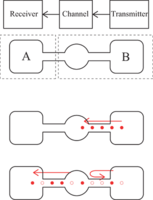
The performance of communication through a quantum conductor is limited by the laws of physics. The optimum channel capacity, the maximum rate at which information can be transmitted under a given signal power, i.e., the heat current, connects the theory of communication, quantum physics, and thermodynamics. Here, the author calculates the distribution of fluctuations of self-information and finds a Jarzynski equality like universal relation connecting the fluctuations of information, the Rényi entropy of order zero, and the optimum capacity.

Reliable methods for seamless stitching of tight-binding models based on maximally localized Wannier functions

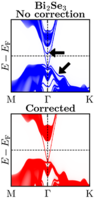
Jae-Mo Lihm and Cheol-Hwan Park

Phys. Rev. B 99, 125117 (2019) - Published 13 March, 2019

Ab initio tight-binding models based on maximally localized Wannier functions obtained from different systems are often combined to construct tight-binding models for large-scale systems, such as a semi-infinite surface. However, the discrepancy between the corresponding Wannier functions of the difference systems in the overlapping region can introduce serious artifacts to the combined tight-binding model. Here, the authors report methods that resolve this issue and enable what the authors term “seamless stitching” of tight-binding models based on maximally localized Wannier functions.

Elastoresistive and elastocaloric anomalies at magnetic and electronic-nematic critical points

Alexander T. Hristov, Matthias S. Ikeda, Johanna C. Palmstrom, Philip Walmsley, and Ian R. Fisher

Phys. Rev. B 99, 100101(R) (2019) - Published 11 March, 2019

This work identifies critical anomalies in measurements of the elastoresistivity and the elastocaloric coefficient at both the structural-nematic and antiferromagnetic phase transitions of an iron pnictide. The authors explain the magnitude and functional forms of these critical anomalies from the strain dependence of the transition temperatures. Because there is typically a strain of the trivial representation that couples to the square of any order parameter, these effects should manifest at all second order transitions. The increasing adoption of strain techniques makes this work particularly timely.

Orientation-dependent direct and inverse spin Hall effects in Co60Fe20B20

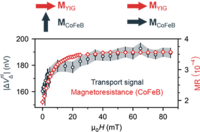
Joel Cramer, Andrew Ross, Samridh Jaiswal, Lorenzo Baldrati, Romain Lebrun, and Mathias Kläui

Phys. Rev. B 99, 104414 (2019) - Published 11 March, 2019

The spin Hall effect is a key element of various spintronics applications. Here, the authors study the orientation-dependent interconversion of spin and charge information in Co60Fe20B20. In a nonlocal magnon transport using Y3Fe5O12 as a spin conduit, the spin Hall effect amplitude depends on the relative alignment between the Y3Fe5O12 and Co60Fe20B20 magnetization vectors. In order to suppress direct magnonic contributions so as to study the electronic origin of this effect, Y3Fe5O12 and Co60Fe20B20 are exchange-decoupled by a Cu interlayer.

Domain-wall motion and interfacial Dzyaloshinskii-Moriya interactions in Pt/Co/Ir(tIr)/Ta multilayers

Kowsar Shahbazi, Joo-Von Kim, Hans T. Nembach, Justin M. Shaw, Andreas Bischof, Marta D. Rossell, Vincent Jeudy, Thomas A. Moore, and Christopher H. Marrows

Phys. Rev. B 99, 094409 (2019) - Published 7 March, 2019

The Dzyaloshinskii-Moriya interaction (DMI) that appears at interfaces between magnetic layers and heavy metals is difficult to measure directly and reliably. Here, an international team of researchers from the UK, France, USA, and Switzerland show that two methods that rely on the effect of the DMI on either the creep velocity of a domain wall or the form of the spin-wave spectrum can be reconciled if the domain wall velocity measurements are treated within a proper scaling theory.

Rod motifs in neutron scattering in spin ice

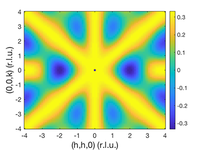
Claudio Castelnovo and Roderich Moessner

Phys. Rev. B 99, 121102(R) (2019) - Published 6 March, 2019

Neutron scattering is a technique of choice to study magnetic correlations in real materials. Discerning topological contributions therein is, however, a tall order. Bow-tie features are a notable exception in that they provide a diagnostic of topological magnetism. Accordingly, the fate of bow ties is remarkably universal. The authors explain why they blur into characteristic rod-like features in a number of pyrochlore oxides. They find that these rods do not indicate correlations of reduced dimensionality as one would naively expect from Fourier analysis. Rather, they present an additional item in the collection of motifs characteristic of topological magnetism. The researchers present two very simple models which explain their appearance, and elucidate the role played by monopole excitations.

Origin of the π-band replicas in the electronic structure of graphene grown on 4H-SiC(0001)

C. M. Polley, L. I. Johansson, H. Fedderwitz, T. Balasubramanian, M. Leandersson, J. Adell, R. Yakimova, and C. Jacobi

Phys. Rev. B 99, 115404 (2019) - Published 5 March, 2019

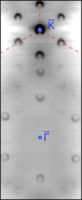
How many Dirac cones are found in the first Brillouin zone of graphene? According to photoemission studies of graphene grown on 4H-SiC(0001), the answer is not six but dozens. Whether they are real or simply artificial replicas has been a long running argument. While recent studies have argued that at least some replicas are real initial state bands, here the authors show that stronger evidence will be needed to close the case, since almost all of the replicas are consistent with simple photoelectron diffraction.

Chiral Casimir forces: Repulsive, enhanced, tunable

Qing-Dong Jiang and Frank Wilczek

Phys. Rev. B 99, 125403 (2019) - Published 4 March, 2019

Quantum fluctuations can induce a long-range force between macroscopic bodies – the Casimir effect. In recent years, people have devoted substantial efforts to alter the sign and strength of Casimir forces. The attractive Casimir force is unwelcome for nanodevices and colloids, because it can make nearby parts stick together. Here, by using chiral materials as an intervening “lubricant”, the authors propose a universal way to achieve repulsive, enhanced, and tunable Casimir forces.

Ballistic supercurrent discretization and micrometer-long Josephson coupling in germanium

N. W. Hendrickx, M. L. V. Tagliaferri, M. Kouwenhoven, R. Li, D. P. Franke, A. Sammak, A. Brinkman, G. Scappucci, and M. Veldhorst

Phys. Rev. B 99, 075435 (2019) - Published 27 February, 2019

Germanium quantum wells have long been considered to form an excellent host for spin, superconducting, and topological quantum circuits. As a first experimental step towards planar germanium hybrids, the authors demonstrate gate-tunable Josephson supercurrent that can extend over several micrometers. The supercurrent is observed to become discretized in quantum point contacts due to the quantization of the current carrying modes. These demonstrations provide scope for novel hole-based quantum technologies with control down to the last hole.

Spectroscopic study on hot-electron transport in a quantum Hall edge channel

Tomoaki Ota, Shunya Akiyama, Masayuki Hashisaka, Koji Muraki, and Toshimasa Fujisawa

Phys. Rev. B 99, 085310 (2019) - Published 27 February, 2019

Hot electron transport in a quantum Hall edge channel of an AlGaAs/GaAs heterostructure is studied by investigating the energy distribution function in the channel. Ballistic hot-electron transport, its optical-phonon replicas, weak electron-electron scattering, and electron-hole excitation in the Fermi sea are clearly identified in the energy spectra. The authors find that the electron-electron scattering is significantly suppressed with increasing the hot-electron energy well above the Fermi energy. This can be understood as deriving from a suppressed Coulomb potential at larger distances and higher energies.

Characterizing breathing dynamics of magnetic skyrmions and antiskyrmions within the Hamiltonian formalism

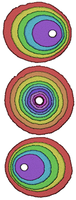
B. F. McKeever, D. R. Rodrigues, D. Pinna, Ar. Abanov, Jairo Sinova, and K. Everschor-Sitte

Phys. Rev. B 99, 054430 (2019) - Published 26 February, 2019

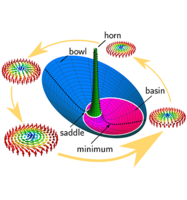
Magnetic skyrmions display a rich variety of nonlinear dynamical excitations when pushed away from equilibrium. The authors investigate an effective Hamiltonian mechanics for the breathinglike behavior, where the core of the spin structure periodically grows and shrinks in time. The effective energy in this description provides an intuitive picture for the allowed kinds of breathing motion, being either rotational or nonrotational, while the average power loss provides an experimental signature for each regime.

Orbital-to-spin angular momentum conversion employing local helicity

Sergey Nechayev, Jörg S. Eismann, Gerd Leuchs, and Peter Banzer

Phys. Rev. B 99, 075155 (2019) - Published 26 February, 2019

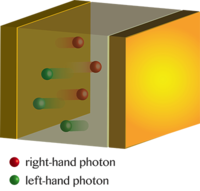
Controlling the spatial degrees of freedom of light by its polarization is at the heart of countless phenomena and applications. The most prominent example is the generation of orbital angular momentum by circularly polarized light. Here, the authors demonstrate the opposite effect – mastering spin by orbital angular momentum. They employ a nanoscopic scatterer to manipulate the input field locally at the nanoscale and generate purely circularly polarized light with the spin depending on the orbital angular momentum that they started with.

Singularity in entanglement negativity across finite-temperature phase transitions

Tsung-Cheng Lu and Tarun Grover

Phys. Rev. B 99, 075157 (2019) - Published 26 February, 2019

Phase transitions at a finite (i.e. nonzero) are typically driven by classical fluctuations, as opposed to those at zero temperature where quantum mechanics plays an essential role. Motivated by this observation, here we ask whether there exist any universal signatures of quantum correlations across a finite temperature phase transition? In this work, we approach this question by investigating one measure of quantum correlations at finite temperature, called ‘entanglement negativity’, in several models that exhibit phase transition.

Sign In to Your Journals Account

Filter

Section

Filter

Article Lookup

Enter a citation