Highlights

Calculating spin transport properties from first principles: Spin currents

R. J. H. Wesselink, K. Gupta, Z. Yuan, and Paul J. Kelly

Phys. Rev. B 99, 144409 (2019) - Published 11 April, 2019

Experiments usually don’t measure things favored by theorists like Green’s functions or scattering matrices, rather, they measure chemical potentials and currents. Here, the authors have calculated local charge and spin currents in bulk platinum and permalloy from the results of relativistic first-principles quantum mechanical scattering calculations at finite temperatures. This makes it possible to extract spin transport parameters like the spin-flip diffusion length, spin Hall angle, and spin polarization. It opens up the exciting possibility of separating interface and bulk effects, a problem that plagues experimental studies on magnetic bilayers.

Thermoelectric Hall conductivity and figure of merit in Dirac/Weyl materials

Vladyslav Kozii, Brian Skinner, and Liang Fu

Phys. Rev. B 99, 155123 (2019) - Published 11 April, 2019

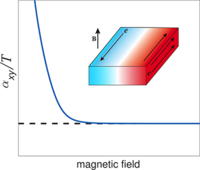
The authors study theoretically thermoelectric transport of three-dimensional Dirac/Weyl materials under a magnetic field. They find that at large field the thermoelectric Hall conductivity acquires a constant, quantized value that is independent of magnetic field, carrier density, or disorder. This quantization results from chiral Landau levels of Dirac/Weyl electrons and enables an unprecedented growth in the thermopower and the thermoelectric figure of merit.

Second harmonic generation in graphene dressed by a strong terahertz field

Mikhail Tokman, Sergey B. Bodrov, Yuri A. Sergeev, Alexey I. Korytin, Ivan Oladyshkin, Yongrui Wang, Alexey Belyanin, and Andrey N. Stepanov

Phys. Rev. B 99, 155411 (2019) - Published 10 April, 2019

The authors observe enhanced second-harmonic generation in monolayer graphene in the presence of an ultrastrong terahertz field pulse. This is a strongly nonperturbative regime of light-matter interaction, in which particles get accelerated to energies exceeding the initial Fermi energy of 0.2 eV over a timescale of a few femtoseconds. The resulting strongly asymmetric distortion of carrier distribution in the vicinity of the interband optical transition resonance gives rise to an enhanced electric-dipole nonlinear response at the second harmonic.

Localized surfaces of three-dimensional topological insulators

Yang-Zhi Chou, Rahul M. Nandkishore, and Leo Radzihovsky

Phys. Rev. B 99, 165108 (2019) - Published 8 April, 2019

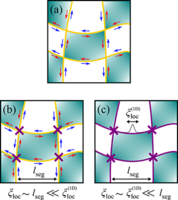
The authors study the possibilities of three-dimensional topological insulator surfaces of class CII with both disorder and interaction. In the presence of the statistically symmetric disorder, the CII surfaces can realize a chiral domain-wall network, a helical domain-wall network, or a fully gapped state. The authors demonstrate that repulsive interactions can drive the helical domain-wall network surface to a gapless localized insulator. Such a localized phase contains two distinct regimes, a “clogged” regime wherein the network localization is induced by its junctions between metallic helical domain-walls, and a “fully localized” regime of localized domain walls.

Magnon-photon coupling in the noncollinear magnetic insulator Cu2OSeO3

L. V. Abdurakhimov, S. Khan, N. A. Panjwani, J. D. Breeze, M. Mochizuki, S. Seki, Y. Tokura, J. J. L. Morton, and H. Kurebayashi

Phys. Rev. B 99, 140401(R) (2019) - Published 3 April, 2019

In chiral magnets, nontrivial spin textures can be realized due to the relativistic spin-orbit Dzyaloshinskii-Moriya interactions between the magnetic moments of unpaired electrons. In particular, a helical magnetic structure can be formed, in which magnetic moments spiral around the helical axis. Here, the authors demonstrate that collective spin excitations of the helical structure (helimagnons) can couple strongly to microwave cavity photons, resulting in the formation of a hybrid state – the helimagnon polariton.

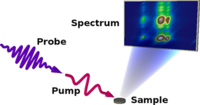
Excited-state band mapping and momentum-resolved ultrafast population dynamics in In/Si(111) nanowires investigated with XUV-based time- and angle-resolved photoemission spectroscopy

C. W. Nicholson, M. Puppin, A. Lücke, U. Gerstmann, M. Krenz, W. G. Schmidt, L. Rettig, R. Ernstorfer, and M. Wolf

Phys. Rev. B 99, 155107 (2019) - Published 3 April, 2019

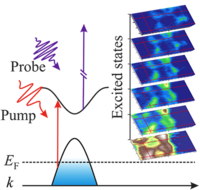
The electronic structure of a material can reveal a lot about its properties. Here, the authors map the electronic structure of the typically elusive excited states above the Fermi level throughout the full Brillouin zone in In/Si(111) nanowires. This allows for rigorous tests of current electronic structure calculation methods, and hints at a momentum-dependent excitonic coupling. In addition, extraction of the ultrafast population dynamics of these states and comparison with quasithermal modeling reveals a strongly nonequilibrium phonon distribution after photoexcitation.

Two- and three-electron bubbles in AlxGa1−xAs/Al0.24Ga0.76As quantum wells

X. Fu, Q. Shi, M. A. Zudov, G. C. Gardner, J. D. Watson, and M. J. Manfra

Phys. Rev. B 99, 161402(R) (2019) - Published 3 April, 2019

A bubble phase containing several electrons per unit cell was predicted by Koulakov, Fogler, and Shklovskii in 1996 as a generalization of the Wigner crystal. While the experimental evidence of such phases with M=2 electrons per bubble has emerged shortly after the prediction, larger bubbles have not been identified till now. Here, the authors report on bubbles with M=2 and M=3 electrons in the third excited Landau level, revealed with the help of intentionally added alloy disorder.

Nanoscale probing of resonant photonic modes in dielectric nanoparticles with focused electron beams

Qianlang Liu, Amber M. Nelson-Quillin, David J. Masiello, and Peter A. Crozier

Phys. Rev. B 99, 165102 (2019) - Published 3 April, 2019

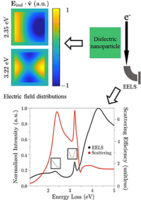
Engineering dielectric nanoparticles to select and manipulate light at specific resonance energies has great potential in fields such as solar energy conversion and optical communication. To accomplish this challenging task, it is necessary to develop tools to probe the optical resonance behavior of nanostructure locally. This work shows that focused electron beams and monochromated electron energy-loss spectroscopy provide a unique way for studying the optical resonance properties of dielectric structures with nanometer-scale spatial resolution. Resonant optical-frequency geometric modes excited by fast electrons show up as a series of pronounced peaks within the band gap of the spectra, where absorption is negligible.

RKKY interaction on the surface of three-dimensional Dirac semimetals

V. Kaladzhyan, A. A. Zyuzin, and P. Simon

Phys. Rev. B 99, 165302 (2019) - Published 3 April, 2019

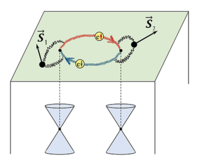
In three-dimensional Dirac semimetals the properties of bulk and surface electrons are qualitatively different. While the former have a three-dimensional pseudorelativistic spectral behavior, the latter disperse effectively like one-dimensional quasiparticles. Such a salient difference leads to qualitatively distinct properties of the RKKY exchange interaction between localized spins introduced in the bulk versus those introduced on the surface. Here, the authors demonstrate that at large distances the contribution of the Fermi-arc surface states dominates the exchange interaction and may lead to quasi-one-dimensional magnetic stripes.

Stacking tunable interlayer magnetism in bilayer CrI3

Peiheng Jiang, Cong Wang, Dachuan Chen, Zhicheng Zhong, Zhe Yuan, Zhong-Yi Lu, and Wei Ji

Phys. Rev. B 99, 144401 (2019) - Published 1 April, 2019

Interlayer magnetic interactions between two-dimension van der Waals layers are often thought to be weak or even negligible and their mechanism is largely unexplored. Here, the authors propose a mechanism for these interactions in a CrI3 bilayer, based on the concept of covalent-like quasibonding, which offers significant alteration of interlayer wave-function hybridization but small energetic difference between different stacking configurations. While a near-collinear coupling between two parallel spin-polarized I 5p orbitals prefers interlayer ferromagnetism, a noncollinear one favors antiferromagnetism, which is tunable by surmounting a tiny energy barrier between two stacking orders. This explains experimental observations and suggests a strategy for designing interlayer magnetism.

Topological theory of non-Hermitian photonic systems

Mário G. Silveirinha

Phys. Rev. B 99, 125155 (2019) - Published 29 March, 2019

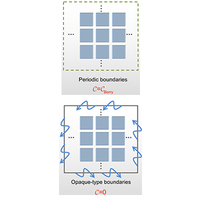
Recently, it was shown that non-Hermitian systems, e.g., materials with loss or gain, can have topological properties. Here, the author develops a gauge-independent Green’s function approach to classify the topological phases of generic non-Hermitian systems. The proposed theory introduces in a natural way the band gaps of non-Hermitian systems as the strips of the complex-frequency plane, wherein the Green’s function is analytical, and unveils that the spectrum of a non-Hermitian topological material cavity terminated with opaque-type walls must be gapless.

Electromagnetic proximity effect controlled by spin-triplet correlations in superconducting spin-valve structures

Zh. Devizorova, S. V. Mironov, A. S. Mel'nikov, and A. Buzdin

Phys. Rev. B 99, 104519 (2019) - Published 28 March, 2019

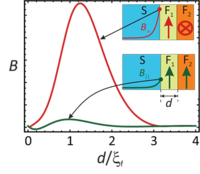
The spin-triplet correlations in superconducting spin-valve structures arising in the presence of noncollinear textures of magnetic moment are shown to enhance strongly the electromagnetic proximity effect, i.e., the long-range leakage of the magnetic field from the ferromagnet (F) to the superconducting (S) layer. The results here provide a natural explanation of the puzzling enhancement of spontaneous magnetic fields induced by noncollinear magnetic structures observed in a wide class of layered S/F systems.

Operator spreading in quantum maps

Sanjay Moudgalya, Trithep Devakul, C. W. von Keyserlingk, and S. L. Sondhi

Phys. Rev. B 99, 094312 (2019) - Published 27 March, 2019

The authors initiate the study of “operator spreading” in quantum maps on a torus, systems which do not have a tensor product Hilbert space or a notion of spatial locality. The evolution of functions on classical phase space and quantum operator evolutions are compared and contrasted using the perturbed Arnold cat map as an example. Dynamics of operators in quantum chaotic maps are characterized by distinct time scales that can be related to the quasienergy spectrum of the unitary via the spectral form factor.

Three-dimensional superconductors with hybrid higher-order topology

Nick Bultinck, B. Andrei Bernevig, and Michael P. Zaletel

Phys. Rev. B 99, 125149 (2019) - Published 26 March, 2019

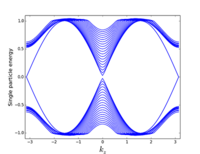
The authors identify a form of higher-order band topology in three dimensional superconductors, characterized by helical Majorana modes on the hinges of the sample. It is shown that these hinge modes can coexist robustly with Majorana cones on the boundary surface. This leads to a notion of hybridhigher−ordertopology, which distinguishes different topological superconductors in the presence of crystalline symmetries.

Percolation in Fock space as a proxy for many-body localization

Sthitadhi Roy, J. T. Chalker, and David E. Logan

Phys. Rev. B 99, 104206 (2019) - Published 25 March, 2019

Drawing motivation from the fact that eigenstates in many-body localized and ergodic phases behave differently with regard to their support on the Fock space, the authors study a classical percolation problem in Fock space that captures certain aspects of the many-body localization transition. In particular, it has two classical phases that provide simplified pictures of the extended and many-body localized states. At weak disorder, the entire Fock space is contained in a single cluster, whereas for strong disorder, the typical cluster size scales with the Fock-space dimension in a subvolume law fashion.

Theory for time-resolved resonant inelastic x-ray scattering

Yuan Chen, Yao Wang, Chunjing Jia, Brian Moritz, Andrij M. Shvaika, James K. Freericks, and Thomas P. Devereaux

Phys. Rev. B 99, 104306 (2019) - Published 22 March, 2019

How do we map collective excitations with time, momentum, and energy resolution? Development of time-resolved resonant inelastic x-ray scattering (tr-RIXS) shows promise. Here, the authors present a theory for the tr-RIXS cross section, and as a proof of principle, they apply the theory to single-band models to elucidate the dynamics of particle-hole excitations. This work provides a crucial bridge for understanding how excitations from complicated phases manifest in time-resolved resonant scattering experiments.

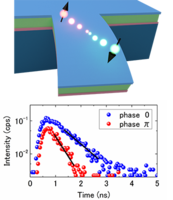
Strain-induced exciton decomposition and anisotropic lifetime modulation in a GaAs micromechanical resonator

Ryuichi Ohta, Hajime Okamoto, Takehiko Tawara, Hideki Gotoh, and Hiroshi Yamaguchi

Phys. Rev. B 99, 115315 (2019) - Published 22 March, 2019

Mechanical vibration generates a time-varying strain that enables one to control the electrical and optical properties of solid-state two-level systems. Here, the authors report on a mechanical way to control exciton lifetimes using the vibrational strain of suspended semiconductor heterostructures. The results indicate a back-action force from the excitons to the mechanical resonator with this dissipative process, which has the potential to suppress the thermal noise of the resonator and provide a photon-exciton-phonon interaction in a solid-state system.

Fermi surface, possible unconventional fermions, and unusually robust resistive critical fields in the chiral-structured superconductor AuBe

Drew J. Rebar, Serena M. Birnbaum, John Singleton, Mojammel Khan, J. C. Ball, P. W. Adams, Julia Y. Chan, D. P. Young, Dana A. Browne, and J. F. DiTusa

Phys. Rev. B 99, 094517 (2019) - Published 21 March, 2019

AuBe is a fascinating binary metal with a chiral structure predicted to host exotic fermions. Despite the polycrystalline nature of the samples, a plethora of de Haas–van Alphen oscillations is observed, one series of which shows a strongly field-dependent effective mass and Berry phase, supporting the premise of unusual fermions. Moreover, AuBe exhibits superconductivity with a highly enhanced resistive critical field. This property is shown to be intrinsic to this material class, implying that topologically protected surface states are involved.

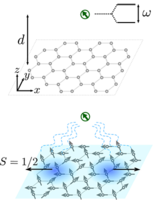
Diagnosing phases of magnetic insulators via noise magnetometry with spin qubits

Shubhayu Chatterjee, Joaquin F. Rodriguez-Nieva, and Eugene Demler

Phys. Rev. B 99, 104425 (2019) - Published 21 March, 2019

Two-dimensional magnetic insulators exhibit a plethora of competing ground states, such as ordered (anti)ferromagnets, exotic quantum spin liquid states, and random singlet phases. Spin liquids, in particular, are collective phases of matter which have eluded discovery for several decades. Although there are many promising candidate materials for their realization, the central challenges for the clear diagnosis of a spin liquid has been the lack of experimental probes to access their emergent excitations. Here, the authors propose that spin qubit magnetometers grant access to these excitations and, therefore, can be used as a diagnostic of ground states in magnetic insulators.

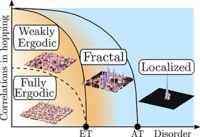
Correlation-induced localization

P. A. Nosov, I. M. Khaymovich, and V. E. Kravtsov

Phys. Rev. B 99, 104203 (2019) - Published 19 March, 2019
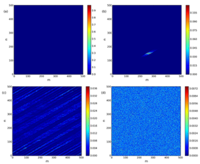
Conventional Anderson localization is due to destructive interference of matter waves described by local random Hamiltonians. Correlations in random diagonal elements of such a Hamiltonian are known to favor delocalization. Systems described by nonlocal Hamiltonians have become experimentally accessible recently. The authors consider two families of such random-matrix Hamiltonians with correlations in the long-range hopping terms and demonstrate that, as correlations become stronger, localization is enhanced while the wave-function ergodicity progressively deteriorates.

Sign In to Your Journals Account

Filter

Section

Filter

Article Lookup

Enter a citation