Highlights

Hierarchies of methods towards the exact Kohn-Sham correlation energy based on the adiabatic-connection fluctuation-dissipation theorem

Andreas Görling

Phys. Rev. B 99, 235120 (2019) - Published 10 June, 2019

A hierarchy of universally applicable density functional methods based on the adiabatic-connection fluctuation-dissipation theorem is introduced that can be systematically improved to treat electronic structures with increasing accuracy. Methods at the first rank of the hierarchy already can compete with established high-level wave-function methods and exhibit an attractive ratio of accuracy to computational effort. Strong correlation can be treated in a black-box manner based on a single Slater determinant: the Kohn-Sham determinant.

Non-Hermitian systems and topology: A transfer-matrix perspective

Flore K. Kunst and Vatsal Dwivedi

Phys. Rev. B 99, 245116 (2019) - Published 10 June, 2019

Non-Hermitian Hamiltonians—proposed to describe dissipative systems where the particles have a finite lifetime—exhibit many puzzling properties, strongly contrasting their Hermitian counterparts. In particular, their spectra exhibit extreme sensitivity to boundary conditions and a piling up of all states at the boundary, signalling a breakdown of the conventional bulk-boundary correspondence. The authors study these systems using transfer matrices, whereby they can explain as well as predict the aforementioned features without resorting to numerical computations. This analytical approach allows for a deeper understanding of the topological properties of non-Hermitian systems.

Spin-glass state and reversed magnetic anisotropy induced by Cr doping in the Kitaev magnet α−RuCl3

G. Bastien, M. Roslova, M. H. Haghighi, K. Mehlawat, J. Hunger, A. Isaeva, T. Doert, M. Vojta, B. Büchner, and A. U. B. Wolter

Phys. Rev. B 99, 214410 (2019) - Published 6 June, 2019

In the presence of strong spin-orbit coupling, honeycomb-layered magnetic materials host a particular type of magnetic interactions known as Kitaev interactions. These are predicted to lead to a topological quantum spin liquid ground state. The material α-RuCl3 is considered to be close to this Kitaev spin liquid state. Here, the authors discuss the effect of the partial substitution of ruthenium ions in α-RuCl3 by magnetic chromium ions, which have a much smaller spin-orbit coupling.

Periodic table for topological bands with non-Hermitian symmetries

Hengyun Zhou and Jong Yeon Lee

Phys. Rev. B 99, 235112 (2019) - Published 6 June, 2019

Classifications of symmetry-protected topological phases provide a framework to understand systematically the physical properties and potential applications of topological systems. Here, the authors derive a comprehensive 38-fold topological classification of non-Hermitian systems with generic non-Hermitian symmetry classes. Two independent generalizations of Kramers’ degeneracy to the non-Hermitian setting are presented. The nature of the non-Hermitian topological invariants obtained in this classification is explained through worked-out examples, thus providing a framework for the experimental design and engineering of non-Hermitian symmetry-protected topological systems.

Vortex-induced quantum metallicity in the mono-unit-layer superconductor NbSe2

Satoru Ichinokura, Yuki Nakata, Katsuaki Sugawara, Yukihiro Endo, Akari Takayama, Takashi Takahashi, and Shuji Hasegawa

Phys. Rev. B 99, 220501(R) (2019) - Published 5 June, 2019

The authors investigate quantum phase transitions in single unit-layer NbSe2. The superconductor–normal state transition caused by the surface-normal magnetic field is found to be intermediated by a quasimetallic state. This behavior is consistent with the “Bose metal” picture, in which finite dissipation is caused by the breaking of phase coherence due to the strong gauge-field fluctuation. The results of scaling analyses reveal a complex but essential phase diagram of single unit-layer NbSe2 as a two-dimensional superconductor.

Reconstructing entanglement Hamiltonian via entanglement eigenstates

W. Zhu, Zhoushen Huang, and Yin-Chen He

Phys. Rev. B 99, 235109 (2019) - Published 4 June, 2019

Entanglement-based measurements have proven to be beneficial in analyzing strong correlation effects in condensed matter systems. While diagnostics such as entanglement entropy and spectrum are numerically straightforward to obtain and thus widely used, the physically more illuminating object that the entanglement Hamiltonian is remains elusive, since its determination involves the daunting task of fully diagonalizing a many-body reduced density matrix. Here, the authors show how to circumvent this technical challenge and construct the entanglement Hamiltonian from a single entanglement eigenstate.

Mimicking chiral light-matter interaction

Sergey Nechayev and Peter Banzer

Phys. Rev. B 99, 241101(R) (2019) - Published 4 June, 2019

Chiral light-matter interactions are at the heart of countless phenomena and applications. Here, the authors demonstrate how electric-dipole scatterers can mimic interactions of light and chiral matter. The underlying mechanism originates from the selective response of electric-dipole scatterers to the incident electric field only, and from the lack of reflection symmetry of the whole experiment. These results address the fundamentals of duality symmetry in optics and chiral light-matter interactions, accentuating their richness and ubiquity even in highly symmetric scenarios.

Transient magnetic-domain-wall ac dynamics by means of magneto-optical Kerr effect microscopy

P. Domenichini, C. P. Quinteros, M. Granada, S. Collin, J.-M. George, J. Curiale, S. Bustingorry, M. G. Capeluto, and G. Pasquini

Phys. Rev. B 99, 214401 (2019) - Published 3 June, 2019

Magnetic domain walls can be described within the general framework of disordered elastic systems, which accounts well for most of their dynamical and geometrical properties. Beyond the theoretical predictions, the authors report here unexpected features observed under the application of alternating square pulses. In particular, magneto-optical images show that domain walls evolve toward strongly distorted shapes concomitantly with a reduction of domain area. The evolution of the morphology is characterized, and the underlying physics is discussed.

Universal driving protocol for symmetry-protected Floquet topological phases

Bastian Höckendorf, Andreas Alvermann, and Holger Fehske

Phys. Rev. B 99, 245102 (2019) - Published 3 June, 2019

Topological systems can exhibit different types of bulk and boundary transport, which are regularly associated with fundamental, nonunitarily realized symmetries. Here, the authors introduce a universal driving protocol for Floquet topological phases with time-reversal, particle-hole, or chiral symmetry. By selectively enforcing or breaking the individual symmetries, the driving protocol manages to implement various topological phases in the same system. Depending on the specific combination of symmetries, these phases feature copropagating as well as symmetry-protected counterpropagating topological boundary states.

Multiscale time-dependent density functional theory for a unified description of ultrafast dynamics: Pulsed light, electron, and lattice motions in crystalline solids

Atsushi Yamada and Kazuhiro Yabana

Phys. Rev. B 99, 245103 (2019) - Published 3 June, 2019

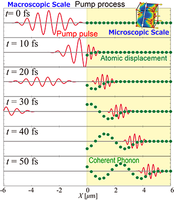
First-principles multiscale simulations that trace the nonlinear dynamics of light electromagnetic fields, electrons, and lattice motion in crystalline solid are developed here. The Maxwell, time-dependent Kohn-Sham, and Newton equations are solved simultaneously. This Maxwell plus time-dependent DFT plus molecular dynamics multiscale scheme is widely applicable to nonlinear optical phenomena involving lattice motion. The authors demonstrate the method by mimicking the experimental setup of a pump-probe measurement in diamond, showing coherent phonon generation by the pump pulse and amplification of the stimulated Raman wave accompanying the probe pulse.

Geometric responses of the Pfaffian state

Vatsal Dwivedi and Semyon Klevtsov

Phys. Rev. B 99, 205158 (2019) - Published 31 May, 2019

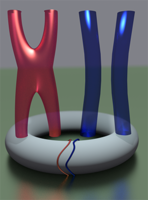
The universal transport coefficients of fractional quantum Hall states can be obtained from the response of trial wave functions to variations of the background geometry. The authors define and study the Pfaffian (or Moore-Read) state, which has been proposed to describe the fractional quantum Hall state at a filling fraction 52, on compact curved manifolds by means of a path integral approach. Starting from the trial wave function, they compute the electron density and the static structure factor in a large-N expansion, including an exact derivation of the gravitational anomaly contribution.

Faithful tight-binding models and fragile topology of magic-angle bilayer graphene

Hoi Chun Po, Liujun Zou, T. Senthil, and Ashvin Vishwanath

Phys. Rev. B 99, 195455 (2019) - Published 29 May, 2019

The authors report on the construction of a faithful tight-binding model for twisted bilayer graphene, which led them to a precise characterization of its band topology.

Photoinduced dynamics of nematic order parameter in FeSe

T. Konstantinova, L. Wu, M. Abeykoon, R. J. Koch, A. F. Wang, R. K. Li, X. Shen, J. Li, J. Tao, I. A. Zaliznyak, C. Petrovic, S. J. L. Billinge, X. J. Wang, E. S. Bozin, and Y. Zhu

Phys. Rev. B 99, 180102(R) (2019) - Published 28 May, 2019

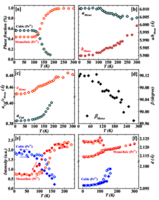
Nematicity is deemed a precursor of superconductivity in unconventional superconductors. Here, the authors investigate the formation of a nematic phase and the dynamics of nematic fluctuations in FeSe using ultrafast electron diffraction. They find an enhancement of the high-symmetry crystalline order as a result of photoinduced suppression of low-symmetry local lattice distortion. This distortion, which is a signature of nematic fluctuations, is corroborated by x-ray pair distribution function analysis and electron microscopy, and is present in a wide temperature range below and above the nematic phase transition.

First-order valence transition: Neutron diffraction, inelastic neutron scattering, and x-ray absorption investigations on the double perovskite Ba2PrRu0.9Ir0.1O6

J. Sannigrahi, D. T. Adroja, C. Ritter, W. Kockelmann, A. D. Hillier, K. S. Knight, A. T. Boothroyd, M. Wakeshima, Y. Hinatsu, J. F. W. Mosselmans, and S. Ramos

Phys. Rev. B 99, 184440 (2019) - Published 28 May, 2019

Strongly correlated electron systems having strong hybridization between localized 4f electrons and conduction electrons exhibit anomalous behavior, e.g., heavy-fermion effects, Kondo effect, valence fluctuations, and many more. Among these, valence fluctuations are the most interesting and there are only a handful of compounds that exhibit a first-order valence transition. Here, the authors have provided direct confirmation of the first-order valence transition in Ba2PrRu0.9Ir0.1O6 using multiple techniques. This compound is the first system to exhibit multiple degrees of freedom with temperature, i.e., a structural phase transition, antiferromagnetic and ferromagnetic ordering, and a first-order valence transition.

Nonlocal topological electromagnetic phases of matter

Todd Van Mechelen and Zubin Jacob

Phys. Rev. B 99, 205146 (2019) - Published 28 May, 2019

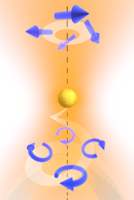
Topological electromagnetic phases of matter belong to a unique class of quantum phases in atomic-scale media. The ultimate origin of electromagnetic phases lies in the nonlocal Hall conductivity. Unlike their electronic counterparts, topological electromagnetic materials are manifestly bosonic and exhibit protected spin-1 edge states. To uncover the signatures of these bosonic phases, the authors introduce the microscopic theory of photonic band structure and analyze the symmetries of the atomic lattice. Beside the Chern invariant, there are also symmetry-protected topological invariants that are characterized by spin-1 eigenvalues of the electromagnetic field, as illustrated in the accompanying figure.

Bridging Hubbard model physics and quantum Hall physics in trilayer graphene/h−BN moiré superlattice

Ya-Hui Zhang and T. Senthil

Phys. Rev. B 99, 205150 (2019) - Published 28 May, 2019

ABC-stacked trilayer graphene aligned with a boron nitride substrate is a fascinating correlated electron system with gate-tunable bandwidth and band topology. This paper derives an explicit lattice extended Hubbard model for the topologically trivial side. This provides a solid framework for future studies of this system. An interesting outcome is the identification of a novel physical mechanism for ferromagnetism in a Mott insulator. The paper also highlights the remarkable opportunities presented by this system for fundamental studies of the electronic Mott transition through feasible transport experiments.

On the origin of the anomalous peak in the resistivity of TiSe2

Matthew D. Watson, Adam M. Beales, and Philip D. C. King

Phys. Rev. B 99, 195142 (2019) - Published 23 May, 2019

Resistivity measurements of TiSe2 typically show a pronounced and broad peak upon cooling, whose link with the much-studied charge density wave like transition that this material hosts has proved controversial. Here, the authors present quantitative simulations of resistivity using a simple model, but one whose parameters are strongly constrained from recent electronic structure measurements. It is shown that the prominent peak in resistivity, and its variation with doping, arise due to changing thermal carrier populations of a narrow-gap semiconductor, and that these are largely unrelated to the 200 K phase transition.

Non-Hermitian higher-order topological states in nonreciprocal and reciprocal systems with their electric-circuit realization

Motohiko Ezawa

Phys. Rev. B 99, 201411(R) (2019) - Published 21 May, 2019

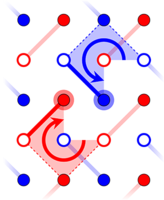
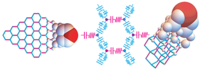
Nonreciprocal non-Hermitian higher-order topological skin states are realized in LC electric circuits with diodes. Here, the authors give examples with rhombus geometry of the nonreciprocal honeycomb system and rhombohedron geometry of the diamond lattice system. In the accompanying image, red balls represent zero-energy topological corner states.

Emergent statistical mechanics of entanglement in random unitary circuits

Tianci Zhou and Adam Nahum

Phys. Rev. B 99, 174205 (2019) - Published 20 May, 2019

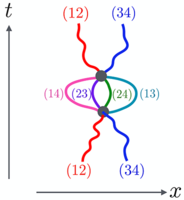
Random unitary circuits are powerful minimal models for chaotic nonequilibrium evolution. Here, the authors establish an exact mapping between dynamical observables in random circuits and a statistical mechanical model of interacting spins, and use it to study systematically the entanglement generated by a random circuit consisting of local gates. A domain wall line tension in this spin model sets the entanglement growth rate. By a careful analysis of the interaction between domain walls, the authors derive explicitly the Kardar-Parisi-Zhang equation that governs the evolution of second Renyi entropy and identify a phase transition of the growth-rate function.

Ultrafast quantum-path interferometry revealing the generation process of coherent phonons

Kazutaka G. Nakamura, Kensuke Yokota, Yuki Okuda, Rintaro Kase, Takashi Kitashima, Yu Mishima, Yutaka Shikano, and Yosuke Kayanuma

Phys. Rev. B 99, 180301(R) (2019) - Published 20 May, 2019
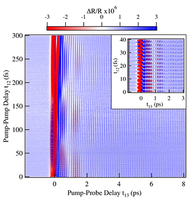
Ultrafast quantum-path interferometry by using a pair of relative-phase-locked femtosecond pulses is proposed to evaluate the contribution of each quantum path in an optical transition. The observed characteristic interference fringes (collapse and revival) reveal that the impulsive stimulated Raman scattering is dominant in the coherent-phonon generation in n-type GaAs even in an opaque condition. It is demonstrated that the optical dual-pulse pumping actively creates quantum mechanical superposition of the electronic and phononic states in a bulk solid.

Sign In to Your Journals Account

Filter

Section

Filter

Article Lookup

Enter a citation