Highlights

Phase-tunable second-order topological superconductor

S. Franca, D. V. Efremov, and I. C. Fulga

Phys. Rev. B 100, 075415 (2019) - Published 9 August, 2019

Two-dimensional second-order topological superconductors (SOTSCs) have gapped bulk and edge states with zero-energy Majorana bound states localized at corners. The authors propose to construct a tunable SOTSC in a two-dimensional Majorana nanowire array by using superconducting phase differences to modify interwire couplings. The system, which is characterized within the framework of scattering theory, is robust against disorder that can actually increase the extent of the topological phase in parameter space. As such, it realizes a higher-order topological Anderson phase.

Non-Abelian Berry phase for open quantum systems: Topological protection versus geometric dephasing

Kyrylo Snizhko, Reinhold Egger, and Yuval Gefen

Phys. Rev. B 100, 085303 (2019) - Published 9 August, 2019

To what extent can coupling to a dissipative environment hinder the emergence of a geometric phase? And does dissipation undermine its possibly non-Abelian nature? Here, the authors show that non-Abelian geometric phase survives the presence of an environment, albeit modified. The dissipative coupling is manifest in the non-Abelian dynamics. Moreover, it gives rise to non-Abelian geometric dephasing, which may suppress or enhance coherent contributions, depending on the order of adiabatic operations.

Evolution of structure and magnetism across the metal-insulator transition in the pyrochlore iridate (Nd1−xCax)2Ir2O7

Zach Porter, Eli Zoghlin, Samuel Britner, Samra Husremovic, Jacob P. C. Ruff, Yongseong Choi, Daniel Haskel, Geneva Laurita, and Stephen D. Wilson

Phys. Rev. B 100, 054409 (2019) - Published 8 August, 2019

This study explores a filling-controlled metal-insulator transition in the pyrochlore-based iridium oxide Nd2Ir2O7. Through measurements of the local site symmetry, average structure, and electronic properties, the authors comment on the interplay of the lattice, charge gap, and magnetism in this material. The work holds important implications for tuning this compound toward its anticipated quantum critical regime, which has been predicted to host a Weyl semimetal state.

Topologically protected photonic modes in composite quantum Hall/quantum spin Hall waveguides

Shukai Ma, Bo Xiao, Yang Yu, Kueifu Lai, Gennady Shvets, and Steven M. Anlage

Phys. Rev. B 100, 085118 (2019) - Published 8 August, 2019

The authors report on the creation of the first optical analog of a composite quantum Hall (QH) and quantum spin-Hall (QSH) interface that carries topologically protected modes - a heterogeneous structure that is unprecedented in condensed matter physics. The effective spin degree of freedom of the topologically protected electromagnetic modes determines their unique pathways through these systems. Experimental realizations include backscatter-free 2-port isolators, unique 3-port circulators with strong isolation, and full 4-port circulators, based on composite QH and QSH structures.

Conversion of projected entangled pair states into a canonical form

Reza Haghshenas, Matthew J. O'Rourke, and Garnet Kin-Lic Chan

Phys. Rev. B 100, 054404 (2019) - Published 5 August, 2019

Projected entangled pair states (PEPS) are a class of tensor networks that are believed to represent a wide variety of two-dimensional physical quantum states. However, unlike their well-known one-dimensional counterparts, the matrix product states (MPS), numerical simulations with PEPS suffer from instabilities that can be traced back to the lack of a canonical form. The authors describe how to convert a PEPS into a canonical form analogous to the one for an MPS. It is expected that this canonical form will make possible improved analytical and numerical approaches for PEPS.

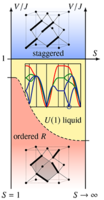
Generalized route to effective field theories for quantum systems with local constraints

Attila Szabó, Garry Goldstein, Claudio Castelnovo, and Alexei M. Tsvelik

Phys. Rev. B 100, 085113 (2019) - Published 5 August, 2019

Effective models featuring hard local constraints describe several strongly correlated electronic systems that exhibit interesting and exotic behavior from emergent gauge symmetries to deconfined criticality and topological order. A systematic field-theoretic approach to such models remained elusive to date, with effective theories constructed from physical insight. Here, the authors propose a general large-S path-integral formalism to obtain field theories for hard constrained Hamiltonians. They demonstrate its potential by performing a systematic study of quantum dimer models, including such on nonbipartite lattices.

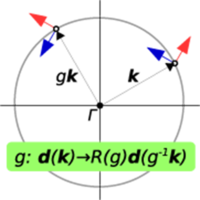
Symmetry of superconducting pairing in non-pseudospin electron bands

K. V. Samokhin

Phys. Rev. B 100, 054501 (2019) - Published 2 August, 2019

The symmetry-based phenomenological theory of Cooper pairing is a powerful tool in the studies of unconventional superconductors. At the heart of this theory is the assumption that the electron Bloch states transform under crystal symmetry operations in the same way as the pure spin-½ states, even in the presence of spin-orbit coupling. Here, the author shows that this assumption is not always true and develops a modified classification of superconducting states in centrosymmetric crystals.

Magic angle hierarchy in twisted graphene multilayers

Eslam Khalaf, Alex J. Kruchkov, Grigory Tarnopolsky, and Ashvin Vishwanath

Phys. Rev. B 100, 085109 (2019) - Published 2 August, 2019

The recent discovery of correlated insulating states and superconductivity in twisted bilayer graphene has opened the door to a new approach to designing correlated materials by controlling the twist angles. In this study, the authors propose a large class of graphene-based moiré heterostructures which similarly exhibit flat bands at a sequence of magic angles whose pattern is analytically related to the bilayer magic angles. The proposed setup may be experimentally more stable compared to the bilayer case and features the coexistence of a flat band with Dirac dispersing bands, potentially leading to qualitatively different types of flat-band induced correlated phases.

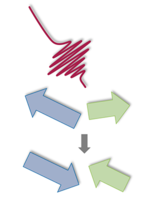
Stochastic ferrimagnetic Landau-Lifshitz-Bloch equation for finite magnetic structures

Christoph Vogler, Claas Abert, Florian Bruckner, and Dieter Suess

Phys. Rev. B 100, 054401 (2019) - Published 1 August, 2019

After deriving the stochastic version of the Landau-Lifshitz-Bloch equation for disordered ferromagnets, the authors develop a computationally efficient coarse-grained model for ferrimagnets with a finite size. This model is shown to be accurate for applied heat pulses of down to ten picoseconds. Although the authors observe switching with a ferromagneticlike state for a 50-fs pulse, no deterministic switching is obtained. This leads to the conclusion that the two-spin model is probably not capable of describing deterministic all-optical switching at all.

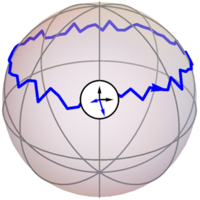
Landau quantization of nearly degenerate bands and full symmetry classification of Landau level crossings

Chong Wang, Wenhui Duan, Leonid Glazman, and A. Alexandradinata

Phys. Rev. B 100, 014442 (2019) - Published 31 July, 2019

In the presence of a magnetic field, an electron’s spin tends to align with the field via the Zeeman interaction, but this often competes with the locking of spin and momentum via the spin-orbit interaction. Here, the authors propose a quantization rule for electron energy levels (Landau levels) that captures the delicate interplay of these two interactions and that quantifies the level repulsion between energy levels of opposite spin. In certain symmetry classes, this level repulsion is anomalously weak, meaning that only one tunable experimental parameter is needed to obtain a level degeneracy.

Second-order Dirac superconductors and magnetic field induced Majorana hinge modes

Sayed Ali Akbar Ghorashi, Xiang Hu, Taylor L. Hughes, and Enrico Rossi

Phys. Rev. B 100, 020509(R) (2019) - Published 31 July, 2019

Higher-order topological superconductors (HOTSCs) are a new class of topological materials that in three dimensions are characterized by gapped bulk and surface states and gapless hinge modes. Here, the authors identify two new groups of HOTSCs: (i) second-order Dirac superconductors, which have both topologically protected Dirac cones at the surface and topologically protected dispersionless Majorana states at the hinges; (ii) three-dimensional magnetic field-induced HOTSCs with helical Majorana hinge states, which are located at only two (or one) of the corners. The authors show that, using the sign of the magnetic field and the mirror-diagonal symmetry-breaking perturbation, the Majorana pairs can be tuned to be at a specific corner, leading to a highly tunable setup for realization and detection of helical Majorana states.

Designing flat bands by strain

Zhen Bi, Noah F. Q. Yuan, and Liang Fu

Phys. Rev. B 100, 035448 (2019) - Published 31 July, 2019

Magic angle twisted bilayer graphene (MATBG) is an exciting new system for flat electronic bands and correlated physics. However, heterostrains are ubiquitous in the TBG samples, and their role on the electronic properties has not been clear. Here, the authors show that heterostrains generically broaden the flat bands in MATBG. This explains many puzzling results from transport and scanning tunneling spectroscopy experiments. Furthermore, one can utilize the heterostrain to engineer highly flexible moiré flat bands in bilayer transition metal dichalcogenides, suggesting another platform to be exploited.

Engineering the Floquet spectrum of superconducting multiterminal quantum dots

Régis Mélin, Romain Danneau, Kang Yang, Jean-Guy Caputo, and Benoît Douçot

Phys. Rev. B 100, 035450 (2019) - Published 31 July, 2019

The authors have applied Floquet theory to the dynamics of Andreev bound states in voltage-biased multiterminal superconducting quantum dots. They have established that the spectrum of the sharp Floquet resonances can be probed by noise in the microwave domain. This full analogy with photocurrent spectroscopy of Wannier-Stark ladders in semiconducting superlattices paves the way towards a new kind of a Floquet qubit in superconducting devices.

99% beta factor and directional coupling of quantum dots to fast light in photonic crystal waveguides determined by spectral imaging

L. Scarpelli, B. Lang, F. Masia, D. M. Beggs, E. A. Muljarov, A. B. Young, R. Oulton, M. Kamp, S. Höfling, C. Schneider, and W. Langbein

Phys. Rev. B 100, 035311 (2019) - Published 30 July, 2019

Semiconductor quantum dots in photonic crystal waveguides are building blocks for quantum technology. Placing the dots at locations where the waveguide modes have circular polarization enables light emission in only one direction with a high probability of coupling to the mode, the beta factor. The authors use spectral imaging to determine the beta factor and the directionality, doing away with assumptions on emission rates into nonguided modes. In the fast-light regime, they find coupling, close to unity, and determine the quantum-dot position inside the waveguide.

Experimental search for the origin of low-energy modes in topological materials

G. P. Mazur, K. Dybko, A. Szczerbakow, J. Z. Domagala, A. Kazakov, M. Zgirski, E. Lusakowska, S. Kret, J. Korczak, T. Story, M. Sawicki, and T. Dietl

Phys. Rev. B 100, 041408(R) (2019) - Published 26 July, 2019

Point-contact spectroscopy of several topological materials reveals a low-bias conductance peak with Bardeen-Cooper-Schrieffer criticality. However, no surface or bulk superconductivity accompanies these Andreev reflection type of spectra. Here, the authors show, by studying Ag/Pb1−x−ySnyMnxTe junctions, that the low-bias anomaly is immune to doping with paramagnetic or ferromagnetic Mn impurities. They assign the low-temperature phase either to superconducting nanoprecipitates, not however detected within their experimental resolution, or to a Su-Schrieffer-Heeger-type of states formed by correlation-driven instability of 1D topological flat bands residing at edges of surface terraces.

Universal divergence of the Rényi entropy of a thinly sliced torus at the Ising fixed point

Bohdan Kulchytskyy, Lauren E. Hayward Sierens, and Roger G. Melko

Phys. Rev. B 100, 045139 (2019) - Published 26 July, 2019

Entanglement entropies can conceal novel universal features that underlie a quantum phase transition. The universal content is determined by the geometry of the boundary between two entangled regions. In the quantum Monte Carlo simulations here, the authors numerically extract a universal number that arises at a quantum phase transition in the two-dimensional quantum Ising model. This universal number, measured when a two-dimensional torus is partitioned with a thin cylindrical strip, is so far lacking a comprehensive theoretical interpretation.

Observation of dynamical phase transitions in a topological nanomechanical system

Tian Tian, Yongguan Ke, Liang Zhang, Shaochun Lin, Zhifu Shi, Pu Huang, Chaohong Lee, and Jiangfeng Du

Phys. Rev. B 100, 024310 (2019) - Published 25 July, 2019

Here, the authors present a novel scheme to study dynamical phase transitions (DPTs) from topological edge states in the Su-Schrieffer-Heeger model. They utilize eight coupled nanomechanical oscillators to simulate the quantum quenches and observe DPTs via directly measuring the Pancharatnam geometric phase in the experiment. The robustness of the DPT and its relation to equilibrium phases are explored. This nanomechanical lattice with its multiple modes, high quality factor, and temporal configurability offers unique advantages for research into nonequilibrium phenomena via an artificial solid-state platform.

Laser-driven quantum magnonics and terahertz dynamics of the order parameter in antiferromagnets

D. Bossini, S. Dal Conte, G. Cerullo, O. Gomonay, R. V. Pisarev, M. Borovsak, D. Mihailovic, J. Sinova, J. H. Mentink, Th. Rasing, and A. V. Kimel

Phys. Rev. B 100, 024428 (2019) - Published 25 July, 2019

Ultrashort laser pulses can induce picosecond coherent spin precession, described in terms of classical Landau-Lifshitz equations of motion. In antiferromagnets, the optical generation of pairs of high-energy magnons results in coherent 20-THz longitudinal spin oscillations. In a joint theoretical and experimental effort, the authors analyze here this controversial dynamical regime, investigating the dependence of spin dynamics on several parameters, such as temperature, polarization, and fluence. The derivation of an adequate equation of motion requires a quantum mechanical treatment, which predicts also entanglement between the pairs of photogenerated magnons.

Floating Wigner crystal with no boundary charge fluctuations

Mathieu Lewin, Elliott H. Lieb, and Robert Seiringer

Phys. Rev. B 100, 035127 (2019) - Published 25 July, 2019

Different definitions of the ground-state energy of the uniform electron gas (jellium) exist. In one, electrons are placed in a neutralizing uniform background. In another, there is no background but the electron density is constrained to be constant, as is appropriate for density functional theory. In the third, electrons interact with periodic images of themselves (periodic boundary conditions). Due to the long-range nature of the Coulomb potential, charge fluctuations near the boundary have made it difficult to prove that their energies coincide, but that is achieved here by a novel floating-crystal trial state.

Adiabatic variation of the charge density wave phase diagram in the 123 cuprate (CaxLa1−x)(Ba1.75−xLa0.25+x)Cu3Oy

M. Bluschke, M. Yaari, E. Schierle, G. Bazalitsky, J. Werner, E. Weschke, and A. Keren

Phys. Rev. B 100, 035129 (2019) - Published 25 July, 2019
In this study, isovalent chemical substitution is used to tune adiabatically structural and electronic degrees of freedom in a cuprate high-temperature superconductor. The strength of charge density modulations in the electronic states responsible for superconductivity responds dramatically to this substitution as demonstrated by resonant x-ray scattering experiments. These measurements indicate that the energy scale of the enigmatic pseudogap is not determined by charge density wave (CDW) order and suggest a competition between CDWs and precursor superconductivity at temperatures above 200 K.

Sign In to Your Journals Account

Filter

Section

Filter

Article Lookup

Enter a citation