Highlights

Experimental test of strong pinning and creep in current-voltage characteristics of type-II superconductors

M. Buchacek, Z. L. Xiao, S. Dutta, E. Y. Andrei, P. Raychaudhuri, V. B. Geshkenbein, and G. Blatter

Phys. Rev. B 100, 224502 (2019) - Published 4 December, 2019

Superconductors transport electric current without dissipation. To achieve this goal, magnetic flux lines or vortices have to be pinned by material defects. Recent developments in strong pinning theory provide quantitative results for the current-voltage characteristic and its dependence on temperature, an excess-current characteristic that is rounded by thermal creep. Here, the authors analyze transport data on NbSe2 and MoGe superconductors exhibiting such characteristics, demonstrating excellent agreement with strong pinning theory, and extract pertinent parameters such as the defect density and creep barriers.

Ab initio analysis of magnetic properties of the prototype B20 chiral magnet FeGe

S. Grytsiuk, M. Hoffmann, J.-P. Hanke, P. Mavropoulos, Y. Mokrousov, G. Bihlmayer, and S. Blügel

Phys. Rev. B 100, 214406 (2019) - Published 2 December, 2019

The FeGe compound in the B20 phase is a prototype of a bulk chiral magnet exhibiting helical spirals, skyrmion lattices, and individual skyrmions. Using different electronic-structure methods, different exchange correlation potentials, and focusing on computational and structural details, the authors provide consistent results for the period of the helical ground state structure, which are significantly larger with respect to the unequivocally determined experimental values. The authors speculate that the well-known relation between micromagnetic parameters and helix period is not valid for these compounds.

Continuous microwave hole burning and population oscillations in a diamond spin ensemble

Haitham A. R. El-Ella, Alexander Huck, and Ulrik L. Andersen

Phys. Rev. B 100, 214407 (2019) - Published 2 December, 2019

Dense nitrogen-vacancy spin ensembles in diamond are exciting systems for exploring novel collective spin states and for advancing quantum-limited metrology and information technology. However, severe inhomogeneous broadening usually accompanies increasing densities, making ensemble characterization and control challenging when using conventional pulsed multiresonance protocols. Here, the authors demonstrate the utility of employing a continuous-wave double-resonance scheme and of generating spin-ensemble population oscillations. Through this approach, some unexpected aspects of the inhomogeneous broadening mechanism are revealed, while coupled nuclear spins are detected at energies that are challenging to measure via conventional pulsed schemes.

Many-body chaos in the antiferromagnetic quantum critical metal

Peter Lunts and Aavishkar A. Patel

Phys. Rev. B 100, 235104 (2019) - Published 2 December, 2019

Regularized out-of-time-ordered correlators (OTOCs) are frequently used as a measure of chaos, i.e., nonintegrability, in quantum many-body systems. Here, the authors compute the regularized OTOCs of both fermion and boson operators at the fixed point of the spin-fermion model found by Schlief, Lunts, and Lee. They find that, despite being a strongly coupled theory, the degrees of nonintegrability of the fermion and boson sectors are parametrically different, and both are parametrically smaller than the upper bound for the growth rate of regularized OTOCs.

Quantized charge transport driven by a surface acoustic wave in induced unipolar and bipolar junctions

Yousun Chung, Hangtian Hou, Seok-Kyun Son, Tzu-Kan Hsiao, Ateeq Nasir, Antonio Rubino, Jonathan P. Griffiths, Ian Farrer, David A. Ritchie, and Christopher J. B. Ford

Phys. Rev. B 100, 245401 (2019) - Published 2 December, 2019

Surface acoustic waves (SAWs) can transport single electrons over distances of many microns. By transporting single electrons into a hole reservoir, SAWs may produce a stream of single photons, with potential applications in quantum communications and quantum computing. The authors create a lateral p−n junction in an undoped GaAs/AlGaAs heterostructure, using SAWs to transport single electrons between regions of induced electrons. They also pump electrons into a region of induced holes and observe light emission from such a lateral p−n junction.

Quantum many-body scars from magnon condensation

Thomas Iadecola, Michael Schecter, and Shenglong Xu

Phys. Rev. B 100, 184312 (2019) - Published 27 November, 2019

According to quantum statistical mechanics, generic many-body systems decohere and thermalize regardless of their initial state. A recent experiment found a surprising exception to this rule, wherein an otherwise thermalizing system maintains its coherence only for a particular initial condition, a phenomenon dubbed “quantum many-body scarring.” Here, the authors propose and provide numerical evidence for a physical mechanism underlying the observed phenomena: Bose-Einstein condensation, wherein macroscopic numbers of quasiparticles occupy a single quantum state. While this phenomenon is well known at equilibrium, its emergence in a strongly interacting, far-from-equilibrium system is striking and unexpected. The physical principle explored in this work can be applied to other systems to reveal new examples of quantum many-body scars.

Bridging between laboratory and rotating-frame master equations for open quantum systems

Gal Shavit, Baruch Horovitz, and Moshe Goldstein

Phys. Rev. B 100, 195436 (2019) - Published 27 November, 2019

The evolution of a driven open quantum system is often described by the Lindblad master equation. Two prevalent forms of this equation involve approximations with distinct and limited applicability ranges, possibly leading to different outcomes. This work introduces a generalized approach bridging between the two previous methods and uncovering novel behavior in previously inaccessible regimes. The relevance of the generalized approach to quantum-technology systems, such as cavity-coupled quantum dots and single-spin EPR experiments, is demonstrated.

Formation of a two-dimensional single-component correlated electron system and band engineering in the nickelate superconductor NdNiO2

Yusuke Nomura, Motoaki Hirayama, Terumasa Tadano, Yoshihide Yoshimoto, Kazuma Nakamura, and Ryotaro Arita

Phys. Rev. B 100, 205138 (2019) - Published 26 November, 2019

Motivated by the discovery of the nickelate superconductor Nd0.8Sr0.2NiO2, the authors construct an effective low-energy Hamiltonian for the parent compound NdNiO2, which is found to be strongly correlated. While high-Tc superconductivity emerges near the Mott-insulating phase in the cuprates, NdNiO2 is not a Mott insulator, because the 3d x2-y2 band of nickel is self-doped. The authors propose a route for the design of novel nickelates where self-doping is suppressed. If synthesized, such nickelates would provide a playground for the exploration of high-Tc superconductivity.

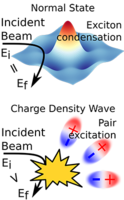
Charge density wave hampers exciton condensation in 1T−TiSe2

Chao Lian, Zulfikhar A. Ali, and Bryan M. Wong

Phys. Rev. B 100, 205423 (2019) - Published 25 November, 2019

The Bose-Einstein condensation of excitons in titanium diselenide TiSe2 has garnered immense attention as a prototypical example of observing emergent properties from many-body quantum effects. The authors have demonstrated that below the transition temperature periodic lattice distortions hamper the spontaneous formation of the exciton by introducing a charge density wave gap. Meanwhile, a finite electronic temperature introduces a dissipation channel and prevents the condensation above the transition temperature. Together, these findings explain the experimentally observed fragile temperature dependence of the exciton condensation.

Fracton fusion and statistics

Shriya Pai and Michael Hermele

Phys. Rev. B 100, 195136 (2019) - Published 22 November, 2019

Universal properties of quasiparticle excitations, such as fusion and statistics of anyons in two dimensions, play a central role in characterizing quantum phases of matter. Here, the authors develop a systematic framework to describe fusion and statistical processes of fractons and other quasiparticle excitations with subdimensional mobility. The restricted mobility of excitations leads to statistical processes that differ dramatically from more familiar braiding processes of anyons.

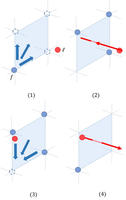
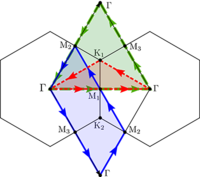
Wilson loop approach to fragile topology of split elementary band representations and topological crystalline insulators with time-reversal symmetry

Adrien Bouhon, Annica M. Black-Schaffer, and Robert-Jan Slager

Phys. Rev. B 100, 195135 (2019) - Published 21 November, 2019

Recently, there has been rapid progress in classifying topological band structures by examining possible configurations, arising through consideration of the constraints of the underlying lattice symmetry. Apart from topologically stable and trivial bands, these pursuits have identified fragile topologies that can be trivialized by additional bands. The authors present a general and directly implementable tool to diagnose the full topological characterization of bands using Wilson flows. As a result, they find a general relation and unambiguous representation of these novel topological concepts.

Compressive sensing lattice dynamics. I. General formalism

Fei Zhou (周非), Weston Nielson, Yi Xia, and Vidvuds Ozoliņš

Phys. Rev. B 100, 184308 (2019) - Published 20 November, 2019

Anharmonic vibrational effects in solids, although essential for the finite-temperature properties, remain difficult to model via first-principles calculations. The authors detail a systematic information-theory based approach: compressive sensing lattice dynamics. The conventional lattice dynamics theory is recast into a form, suited for complex multicomponent compounds with large unit cells. With L1 regularization, the anharmonic force constants can be obtained efficiently using modest sets of training structures. The approach therefore allows for easier access to finite-temperature properties of complex solids.

Crystal fields and magnetic structure of the Ising antiferromagnet Er3Ga5O12

Y. Cai, M. N. Wilson, J. Beare, C. Lygouras, G. Thomas, D. R. Yahne, K. Ross, K. M. Taddei, G. Sala, H. A. Dabkowska, A. A. Aczel, and G. M. Luke

Phys. Rev. B 100, 184415 (2019) - Published 18 November, 2019

Frustrated magnets provide an exciting playground for the study of exotic magnetic properties. Here, the authors use a combination of neutron scattering and muon spin rotation to determine crystal electric fields, spin anisotropy, and the magnetic structure of Er3Ga5O12, as well as the fingerprints of a dynamical ground state. These findings shows an excellent model system for studying the complexities of metamagnetism.

Coupled structural distortions, domains, and control of phase competition in polar SmBaMn2O6

Elizabeth A. Nowadnick, Jiangang He, and Craig J. Fennie

Phys. Rev. B 100, 195129 (2019) - Published 18 November, 2019

Understanding and controlling the competing ground states realized in correlated oxides is a significant challenge. Manipulating subtle geometric distortions to crystal structure provides an opportunity to control these states by changing the environment in which electrons interact. Here, the authors explore the structurally complex polar manganite SmBaMn2O6 and reveal how a set of coupled structural distortions stabilize the ground state. They show how modulations to crystal structure at domain walls and in epitaxially strained thin films can stabilize competing phases.

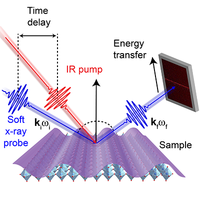
Evidence for photoinduced sliding of the charge-order condensate in La1.875Ba0.125CuO4

Matteo Mitrano, Sangjun Lee, Ali A. Husain, Minhui Zhu, Gilberto de la Peña Munoz, Stella X.-L. Sun, Young Il Joe, Alexander H. Reid, Scott F. Wandel, Giacomo Coslovich, William Schlotter, Tim van Driel, John Schneeloch, G. D. Gu, Nigel Goldenfeld, and Peter Abbamonte

Phys. Rev. B 100, 205125 (2019) - Published 18 November, 2019

Electrons and holes in quantum materials often self-organize into ordered electronic phases, such as charge or spin density waves. These states are widely regarded as competing with superconductivity, and achieving their control could lead to higher superconducting transition temperatures. By using ultrafast optical and soft x-ray pulses, here, the authors observe a novel sliding state of the charge density wave in the cuprate superconductor La1.875Ba0.125CuO4, in which the condensate translates with respect to the lattice due to the ultrafast pump field.

Learnability scaling of quantum states: Restricted Boltzmann machines

Dan Sehayek, Anna Golubeva, Michael S. Albergo, Bohdan Kulchytskyy, Giacomo Torlai, and Roger G. Melko

Phys. Rev. B 100, 195125 (2019) - Published 15 November, 2019

Motivated by the recent success of machine learning techniques in many-body physics, the authors study the scaling complexities of quantum state reconstruction in the restricted Boltzmann machine on the paradigmatic one-dimensional transverse-field Ising model. The authors demonstrate that the scaling complexities in the number of parameters and in the size of the training data are polynomial. Moreover, they show that the number of parameters required for reconstruction can be significantly reduced via pruning out network weights – indicating that overparameterization is required to facilitate the learning process.

Determining surface phase diagrams including anharmonic effects

Yuanyuan Zhou, Matthias Scheffler, and Luca M. Ghiringhelli

Phys. Rev. B 100, 174106 (2019) - Published 14 November, 2019

A prerequisite for analyzing and understanding the electronic properties and the function of surfaces is the detailed knowledge of their structure under realistic conditions. The authors have developed a replica-exchange grand-canonical algorithm, enabling the unbiased calculation of pressure-temperature phase diagrams of surfaces or clusters in reactive atmospheres including anharmonic effects. Moreover, the multicanonical sampling yields the p-T dependence (map) of all equilibrium observables, such as the radial distribution function, which can be measured within the given model Hamiltonian.

Threshold interface magnetization required to induce magnetic proximity effect

O. Inyang, L. Bouchenoire, B. Nicholson, M. Tokaç, R. M. Rowan-Robinson, C. J. Kinane, and A. T. Hindmarch

Phys. Rev. B 100, 174418 (2019) - Published 13 November, 2019

Magnetism can be induced in nominally nonmagnetic metals, such as platinum, as a result of proximity to an adjacent ferromagnet. This proximity-induced magnetism is typically weak and decays over a length scale on the order of nanometers, making the elucidation of the underlying physics experimentally challenging. The authors use a combination of polarized neutron reflectivity to probe depth-resolved magnetization in the ferromagnet and x-ray resonant magnetic reflectivity to provide an element-specific probe of depth-resolved magnetism in platinum. This allows for a direct comparison of the proximity-induced magnetism in platinum with the magnetization close to the interface within the ferromagnet.

Sampling scheme for neuromorphic simulation of entangled quantum systems

Stefanie Czischek, Jan M. Pawlowski, Thomas Gasenzer, and Martin Gärttner

Phys. Rev. B 100, 195120 (2019) - Published 13 November, 2019

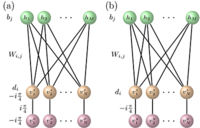
Neural networks can be used to represent a large class of quantum many-body states in a classical-statistical manner. This includes entangled states such as the paradigmatic Bell states or a quantum Ising chain near its critical point. The task of sampling from these states may be performed efficiently by physically implementing the network on neuromorphic hardware. A deep neural network structure is proposed for the sampling of arbitrary and, in general, noncommuting observables, where a phase-reweighting scheme is used in view of the complex coupling parameters. Entanglement is demonstrated through the violation of Bell inequalities.

Ideal Weyl semimetal induced by magnetic exchange

J.-R. Soh, F. de Juan, M. G. Vergniory, N. B. M. Schröter, M. C. Rahn, D. Y. Yan, J. Jiang, M. Bristow, P. Reiss, J. N. Blandy, Y. F. Guo, Y. G. Shi, T. K. Kim, A. McCollam, S. H. Simon, Y. Chen, A. I. Coldea, and A. T. Boothroyd

Phys. Rev. B 100, 201102(R) (2019) - Published 13 November, 2019

Weyl semimetals exhibit anomalous electronic transport due to the presence of topological band crossings, called Weyl nodes. In this work, experimental and theoretical results show that EuCd2As2 in a magnetic field is what Bernevig has termed the hydrogen atom of a Weyl semimetal, i.e. one with a single pair of Weyl nodes at the Fermi level and without overlapping electron bands. The discovery opens the door to a wide range of exotic physics, predicted for Weyl fermions in the solid state.

Sign In to Your Journals Account

Filter

Section

Filter

Article Lookup

Enter a citation