Highlights

Uncovering electron-phonon scattering and phonon dynamics in type-I Weyl semimetals

Jennifer Coulter, Gavin B. Osterhoudt, Christina A. C. Garcia, Yiping Wang, Vincent M. Plisson, Bing Shen, Ni Ni, Kenneth S. Burch, and Prineha Narang

Phys. Rev. B 100, 220301(R) (2019) - Published 24 December, 2019

Topological semimetals display remarkable transport properties. Here, the authors use Raman spectroscopy to probe the phonons and electron-phonon coupling in the Weyl semimetals NbAs and TaAs. An anomalous temperature dependence of phonon linewidths is shown to be consistent with decay into electron-hole pairs near the Weyl nodes. First-principles calculations observe this coupling and reveal yet-to-be-measured coupling hot spots at finite phonon momentum. The authors show that such couplings would contribute to the temperature-dependent mobility in these Weyl semimetals.

Shift current from electromagnon excitations in multiferroics

Takahiro Morimoto and Naoto Nagaosa

Phys. Rev. B 100, 235138 (2019) - Published 24 December, 2019

Electromagnons are the spin wave in multiferroic materials and are known to accompany electric polarization due to the cross correlation between the charge and spin. In this theoretical work, the authors reveal that the dc current flows by photoexciting electromagnons. Such dc current is induced by the multiferroic nature of its spin waves and does not involve free carriers. The proposed dc current response relies on the shift current mechanism, which arises from a geometric nature of the Bloch wave functions.

Thermal diffusivity above the Mott-Ioffe-Regel limit

Jiecheng Zhang, Erik D. Kountz, Eli M. Levenson-Falk, Dongjoon Song, Richard L. Greene, and Aharon Kapitulnik

Phys. Rev. B 100, 241114(R) (2019) - Published 24 December, 2019

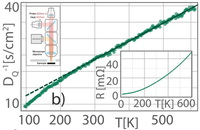
Understanding transport of charge excitations in strongly correlated electron systems exhibiting the “strange metal” state without long-lived quasiparticle excitations has been a long-standing challenge in condensed matter physics. Here, the authors demonstrate that thermal diffusivity, which tracks energy-thermalization processes, exhibits a limiting Planckian relaxation time and a unique thermal diffusion velocity. These reflect both the contribution of phonons and electrons. This result is bound by the thermal diffusivity of the electrons at the Mott-Ioffe-Regel limit, where the mean-free-path reaches atomic distances.

Ferromagnetism in quantum dot plaquettes

Donovan Buterakos and Sankar Das Sarma

Phys. Rev. B 100, 224421 (2019) - Published 23 December, 2019

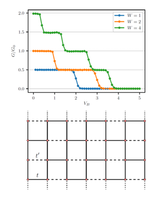
Nagaoka showed that ferromagnetism can arise from a basic Hubbard model of certain lattices under special conditions. Motivated by recent experimental advances in simulating such systems using small plaquettes of a few quantum dots, this work investigates what geometrical arrangement of these dots and what number of electrons are necessary to lead to nontrivial ferromagnetic ground states. This includes many situations not covered by Nagaoka’s theorem, which is only valid under specific constraints.

Role of correlations in determining the Van Hove strain in Sr2RuO4

Mark E. Barber, Frank Lechermann, Sergey V. Streltsov, Sergey L. Skornyakov, Sayak Ghosh, B. J. Ramshaw, Naoki Kikugawa, Dmitry A. Sokolov, Andrew P. Mackenzie, Clifford W. Hicks, and I. I. Mazin

Phys. Rev. B 100, 245139 (2019) - Published 23 December, 2019

Piezoelectric-based uniaxial pressure devices have become an important tool for investigating correlated electron systems. In Sr2RuO4, a Van Hove singularity can be tuned to the Fermi level, which more than doubles the superconducting critical temperature. With a new style of pressure device, the authors have measured here the stress at which this occurs with high accuracy, and the result now gives an unmistakable discrepancy with predictions from noninteracting electronic structure calculations. With this knowledge, they put constraints on the interaction parameters, improving our understanding of both the pressurized and ambient-pressure properties of Sr2RuO4.

Observation of nonequilibrium motion and equilibration in polariton rings

S. Mukherjee, D. M. Myers, R. G. Lena, B. Ozden, J. Beaumariage, Z. Sun, M. Steger, L. N. Pfeiffer, K. West, A. J. Daley, and D. W. Snoke

Phys. Rev. B 100, 245304 (2019) - Published 23 December, 2019

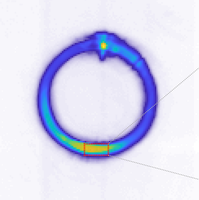
Recent progress in fabricating long-lifetime semiconductor microcavities has improved the thermalization of polaritons, quasiparticles arising from the strong coupling between photons and excitons in a microcavity. Here, the authors image nondestructively the real-time dynamics of the excited polaritons settling to the bottom of a tilted ring trap, which shows damped pendulum-like oscillations akin to atomic condensates in optical harmonic traps. Smoking gun evidence for extremely long transport lengths of the exciton reservoir is shown, which opens a new perspective for reservoir engineering.

Time- and momentum-resolved phonon population dynamics with ultrafast electron diffuse scattering

Laurent P. René de Cotret, Jan-Hendrik Pöhls, Mark J. Stern, Martin R. Otto, Mark Sutton, and Bradley J. Siwick

Phys. Rev. B 100, 214115 (2019) - Published 19 December, 2019

The coupling within and between lattice and charge degrees of freedom is central to a diverse range of transport and ordering phenomena in materials, from superconductivity to charge density waves. Here, the authors show how ultrafast electron diffuse scattering (UEDS) tracks energy flows – across the entire Brillouin zone – between electrons and phonons and within the phonon system itself. The nonequilibrium phonon populations determined by UEDS are used to extract momentum- and mode-dependent electron-phonon and phonon-phonon coupling constants.

Point-node gap structure of the spin-triplet superconductor UTe2

Tristin Metz, Seokjin Bae, Sheng Ran, I-Lin Liu, Yun Suk Eo, Wesley T. Fuhrman, Daniel F. Agterberg, Steven M. Anlage, Nicholas P. Butch, and Johnpierre Paglione

Phys. Rev. B 100, 220504(R) (2019) - Published 19 December, 2019

There is compelling evidence that the recently discovered actinide superconductor UTe2 hosts a rarely observed spin-triplet pairing state. Here, the authors report the results of three classic low-temperature experimental measurements – thermal conductivity, magnetic penetration depth, and specific heat – in order to resolve the structure of the superconducting order parameter in UTe2. The results indicate a gap structure with point nodes, providing strong evidence for spin-triplet Cooper pairing in this material.

Counterrotating magnetic order in the honeycomb layers of NaNi2BiO6−δ

A. Scheie, K. Ross, P. Peter Stavropoulos, E. Seibel, J. A. Rodriguez-Rivera, J. A. Tang, Yi Li, Hae-Young Kee, R. J. Cava, and C. Broholm

Phys. Rev. B 100, 214421 (2019) - Published 18 December, 2019

The exotic Kitaev spin liquid state emerges from a particular form of anisotropic magnetic exchange on the honeycomb lattice. Here, the authors use neutron scattering, electron spin resonance, and density functional theory to show that bond-anisotropic Kitaev exchange exists in between Ni3+ ions in the honeycomb layers of NaNi2BiO5.66. This magnetic exchange produces a complex counterrotating low-temperature magnetic order with 120° in-plane order in this compound. These results demonstrate that Kitaev physics can be found in 3d transition ion materials.

High-resolution resonant inelastic x-ray scattering study of the electron-phonon coupling in honeycomb α−Li2IrO3

J. G. Vale, C. D. Dashwood, E. Paris, L. S. I. Veiga, M. Garcia-Fernandez, A. Nag, A. Walters, Ke-Jin Zhou, I.-M. Pietsch, Anton Jesche, P. Gegenwart, R. Coldea, T. Schmitt, and D. F. McMorrow

Phys. Rev. B 100, 224303 (2019) - Published 18 December, 2019

Resonant inelastic x-ray scattering (RIXS) is an element- and orbital-specific, momentum-resolved technique which couples to multiple degrees of freedom in a material. The field has evolved significantly in recent years thanks to advances in instrumentation. The authors present oxygen K-edge RIXS data, collected on a honeycomb iridate. Clear multiphonon harmonics can be observed, indicative of significant electron-phonon coupling (EPC). They conclude that the EPC is comparable in magnitude to that found for a range of 3d transition metal oxides.

Direct observation of coherent magnons with suboptical wavelengths in a single-crystalline ferrimagnetic insulator

J. Förster, J. Gräfe, J. Bailey, S. Finizio, N. Träger, F. Groß, S. Mayr, H. Stoll, C. Dubs, O. Surzhenko, N. Liebing, G. Woltersdorf, J. Raabe, M. Weigand, G. Schütz, and S. Wintz

Phys. Rev. B 100, 214416 (2019) - Published 16 December, 2019

In the field of magnetism, spin waves are a subject of great interest for fundamental and application-oriented research. Time-resolved scanning transmission x-ray microscopy, a technique that allows for direct spin-wave imaging below the optical resolution limit, is usually limited to thin layers deposited on x-ray transparent membranes. Here, the authors report on a preparation routine that makes single-crystalline materials accessible to this powerful technique. The latter is subsequently implemented on the ferrimagnetic insulator yttrium iron garnet, where spin waves down to 100-nm wavelength are observed.

Fractional topological insulator precursors in spin-orbit fermion ladders

Raul A. Santos and Benjamin Béri

Phys. Rev. B 100, 235122 (2019) - Published 16 December, 2019

A fractional topological insulator is a two-dimensional correlated state that shares some characteristics with the fractional quantum Hall effect, but can exist without an applied magnetic field. It has been proposed as a basic ingredient for fault-tolerant quantum computation, but without any realistic proposal for implementation so far. The authors show that a precursor of this state can be stabilized in a two-leg fermionic ladder and that, surprisingly, the response of this precursor to certain perturbation protocols is quantized in the same way as if one deals with the two-dimensional state.

Fast and accurate Cooper pair pump

Paolo A. Erdman, Fabio Taddei, Joonas T. Peltonen, Rosario Fazio, and Jukka P. Pekola

Phys. Rev. B 100, 235428 (2019) - Published 16 December, 2019

Pumping occurs when matter is transported via periodic modulation of some system parameters. The authors propose a method to achieve perfectly quantized charge pumping at any finite speed exploiting topological properties and quantum control techniques, known as shortcuts to adiabaticity. Using realistic system parameters, they show that the scheme can improve the pumping accuracy of realistic devices by various orders of magnitude.

Bosonization in three spatial dimensions and a 2-form gauge theory

Yu-An Chen and Anton Kapustin

Phys. Rev. B 100, 245127 (2019) - Published 16 December, 2019

The well-known Jordan-Wigner transformation maps an arbitrary system of fermions on a one-dimensional lattice to a system of spins. An essential property of this transformation is that it preserves the locality of observables. This transformation has been recently extended to two-dimensional lattices, where it maps an arbitrary system of fermions to a gauge theory, with locality preserved. Here, the authors construct a bosonization map for arbitrary systems of fermions in three dimensions. As an application, the authors design a model of interacting spins on a cubic lattice, which is exactly soluble and is equivalent to a tight-binding model of free fermions with Dirac points.

Comparing many-body localization lengths via nonperturbative construction of local integrals of motion

Pai Peng (彭湃), Zeyang Li, Haoxiong Yan, Ken Xuan Wei, and Paola Cappellaro

Phys. Rev. B 100, 214203 (2019) - Published 13 December, 2019

Many interesting properties of many-body localization (MBL) can be understood using a phenomenological model, involving local integrals of motion (LIOMs). Usually, LIOMs can only be computed approximately. Here, the authors explicitly compute a complete set of LIOMs nonperturbatively by maximizing their overlap with physical spin operators. The scheme is immune to accidental resonances and can be applied even at the phase transition point, providing a powerful tool to study microscopic features of MBL as characterized by various localization lengths.

BiMnTeO6: A multiaxis Ising antiferromagnet

N. Matsubara, S. Petit, C. Martin, F. Fauth, E. Suard, S. Rols, and F. Damay

Phys. Rev. B 100, 220406(R) (2019) - Published 12 December, 2019

An experimental realization of the transverse-field Ising model has been evidenced in the layered honeycomb tellurate BiMnTeO6. X-ray diffraction and neutron diffraction show that this material hosts a zig-zag-like pattern of orbital orientations, resulting in Mn3+ site-dependent magnetic easy axes. Below TN = 10 K, these anisotropies compete with exchange interactions to stabilize a noncollinear magnetic order, out of which a specific spectrum of nearly localized magnetic excitations emerges, as observed by inelastic neutron scattering. This spectrum can be correctly modeled by considering spins with large easy-axis magnetic anisotropy, yet coupled by a molecular field arising from the ordering of neighboring Mn3+ spins. The molecular field is characterized by a sizable component, orthogonal to the local easy-axis directions.

Matrix product state algorithms for Gaussian fermionic states

Norbert Schuch and Bela Bauer

Phys. Rev. B 100, 245121 (2019) - Published 12 December, 2019

Simulation methods for real materials often require the solution of extremely large inhomogeneous systems of noninteracting fermions. Here, the authors show how the density matrix renormalization group (DMRG), the most successful method for 1D interacting systems, can be adapted to noninteracting fermions, giving a significant improvement both over conventional DMRG and over the full solution of the noninteracting problem. The authors test the method on a range of one- and two-dimensional examples for both static and dynamic properties, demonstrating its applicability to systems up to a million sites.

Spectrum and coherence properties of the current-mirror qubit

D. K. Weiss, Andy C. Y. Li, D. G. Ferguson, and Jens Koch

Phys. Rev. B 100, 224507 (2019) - Published 10 December, 2019

Superconducting qubits designed to exhibit protection from noise have recently received attention in the search for a qubit with coherence times that could exceed those of current state-of-the-art qubits. The current-mirror circuit has long been proposed as such a protected qubit. Based on an effective model capturing the low-energy excitations of the circuit, the authors present here a simulation of spectral properties using density matrix renormalization group methods. Coherence times for the current mirror are predicted to exceed 1 ms, about an order of magnitude greater than those of industry-standard transmon qubits.

Observation of Kondo resonance in valence-ordered YbPd

Masanobu Shiga, Kengo Okimura, Hiroki Takata, Akihiro Mitsuda, Isao Maruyama, Hirofumi Wada, Yuji Inagaki, and Tatsuya Kawae

Phys. Rev. B 100, 245117 (2019) - Published 10 December, 2019

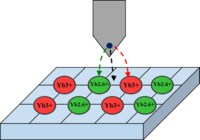
Generally, valence ordering is accompanied by a significant decrease in the carrier concentration, inhibiting the Kondo effect. YbPd exhibits valence ordering of two Yb valence states, Yb+2.6 and Yb+3, where the valence fluctuations survive even below the ordering temperature. Using a point-contact spectroscopy, the authors reveal here that the differential conductance spectra are reproduced by the sum of two Fano curves. These spectra provide evidence for the screening of the magnetic moments at the valence-ordering sites owing to the Kondo effect.

Evidence of charge density wave with anisotropic gap in a monolayer VTe2 film

Yuan Wang, Junhai Ren, Jiaheng Li, Yujia Wang, Huining Peng, Pu Yu, Wenhui Duan, and Shuyun Zhou

Phys. Rev. B 100, 241404(R) (2019) - Published 9 December, 2019

Angle-resolved photoemission spectroscopy measurements reveal the evidence of a charge density wave (CDW) and the underlying mechanism in a monolayer VTe2 film. The Fermi surface map is partially gapped and shows an arc shape. The CDW gap is found to be rather anisotropic and attributed to the imperfect nesting. First-principles calculations further indicate electron-phonon coupling at the corresponding wave vector. These observations suggest that both Fermi surface nesting and phonon instability contribute significantly to the CDW formation in this monolayer VTe2 film.

Sign In to Your Journals Account

Filter

Section

Filter

Article Lookup

Enter a citation