Highlights

Quantum beats in the polarization of the spin-dependent photon echo from donor-bound excitons in CdTe/(Cd,Mg)Te quantum wells

S. V. Poltavtsev, I. A. Yugova, Ia. A. Babenko, I. A. Akimov, D. R. Yakovlev, G. Karczewski, S. Chusnutdinow, T. Wojtowicz, and M. Bayer

Phys. Rev. B 101, 081409(R) (2020) - Published 18 February, 2020

Spin-dependent photon echoes provide an excellent tool to monitor with high accuracy the dynamics of optically excited spin coherence of exciton complexes in semiconductor nanostructures. In this work, the authors apply the technique to observe quantum beats between spin states in the polarization of photon echoes emitted from donor-bound excitons in a quantum well. From these beats, the g-factors of electrons and holes can be directly obtained, even in small external magnetic fields.

Magnetic structure of the square cupola compound Ba(TiO)Cu4(PO4)4

Riho Rästa, Ivo Heinmaa, Kenta Kimura, Tsuyoshi Kimura, and Raivo Stern

Phys. Rev. B 101, 054417 (2020) - Published 12 February, 2020

A noncollinear arrangement of spins is a source of interesting phenomena in magnets. Thus, the loss of inversion symmetry activates asymmetric interactions via the relativistic spin-orbit coupling that can cause the magnetoelectric effect, a cross-correlation between dielectricity and magnetism. Here, the authors report NMR studies of the magnetic structure in BaTiOCu4(PO4)4, a newly discovered magnetic insulator with antiferromagnetically rotated Cu4O12 square cupola clusters, formed by four corner-sharing CuO4 plaquettes. Using Cu zero-field NMR, theyunambiguously identify the model Γ3(2) with the moments pointing out of the CuO4 planes.

Detecting a phonon flux in superfluid He4 by a nanomechanical resonator

A. M. Guénault, A. Guthrie, R. P. Haley, S. Kafanov, Yu. A. Pashkin, G. R. Pickett, V. Tsepelin, D. E. Zmeev, E. Collin, R. Gazizulin, and O. Maillet

Phys. Rev. B 101, 060503(R) (2020) - Published 11 February, 2020

Nanomechanical resonators are extremely sensitive force detectors and, therefore, provide fantastic probes for superfluids at low temperatures. The authors show that a nanomechanical resonator can detect the modulated flux of thermal phonons (‘phonon wind’) in superfluid 4He at millikelvin temperatures. To do this, they set up a modulated flux of phonons by passing an ac current through a nearby heater. The phonons collide with the nanobeam and are able to excite the system into oscillation.

Effective classical correspondence of the Mott transition

Danqing Hu, Jian-Jun Dong, Li Huang, Lei Wang, and Yi-feng Yang

Phys. Rev. B 101, 075111 (2020) - Published 11 February, 2020

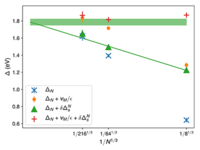
Quantum-to-classical mapping has played an important role in the studies of condensed matter physics, but has often suffered from analytical difficulties in treating the series expansion of the quantum action. The authors revive the idea by combining machine learning techniques and map, as an example, the Hubbard model to a classical molecular gas with an effective two-body interaction of exponential form. The Mott transition can be understood as a classical liquid-gas transition controlled by the range of the intermolecular interaction.

Electronic band gaps from quantum Monte Carlo methods

Yubo Yang (杨煜波), Vitaly Gorelov, Carlo Pierleoni, David M. Ceperley, and Markus Holzmann

Phys. Rev. B 101, 085115 (2020) - Published 11 February, 2020

Accurate prediction of the fundamental gap in insulators is a challenge for electronic structure theories. Electronic correlation and finite-size effects can significantly change the fundamental gap. Using quantum Monte Carlo, the authors show here that the fundamental gap can be calculated as the derivative discontinuity of the energy with respect to the electron density in the grand-canonical ensemble. Further, the finite-size error can be understood and corrected using information encoded in the electronic structure factor. The presented methodology applies for any explicitly correlated method.

Magnetic phase diagram enriched by chemical substitution in a noncentrosymmetric helimagnet

Tatsuki Sato, Yusuke Araki, Atsushi Miyake, Akiko Nakao, Nobuyuki Abe, Masashi Tokunaga, Shojiro Kimura, Yusuke Tokunaga, and Taka-hisa Arima

Phys. Rev. B 101, 054414 (2020) - Published 10 February, 2020

In noncentrosymmetric helimagnets, magnetic helices are often abruptly transformed to another magnetic structure by applying a moderate magnetic field, accompanying a variety of physical phenomena. However, antiferromagnetic (AF) helimagnets have been attracting less interest, because of the robustness to the magnetic field. Here, the authors modify an AF helimagnet to be a ferrimagnetic helimagnet, which shows an enriched magnetic phase diagram owing to competition among the spin-spin interaction, thermal fluctuations, and Zeeman coupling.

Coupled transport of phonons and carriers in semiconductors: A case study of n-doped GaAs

Nakib H. Protik and David A. Broido

Phys. Rev. B 101, 075202 (2020) - Published 10 February, 2020

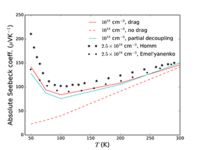
Transport in a coupled system of electrons and phonons is a problem of both fundamental and technological importance. Calculations typically assume that one of the species is in equilibrium when considering transport in the other. However, the electron-phonon interaction drags, in principle, both subsystems out of equilibrium. Here, the authors solve the coupled electron-phonon Boltzmann transport equations, demonstrating significant enhancement of the mobility and the Seebeck coefficient in GaAs in the strong drag regime as well as the validity of the Kelvin relation, mandated by thermodynamics.

Anisotropy of spin-transfer torques and Gilbert damping induced by Rashba coupling

I. A. Ado, P. M. Ostrovsky, and M. Titov

Phys. Rev. B 101, 085405 (2020) - Published 7 February, 2020

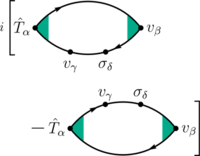
Strong spin-orbit coupling can manifest itself in the anisotropic character of various magnetic phenomena. Recently, such anisotropy has been observed experimentally for Gilbert damping. The authors perform a microscopic analysis of a paradigmatic two-dimensional model to quantify the anisotropy of spin-transfer torque and Gilbert damping induced by Rashba spin-orbit coupling. Within the model, they derive an unexpected relation between the spin-transfer torque and Gilbert damping terms in the Landau-Lifshitz-Gilbert equation. The authors also introduce the notion of a matrix gauge transformation for the Landau-Lifshitz-Gilbert equation.

Mapping skyrmion stability in uniaxial lacunar spinel magnets from first principles

Daniil A. Kitchaev, Emily C. Schueller, and Anton Van der Ven

Phys. Rev. B 101, 054409 (2020) - Published 6 February, 2020

The development of bulk materials that stabilize magnetic skyrmions over a wide range of temperatures is instrumental to the development of spintronic devices based on these phases. Using electronic structure calculations, Monte Carlo simulations, and thermodynamic sensitivity analysis, the authors relate the thermal stability of skyrmions in GaM4X8 lacunar spinels to the crystal symmetry, and conclude that thermally robust skyrmions may be expected in a wide range of materials with Cnv, D2d, or S4 symmetry and low magnetocrystalline anisotropy.

Intermittent dynamics of antiferromagnetic phase in inhomogeneous iron-based chalcogenide superconductor

A. Ricci, G. Campi, B. Joseph, N. Poccia, D. Innocenti, C. Gutt, M. Tanaka, H. Takeya, Y. Takano, T. Mizokawa, M. Sprung, and N. L. Saini

Phys. Rev. B 101, 020508(R) (2020) - Published 31 January, 2020

Layered superconductors are electronically inhomogeneous systems, characterized by the interplay of charge, lattice, and magnetic degrees of freedom. Intrinsic phase separation and texturing at different length scales are natural consequences of this interplay. Here, the authors have studied atomic motion in nanodomains of an inhomogeneous iron-based superconductor with coexisting metallic and antiferromagnetic phases, exploiting evolution of speckles produced by coherent x-ray scattering. They show that the majority antiferromagnetic phase has an avalanchelike dynamics, which changes anomalously across the superconducting transition temperature. The results suggest relevance of glassy dynamics in the quantum phenomena occurring in inhomogeneous matter.

Magnetism of Ir5+-based double perovskites: Unraveling its nature and the influence of structure

M. A. Laguna-Marco, E. Arias-Egido, C. Piquer, V. Cuartero, L. Hernández-López, P. Kayser, J. A. Alonso, J. A. T. Barker, G. Fabbris, C. A. Escanhoela, Jr., and T. Irifune

Phys. Rev. B 101, 014449 (2020) - Published 30 January, 2020

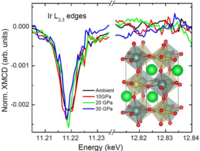
Iridates having pentavalent Ir5+ ions have emerged in the last years as an exciting playground to tune the atomic magnetic ground state from nonmagnetic J=0 to magnetic J≠0 by either distortions of the IrO6 octahedra or increased orbital overlap. Here, the authors analyze the origin of the magnetic response observed in Sr2YIrO6 and reveal that in this case neither volume contraction nor structural distortions are sufficient to cause any change in the magnetic state of the Ir5+ ions.

Influence of nonequilibrium phonons on the spin dynamics of a single Cr atom

V. Tiwari, K. Makita, M. Arino, M. Morita, S. Kuroda, H. Boukari, and L. Besombes

Phys. Rev. B 101, 035305 (2020) - Published 30 January, 2020

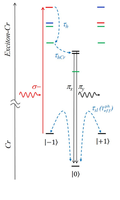
Doping semiconductor quantum dots with transition elements can create an optical probe and can control spins of individual magnetic atoms. Such atoms that feature both spin and orbital degrees of freedom present a large spin-to-strain coupling and could be used in hybrid spin-mechanical devices. In particular, this is the case for chromium. Here, the authors show that the spin dynamics of an individual Cr atom embedded in a quantum dot is controlled by the interaction with nonequilibrium phonons. Excitation conditions are found where the Cr spin states can be optically initialized, conserved in the dark for a few microseconds, and read out by resonant fluorescence.

Conductance and adhesion in an atomically precise Au-Au point contact

Lukas Gerhard and Wulf Wulfhekel

Phys. Rev. B 101, 035429 (2020) - Published 30 January, 2020

Electrical and mechanical properties of atom-sized metal contacts are of central importance for a number of fields in nanoscience. Here, the authors use an STM tip to contact an Au(111) surface. As both electrodes remain stable throughout 19,000 measurements, the atomic configuration of the point contact can be precisely controlled by positioning the tip with respect to the substrate. This allows to relate the atomic configuration of the electrodes to the conductance and the stiffness of the junction.

Field and temperature dependence of the skyrmion lattice phase in chiral magnet membranes

David M. Burn, Shasha Wang, Weiwei Wang, Gerrit van der Laan, Shilei Zhang, Haifeng Du, and Thorsten Hesjedal

Phys. Rev. B 101, 014446 (2020) - Published 29 January, 2020

Using high-resolution small-angle resonant elastic x-ray scattering, the authors study here the field and temperature dependence of the skyrmion lattice in FeGe membranes. In stark contrast to Cu2OSeO3, the lattice constant and skyrmion size undergo a continuous evolution within the skyrmion phase pocket, whereby the lattice constant changes by up to 15%. Micromagnetic modeling shows that the competing energy terms contributing to the formation of the skyrmion lattice fully explain the observed breathing behavior.

Selective hybridization between the main band and the superstructure band in the Bi2Sr2CaCu2O8+δ superconductor

Qiang Gao, Hongtao Yan, Jing Liu, Ping Ai, Yongqing Cai, Cong Li, Xiangyu Luo, Cheng Hu, Chunyao Song, Jianwei Huang, Hongtao Rong, Yuan Huang, Qingyan Wang, Guodong Liu, Genda Gu, Fengfeng Zhang, Feng Yang, Shenjin Zhang, Qinjun Peng, Zuyan Xu, Lin Zhao, Tao Xiang, and X. J. Zhou

Phys. Rev. B 101, 014513 (2020) - Published 29 January, 2020

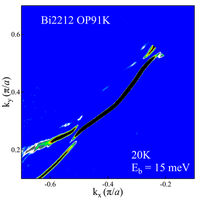
Unexpected hybridization between the main band and the superstructure band in the Bi2Sr2CaCu2O8+δ (Bi2212) superconductor is revealed by high-resolution laser-based angle-resolved photoemission measurements. It can be understood by considering the selective hybridization of bands from the bilayer splitting in Bi2212. These observations indicate that the origin of the superstructure bands is intrinsic to the CuO2 planes. Understanding the physical properties and superconductivity in Bi2212 needs consideration of the complete Fermi surface topology, involving the main bands, the superstructure bands, and their interactions.

Quantum many-body scar states with emergent kinetic constraints and finite-entanglement revivals

Thomas Iadecola and Michael Schecter

Phys. Rev. B 101, 024306 (2020) - Published 29 January, 2020

Strongly interacting systems with quantum many-body scars exhibit persistent fidelity oscillations when prepared in a certain class of initial states, but otherwise undergo ergodic dynamics. Previous examples of scars have interpreted the characteristic periodic dynamics in terms of the precession of a macroscopic SU(2) spin in an effective magnetic field. Here, the authors uncover a new exactly solvable example of many-body scars in a spin-½ model and show that the scarred dynamics in this model evades such an interpretation. This unusual coherent dynamics arises due to an emergent kinetic constraint that endows the time-evolving many-body state with constant area-law entanglement. The model studied in this work is relevant to experiments on Rydberg-atom quantum simulators in the antiblockade regime.

Interacting Majorana modes at surfaces of noncentrosymmetric superconductors

Janna E. Rückert, Gergő Roósz, and Carsten Timm

Phys. Rev. B 101, 024519 (2020) - Published 29 January, 2020

Majorana modes are currently receiving a lot of attention, in part because they may be useful for quantum computation. One proposed platform to realize a large number of Majorana zero-energy modes involves flat bands at surfaces of superconductors lacking inversion symmetry. Here, the authors investigate what happens to these flat Majorana bands if interactions beyond BCS mean-field theory are taken into account. They find that the resulting strongly interacting system exhibits both interesting topological properties and spontaneous symmetry breaking.

Inelastic light scattering by intrasubband spin-density excitations in GaAs-AlGaAs quantum wells with balanced Bychkov-Rashba and Dresselhaus spin-orbit interaction: Quantitative determination of the spin-orbit field

S. Gelfert, C. Frankerl, C. Reichl, D. Schuh, G. Salis, W. Wegscheider, D. Bougeard, T. Korn, and C. Schüller

Phys. Rev. B 101, 035427 (2020) - Published 29 January, 2020

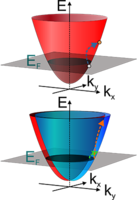
The theoretically infinite spin lifetime makes the persistent spin helix (PSH) a very interesting candidate for spintronic research. Resonant Raman scattering on spin-density excitations permits insights into subtle many-body effects. Utilizing electronic Raman scattering, the authors present here a precise mapping of the huge spin-splitting anisotropy for two different configurations of the PSH. By modulating the effective spin-orbit fields with an external magnetic field, they reveal electron g factors for the two different configurations, probably influenced by collective effects in the intrasubband spin-density excitations.

Tuning single-electron charging and interactions between compressible Landau level islands in graphene

Daniel Walkup, Fereshte Ghahari, Christopher Gutiérrez, Kenji Watanabe, Takashi Taniguchi, Nikolai B. Zhitenev, and Joseph A. Stroscio

Phys. Rev. B 101, 035428 (2020) - Published 29 January, 2020

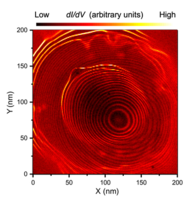
Interacting and tunable quantum dots (QDs) provide a powerful testbed in condensed matter physics and quantum information science. Here, the authors use a low-temperature scanning tunneling microscope to both create and directly image a new type of coupled QD system in graphene. In a strong magnetic field, the carriers condense into Landau levels (LLs), and the successive LLs form concentric spatially isolated Coulomb islands (compressible rings) within the confining electric potential well that behave as controllably coupled QDs.

High-precision numerical solution of the Fermi polaron problem and large-order behavior of its diagrammatic series

Kris Van Houcke, Félix Werner, and Riccardo Rossi

Phys. Rev. B 101, 045134 (2020) - Published 29 January, 2020

The Fermi polaron is a quasiparticle that emerges when a mobile impurity is coupled to an ideal Fermi gas through a short-range interaction. Here, the authors introduce a simple Monte Carlo algorithm to compute its ground-state properties by evaluating the Feynman diagrammatic series. The fermionic sign does not cause any fundamental problem when going to high diagrammatic orders, and order N=30 is easily reached. Resummation of the divergent series through a conformal mapping yields the polaron energy with record accuracy.

Sign In to Your Journals Account

Filter

Section

Filter

Article Lookup

Enter a citation