Highlights

Cooperative response of magnetism and superconductivity in the magnetic superconductor RbEuFe4As4

V. K. Vlasko-Vlasov, U. Welp, A. E. Koshelev, M. Smylie, J.-K. Bao, D. Y. Chung, M. G. Kanatzidis, and W.-K. Kwok

Phys. Rev. B 101, 104504 (2020) - Published 11 March, 2020

A friendly coexistence of superconductivity and magnetism is quite an unusual physical phenomenon. However, the authors find that in the new high-Tc magnetic superconductor RbEuFe4As4 the magnetic and superconducting subsystems show a remarkable cooperative response. In the external magnetic field, the magnetic Eu sublattice acts as an internal pump of the magnetic flux, while the superconducting component works as a valve controlling the flux entry through the pinning of flux-carrying Abrikosov vortices and establishes the self-organized critical state.

Exact dynamics in dual-unitary quantum circuits

Lorenzo Piroli, Bruno Bertini, J. Ignacio Cirac, and Tomaž Prosen

Phys. Rev. B 101, 094304 (2020) - Published 9 March, 2020

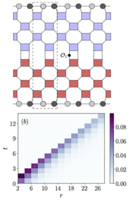
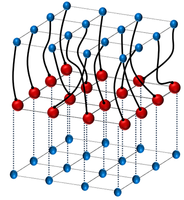
Recently, random unitary quantum circuits have received increasing attention as minimal models for the chaotic quantum many-body dynamics, since they allow for exact computation of quantities that are notoriously hard to study in traditional Hamiltonian systems. A natural question is whether nonrandom quantum circuits exist, also allowing for the derivation of analytic results. The answer is provided in this work, where the authors exhibit a class of interacting quantum circuits for which they are able to compute exactly for an infinite family of initial configurations the dynamics of correlation functions and entanglement.

Microscopic definitions of anyon data

Kyle Kawagoe and Michael Levin

Phys. Rev. B 101, 115113 (2020) - Published 9 March, 2020

The algebraic theory of anyons is one of the most powerful tools for studying two-dimensional interacting topological phases of matter. However, despite its success, this formalism is lacking an important conceptual ingredient: concrete, microscopic definitions of the different pieces of ‘anyon data’ that characterize anyon excitations. This paper fills the gap by providing precise operational definitions of every piece of anyon data.

Observation of quantum Hall interferometer phase jumps due to a change in the number of bulk quasiparticles

Marc P. Röösli, Lars Brem, Benedikt Kratochwil, Giorgio Nicolí, Beat A. Braem, Szymon Hennel, Peter Märki, Matthias Berl, Christian Reichl, Werner Wegscheider, Klaus Ensslin, Thomas Ihn, and Bernd Rosenow

Phys. Rev. B 101, 125302 (2020) - Published 9 March, 2020

Quantum dots, operated at high magnetic fields, are a laboratory for intricate quantum Hall physics. Between filling factors of 1 and 2, one finds a striking similarity in the magnetotransport of a micron-sized quantum dot in the Coulomb-blockaded and the Fabry-Pérot quantum Hall interferometer regimes. Abrupt jumps of the interferometer phase relate to a change in the number of bulk quasiparticles. This paves the way for the investigation of phase shifts due to (fractional) charge redistributions in future experiments.

Inelastic electron tunneling spectroscopy for probing strongly correlated many-body systems by scanning tunneling microscopy

Fabian Eickhoff, Elena Kolodzeiski, Taner Esat, Norman Fournier, Christian Wagner, Thorsten Deilmann, Ruslan Temirov, Michael Rohlfing, F. Stefan Tautz, and Frithjof B. Anders

Phys. Rev. B 101, 125405 (2020) - Published 6 March, 2020

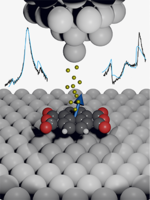
A theory for scanning tunneling spectroscopy is presented that includes elastic and inelastic electron-vibrational processes on equal footing. It is especially suited for the investigation of strongly correlated sample systems. As an example, the theory is applied to a molecular Kondo impurity, using a combination of abinitio density functional theory and numerical renormalization group to quantitatively explain the experiment. In particular, the presented approach allows to identify a vibrational sharpening of the Kondo resonance in the targeted system.

Transient three-dimensional structural dynamics in 1T−TaSe2

Shaozheng Ji, Oscar Grånäs, Kai Rossnagel, and Jonas Weissenrieder

Phys. Rev. B 101, 094303 (2020) - Published 5 March, 2020

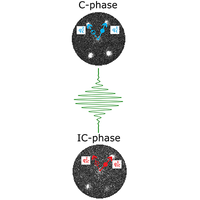
The coupling between electron and lattice dynamics is fundamental for the understanding of matter. Here, the authors investigate how an optical excitation of a charge density wave transition in 1T-TaSe2 affects its three-dimensional atomic structure. Excitation by a short laser pulse results in the formation of a short-lived metastable phase and reconfiguration of the stacking order on a picosecond time scale. The authors observe the activation of a coherent shear mode by uncompensated shear forces between the layers, formed as a result of local transient velocity disparities in the Se sublattice.

Finite-size effects in lead scandium tantalate relaxor thin films

Abel Fernandez, Jieun Kim, Derek Meyers, Sahar Saremi, and Lane W. Martin

Phys. Rev. B 101, 094102 (2020) - Published 4 March, 2020

Relaxor ferroelectrics exhibit large electromechanical effects in response to external stimuli, making them promising materials for a variety of energy-harvesting, sensing, and actuating applications. An open question in the field, however, is how the polarization response evolves when the sample size approaches the nanometer length scale of polar correlations. Here, the evolution of polarization response as a function of film thickness is studied in epitaxial thin films of the relaxor lead scandium tantalate, demonstrating a large suppression of polarization response at reduced thickness.

Theory of the phase transition in random unitary circuits with measurements

Yimu Bao, Soonwon Choi, and Ehud Altman

Phys. Rev. B 101, 104301 (2020) - Published 3 March, 2020

The interplay of entanglement, measurement, and noise in near-term quantum devices may lead to novel emergent phenomena. This work presents a theoretical framework to understand collective effects in the dynamics of quantum entanglement and information, using the tools of statistical mechanics. The new effective description of generic quantum circuits lends insight into a measurement-induced phase transition in the information content of the system and points toward novel schemes to identify this transition in experiments.

Measurement-induced criticality in random quantum circuits

Chao-Ming Jian, Yi-Zhuang You, Romain Vasseur, and Andreas W. W. Ludwig

Phys. Rev. B 101, 104302 (2020) - Published 3 March, 2020

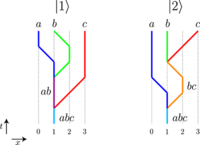
A new class of quantum entanglement transitions separating phases with different entanglement entropy scaling has been observed in recent numerical studies. Despite the numerical efforts, an analytical understanding of such transitions has remained elusive. Here, the authors propose a theory for the area-law to volume-law entanglement transition in many-body systems that undergo both random unitary evolutions and projective measurements. Using the replica method, the authors map analytically this entanglement transition to an ordering transition in a classical statistical mechanics model. They derive the general entanglement scaling properties at the transition and show a solvable limit where this transition can be mapped onto two-dimensional percolation.

Wigner crystals in two-dimensional transition-metal dichalcogenides: Spin physics and readout

J. Knörzer, M. J. A. Schuetz, G. Giedke, D. S. Wild, K. De Greve, R. Schmidt, M. D. Lukin, and J. I. Cirac

Phys. Rev. B 101, 125101 (2020) - Published 3 March, 2020

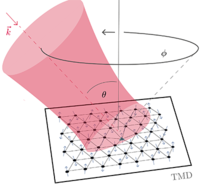
This work appraises two-dimensional semiconductors as a platform for Wigner crystalization and outlines a procedure for minimally invasive all-optical detection of charge and spin ordering in such structures. For incident light with optimally chosen beam parameters and polarization, the authors predict a strong dependence of the transmitted and reflected signals on the underlying lattice periodicity, thus revealing the charge order inherent in self-assembled electron lattices. Furthermore, the spin physics of Wigner crystals in transition-metal dichalcogenides is discussed, which is of relevance for quantum simulation of spin models.

Theory of quantum acoustomagnonics and acoustomechanics with a micromagnet

C. Gonzalez-Ballestero, D. Hümmer, J. Gieseler, and O. Romero-Isart

Phys. Rev. B 101, 125404 (2020) - Published 3 March, 2020

The authors outline a method to cool micromechanical resonators. It is experimentally feasible and requires neither external cavities nor feedback, thus potentially reducing the complexity of optomechanical experiments. In addition, the team proposes a novel way of accessing the internal acoustic modes of highly isolated microparticles. Both advances exploit a heretofore uncharted regime of magnon-phonon interaction. This work unveils a new playground for the implementation and use of levitated microparticles by demonstrating that internal solid-state quantum excitations can be harnessed and used as a resource.

Almost pure Jeff=12 Mott state of In2Ir2O7 in the limit of reduced intersite hopping

A. Krajewska, T. Takayama, R. Dinnebier, A. Yaresko, K. Ishii, M. Isobe, and H. Takagi

Phys. Rev. B 101, 121101(R) (2020) - Published 2 March, 2020

The pyrochlore iridates A2Ir2O7 are expected to host novel electronic phases due to the interplay of spin-orbit coupling and correlation on a frustrated lattice. Their properties and orbital character are reported to vary as a function of the distortion of IrO6 octahedra, which is scaled by the A cation radius. Here, the authors report a new pyrochlore iridate In2Ir2O7 at the small A cation and large distortion limit. By means of resonant inelastic x-ray scattering and band calculations they show that the orbital character of pyrochlore iridates largely depends on Ir-O-Ir intersite hopping rather than the local distortions. Furthermore, the In-O bond covalency in In2Ir2O7 suppresses this intersite hopping, generating a nearly pure Jeff=½ state, in contrast to other pyrochlore iridates.

Gap-size dependence of optical near fields in a variable nanoscale two-tip junction

Jonas Heimerl, Takuya Higuchi, Maximilian Ammon, M. Alexander Schneider, and Peter Hommelhoff

Phys. Rev. B 101, 125403 (2020) - Published 2 March, 2020

Nanometer-sharp objects coupled with femtosecond laser pulses find much current interest because they allow us to reach high spatiotemporal control – like a needle tip enables the scanning tunneling microscope (STM). With two needles facing each other, a special nanometric gap is formed, facilitating large optical near fields. Here, the authors experimentally retrieve the optical near fields of femtosecond laser pulses present in a nanogap as a function of the gap size, bearing direct ramifications for plasmonics and strong-field physics.

π-anisotropy: A nanocarbon route to hard magnetism

Timothy Moorsom, Shoug Alghamdi, Sean Stansill, Emiliano Poli, Gilberto Teobaldi, Marijan Beg, Hans Fangohr, Matt Rogers, Zabeada Aslam, Mannan Ali, B. J. Hickey, and Oscar Cespedes

Phys. Rev. B 101, 060408(R) (2020) - Published 28 February, 2020

Hybridization and charge transfer at molecule-metal interfaces can alter the magnetic anisotropy of transition metal ferromagnets. Here, the authors show that the molecule C60 increases the magnetic energy product of cobalt thin films by 520 % at low temperature. The authors outline a mechanism for this effect, dubbed π-anisotropy, which explains magnetic hardening as a consequence of p-d hybridization and broken interfacial symmetry. It is anticipated that this may provide a route towards a rare earth free high-coercivity magnet.

Stability of multiferroic phase and magnetization-polarization coupling in Y-type hexaferrite crystals

V. Kocsis, T. Nakajima, M. Matsuda, A. Kikkawa, Y. Kaneko, J. Takashima, K. Kakurai, T. Arima, Y. Tokunaga, Y. Tokura, and Y. Taguchi

Phys. Rev. B 101, 075136 (2020) - Published 26 February, 2020

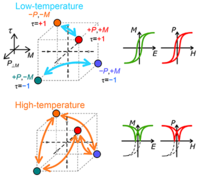
Y-type hexaferrites are one of the most promising multiferroic materials for applications that allow electric field control of magnetization near room temperature. Here, the authors systematically investigate the stability of competing magnetic and multiferroic phases for several Y-type hexaferrite single crystals by performing magnetization, polarization, and neutron diffraction measurements. They also study the magnetization-polarization coupling by simultaneously applying electric and magnetic fields, and reveal how it changes as a function of temperature.

Robust dx2−y2-wave superconductivity of infinite-layer nickelates

Xianxin Wu, Domenico Di Sante, Tilman Schwemmer, Werner Hanke, Harold Y. Hwang, Srinivas Raghu, and Ronny Thomale

Phys. Rev. B 101, 060504(R) (2020) - Published 24 February, 2020

Cuprate superconductors have shaped the contemporary state of condensed matter physics. Recently, infinite-layer Nd-doped NiO2 nickelates have initiated a new era of unconventional superconductivity, of which this paper constitutes the first comprehensive theoretical analysis at weak and strong coupling. From a combined perspective of ab initio studies, random phase approximation, and t-J model analysis, the authors find that the infinite-layer nickelates form a d-wave superconductor with three-dimensional fermiological features. Several experiments are proposed to confirm these theoretical predictions.

Superfluid weight and Berezinskii-Kosterlitz-Thouless transition temperature of twisted bilayer graphene

A. Julku, T. J. Peltonen, L. Liang, T. T. Heikkilä, and P. Törmä

Phys. Rev. B 101, 060505(R) (2020) - Published 24 February, 2020

Superconductivity in twisted bilayer graphene (TBG) has inspired fervent research to explain the origin of the phenomenon and to find whether moiré materials featuring flat bands offer a route to room-temperature superconductivity. Here, the authors show that TBG flat-band superconductivity relies on such quantum geometric properties of the band as its quantum metric and Berry curvature. The authors predict qualitative differences between different pairing potentials, which can be used to reveal the yet unknown pairing symmetry.

Symmetric single-impurity Kondo model on a tight-binding chain: Comparison of analytical and numerical ground-state approaches

Gergely Barcza, Kevin Bauerbach, Fabian Eickhoff, Frithjof B. Anders, Florian Gebhard, and Örs Legeza

Phys. Rev. B 101, 075132 (2020) - Published 24 February, 2020

The Kondo model describes a magnetic impurity in a metallic host. Here, the authors use variational approaches (Lanczos, Yosida, Gutzwiller) and quasi-exact numerical techniques (numerical renormalization group, density matrix renormalization group) to study the ground-state energy and magnetization, and compare these properties to Bethe ansatz results. The Gutzwiller wave function is an excellent trial state for strong coupling. For weak coupling, the numerical renormalization group gives the best description of the magnetic properties. A combination of Bethe ansatz and perturbation theory provides new benchmark results for the zero-field susceptibility.

Large-N approach to the two-channel Kondo lattice

Ari Wugalter, Yashar Komijani, and Piers Coleman

Phys. Rev. B 101, 075133 (2020) - Published 24 February, 2020

The recent discovery of a new class of 1-2-20 praseodymium compounds appears to form a new realization of the two-channel Kondo lattice. In this model, the continuous channel symmetry is spontaneously broken, forming a channel ferromagnet, in which one conduction channel forms a Kondo insulator, while the other remains conducting. This ground state can be understood using the concept of order fractionalization, in which the channel magnetization breaks up into an emergent spinor order parameter. Topological defects in the order parameter carry a U(1) flux. The effective action reveals a phase diagram that contains a nonmagnetic transition between a large and a small Fermi surface.

Coherent long-range transfer of angular momentum between magnon Kittel modes by phonons

K. An, A. N. Litvinenko, R. Kohno, A. A. Fuad, V. V. Naletov, L. Vila, U. Ebels, G. de Loubens, H. Hurdequint, N. Beaulieu, J. Ben Youssef, N. Vukadinovic, G. E. W. Bauer, A. N. Slavin, V. S. Tiberkevich, and O. Klein

Phys. Rev. B 101, 060407(R) (2020) - Published 21 February, 2020

From a ferromagnetic resonance experiment on a YIG|GGG|YIG crystal, phonons are shown to be able to provide coherent long-range coupling between two magnets, which act as “microphones” and “speakers” for acoustic waves to induce feedback interference over millimeter distances. In this “phononic spin valve” under perpendicular magnetization, the phonons, which are circularly polarized, carry efficiently angular momentum current through a nonmagnetic dielectric. The high acoustic quality of phonon transport in garnets and the strong coupling to the magnetic order may also be useful for quantum communication.

Sign In to Your Journals Account

Filter

Section

Filter

Article Lookup

Enter a citation