Highlights

Edge modes in one-dimensional topological charge conserving spin-triplet superconductors: Exact results from Bethe ansatz

Parameshawar R. Pasnoori, Natan Andrei, and Patrick Azaria

Phys. Rev. B 102, 214511 (2020) - Published 23 December, 2020

The authors consider a one-dimensional charge-conserving spin-triplet superconductor with the superconductivity induced by intrinsic attractive pairing interactions between the electrons. Using Bethe ansatz, they show that the system with open boundary conditions exhibits a topological phase characterized by the existence of zero energy bound states localized at the edges. These bound states give rise to degeneracy in the ground-state structure, which results in the existence of fractionalized ¼ spins at the edges.

Non-Hermitian topological Mott insulators in one-dimensional fermionic superlattices

Tao Liu, James Jun He, Tsuneya Yoshida, Ze-Liang Xiang, and Franco Nori

Phys. Rev. B 102, 235151 (2020) - Published 23 December, 2020

Non-Hermitian Hamiltonians have been extensively studied at the single-particle level. Here, the authors investigate interaction-induced topological Mott insulators in a non-Hermitian fermionic superlattice system, and discover an anomalous boundary effect without its Hermitian counterpart. The interplay of nonreciprocal hopping, superlattice potential, and interactions leads to the absence of edge excitations, defined via only right eigenvectors, of some in-gap states for both the neutral and charge excitation spectra, which can be restored using biorthogonal eigenvectors.

Real-space Raman spectroscopy of graphene isotope superlattices

Eric Whiteway, Martin Lee, and Michael Hilke

Phys. Rev. B 102, 235429 (2020) - Published 23 December, 2020

A two-dimensional graphene isotope superlattice lattice of carbon 12 and carbon 13 shows a fascinating Raman scattering response: two phonons from different isotope regions are emitted in a single Raman process, leading to the tripling of the corresponding Raman peak. This occurs when the mean free path of the photoexcited electron is larger than the superlattice period and can be understood in terms of a real-space picture of Raman scattering.

Unified description of spin transport, weak antilocalization, and triplet superconductivity in systems with spin-orbit coupling

Stefan Ilić, Ilya V. Tokatly, and F. Sebastián Bergeret

Phys. Rev. B 102, 235430 (2020) - Published 23 December, 2020

This work uncovers a hitherto unknown connection between different effects mediated by spin-orbit coupling in nanostructures: spin transport, weak antilocalization, and spin-triplet superconductivity. The authors show that all these phenomena can be described by a tool borrowed from the theory of superconductivity – the linearized Eilenberger equation, generalized to include the spin-orbit coupling as a non-Abelian background gauge field. Furthermore, this approach enables the description of the aforementioned phenomena in a simpler and more intuitive manner compared to other methods.

Effects of conduction electron excitation on x-ray magnetic circularly polarized emission in itinerant ferromagnets

Akihiro Koide, Takuji Nomura, and Toshiya Inami

Phys. Rev. B 102, 224425 (2020) - Published 22 December, 2020

This study provides a theoretical method to calculate x-ray magnetic circularly polarized emission spectra at the Kα transitions in transition-metal ferromagnets. The method is applied to metallic iron. It reproduces the observed tail structures which originate from the electron excitations on the correlated d bands. Cosinusoidal emission angle dependence of the spectral intensity enables one to elucidate the magnetization directions deep inside of bulk ferromagnets.

Hybridization-induced gapped and gapless states on the surface of magnetic topological insulators

Xiao-Ming Ma et al.

Phys. Rev. B 102, 245136 (2020) - Published 22 December, 2020

The Mn-Bi-Te family of materials hold promise for realizing the quantum anomalous Hall effect, provided that the topological surface states are gapped by magnetic order. However, previous ARPES measurements have revealed gapless surface Dirac cones for all Mn-Bi-Te antiferromagnetic members. Here, combining ARPES, DFT and tight-binding simulations, the authors find out that the gapless surface Dirac cones result from hybridization between surface and bulk states. This hybridization gives the surface states bulk distribution, with much reduced effective magnetic moment, and thus not sensitive to antiferromagnetic order.

Quantum metamorphism

V. M. Bastidas, M. P. Estarellas, T. Osada, Kae Nemoto, and W. J. Munro

Phys. Rev. B 102, 224307 (2020) - Published 21 December, 2020

Crystals are widely present in our daily life in the form of solid materials whose atoms self-organize in regular patterns, such as salt, diamonds, and ice. While these arrangements tend to be periodic in space, such regularities can also arise in time. By using common tools in condensed matter theory, the authors show here that time crystals can indeed metamorphose as normal crystals do, with the difference that now the structural transformation happens in the temporal and not spatial dimension.

Fermiology and type-I superconductivity in the chiral superconductor NbGe2 with Kramers-Weyl fermions

Eve Emmanouilidou, Sougata Mardanya, Jie Xing, P. V. Sreenivasa Reddy, Amit Agarwal, Tay-Rong Chang, and Ni Ni

Phys. Rev. B 102, 235144 (2020) - Published 21 December, 2020

NbGe2 is a type-I full-gap bulk chiral superconductor with Kramers-Weyl fermions and an enhanced critical field from filamentary superconductivity. Quantum oscillations and first-principles calculations reveal two hole Fermi pockets centered around the Weyl M point and one trivial hole pocket near the H point in the Brillouin zone. The authors attribute the electron-phonon mediated superconductivity to the Van Hove singularity arising from the saddle-point-like dispersion at the M and H points near the Fermi level.

Charge transfer excitations, pair density waves, and superconductivity in moiré materials

Kevin Slagle and Liang Fu

Phys. Rev. B 102, 235423 (2020) - Published 21 December, 2020

The authors demonstrate that in moiré transition metal dichalcogenide bilayers strong electron repulsion alone is sufficient to create tightly bound charge-2e bosons called trimers. They consist of two holes bound to a charge-transfer exciton. When the bandwidth of doped holes is small, trimers crystallize into insulating pair density waves. By varying the twist angle to increase the bandwidth, holes and trimers can be tuned to resonance, leading to unconventional superconductivity similar to superfluidity in an ultracold Fermi gas near a Feshbach resonance.

Gate-controlled unitary operation on flying spin qubits in quantum Hall edge states

Takase Shimizu, Taketomo Nakamura, Yoshiaki Hashimoto, Akira Endo, and Shingo Katsumoto

Phys. Rev. B 102, 235302 (2020) - Published 16 December, 2020

Unitary operation of flying spin qubits in quantum Hall edge channels has been achieved with simple all-electrical methods. The present operation scheme does not require complexities such as nanoscale magnetic gates or irradiation of radiofrequency electromagnetic waves. Via tuning gate voltages, the azimuth and zenith angles can be controlled separately. The present method is beneficial for quantum information technology and gives intriguing insights into the question: what is interaction in quantum mechanics?

Synthesis of osmium hydride under high hydrogen pressure

Mikhail A. Kuzovnikov, Vasily S. Minkov, Stella Chariton, Vitali B. Prakapenka, and Mikhail I. Eremets

Phys. Rev. B 102, 214109 (2020) - Published 15 December, 2020

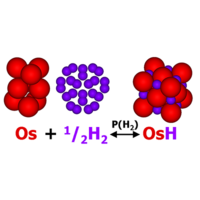
High pressure is a very effective tool for the synthesis of new hydrogen-rich compounds, because it dramatically increases the reactivity of molecular hydrogen. Various new hydrides have been discovered in recent years, including superhydrides and materials with nearly room-temperature superconductivity (H3S, LaH10, YH9, etc.). Here, the authors study the hydrogen reactivity with osmium, which was the last group IV-X transition metal that could not be hydrogenated until now.

Parquet renormalization group analysis of weak-coupling instabilities with multiple high-order Van Hove points inside the Brillouin zone

Yu-Ping Lin and Rahul M. Nandkishore

Phys. Rev. B 102, 245122 (2020) - Published 15 December, 2020

The discovery of unconventional superconductivity and correlated insulators in twisted bilayer graphene has triggered enormous interest in modern condensed matter research. Here, the authors investigate the potential weak-coupling instabilities in such a system, particularly at the higher-order Van Hove singularity. An asymptotically exact renormalization group analysis uncovers a host of unconventional correlated phases. These include chiral and helical superconductivities, ferromagnetism, and valley-polarized order with potential rotation symmetry breaking. The results may serve as interesting indications for the experimentally observed correlated phases in twisted bilayer graphene.

Nonlocal spin Seebeck effect in the bulk easy-plane antiferromagnet NiO

Geert R. Hoogeboom and Bart J. van Wees

Phys. Rev. B 102, 214415 (2020) - Published 14 December, 2020

NiO is an insulating easy-plane antiferromagnet with multiple domains. Its magnon modes with opposite spin become nondegenerate with the application of magnetic field and a subsequent heat gradient results in a net spin current over long distances. After a sign change, both signal strength and noise increase with increasing distance. The authors ascribe this to magnon accumulation at the domain walls, which move with the rotating magnetic field, locally increasing the magnon chemical potential.

Berry phase manipulation in ultrathin SrRuO3 films

Liang Wu, Fangdi Wen, Yixing Fu, Justin H. Wilson, Xiaoran Liu, Yujun Zhang, Denis M. Vasiukov, Mikhail S. Kareev, J. H. Pixley, and Jak Chakhalian

Phys. Rev. B 102, 220406(R) (2020) - Published 10 December, 2020

Ultrathin SrRuO3 has a nontrivial Hall response that looks strikingly like a skyrmion-induced topological Hall effect. Here, the authors demonstrate how the Berry phase alone, without skyrmions, provides a comprehensive explanation for such a Hall response. The Berry phase contribution to the Hall effect can be altered, enhanced, and even change sign in response to the number of layers, temperature, and, importantly, disorder. By comparing the effects of disorder, theoretically, on a skyrmion model and on a spin-orbit coupled model, only the latter can capture the experimentally observed enhancement of the anomalous Hall effect in the more disordered samples.

Strategies for solving the Fermi-Hubbard model on near-term quantum computers

Chris Cade, Lana Mineh, Ashley Montanaro, and Stasja Stanisic

Phys. Rev. B 102, 235122 (2020) - Published 10 December, 2020

One of the main applications of near-term quantum computers is expected to be solving many-body quantum systems. The present study reports on extensive optimization and numerical investigation of the Variational Quantum Eigensolver method for the iconic Fermi-Hubbard model, including the effect of realistic measurements and noise. The presented optimized circuits use up to an order of magnitude fewer gates than previously reported, suggesting that quantum circuits with a gate depth substantially below 1000 could be sufficient to solve instances beyond the capacity of classical exact diagonalization.

Berry phase in quantum field theory: Diabolical points and boundary phenomena

Po-Shen Hsin, Anton Kapustin, and Ryan Thorngren

Phys. Rev. B 102, 245113 (2020) - Published 9 December, 2020

The quantum mechanical Berry phase is a topological contribution to the adiabatic response as system parameters are varied. It is the root of many fascinating topological phenomena in physics. Here, the authors consider spatiotemporal adiabatic response for many-body quantum systems in any dimension, and find analogous topological contributions they dub the “higher Berry phase”. These contributions constrain the global structure of the phase diagrams of these systems and imply the existence of boundary modes at special parameter values.

Magnetically induced metal-insulator transition in Pb2CaOsO6

Henrik Jacobsen, Hai L. Feng, Andrew J. Princep, Marein C. Rahn, Yanfeng Guo, Jie Chen, Yoshitaka Matsushita, Yoshihiro Tsujimoto, Masahiro Nagao, Dmitry Khalyavin, Pascal Manuel, Claire A. Murray, Christian Donnerer, James G. Vale, Marco Moretti Sala, Kazunari Yamaura, and Andrew T. Boothroyd

Phys. Rev. B 102, 214409 (2020) - Published 8 December, 2020

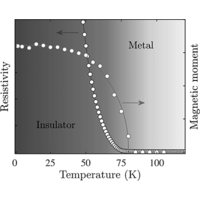
Why do some metals suddenly become insulators when their temperature is reduced? At one level, the answer is straightforward: a gap opens up in the electronic spectrum. Yet a variety of different processes can cause a gap to open. In this work, the authors find that the newly synthesized osmium oxide, Pb2CaOsO6, undergoes a metal-to-insulator transition at 80 K, which coincides with the onset of antiferromagnetic ordering. A range of experimental results suggest that the transition is spin-driven and could be a rare example of a Slater transition.

Suppression of transport anisotropy at the Anderson localization transition in three-dimensional anisotropic media

Antton Goïcoechea, Sergey E. Skipetrov, and John H. Page

Phys. Rev. B 102, 220201(R) (2020) - Published 8 December, 2020

The effects of structural anisotropy on wave transport can be quite intriguing. Here, the authors capitalize on advantages of ultrasonic experiments to demonstrate that, in a disordered anisotropic material, anisotropy in the propagation of multiply scattered waves is significantly reduced and may even vanish as the Anderson localization transition is approached. These remarkable findings are expected to be very general, as the underlying physics is relevant to all types of waves (electrons, matter waves, and optical and acoustic waves), and they also resolve a puzzling question raised by previous conflicting theoretical predictions.

Disorder-free localization and many-body quantum scars from magnetic frustration

Paul A. McClarty, Masudul Haque, Arnab Sen, and Johannes Richter

Phys. Rev. B 102, 224303 (2020) - Published 8 December, 2020

Magnetic frustration has been a source of inspiration to condensed matter physicists for many years, usually as a means to obtain exotic low-energy physics. Here, magnetic frustration is shown to lead to various classes of models with anomalous eigenstates embedded in the high-energy spectrum. These include states called many-body quantum scars that live in a sea of typical eigenstates. The work also shows that the entire spectrum can be scarred through a fragmentation of Hilbert space generated by frustration.

Equation of motion and the constraining field in ab initio spin dynamics

Simon Streib, Vladislav Borisov, Manuel Pereiro, Anders Bergman, Erik Sjöqvist, Anna Delin, Olle Eriksson, and Danny Thonig

Phys. Rev. B 102, 214407 (2020) - Published 7 December, 2020

In ab initio spin dynamics, the effective field acting on a magnetic moment can either be calculated from the energy gradient or from the negative of the constraining field that stabilizes an out-of-equilibrium noncollinear magnetic configuration. Here, the authors show that the constraining field in DFT calculations is not exactly the negative of the effective magnetic field obtained from the energy gradient. They provide a theoretical explanation of this surprising result and discuss the implications for ab initio spin dynamics.

Sign In to Your Journals Account

Filter

Section

Filter

Article Lookup

Enter a citation