Highlights

Local measures of dynamical quantum phase transitions

Jad C. Halimeh, Daniele Trapin, Maarten Van Damme, and Markus Heyl

Phys. Rev. B 104, 075130 (2021) - Published 17 August, 2021

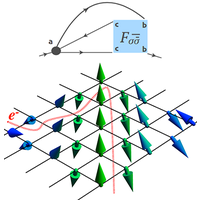
The authors introduce two types of local effective free energies to detect dynamical quantum phase transitions, which are a useful concept to classify nonequilibrium states of quantum matter. These local effective free energies can be employed in position or momentum space, making them ideal for various measurement techniques in modern quantum simulation platforms. The local effective free energies also allow extraction of truly out-of-equilibrium critical exponents, giving a glimpse into possible out-of-equilibrium quantum universality classes.

Characterization of Er3+:YVO4 for microwave to optical transduction

Tian Xie, Jake Rochman, John G. Bartholomew, Andrei Ruskuc, Jonathan M. Kindem, Ioana Craiciu, Charles W. Thiel, Rufus L. Cone, and Andrei Faraon

Phys. Rev. B 104, 054111 (2021) - Published 16 August, 2021

Rare-earth-ion doped crystals are a promising platform for applications in microwave-to-optical transduction. Erbium is of special interest because of its telecom wavelength optical transitions. This work investigates the optical and electron-spin properties of Er3+:YVO4. An initial transduction of classical microwave signal using this material is demonstrated. The measured strong optical dipole moment and narrow ensemble inhomogeneities make Er3+:YVO4 a promising material for microwave-to-optical transduction.

Revealing pressure-driven structural transitions in the hybrid improper ferroelectric Sr3Sn2O7

K. A. Smith, S. P. Ramkumar, N. C. Harms, A. J. Clune, X. Xu, S.-W. Cheong, Z. Liu, E. A. Nowadnick, and J. L. Musfeldt

Phys. Rev. B 104, 064106 (2021) - Published 12 August, 2021

The authors bring together diamond anvil cell techniques, infrared spectroscopy, a symmetry analysis, and lattice dynamics calculations to reveal the series of pressure-induced structural phase transitions in the hybrid improper ferroelectric Sr3Sn2O7. Remarkably, the pressure and temperature progressions are identical, and this information is used to develop the phase diagram. Pressure and probably strain are highly advantageous for device applications in this family of materials because the entire series of transitions can be triggered at room temperature.

Dynamical vertex approximation for many-electron systems with spontaneously broken SU(2) symmetry

Lorenzo Del Re and Alessandro Toschi

Phys. Rev. B 104, 085120 (2021) - Published 12 August, 2021

While it is commonly assumed that correlation effects in quantum materials get partly mitigated by the onset of magnetic order, the precise role played by strong correlations in spontaneous symmetry-broken phases remains largely unexplored. Here, the authors’ generalization of one of the most used diagrammatic extensions of dynamical mean-field theory to treat magnetic ordered phases provides a powerful tool to unveil the spectroscopic signatures of electronic correlations in strongly correlated quantum magnets, as highlighted by preliminary results for testbed cases.

Nondegenerate two-photon absorption in ZnSe: Experiment and theory

L. Krauss-Kodytek, W.-R. Hannes, T. Meier, C. Ruppert, and M. Betz

Phys. Rev. B 104, 085201 (2021) - Published 11 August, 2021

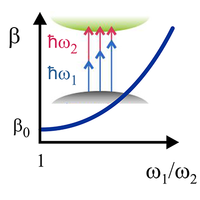
Nonlinear optical processes often suffer from rather weak efficiencies. Here, the authors investigate two-photon absorption in ZnSe and demonstrate a tremendous enhancement of the two-photon absorption coefficient β(ω1,ω2) in the nondegenerate regime. Considering a constant frequency sum ω1+ω2, they measure an about tenfold increase of β at a ratio ω1/ω2=4. These findings are in very good agreement with solutions of the semiconductor Bloch equations. The theoretical analysis predicts that even larger enhancements of β should be possible when larger ratios ω1/ω2 become attainable.

Precise measurement of the configurational energy of bent graphene membranes via three-dimensional force field spectroscopy

Makoto Ashino, Keita Nishioka, Keiji Hayashi, and Roland Wiesendanger

Phys. Rev. B 104, 085407 (2021) - Published 6 August, 2021

Two key parameters for mechanical properties of atomically thin membranes – bending rigidity and Gaussian modulus – describe the relationship between configurational (strain) energy and bending curvatures. The authors apply three-dimensional force field spectroscopy, based on atomic force microscopy (AFM), to convex-curved graphene in rolled and unrolled forms. Force-spectra analysis reveals that the configurational energy is measured precisely via the AFM tip that detects spatially varying surface potentials, owing to rehybridization effects and change in next-neighbor hopping caused by the bending curvatures.

High-throughput discovery of high-temperature conventional superconductors

Alice M. Shipley, Michael J. Hutcheon, Richard J. Needs, and Chris J. Pickard

Phys. Rev. B 104, 054501 (2021) - Published 4 August, 2021

Here, the search for superconducting hydrides is supercharged by a high-performance screening process, leveraging Gaspari-Gyorffy theory to avoid expensive phonon calculations. Combined with stability and metallicity screening, this allows the investigation of hundreds of thousands of candidates from across the periodic table, found via crystal structure prediction. From the best candidates, full electron-phonon calculations reveal many promising materials, including superconductivity at In this work, the search for superconducting hydrides is supercharged by a high-performance screening process, leverageing Gaspari-Gyorffy theory to avoid expensive phonon calculations. Combined with stability and metallicity screening, this allows the investigation of hundreds of thousands of candidates from across the periodic table, found via crystal structure prediction. From the best candidates, full electron-phonon calculations reveal many promising materials, including superconductivity at ~260 K in NaH6 at 100 GPa, and ~380 K (106 °C) in MgH12 at 500 GPa.

Local and nonlocal quantum transport due to Andreev bound states in finite Rashba nanowires with superconducting and normal sections

Richard Hess, Henry F. Legg, Daniel Loss, and Jelena Klinovaja

Phys. Rev. B 104, 075405 (2021) - Published 4 August, 2021

The authors analyze zero-energy Andreev bound states (ABSs) that form in three-terminal devices. For finite-size nanowires (typically < 1 μm in current experiments), the ABS localization length is comparable to the length of the nanowire. The probability density of an ABS is therefore nonzero throughout the nanowire and differential-conductance calculations reveal a correlated zero-bias peak (ZBP) at both ends of the nanowire. The interplay of multiple ABSs can lead to a signature in conductance that is reminiscent of a topological phase transition.

Asymmetric ferroelectricity by design in atomic-layer superlattices with broken inversion symmetry

Maitri P. Warusawithana, Caitlin S. Kengle, Xun Zhan, Hao Chen, Eugene V. Colla, Michael O’Keeffe, Jian-Min Zuo, Michael B. Weissman, and James N. Eckstein

Phys. Rev. B 104, 085103 (2021) - Published 4 August, 2021

One hundred years after ferroelectricity was first reported [Physical Review 17, 475 (1921)], a qualitatively different phenomenon, asymmetric ferroelectricity, is reported in atomic-scale engineered crystals. Unlike the high-temperature centrosymmetric structure that prevail in ferroelectric crystals, the crystals here break inversion symmetry by design. This is achieved by sequenced stacking of three molecular components. When these tailored crystals become hysteretic below an ordering temperature, two unequal polarization states emerge. This unusual bistability points to an asymmetric energy landscape, controlled by sample architecture.

Symmetric U(1) and Z2 spin liquids on the pyrochlore lattice

Chunxiao Liu, Gábor B. Halász, and Leon Balents

Phys. Rev. B 104, 054401 (2021) - Published 2 August, 2021

Here, the authors report the discovery of novel types of U(1) and ℤ2 quantum spin liquids on the pyrochlore lattice through a projective symmetry group classification. The classification highlights a special type of U(1) spin liquid, possessing an unusual symmetry-protected gapless multi-nodal-line structure in the spinon bands. The effect of gauge fluctuations for such a nodal structure is discussed. The leading contributions to the low-temperature specific heat are calculated, providing a clear experimental diagnostic of this U(1) spin liquid.

Signatures for Berezinskii-Kosterlitz-Thouless critical behavior in the planar antiferromagnet BaNi2V2O8

E. S. Klyushina, J. Reuther, L. Weber, A. T. M. N. Islam, J. S. Lord, B. Klemke, M. Månsson, S. Wessel, and B. Lake

Phys. Rev. B 104, 064402 (2021) - Published 2 August, 2021

BaNi2V2O8 is a solid-state compound with a three-dimensional crystal structure, but it reveals entirely two-dimensional (2D) magnetic properties. Depending on the temperature regime, BaNi2V2O8 exhibits different 2D magnetic behaviors, providing unique experimental access to exotic magnetic phenomena. In particular, within the planar regime it provides a rare opportunity to explore Berezinskii-Kosterlitz-Thouless criticality in solid-state antiferromagnets. Indeed, a comparison of the experimental results here to theoretical models developed for the Hamiltonian of this compound illuminates clear signatures for BKT critical behavior.

Signature of magnon polarons in electron relaxation on terbium revealed by comparison with gadolinium

Bo Liu, Huijuan Xiao, Gesa Siemann, Jonathan Weber, Beatrice Andres, Wibke Bronsch, Peter M. Oppeneer, and Martin Weinelt

Phys. Rev. B 104, 024434 (2021) - Published 28 July, 2021

Terbium and gadolinium have eight and seven 4f electrons, respectively. This one-electron difference sparks surprisingly different behaviors. Here, the authors use spin-, angle-, and energy-dependent photoemission to investigate the relaxations of the photo-hole in the surface states of terbium and gadolinium metal. They find distinct, spin-dependent linewidths for gadolinium, in contrast to spin-independent relaxation for terbium. This peculiar difference is explained by strong magnon-phonon interaction in terbium leading to magnon polarons that couple to both spin-decay channels, in contrast to gadolinium.

Inhomogeneous time-reversal symmetry breaking in Sr2RuO4

Roland Willa, Matthias Hecker, Rafael M. Fernandes, and Jörg Schmalian

Phys. Rev. B 104, 024511 (2021) - Published 27 July, 2021

This work provides compelling evidence that time-reversal symmetry breaking (TRSB) in the superconducting phase of Sr2RuO4 is due to inhomogeneous strain. Specifically, it demonstrates that strong inhomogeneous strain near crystallographic dislocations can promote a subleading superconducting state and thereby induce local TRSB in an otherwise single-component d-wave superconductor. The winding of the relative phase between the two superconducting condensates near dislocations, percolates at an Ising-type transition and induces global TRSB with a very weak heat capacity anomaly, in agreement with experiments.

Bose-Luttinger liquids

Ethan Lake, T. Senthil, and Ashvin Vishwanath

Phys. Rev. B 104, 014517 (2021) - Published 26 July, 2021

The authors theoretically investigate theoretically exotic phases of matter, dubbed “Bose-Luttinger liquids,” which can loosely be thought of as bosonic Fermi liquids. Despite being bosonic and consequently lacking degeneracy pressure, these systems posses a bosonic analog of a Fermi surface. Unlike Fermi liquids, however, these systems have no quasiparticles, and exhibit operators whose scaling dimensions can be tuned continuously. The authors suggest that these ideas may be relevant for understanding the non-Fermi-liquid phase of MnSi.

Hole-Cr+ nanomagnet in a semiconductor quantum dot

V. Tiwari, M. Arino, S. Gupta, M. Morita, T. Inoue, D. Caliste, P. Pochet, H. Boukari, S. Kuroda, and L. Besombes

Phys. Rev. B 104, L041301 (2021) - Published 23 July, 2021

Here, the authors show that the negatively charged Cr+ ion, an excited state of Cr in II-VI semiconductors, can be stable when inserted in a CdTe quantum dot. The Cr+ attracts a hole and forms a hole-Cr+ spin complex with a ferromagnetic coupling. The resulting nanomagnet can be controlled optically. The ferromagnetic ground states, with total spin Mz = ±4, are prepared by resonant optical pumping and a spin memory in the 20 µs range is obtained at 4.2 K and zero magnetic field.

Spin dynamics of the quantum dipolar magnet Yb3Ga5O12 in an external field

E. Lhotel, L. Mangin-Thro, E. Ressouche, P. Steffens, E. Bichaud, G. Knebel, J.-P. Brison, C. Marin, S. Raymond, and M. E. Zhitomirsky

Phys. Rev. B 104, 024427 (2021) - Published 22 July, 2021

The authors investigate the microscopic mechanisms at play in the magnetization process of ytterbium gallium garnet, a frustrated magnetic material, which has recently gained interest for its enhanced magnetocaloric properties. The combination of susceptibility and specific heat measurements with neutron scattering experiments and theoretical calculations allows one to draw a comprehensive picture of the system, where the role of dipole-dipole interactions is dominant. This makes Yb3Ga5O12 an appealing example of a quantum dipolar magnet on the hyperkagome lattice.

Electronic instabilities of kagome metals: Saddle points and Landau theory

Takamori Park, Mengxing Ye, and Leon Balents

Phys. Rev. B 104, 035142 (2021) - Published 22 July, 2021

The newly discovered family of kagome metals AV3Sb5 (A=K,Cs,Rb) has recently gained wide attention. Here, the authors study these materials using a general continuum model and utilize renormalization group and mean field theory methods to identify mechanisms that can lead to the experimentally observed charge density wave ordering. The authors find that the charge density wave is the primary density wave instability in certain cases but could also be induced by a leading orbital current or spin density wave order.

Ground state in proximity to a possible Kitaev spin liquid: The undistorted honeycomb iridate NaxIrO3 (0.60≤x≤0.80)

Hengdi Zhao, Bing Hu, Feng Ye, Minhyea Lee, Pedro Schlottmann, and Gang Cao

Phys. Rev. B 104, L041108 (2021) - Published 20 July, 2021

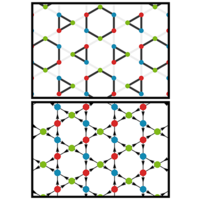
The Kitaev quantum spin liquid has been among the most intensively studied states of matter but there has been no clear-cut materials realization of it. This absence is largely because all existing honeycomb lattices are inherently distorted and disordered, which inevitably amplifies the competing Heisenberg interaction in the Kitaev-Heisenberg model, leading to an unwanted antiferromagnetic state. This work reports a new, undistorted honeycomb iridate NaxIrO3, where all evidence indicates that the elusive Kitaev spin liquid may finally be within reach.

Double accumulation and anisotropic transport of magnetoelastic bosons in yttrium iron garnet films

Pascal Frey, Dmytro A. Bozhko, Victor S. L'vov, Burkard Hillebrands, and Alexander A. Serga

Phys. Rev. B 104, 014420 (2021) - Published 19 July, 2021

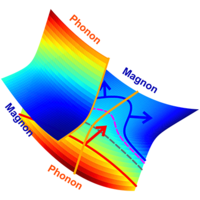
Here, the authors use the avoided crossing region created via magnetoelastic coupling between the magnonic and phononic dispersion in yttrium iron garnet films as a thermalization gateway for an artificially populated magnon gas. Magnons thermalizing through the hybridization region become hybrid quasiparticles that mix magnon and phonon properties. Due to the varying magnon-phonon interaction, they experience bottleneck accumulation near the bottom of the magnon spectrum, forming two quasiparticle groups with different propagation directions and velocity values.

Homogeneous and inhomogeneous line shape of the electronic excitation of a single molecule on a surface

Christian Marquardt, Alexander Paulheim, Manuel Hochheim, Thomas Bredow, and Moritz Sokolowski

Phys. Rev. B 104, 045415 (2021) - Published 16 July, 2021

Here, the authors perform a single-molecule spectroscopy experiment on an organic molecule (PTCDA) adsorbed on a KCl surface. The homogeneous line profile is approximately of Lorentzian shape. Although the molecule is slightly out-of-plane distorted due to the adsorption, the dephasing time is 0.70 ns, yielding sharp zero phonon lines. The inhomogeneous line profile of the ensemble is broader by a factor of about 200 and also of Lorentzian shape. This is due to the stochastic interaction with surface defects.

Sign In to Your Journals Account

Filter

Section

Filter

Article Lookup

Enter a citation