Recent Articles

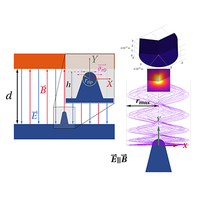
Influence of an external static magnetic field on prebreakdown electron emission and heating

Roni Koitermaa, Marzhan Toktaganova, Andreas Kyritsakis, Tauno Tiirats, Alexej Grudiev, Veronika Zadin, and Flyura Djurabekova

Phys. Rev. Accel. Beams 29, 074301 (2026) - Published 22 July, 2026

This study demonstrates the significance of magnetic fields in vacuum arc initiation, which can be a major design limitation in numerous devices operating at high electric fields in vacuum. Most previous studies on vacuum arcing have neglected the magnetic field or used simplified theoretical models, while high magnetic fields have been demonstrated to contribute significantly to arc occurrence. Our study examines the electron emission and heating processes by simulation, which provides more accurate details on the processes involved. This benefits understanding of the phenomenon itself, as well as its influence on applications.

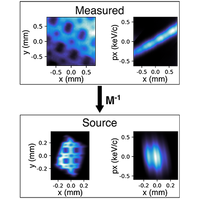
Experimental reconstruction of source 4D phase space without prior knowledge of transfer matrix

Charles Zhang, Elena Echeverria, Abigail Flint, William H. Li, Christopher M. Pierce, Alice Galdi, Chad Pennington, Adam Bartnik, Ivan Bazarov, and Jared Maxson

Phys. Rev. Accel. Beams 29, 074501 (2026) - Published 21 July, 2026

Understanding photoemission from electron sources in typical accelerator environments requires an easily accessible diagnostic method that can probe the position and momentum of electrons at the moment of emission. We experimentally demonstrate a method that uses a beam phase space diagnostic to compute the transfer matrix of a beamline and reconstruct the source 4D transverse phase space of a spatially structured photocathode. This method can uncover local correlations that other diagnostics might miss and aid in particle source design.

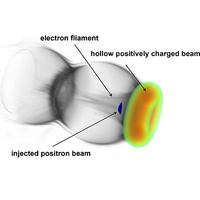
Self-adaptive catch-up injection of positrons in plasma wakefield acceleration

L. Q. Han, Y. R. Shou, H. Wen, J. Cai, X. Y. Zhao, L. Xu, X. D. Liu, J. X. Wang, B. F. Shen, Z. Gong, J. Q. Yu, and X. Q. Yan

Phys. Rev. Accel. Beams 29, L070501 (2026) - Published 17 July, 2026

Efficient positron injection in plasma wakefield acceleration is challenging because it requires a field structure that can both focus and accelerate positrons. Here, we propose a self-adaptive catch-up injection scheme, in which a positron source placed in front of a hollow, positively charged driver is naturally captured as the wake catches up. Analytical modeling and 3D PIC simulations show that positrons with broad initial conditions can be injected into similar accelerating phases and further accelerated to multi-GeV energies.These results provide a proof-of-principle demonstration for a new positron injection and acceleration scheme in plasma wakefields.

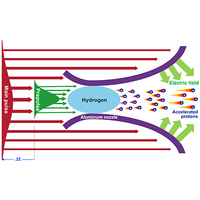
Dual-pulse micronozzle acceleration of sub-GeV-class protons

D. Pan and M. Murakami

Phys. Rev. Accel. Beams 29, 073601 (2026) - Published 13 July, 2026

Conventional laser-driven proton acceleration suffers from a trade-off between maximum energy and conversion efficiency as the accelerating field and the ion bunch quickly lose synchronization. We overcome this by combining two laser pulses with a micronozzle structure. With precise timing control, the proton bunch remains phase-locked to the co-moving field, enabling sustained acceleration with far higher efficiency. Our simulations show that sub-GeV-class proton energies can be achieved with a total laser-to-proton conversion efficiency of approximately 20%. Over 13% of the laser energy is transferred to protons above 100 MeV, useful for applications such as neutron and muon sources.

Compact waveguide-type ceramic window for radio frequency cavity in synchrotron storage ring

Hiroshi Yamaguchi, Takahiro Inagaki, Takao Asaka, Takashi Ohshima, Kikuo Hayaga, and Hiroyasu Ego

Phys. Rev. Accel. Beams 29, 073801 (2026) - Published 10 July, 2026

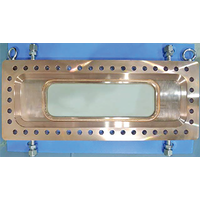
We developed a waveguide-type RF window with a simple structure to seal the vacuum for the cavity at continuous-wave RF frequency (509 MHz) and power (up to 250 kW) in the electron storage ring. This RF window can be replaced on-site quickly in the event of a ceramic plate puncture during beam operations. Although the high-power RF operations faced issues with abnormal heating due to a high loss tangent and multipactor discharges on the ceramic plate, we developed effective countermeasures. These RF windows were finally installed in NanoTerasu, a light source facility in Sendai, Japan, and have been operated without any problems.

Design and preliminary experiment of electromagnetically driven high-speed moving target

Dong Pan, Song Shengyi, Zhang Xiaoyang, Yu Haijun, Zhou Xingjian, Li Yiding, Jing Xiaobing, and Xia Liansheng

Phys. Rev. Accel. Beams 29, 074201 (2026) - Published 10 July, 2026

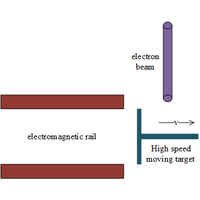
To address the increasingly severe target damage of linear induction accelerators for flash radiography, this paper proposes a solution adopting an electromagnetically driven high-speed moving target. Preliminary physical design and verification experiments have been completed, which verify the feasibility of the proposed scheme. This method is expected to resolve the multi-pulse target issue of flash radiography accelerators.

Development and testing of a permanent magnet spiral inflector

A. H. Barnard and J. L. Conradie

Phys. Rev. Accel. Beams 29, 074602 (2026) - Published 10 July, 2026

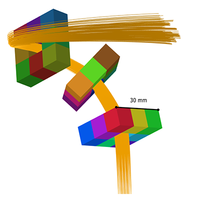
Modern compact cyclotrons are generally equipped with spiral inflectors for axial injection of the beam. Until now, spiral inflectors have been electrostatic, which limits space charge neutralization of the beam, preventing higher beam currents from being achieved. A proposed solution has been to use a magnetic inflector, which has the added advantage of allowing higher energy injection due to the scaling of the magnetic force. Here we demonstrate the design, construction, and testing of the first proof-of-concept magnetic spiral inflector.

Polarization transmission in the Hadron Storage Ring of the Electron-Ion Collider

E. Hamwi, J. P. Devlin, and G. H. Hoffstaetter

Phys. Rev. Accel. Beams 29, 073501 (2026) - Published 9 July, 2026

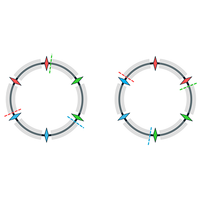
In the Hadron Storage Ring of the Electron-Ion Collider, preservation of helion polarization is especially challenging: a large anomalous magnetic moment and asymmetries in the magnetic optics drive a dense spectrum of strong spin resonances, unlike the more symmetric RHIC proton case. This work compares two snake-matching strategies, betatron phase optimization and Siberian-snake axis optimization, and finds a clear advantage for symmetry-based spin control. By introducing the Doubly Lee-Courant scheme, which enforces local π spin phase advance across every consecutive snake pair, the study provides a robust foundation for high-polarization beams in the EIC and future facilities.

Numerical modeling and experimental investigation of rf heating for midtemperature baking of a TESLA 9-cell srf cavity

R. Schöder, H.-W. Glock, J. Knobloch, and A. Velez

Phys. Rev. Accel. Beams 29, 074401 (2026) - Published 9 July, 2026

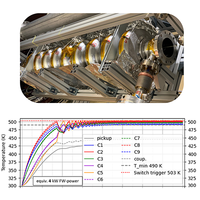
Medium-temperature (Mid-T) baking can significantly improve the quality factor of SRF cavities, reducing cryogenic losses and energy consumption. Conventionally, this treatment is performed in vacuum furnaces, introducing contamination risks and reoxidation of the niobium surface. We investigate an in situ approach in which a TESLA 9-cell cavity is heated directly by RF power via the TTF-III coupler in the fundamental passband. Combining experiments with a validated thermal model, we show that alternating modes can provide the temperature uniformity required for effective Mid-T baking, enabling furnace-free in situ processing of SRF cavities within accelerator modules.

Ceramic vacuum chamber with a strip-patterned metallic coating to suppress eddy currents for beam injection in next-generation light sources

M. Tajima, K. Fukami, M. Masaki, T. Ohshima, M. Shoji, S. Takano, K. Tamura, T. Taniuchi, and H. Tanaka

Phys. Rev. Accel. Beams 29, 074601 (2026) - Published 9 July, 2026

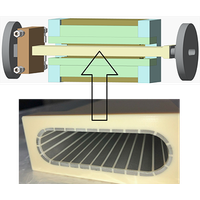
In next-generation light sources, a key challenge common to off-axis injections based on both dipole kickers and nonlinear kickers still remains: mitigating the field distortion caused by eddy currents in the metallic coating of the ceramic vacuum chamber, while minimizing beam coupling impedance and induced heating. We prototyped a chamber with a strip-patterned titanium coating on its inner surface tailored to requirements of SPring-8-II and evaluated the eddy current effects.

Multidimensional phase-space manipulation for attosecond electron bunch compression

Yuxin Cheng, Qiang Gu, and Chao Feng

Phys. Rev. Accel. Beams 29, 060102 (2026) - Published 30 June, 2026

Attosecond electron beams are essential for investigating ultrafast dynamics with atomic-scale resolution. However, conventional compression methods struggle to reach the sub-femtosecond regime without severe charge loss. We propose a novel multi-dimensional phase-space manipulation technique combining pulse-front-tilted photoemission, THz-driven chirping, and an angular dispersion beamline. This method effectively exchanges transverse emittance for robust attosecond longitudinal compression, paving the way for unprecedented resolution in ultrafast sciences.

Terawatt-laser-driven electron bunch with energies up to 25 MeV using robust fast self-replenishing liquid jet target

K. A. Ivanov, S. A. Shulyapov, D. A. Gorlova, I. P. Tsygvintsev, I. N. Tsymbalov, A. Yu. Zavorotny, R. V. Volkov, and A. B. Savel’ev

Phys. Rev. Accel. Beams 29, 061301 (2026) - Published 29 June, 2026

The 3.8 nC/J low divergent electron bunch with energy up to 25 MeV is generated at 10 Hz by the 1.3 TW femtosecond laser pulse. The particles source is based on the efficient coupling of the pulse with an under-critical plasma slab formed by a nanosecond prepulse-induced breakdown of a thin, liquid ethanol microjet. The acceleration mechanism involves complex interplay between Direct Laser Acceleration (DLA) and Self-Modulated Laser Wakefield Acceleration (SM-LWFA) in the plasma density profile. Simple liquid target design has the advantage of robustness and suitability for long-term operation in vacuum for future kHz repetition rate laser-plasma applications.

Physical design of a high-charge L-band photoinjector for the next-generation tau-charm factory

Kaiwen Hou (侯凯文), Qushan Chen (陈曲珊), Kuanjun Fan (樊宽军), and Duan Gu (谷端)

Phys. Rev. Accel. Beams 29, 061604 (2026) - Published 29 June, 2026

The Super Tau-Charm Facility requires an injector capable of delivering high-charge and high-brightness electron beams. We present a segmented design strategy that employs multi-objective optimization in the low-energy section mainly to restrain space-charge effects, followed by sophisticated beam manipulation in the high-energy section mainly to mitigate wakefield effects. This approach reduces design complexity and is capable of yielding a 2 GeV beam with 0.22% energy spread and normalized emittance below 6.5 μmrad. The lattice supports both 8.5 nC swap-out and 1.5 nC off-axis injection without hardware intervention, providing a versatile platform for future high-intensity colliders.

Online beam phase and current calibration for rf cavities under closed-loop operation

Feng Qiu, Rihua Zeng, Chengye Xu, Shihui Wei, Lijuan Yang, Zhaojie Chen, Yilin Miao, Muyuan Wang, Cecilia Maiano, Paolo Pierini, and Yuan He

Phys. Rev. Accel. Beams 29, 062802 (2026) - Published 29 June, 2026

Scientists have successfully developed two new methods that act as real-time “heart monitors” for high-power particle accelerators, allowing continuous and safe measurement of particle beams without interrupting particle accelerators. To prevent dangerous beam losses, operators must constantly track the beam’s current (intensity) and phase (precise timing relative to driving radio-frequency waves). Traditionally, acquiring these details required either dedicating machine time for offline phase scans or running the machine in a risky “open-loop” mode with radio frequency (RF) feedback turned off. To solve this problem, the newly developed Virtual Open-Loop and Steady-State algorithms mathematically analyze the existing RF signals that power the accelerator, accurately extracting the beam-induced signature while the feedback loops remain fully active. Tested successfully at the European Spallation Source, these noninvasive techniques accurately parse out both beam current and phase using zero additional hardware. This breakthrough provides a crucial real-time diagnostic tool for the safe and efficient operation of the next generation of high-power accelerators worldwide.

Three-dimensional collimator design for suppressing transverse single-bunch instabilities in crab-waist colliders

Takuya Ishibashi, Zeyuan Meng, and Demin Zhou

Phys. Rev. Accel. Beams 29, 063001 (2026) - Published 29 June, 2026

The crab-waist collision scheme now defines the world’s highest-luminosity circular colliders, from SuperKEKB today to future machines such as FCC-ee and CEPC. Such colliders require collimators placed very close to the beam core, making them dominant impedance sources that can drive the transverse mode-coupling instability (TMCI). Using electromagnetic and particle-tracking simulations, this work shows how collimator jaw geometry controls the vertical dipolar wakefield. Hollowed, exponentially tapered jaws, especially in a one-sided layout, reduce the dipolar kick factor and raise the TMCI threshold by up to ~90% in the SuperKEKB Low Energy Ring, used here as a case study.

Collective and surface charge effects in high-brightness ultrafast electron sources

Anahita Omoumi, Miguel M. Calderon, Lee Jones, Andrea Latina, and Eduardo Granados

Phys. Rev. Accel. Beams 29, 063401 (2026) - Published 29 June, 2026

Schottky effects in photoinjectors are neglected in most computational codes due to minimal impact. However, for applications such as high brightness high charge photoinjectors in future colliders such as FCC-ee, these field effects on the photocathode surface become significant. We explore the charge production limitations under ultrafast illumination that arise directly from these surface field effects. By self consistently coupling microscopic barrier dynamics with macroscopic space field and charge effects, a new model captures complex collective dynamics while remaining exceptionally computationally efficient, enabling real time simulation and injector tuning.

Geometry of almost-conserved quantities in symplectic maps: Approximate invariants in nonlinear accelerator systems

T. Zolkin, S. Nagaitsev, I. Morozov, and S. Kladov

Phys. Rev. Accel. Beams 29, L064001 (2026) - Published 29 June, 2026

Nonlinear resonances are known to significantly influence stability boundaries, producing island chains and separatrix intersections that are difficult to capture analytically over a wide parameter range. This work introduces a perturbative construction of approximate invariants directly from symplectic one-turn maps. Unlike isolated-resonance normal forms, the method yields a generic invariant expression and can track changes in phase-space topology across different machine configurations. Applications to Fermilab lattices show that the resulting invariant accurately describes nonlinear trajectories and can be used for stability estimates.

Construction of multibend achromat lattices based on their substructures

B. C. Kuske and P. Goslawski

Phys. Rev. Accel. Beams 29, 061603 (2026) - Published 26 June, 2026

This work introduces a systematic and deterministic approach to designing the linear set up of multi-bend achromat lattices with distributed sextupoles based on their substructures. The method reveals key parameter dependencies, prepares a relaxed starting point for nonlinear optimization and reduces reliance on computationally intensive optimization algorithms. Applied to the BESSY III design, it leads to a physically motivated baseline lattice. The approach efficiently provides a transparent foundation for further nonlinear optimization.

Design, fabrication, and tuning studies of the low beta high-gradient S-band traveling wave cryogenic copper cavity at the Institute of Modern Physics

Peng Yu, Min Yang, Quantang Zhao, Xiaoxiao Yuan, Chihao Ni, Lejian Zhang, Jiao Xu, Yao Yang, Zimin Zhang, Liangting Sun, and Hongwei Zhao

Phys. Rev. Accel. Beams 29, 061602 (2026) - Published 23 June, 2026

This paper details the design, fabrication, and tuning methodology of a s-band cryogenic traveling-wave high-gradient accelerating structure with β = 0.3, targeting a theoretical accelerating gradient of 60 MV/m. For the first time, this work establishes a framework for tuning cryogenic traveling-wave copper cavities and for implementing conduction cooling in high-gradient, low-β copper cavities. These developments are significant for future high-gradient ultracompact linacs intended for hadron therapy and other applications.

Numerical investigation of mechanical instabilities in superconducting rf cavities: Lorentz force detuning and microphonics

Xiyuan Chai, Cong-Feng Wu, Yungai Tang, Qin Li, Jianhao Xu, Zhenghe Bai, Guangyao Feng, and Duohui He

Phys. Rev. Accel. Beams 29, 062002 (2026) - Published 18 June, 2026

Dynamic detuning, encompassing dynamic Lorentz force detuning (LFD) and Microphonics, significantly restricts the operational stability of superconducting radio-frequency (SRF) cavity modules. This paper proposes a novel semi-analytical method for calculating the dynamic detuning of SRF cavities, reducing computation time by several orders of magnitude compared to transient f inite element analysis (FEA). A key advancement of this method is the incorporation of a correction term for high-frequency mechanical modes, which enhances simulation accuracy relative to conventional approaches that neglect them.

Sign In to Your Journals Account

Filter

Recent Issues

Vol. 29, Iss. 10
October 2026
Vol. 29, Iss. 9
September 2026
Vol. 29, Iss. 8
August 2026
Vol. 29, Iss. 7
July 2026
Category
Article Type
Section

Filter

Article Lookup

Enter a citation