Recent Articles

Effects of realistic laser intensity and phase distribution on high-charge laser wakefield acceleration

Yuhui Xia, Zhenan Wang, Ziyao Tang, Jianghao Hu, Qianyi Ma, Yuekai Chen, Letian Liu, Zhiyan Yang, Hui Zhang, Chenxu Wang, Haoyang Lan, Di Wu, Xiuhong Yang, Yixing Geng, Yanying Zhao, Xueqing Yan, and Xinlu Xu

Phys. Rev. Accel. Beams 29, 051301 (2026) - Published 13 May, 2026

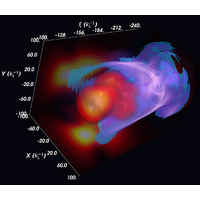
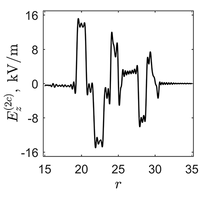
Laser wakefield acceleration (LWFA) studies commonly assume an ideal Gaussian laser driver, although real high-power laser pulses often exhibit complex transverse intensity and phase structures. We combine experiments and particle‑in‑cell simulations to show that actual laser profiles significantly modify the wakefield evolution and electron injection process. The nonideal laser distribution lowers the self‑focused intensity and broadens the plasma wake sheath, delaying injection. Incorporating the reconstructed laser profile in simulations reproduces experimentally observed ~200 pC, ~200 MeV electron beams, revealing the critical role of realistic laser structures in high‑charge LWFA.

Space-charge effects during half-integer resonance crossing in the CERN Proton Synchrotron Booster

Tirsi Prebibaj, Fanouria Antoniou, Foteini Asvesta, Hannes Bartosik, and Giuliano Franchetti

Phys. Rev. Accel. Beams 29, 054201 (2026) - Published 12 May, 2026

Operation close to half-integer resonances can lead to significant beam quality degradation and beam loss in high-intensity/high-brightness synchrotrons. At the CERN Proton Synchrotron Booster, the controlled crossing of the 2Qy=9 half-integer resonance was experimentally investigated and benchmarked against six-dimensional self-consistent tracking simulations. The study demonstrates the role of incoherent space charge effects in shaping the beam profile evolution and beam losses. The observed dependence of beam losses on the resonance crossing rate, beam intensity, and resonance strength provides a basis for devising mitigation strategies.

Data-model-guided framework for systemic emittance minimization in high-brightness photoinjectors

H. Tünnermann, Y. Chen, A. Klemps, D. Ilia, M. Cai, N. Ay, B. Beutner, F. Brinker, W. Decking, J. Good, I. Hartl, W. Hillert, Y. Jiang, C. Li, T. Long, C. Mahnke, H. Panuganti, F. Pressacco, and M. Scholz

Phys. Rev. Accel. Beams 29, 050701 (2026) - Published 8 May, 2026

Emittance minimization in high-brightness photoinjectors is a key challenge for x-ray free-electron lasers. We demonstrate a data- and model-guided framework combining physics-informed laser shaping with inverse emittance modeling. The approach achieves ~20% emittance reduction and enables reliable, stable shaped electron bunches for sustained high-intensity FEL operation at the European XFEL.

Estimation of superconducting cavity bandwidth and detuning using a Luenberger observer

Bozo Richter, Andrea Bellandi, Julien Branlard, Leon Speidel, and Annika Eichler

Phys. Rev. Accel. Beams 29, 054601 (2026) - Published 8 May, 2026

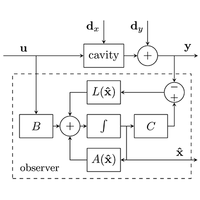
A Luenberger state observer provides real-time estimates of detuning and half bandwidth in superconducting radio frequency (SRF) cavities, offering insight into parameters critical for safe and energy efficient operation. Based on a gain-scheduled linear cavity model with parameter-varying pole placement, it features stable and tunable estimation error dynamics. Differences from existing approaches are discussed and evaluated using experimental data, outlining the observers potential for future applications in resonance control and quench detection.

Modular quadrupole array capture line for plasma-accelerated electrons

Bruno D. Muratori, Deepa Angal-Kalinin, Alexander R. Bainbridge, Joe Crone, Clive Hill, James K. Jones, Hywel L. Owen, Thomas H. Pacey, Yuri M. Saveliev, Neil R. Thompson, Daniel Symes, Nicolas Bourgeois, and Oliver Finlay

Phys. Rev. Accel. Beams 29, 051601 (2026) - Published 7 May, 2026

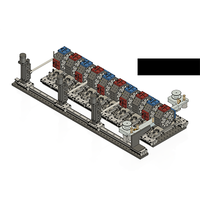
Laser wakefield acceleration offers an exciting route to the generation of bright, high-energy electron bunches, but these electrons are generated with large divergence and must be captured well. GeV-scale electrons need strong quadrupoles. In this paper we propose a Focusing-Defocusing (FODO) array of equal-strength Permanent-Magnet Quadrupoles (PMQs) to gradually capture such bunches. A modular array of fixed-strength PMQs can be readily tuned for different electron energies by adding or removing magnets; we have developed a practical arrangement for the 1 GeV electrons expected at the UK Extreme Photonics Application Center (EPAC) facility, and have constructed novel 350 T/m capture PMQs.

Design of a storage ring based on a fixed-field alternating-gradient configuration with an internal target for heavy-ion beams with stochastic charge state conversions

Yoshihiro Ishi, Tomonori Uesugi, Yoshiharu Mori, and Katsuhisa Nishio

Phys. Rev. Accel. Beams 29, 050101 (2026) - Published 6 May, 2026

Heavy-ion storage rings with internal targets offer highly efficient production of rare events, but are severely limited by stochastic charge-state conversion at each target interaction, which drives rapid transverse emittance growth. We introduce a concept based on a scaling fixed-field alternating-gradient (FFA) lattice with an azimuthally modulated field index k to overcome this fundamental limitation. This approach is found to significantly suppress emittance growth, particularly in the horizontal plane. Six-dimensional beam-tracking simulations incorporating energy loss, scattering, and charge-state conversion are presented, demonstrating effectiveness under realistic conditions.

Experimental demonstration of ultrahigh-precision transport and acceleration of single ions

K. Muroo, K. Hosaka, Y. Yuri, K. Ito, and H. Okamoto

Phys. Rev. Accel. Beams 29, 053401 (2026) - Published 5 May, 2026

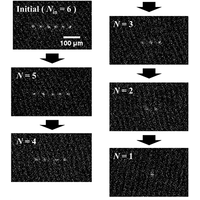
This work addresses the question of how precisely one can control the orbit of a single ion. A unique ion source based on a simple radio-frequency quadrupole trap is employed to provide an extremely narrow beam that enables one to irradiate a target with nanometer precision. This novel source is equipped with a Doppler laser cooler to reduce the temperature of a trapped ion cloud to near absolute zero, where a phase transition to a Coulomb crystalline state occurs. We demonstrate experimentally and numerically that it is possible to extract these ultracold ions one by one from the trap at arbitrary timing and transport them precisely along the design orbit.

Novel rf design of bimodal normal-conducting active rf cavity for synchrotron radiation light sources

Dinghui Su, Wencheng Fang, Cheng Wang, Zihe Gao, Yusen Guo, Hanyu Gong, Yiming Xu, Xiaoxia Huang, Chenyu Wei, Chengcheng Xiao, and Jianhao Tan

Phys. Rev. Accel. Beams 29, 042001 (2026) - Published 30 April, 2026

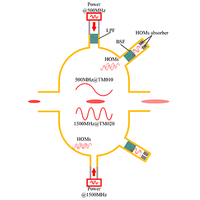
Double-RF systems are widely used in advanced storage-ring light sources, but they are generally implemented with separate accelerating and harmonic cavities. Here we propose a compact normal-conducting bimodal cavity that supports the TM010 and TM020 modes in a single cavity. A low-pass filter suppresses harmonic power leakage through the fundamental-mode coupler, while tunable band-stop filters provide selective isolation for higher-order-mode damping to protect the harmonic mode. The two operating modes remain largely independently controllable, providing a practical design approach for compact bimodal RF cavities in storage rings.

Development of 3.9 GHz fundamental power couplers for the XFEL third harmonic cryomodules

Zhen-Yu Ma et al.

Phys. Rev. Accel. Beams 29, 043501 (2026) - Published 22 April, 2026

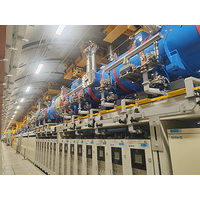
The SHINE 3.9 GHz fundamental power coupler was improved from the original Eu-XFEL design by incorporating adjustable external quality factor Qext and a double-braid copper strip for enhanced cooling. This paper details all aspects of coupler development, including requirements, design, RF simulations, fabrication techniques, power testing, cryomodule integration and RF conditioning. Sixteen production 3.9 GHz couplers were manufactured and integrated into two SHINE third harmonic cryomodules, which achieved maximum total cavity voltages of 63.6 MV and 59.8 MV, respectively. These cryomodules have since been successfully commissioned for online operation.

Optimizing injection for the storage ring proton-EDM experiment

Jonathan Lee, Haixin Huang, Francois Meot, William Morse, Yannis K. Semertzidis, and Nicholaos Tsoupas

Phys. Rev. Accel. Beams 29, 041601 (2026) - Published 17 April, 2026

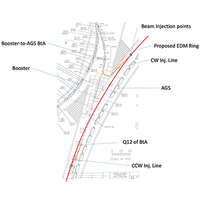
A comprehensive design is presented for the Booster-to-pEDM (BtP) injection line serving both clockwise and counterclockwise rings in the proposed proton Electron Dipole Moment (pEDM) experiment at BNL. The design builds upon a symmetric-hybrid lattice while reusing segments of the existing Booster-to-AGS transfer line, tackling key challenges in precision injection for pEDM searches—such as stringent optics matching, dispersion suppression, spin preservation within ±20 mrad, and systematic error control—required to reach the target sensitivity of 10−29 e⋅cm. Multi-particle and spin tracking simulations validate beam containment and polarization stability, demonstrating design feasibility and robustness.

Low-frequency radiation of a charged particle bunch on a double grid screen

Evgenii S. Simakov, Andrey V. Tyukhtin, and Sergey N. Galyamin

Phys. Rev. Accel. Beams 29, 042901 (2026) - Published 17 April, 2026

We present the results of analytical and numerical calculations of electromagnetic radiation generated by a charged particle bunch passing through two parallel grids composed of thin conductors. The longwave range of the radiation spectrum is studied, i.e., the wavelengths are assumed to be much greater than the cell size of each grid. We demonstrate, in particular, that the structure under consideration can be used for developing new methods of non-destructive bunch diagnostics.

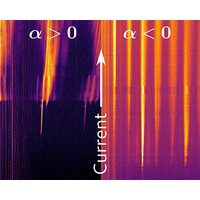
Influence of negative momentum compaction factors on longitudinal beam dynamics in an electron synchrotron

P. Schreiber, T. Boltz, M. Brosi, B. Haerer, A. Mochihashi, A. I. Papash, M. Schuh, and A.-S. Müller

Phys. Rev. Accel. Beams 29, 044402 (2026) - Published 16 April, 2026

Modern synchrotron light sources strive for extreme parameters, where the resulting lowered dynamic aperture could be mitigated by reducing the required sextupole strength through a negative momentum compaction factor. This strategy significantly changes the longitudinal beam dynamics which must be investigated in detail. At KARA, this operation mode was studied in a regime dominated by the coherent synchrotron radiation impedance. The results include significant deviations from the usual positive momentum compaction dynamics, particularly in terms of bunch length and the micro-bunching instability, challenging existing theoretical predictions of the threshold current.

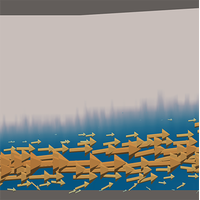
Theory and simulation of gap distance transitions in planar magnetically insulated transmission lines

Adam M. Darr

Phys. Rev. Accel. Beams 29, L040402 (2026) - Published 14 April, 2026

Magnetically insulated electron flow lowers transmission line operating impedance with respect to particle-free vacuum impedance. This work establishes two simple rules: 1) transitioning from high to low impedance, magnetic fields on the high impedance line grow and, consequently, electrons are more tightly insulated; 2) transitioning from low to high impedance, magnetic fields on the high-impedance side weaken and the size of the electron flow region grows. In both cases, the impedance of the formerly high-impedance line drops to exactly match the lower operating impedance, but electron flow on the low-impedance line is unaltered.

Charge-exchange cooling of multicharge-state heavy-ion beams

Hiroshi Imao

Phys. Rev. Accel. Beams 29, L044001 (2026) - Published 14 April, 2026

We introduce a novel beam-cooling concept for multicharge-state heavy-ion beams based on a new multi-zone stripper configuration in a charge stripper ring, where stochastic charge-state transitions combined with charge-state-dependent closed-orbit shifts turn charge exchange—normally associated with beam heating—into a mechanism for rapid cooling. Numerical simulations show substantial emittance reduction within tens of turns, allowing the scheme to overcome beam heating caused by beam-matter interactions. The concept opens new possibilities for sustaining beam-matter interactions and controlling intense heavy-ion beams in future accelerator facilities.

Coherent radiation of ultrashort electron-bunches from linear acceleration

R. J. McGuigan and S. P. Jamison

Phys. Rev. Accel. Beams 29, 041003 (2026) - Published 13 April, 2026

We show that purely linear acceleration of ultra-short electron bunches results in emission of a significant amount of radiation in regimes within reach of current experiments. In cases relevant to plasma acceleration, with fields of 10’s of GV/m, radiation losses are around 100µJ with losses increasing for larger acceleration field strength and shorter bunches. We also predict that acceleration with field strengths accessible to traditional RF accelerating structures results in a measurable radiation pulse of energy of 100’s of nJ. These higher-than-expected losses are due to coherence effects such that the power of the emitted radiation scales with the square of the total charge.

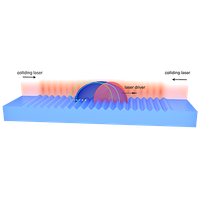
Nanometer-scale prebunched electron beams generated from all-optical plasma-based acceleration

Zhenan Wang, Zewei Xu, Qianyi Ma, Yuhui Xia, Letian Liu, Chenxu Wang, Thamine Dalichaouch, Xueqing Yan, Xinlu Xu, and Warren B. Mori

Phys. Rev. Accel. Beams 29, 040702 (2026) - Published 9 April, 2026

Prebunched relativistic electron beams are central to coherent x-ray generation, but producing nanometer-scale bunching in compact plasma accelerators remains challenging. Here we propose an all-optical three-laser scheme in uniform plasma, where two low-intensity counter-propagating pulses create a density modulation that periodically controls injection into a nonlinear laser wake. The method generates ultrabright electron beams with nanometer-scale bunching and tunable exotic structures, opening a practical route to compact, high-power and coherent x-ray sources.

First experimental report of nonlinear collimator in the SuperKEKB

Shinji Terui, Yoshihiro Funakoshi, Naoko Iida, Takuya Ishibashi, Haruyo Koiso, Akio Morita, Shu Nakamura, Yukiyoshi Ohnishi, Hiroshi Sugimoto, Kyo Shibata, Kenta Uno, Mulee Yao, Giacomo Broggi, Katsunobu Oide, Andrii Natochii, and Qingyuan Liu

Phys. Rev. Accel. Beams 29, 041002 (2026) - Published 8 April, 2026

This paper presents the first experimental demonstration of a nonlinear collimator in the SuperKEKB low-energy ring. By using a pair of skew-sextupole magnets, the system enables efficient beam halo removal while keeping the collimator jaws away from the beam core, thereby reducing impedance. Beam studies show that the nonlinear collimator achieves comparable or improved background suppression relative to conventional collimators without degrading beam lifetime or injection efficiency. Furthermore, it significantly raises the instability threshold, demonstrating its potential for future high-luminosity colliders.

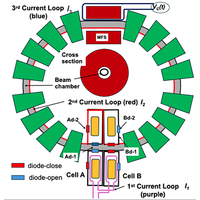
Circular accelerators with effective dc induction acceleration

Ken Takayama, Jun Hasegawa, Toshikazu Adachi, Katsuya Okamura, Kazumi Egawa, Toshiaki Tauchi, and Takashi Yoshimoto

Phys. Rev. Accel. Beams 29, 040401 (2026) - Published 7 April, 2026

DC induction acceleration in a circular ring can be realized by integrating a pair of induction cells with two insulating gaps for setting and resetting of induction magnetic cores and a magnetic flux storage system, which absorbs the magnetic flux emitted when resetting the induction cell. This scenario has been described with the help of theory and computer simulation. One possible application is a fixed field alternating gradient (FFAG) accelerator that provides D- beams of 1-2 MeV and a few amperes for neutral beam injection in the future magnetic fusion DEMOs. The other is an isochronous electron storage ring that could lead to an efficient constant wave free-electron laser.

Over 8 hours of continuous operation of a free-electron laser driven by a laser-plasma accelerator

F. Kohrell, S. K. Barber, C. E. Doss, K. Jensen, S. Schröder, C. Berger, Z. Eisentraut, K. Nakamura, A. J. Gonsalves, F. Isono, G. R. Plateau, R. A. van Mourik, M. Gracia-Linares, L. Labun, B. M. Hegelich, S. V. Milton, C. G. R. Geddes, J. Osterhoff, E. H. Esarey, C. B. Schroeder, F. Grüner, and J. van Tilborg

Phys. Rev. Accel. Beams 29, 041301 (2026) - Published 7 April, 2026

Laser-Plasma Accelerators (LPAs) have emerged as novel, compact drivers for Free-Electron Lasers (FELs), demonstrated most recently by the results of high gain (>1000) and reliability (>90%) achieved by Barber et al. The work presented here serves as a follow-up to these results, highlighting the exceptional long-term stability of the hundred-terawatt laser system. Enabled by the unique integration of multiple active stabilization systems, we demonstrate over ten hours of stable electron beam production from our LPA source, resulting in reliable, long-term operation of an LPA-driven FEL in the self-amplified spontaneous emission (SASE) regime.

Relativistic ponderomotive dynamics and multiscale modulation mechanisms in optical field compression of electron beams

Jinming Zhang, Zixin Guo, Xiazhen Xu, Jingya Li, Fengyi Zhang, Haoran Zhang, Zhigang He, and Guangyao Feng

Phys. Rev. Accel. Beams 29, 044401 (2026) - Published 7 April, 2026

Laser compression of relativistic electron beams offers a pathway to ultrashort pulses, yet the relevant theory for tightly focused fields remains incomplete. We develop a covariant oscillation-center framework for dual-frequency traveling waves, identify a critical beam waist that delineates the transition between multi-cycle compression and sub-cycle breakdown, and derive scaling laws governing wavelength and focusing conditions—thereby enabling predictive optimization of laser compression for relativistic electron beams. Simulations incorporating space-charge effects demonstrate that, under realistic conditions, MeV-scale electron bunches can be compressed into the sub-femtosecond regime.

Sign In to Your Journals Account

Filter

Recent Issues

Vol. 29, Iss. 10
October 2026
Vol. 29, Iss. 9
September 2026
Vol. 29, Iss. 8
August 2026
Vol. 29, Iss. 7
July 2026
Category
Article Type
Section

Filter

Article Lookup

Enter a citation