Recent Articles

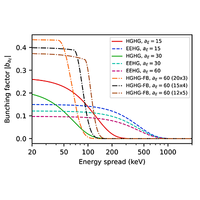
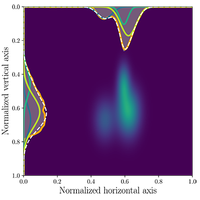
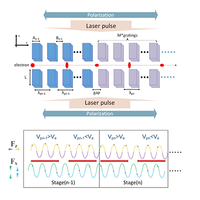
Impact of electron-beam energy spread on the generation of high harmonics in seeded free-electron lasers

Eléonore Roussel, Simone Spampinati, Primož Rebernik Ribič, Laura Badano, Paolo Cinquegrana, Miltcho B. Danailov, Giovanni De Ninno, Alexander Demidovich, Simone Di Mitri, Eugenio Ferrari, Giulio Gaio, Luca Giannessi, Najmeh S. Mirian, Ivaylo Petrov Nikolov, Giuseppe Maria Penco, Carlo Spezzani, and Enrico Massimiliano Allaria

Phys. Rev. Accel. Beams 29, 040701 (2026) - Published 6 April, 2026

Seeded free-electron lasers (FELs) generate short-wavelength light by high harmonic conversion of seed laser, but their performance is often limited by electron beam energy spread. In this study, we experimentally compare two key schemes, High-Gain Harmonic Generation (HGHG) and Echo-Enabled Harmonic Generation (EEHG). We show that EEHG’s ability to handle large energy spread makes it more reliable for producing fully coherent soft X-ray pulses. Using a laser heater to control energy spread, our results confirm EEHG’s advantages, offering a clear path forward for high-performance next-generation FELs.

Precision alignment and tolerance of a plasma wakefield accelerator in a laser-ionized plasma source

Valentina Lee, Robert Ariniello, Douglas Storey, Sébastien Corde, Claudio Emma, Spencer Gessner, Mark Hogan, Alexander Knetsch, Nathan Majernik, Brendan O’Shea, Ivan Rajkovic, and Michael Litos

Phys. Rev. Accel. Beams 29, 041001 (2026) - Published 3 April, 2026

Precise alignment between laser-ionized plasma sources and ultrarelativistic beams is critical for plasma wakefield acceleration at collider-relevant energies. We introduce a simple, non-invasive technique that uses plasma afterglow imaging at two longitudinal locations to achieve micron-level alignment of an 85-cm plasma with a 10-GeV beam. The method achieves better than 10 μm transverse and 10 μrad angular accuracy and is directly validated through beam energy loss, energy transfer efficiency, and witness beam energy gain measurements. These results establish quantitative alignment tolerances essential for next-generation plasma-based accelerators and collider concepts.

Positron transport system for muonium-to-antimuonium conversion experiment

Guihao Lu, Shihan Zhao, Siyuan Chen, and Jian Tang

Phys. Rev. Accel. Beams 29, 031602 (2026) - Published 30 March, 2026

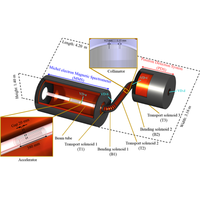
Muonium-to-antimuonium conversion provides a sensitive probe of charged lepton flavor violation. We present the design and performance of the positron transport system for the Muonium-to-Antimuonium Conversion Experiment (MACE), combining an electrostatic accelerator with a solenoid system. Simulations show high geometric acceptance and precise position resolution, enabling efficient signal transport and background rejection. Dedicated studies demonstrate that the system, together with optimized collimation and time-of-flight selection, can effectively suppress internal conversion decay backgrounds, providing a new approach to positron transport for experiments at the high-intensity frontier.

Wide frequency-range acceleration using second-harmonic rf buckets in fixed-field accelerators

T. Uesugi, Y. Ishi, and Y. Mori

Phys. Rev. Accel. Beams 29, 031303 (2026) - Published 27 March, 2026

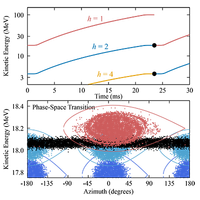
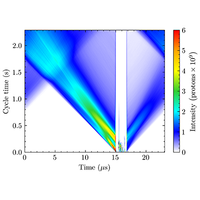
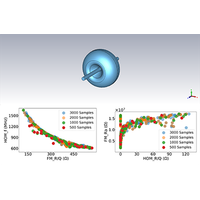
We propose a new acceleration scheme for fixed-field accelerators in which beams corresponding to different RF harmonic numbers are accelerated simultaneously and connected into a single, continuous acceleration path. By completing acceleration over two successive RF frequency sweeps, the method limits the overall sweep range while shortening the repetition cycle.Longitudinal simulations based on realistic machine parameters demonstrate stable operation of the second-harmonic bucket, establishing the practical feasibility of wide-range acceleration within a unified framework.

Field tuning and rf measurement of the four-vane radio frequency quadrupole with piecewise linear intervane voltage

C. B. Yue, H. Zhou, X. Y. Zhou, P. F. Ma, C. T. Du, Q. Z. Xing, S. X. Zheng, X. W. Wang, W. L. Liu, B. C. Wang, and Z. M. Wang

Phys. Rev. Accel. Beams 29, 030101 (2026) - Published 18 March, 2026

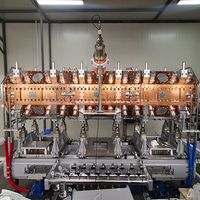
A 108 MHz four-vane radio frequency quadrupole (RFQ) with a piecewise linear intervane voltage profile has been manufactured. The intervane voltage is designed to increase linearly within the shaper and bunching section of the RFQ to enhance the acceleration gradient, while remaining constant in the other sections to control the peak surface electric field. The feasibility of this configuration was achieved through a specialized design of the vane base featuring a localized dip and was demonstrated by RF field tuning, which involved measuring the electric field near the axis and adjusting the insertion depths of 48 tuners.

Machine learning based closed orbit correction for steady state microbunching storage ring

Liwei Chen, Zhilong Pan, Xiujie Deng, Zizheng Li, Xiaoyang Zhang, Wenhui Huang, Alexander Chao, and Chuanxiang Tang

Phys. Rev. Accel. Beams 29, 034602 (2026) - Published 17 March, 2026

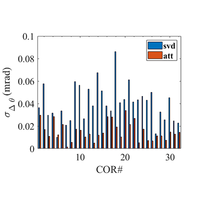
This work combines convolutional layers and attention mechanisms to enable a model to effectively extract both global and local features. This approach optimizes the use of the most effective correctors during closed orbit correction, enhancing process efficiency while better mitigating corrector saturation, thereby contributing to long term stability. By integrating Gaussian process models, the neural network addresses input length mismatches caused by Beam Position Monitor failures, ensuring its applicability to real world devices.

Development and high-current cw operation of 166.6 MHz high-power, higher-order-modes-damped β=1 quarter-wave SRF modules at the High Energy Photon Source

Pei Zhang, Xinying Zhang, Lin Guo, Qiang Ma, Jin Dai, Tongming Huang, Hongjuan Zheng, Fanbo Meng, Zhenghui Mi, Haiying Lin, Qunyao Wang, Dongbing Li, Facheng Zhao, Song Jin, and Jian Li

Phys. Rev. Accel. Beams 29, 032002 (2026) - Published 16 March, 2026

In 2025, the 166.6 MHz high-power, high-order-modes-damped β = 1 quarter-wave superconducting cavity modules—developed for the High Energy Photon Source—successfully accelerated a 100 mA electron beam. This milestone marks the world’s first use of a superconducting quarter-wave cavity as the main accelerating system in a high-current storage ring. By extending the application limits of quarter-wave cavities from their conventional use in low-β accelerators to high-current electron storage rings, this achievement establishes a proven pathway for future high-performance light sources.

Engineering analysis of the medium energy beam transport of front-end test facility for an Accelerator Driven System

Kai Li, Chao Jin, Xin Qi, Zhongyi Li, Zhijun Wang, and Yuan He

Phys. Rev. Accel. Beams 29, 031601 (2026) - Published 13 March, 2026

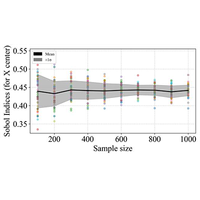
The engineering reliability of high-power accelerator depends critically on understanding complex error couplings. We perform a comprehensive global Sobol sensitivity analysis of the Medium Energy Beam Transport (MEBT) section in an accelerator-driven system test facility. The results identify dominant tolerance drivers and quantify nonlinear interactions that govern beam loss and emittance growth. This approach establishes a practical methodology for physics-informed tolerance design in high-intensity accelerators.

High-power test of the single-periodic magnetically coupled standing-wave accelerating structure for a proton therapy linac

Wei Qin, Yulu Huang, Yuan He, Zheng Gao, Longbo Shi, Jiaosai Li, Chenxing Li, Weiping Dou, Xiaofeng Jin, Zhouli Zhang, Zongheng Xue, Yujuan Zhao, Tiancai Jiang, Yupeng Yang, Yuhui Guo, Shilong Gao, Yuqi Xin, and Ruoxu Wang

Phys. Rev. Accel. Beams 29, 032001 (2026) - Published 12 March, 2026

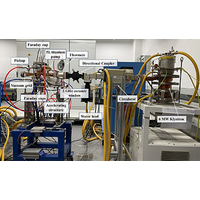
The accelerating structure is a key component of particle linear accelerators. The innovative S-band RF cavity (operating at 3 GHz) that we have developed and tested at high-power pushes the frontiers of high gradient RF cavities, achieving an accelerating gradient of 38 MV/m with duty factor of up to 0.035% and accelerating gradient of 24 MV/m with duty factor of 0.1%. This research contributes to the advancement of compact particle linear accelerators.

Dynamic evolution of ultracold electron beams from nanostructured cathodes

A. Tencate, A. Al Marzouk, and B. Erdélyi

Phys. Rev. Accel. Beams 29, 034201 (2026) - Published 12 March, 2026

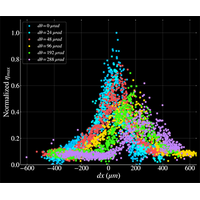
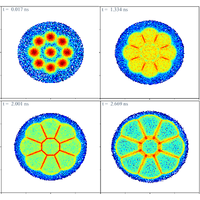
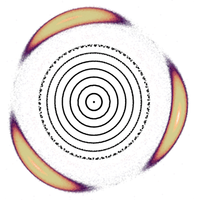
While complex, caustic-like charge patterns driven by dynamic Coulomb expansion have been observed in ultracold ion beams, their manifestation in electrons remains unexplored due to much faster timescales involved. We employ high-fidelity N-body simulations to show how dense, nonuniform electron beamlets emitted from nanostructured cathodes form coherent patterns or merge into a single beam. By identifying the temperature and density thresholds necessary to sustain these patterns, and the effect of geometry and asymmetry, we establish practical design criteria for optimizing next-generation cathodes and introduce a novel virtual diagnostic framework for emittance measurement.

Coupling local and global rf feedback loops for macroparticle tracking simulations

B. E. Karlsen-Baeck, T. Argyropoulos, J. Flowerdew, L. Intelisano, I. Karpov, A. Lasheen, and H. Timko

Phys. Rev. Accel. Beams 29, 032802 (2026) - Published 10 March, 2026

We demonstrate for the first time how dynamic models of global rf control loops, such as beam-phase loops, and local rf loops, such as fast rf feedbacks, can be coupled in a macroparticle tracking code. Extensive benchmarks against measurements from the CERN accelerators show excellent agreement and predictive capability. This advance enables highly realistic beam dynamics simulations capturing the interplay between rf control systems and the circulating beam in critical transient regimes, such as at bunch-to-bucket transfers.

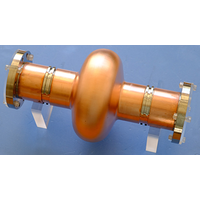
Improved high-gradient performance for medium-velocity superconducting half-wave resonators: Surface preparation and trapped flux mitigation

Yuting Wu, Kenji Saito, Alex Taylor, Andrei Ganshyn, Chris Compton, Ethan Metzgar, Kyle Elliott, Laura Popielarski, Sam Miller, Sang-hoon Kim, Spencer Combs, Taro Konomi, Ting Xu, Walter Hartung, Wei Chang, and Yoo-Lim Cheon

Phys. Rev. Accel. Beams 29, 033102 (2026) - Published 10 March, 2026

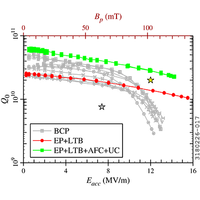
Superconducting radio-frequency (SRF) cavities were first used to accelerate high-velocity electron/positron beams and low-velocity ion beams. High-velocity SRF cavities in particular have benefited from extensive studies and significant performance improvements in the past 6 decades. More recently, SRF technology has been applied to intermediate-velocity beams using half-wave resonators (HWRs) and spoke cavities. Methods to improve HWR performance for the Facility for Rare Isotope Beams (FRIB) are being explored. With electro-polishing (EP), low-temperature baking (LTB), and mitigation of thermo-electric currents, the quality factor at high accelerating gradient improves significantly.

Development of radiation-tolerant beam imaging via multimode fiber and synthetic data-driven machine learning

Q. Xu, H. D. Zhang, G. Trad, A. Hill, F. Roncarolo, and C. P. Welsch

Phys. Rev. Accel. Beams 29, 032801 (2026) - Published 9 March, 2026

Screen-based transverse beam imaging in radiation environments is limited by the survivability of cameras and electronics. We demonstrate a proof-of-concept chain that relays the optical signal through a multimode fiber and uses a synthetic-data-trained autoencoder to reconstruct the screen intensity distribution from the fiber output pattern. Tests using beam images recorded at CERN’s CLEAR facility and replayed in a lab setup show good agreement for beam centroid and transverse sizes, suggesting a route to remote imaging with reduced reliance on beam data.

Multiobjective Bayesian optimization for the shape design of rf cavity in particle accelerators

Yanhong Wang, Yungai Tang, Cong-Feng Wu, and Guangyao Feng

Phys. Rev. Accel. Beams 29, 034601 (2026) - Published 9 March, 2026

The shape design of radio frequency (RF) cavities in particle accelerators is a computationally expensive multiobjective problem with extremely strict equality constraints. We report the first application of multiobjective Bayesian optimization (MOBO) to the shape design of RF cavities and introduce a two-stage acquisition strategy that effectively handles such constraints within the MOBO framework. The method rapidly identifies high-quality Pareto-optimal solutions, demonstrating substantial advantages over conventional approaches in both convergence speed and solution quality.

Sextupole reduction via chaos suppression at the National Synchrotron Light Source II

Yongjun Li, Minghao Song, Yoshiteru Hidaka, Victor Smaluk, and Timur Shaftan

Phys. Rev. Accel. Beams 29, 034001 (2026) - Published 6 March, 2026

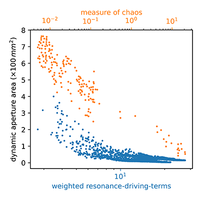
Nonlinear lattice design traditionally relies on minimizing resonance driving terms (RDT) and amplitude-dependent detuning (ADD) to enlarge dynamic aperture. We show at NSLS-II that directly suppressing global chaos provides a stronger correlation with dynamic aperture and enables comparable performance using fewer sextupoles. This challenges the conventional emphasis on RDT and ADD minimization and suggests chaos-based optimization as a more robust strategy.

Plasma dynamics in transient electrostatic shocks driven by relativistic few-cycle laser pulses

Guanqi Qiu, Dongchi Cai, Zheng Gong, and Xueqing Yan

Phys. Rev. Accel. Beams 29, 031302 (2026) - Published 5 March, 2026

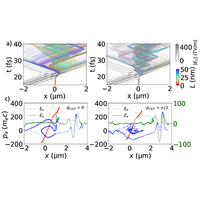
Few-cycle laser pulses offer new routes to drive ion acceleration via transient electrostatic shocks, yet how the carrier-envelope phase (CEP) governs these processes remains poorly understood. Using particle-in-cell simulations and theoretical modeling, we show that the CEP critically selects which laser field peak initiates electron displacement, thereby controlling shock strength and proton energy. We find a cosine-like dependence of proton cutoff energy on the CEP. A predictive framework for CEP-controlled plasma dynamics is established, advancing the optimization of compact high-energy proton sources and offering insights into astrophysical particle acceleration.

Dynamic phase-driven inverse Smith-Purcell dielectric laser accelerator on a chip

Minghao Liu, Weihao Liu, and Shengguang Liu

Phys. Rev. Accel. Beams 29, 031301 (2026) - Published 4 March, 2026

This work presents a dynamic phase-driven synchronization scheme for inverse Smith-Purcell dielectric laser acceleration, leveraging controlled phase slippage to enable simultaneous transverse alternating focusing and continuous acceleration. Unlike conventional alternating phase focusing approaches, the proposed scheme supports particle capture over a continuous phase range, greatly relaxing alignment tolerances and simplifying device fabrication. Full-wave simulations demonstrate outstanding performance: a peak acceleration gradient of 39 MV/m with 95% capture efficiency for a 29.5 keV electron bunch, all within a compact acceleration channel of only 120 μm in length.

RF characterization of 1.3 GHz one-cell Nb/Cu full-seamless cavities manufactured by hydroforming

Masashi Yamanaka, Marco Garlaschè, Joanna Sylwia Swieszek, Guillaume Jonathan Rosaz, Hayato Araki, Kristof Brunner, Said Atieh, Carlota P. A. Carlos, Adrià Gallifa Terricabras, Valentin Giglia, Shinichi Iwamoto, Shinichiro Michizono, Yuya Nishi, Kazuki Nishimori, Walter Venturini Delsolaro, and Akira Yamamoto

Phys. Rev. Accel. Beams 29, 033101 (2026) - Published 2 March, 2026

We employ hydroforming technology to develop a 1.3 GHz one-cell Nb/Cu full-seamless cavity to reduce the cost and improve performance. Following hydroforming, the cavities were coated with niobium via high-power impulse magnetron sputtering (HiPIMS). We conducted RF measurements of the cavities, achieving an accelerating gradient of 12 MV/m at 4.2 K. The quality factor was slightly below requirements, attributed to surface roughness from the hydroforming process. The maximum accelerating gradient reached 15.7 MV/m at 1.85 K with no field emission. We demonstrate the advantages of full-seamless cavities. including reduced manufacturing costs, high reproducibility, and the elimination of welding seams.

Resonant island trapping in a hybrid multibend achromat synchrotron light source

E. C. Cortés García, N. Carmignani, F. Ewald, S. A. Antipov, K. Scheidt, S. White, and I. V. Agapov

Phys. Rev. Accel. Beams 29, L020705 (2026) - Published 27 February, 2026

Formation of resonance islands is one of the most striking manifestations of nonlinear transverse dynamics. We present experimental observations and numerical simulations of resonance island formation at the ESRF, a fourth-generation synchrotron light source, highlighting the interplay between nonlinear optics and beam dynamics.

Realization of compact permanent-magnet-based multibend-achromat lattice with magnetic crosstalk compensations

M. Aiba, M. Böge, H. Braun, C. Calzolaio, K. Dreyer, R. Ganter, P. Lerch, G. Montenero, R. Riccioli, B. Riemann, S. Sanfilippo, S. Sidorov, A. Streun, V. Vranković, and C. Zoller

Phys. Rev. Accel. Beams 29, 022402 (2026) - Published 25 February, 2026

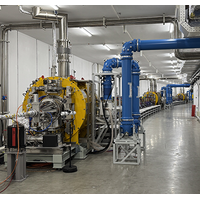
Fourth-generation light sources achieve unprecedented photon beam brightness by dramatically increasing the density of magnets in storage rings, pushing the limits of accelerator design. SLS 2.0, the first storage ring to incorporate a substantial number of permanent magnets in a compact multi-bend achromat lattice, was installed at the Swiss Light Source and successfully commissioned in 2025. Significant magnetic crosstalk identified during the design phase was carefully compensated through simulation-driven magnet design and measurement-based tuning strategies. The image highlights the remarkable density of magnets packed into the accelerator tunnel.

Sign In to Your Journals Account

Filter

Recent Issues

Vol. 29, Iss. 10
October 2026
Vol. 29, Iss. 9
September 2026
Vol. 29, Iss. 8
August 2026
Vol. 29, Iss. 7
July 2026
Category
Article Type
Section

Filter

Article Lookup

Enter a citation