Recent Articles

Knock out slow extraction using betatron sidebands at high harmonics

Philipp Niedermayer, Rahul Singh, Eike Feldmeier, Christian Schömers, and Marcel Hun

Phys. Rev. Accel. Beams 29, 022802 (2026) - Published 24 February, 2026

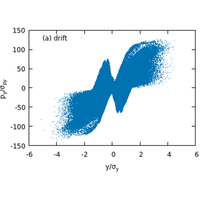
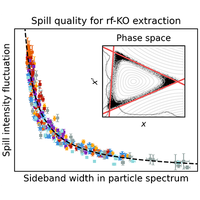
This study investigates how the quality of spills from resonant slow extraction can be improved using high frequency single- and multi-band knock out excitation. Simulations reveal a correlation with the nonlinear betatron motion of particles shortly before their extraction under a wide range of optics and beam parameters. Combined with the experiments conducted, the study gives empirical guidance for optimized excitation waveforms and hardware designs reducing spill fluctuations and pileup.

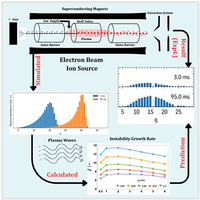
Beam driven plasma instabilities in electron beam ion sources

Chandan Thakur, Sarvesh Kumar, Niketan Jakhar, Sandeep Kashyap, Jyotsna Sharma, Manish K. Kashyap, Hannes Pahl, and Fredrik Wenander

Phys. Rev. Accel. Beams 29, 023401 (2026) - Published 23 February, 2026

The paper identifies the probable mechanisms responsible for instability growth in electron beam ion sources (EBIS), which ultimately limit their ability to produce intense beams of highly charged ions. These instabilities are driven by electron beam impact on EBIS plasma and lead to the excitation of lower-hybrid waves in the megahertz frequency range. The resulting plasma oscillations may enhance anomalous transport and ion heating, thereby affecting efficient charge state buildup.

Recent advances in large-signal beam-wave interaction solvers for klystrons

Wanli Shi, Yulu Hu, Guoxin Ren, Yongping He, Zheng Tan, Haiying Yuan, Luanfeng Gao, Junhui Yin, Xiaofang Zhu, Quan Hu, and Bin Li

Phys. Rev. Accel. Beams 29, 024801 (2026) - Published 20 February, 2026

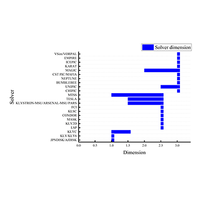
This Review surveys large-signal klystron beam–wave interaction solvers widely used in mainland China alongside selected international codes, spanning parameterized 1D models to fully 3D particle-in-cell (PIC) simulations. Parameterized solvers emphasize physical completeness at low cost, whereas 3D PIC provides self-consistent full-field electrodynamics for asymmetric structures with minimal approximations. We frame predictive “single-run success” as the long-term goal and outline opportunities in model completeness, algorithmic optimization, and engineering-grade verification and validation.

Muon injection and acceleration via ultraintense electron beam-driven plasma wakefield

J. X. Wang, L. Q. Han, X. Y. Zhao, Abdughupur Ablimit, Z. Gong, H. Wen, and J. Q. Yu

Phys. Rev. Accel. Beams 29, 021302 (2026) - Published 18 February, 2026

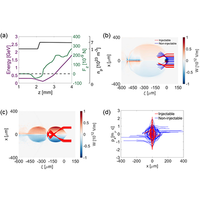
High-flux, high-energy muon beams hold transformative potential for particle physics, yet rapid acceleration to relativistic energies in plasma wakefields is limited by dephasing arising from their larger mass and lower velocity. Here, we propose a method for longitudinal injection and stable acceleration of low-energy muons using a plasma density up-ramp to separate the deceleration and acceleration regions. Driven by an ultra-intense 23 GeV electron beam, initially 300 MeV muons attain 40 GeV final energy with an 18.85% energy spread and normalized emittance of 8.86 mm·mrad. These findings provide a feasible path toward compact muon colliders and exploration beyond the Standard Model.

Limitations of emittance and source size measurement of laser-accelerated electron beams using the pepper-pot mask method

F. C. Salgado, A. Kozan, D. Seipt, D. Hollatz, P. Hilz, M. C. Kaluza, A. Sävert, A. Seidel, D. Ullmann, Y. Zhao, and M. Zepf

Phys. Rev. Accel. Beams 29, 022801 (2026) - Published 17 February, 2026

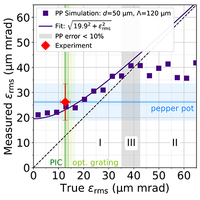
Laser wakefield acceleration (LWFA) produces electron beams with exceptional brightness, but accurately measuring their emittance in real time while minimizing diagnostic complexity remains challenging. The pepper-pot method is often applied for this purpose. In this work, we investigate the applicability of the pepper-pot technique for measuring LWFA beam emittance, particularly in regimes where the true emittance is overestimated. We experimentally validate our analysis by combining the measurements with particle-in-cell simulations and an independent optical diagnostic, identifying conditions under which the method fails for ultralow-emittance LWFA beams.

High-power test of normal conducting cavities with real-time resonant frequency tracking

Y. Xu, W. Fang, C. Xiao, C. Wei, J. Tan, X. Huang, C. Wang, H. Gong, Z. Gao, D. Su, Y. Lan, and R. Qin

Phys. Rev. Accel. Beams 29, 023501 (2026) - Published 17 February, 2026

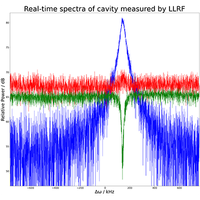
Normal-conducting RF cavities suffer from thermal detuning during high-power operation, traditionally requiring manual frequency adjustments or mechanical tuning. This work presents a digital low-level RF system that autonomously tracks and compensates for resonant frequency shifts using an embedded phase-locked loop and real-time spectrum analysis. The approach maintains reflected power below 8.5% under detuning exceeding 200 kHz, offering a compact, fully electronic alternative to conventional methods.

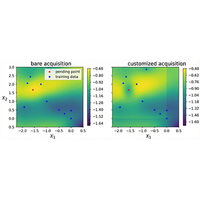
Customized Bayesian optimization for efficient beam tuning at the facility for rare isotope beams

Kilean Hwang, Qiang Zhao, Tong Zhang, Tomofumi Maruta, Alexander Plastun, Kei Fukushima, and Peter Ostroumov

Phys. Rev. Accel. Beams 29, 024601 (2026) - Published 17 February, 2026

At the Facility for Rare Isotope Beams (FRIB), rapid and reliable tuning is essential to support the delivery of diverse ion species. To improve the practicality of Bayesian optimization in this setting, we implemented several enhancements, including scalarized composite objective construction for multi-criteria optimization, asynchronous evaluation for better resource utilization, prior-mean-assisted optimization to accelerate convergence, and the local search strategy for rapid completion of the task.

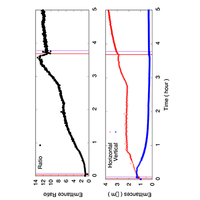
Experimental demonstration of accelerating a beam with a large transverse emittance ratio in the relativistic heavy ion collider for the electron-ion collider

Y. Luo, B. Lepore, K. Mernick, T. Shrey, M. Blaskiewicz, C. Montag, G. Robert-Demolaize, and D. Xu

Phys. Rev. Accel. Beams 29, L021001 (2026) - Published 17 February, 2026

The Electron-Ion Collider (EIC), to be constructed at Brookhaven National Laboratory, will collide polarized high-energy electron beams with hadron beams, at luminosities of up to 1.0×1034 cm⁻² s⁻¹ in the center-of-mass energy range of 20–140 GeV. Large-emittance-ratio hadron beams will be generated at injection energy and accelerated to high energies for collisions. In this experiment, gold ion beams were generated and accelerated in the Relativistic Heavy Ion Collider (RHIC), with an 11:1 transverse emittance ratio, maintained throughout the five-minute acceleration process, from 31 to 100 GeV/nucleon. This experiment fully validates the EIC Hadron Storage Ring design assumptions.

Beam intensity limitations in future multibend achromat light sources

I. Agapov and S. A. Antipov

Phys. Rev. Accel. Beams 29, 020704 (2026) - Published 13 February, 2026

Fourth-generation synchrotron light sources have been an incredible success story and are currently driving groundbreaking research with photons. It turns out that the emittance of fourth-generation 6 GeV machines such as PETRA IV is close to what is theoretically achievable due to beam intensity limitations from space charge and intra-beam scattering. Further significant emittance reduction and brightness increase is only possible by increasing the beam energy in the future generation of light sources.

Beam-dust interactions in an e+e− collider

Kazuhito Ohmi, Hitoshi Fukuma, and Shinji Terui

Phys. Rev. Accel. Beams 29, 021002 (2026) - Published 13 February, 2026

This study discusses beam loss occurring on a microsecond (μs) timescale due to the interaction between a high-energy positron beam and residual dust particles within the vacuum chamber. The dust undergoes heating, evaporation, and ionization by the beam, leading to the formation of a plasma. We simulated the resulting interaction with the positron beam using the particle-in-cell (PIC) method.

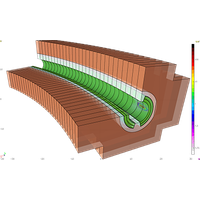
Exploratory energy deposition studies in the superconducting dipole magnet of the carbon-ion gantry for the National Center for Oncological Hadrontherapy

G. Tosetti, A. Mereghetti, and M. G. Pullia

Phys. Rev. Accel. Beams 29, 022401 (2026) - Published 13 February, 2026

Within international collaborations, a compact 360° rotating carbon-ion gantry is being designed for possible installation at CNAO, Pavia, Italy. Since the gantry design is based on superconducting magnet technology, it is essential to make sure that the available beams do not trigger a quench. This contribution quantifies energy density values in the highly improbable scenario of a full beam impact onto the superconducting coils of the main dipoles, showing that they are way above the quench limit; nevertheless, the beam vacuum chamber plays a relevant role in mitigating heat loads. Results suggest that more realistic studies are required, focussing on the distribution of beam losses.

Operation of the P¯ANDA cluster-jet target with the HESR stochastic cooling at COSY

P. Brand, D. Bonaventura, H. Eick, R. Gebel, F. Goldenbaum, V. Hejny, J. Hetzel, V. Kamerdzhiev, C. Mannweiler, D. Prasuhn, J. Ritman, N. Shurkhno, R. Stassen, H. Stockhorst, S. Vestrick, M. Weide, and A. Khoukaz (P¯ANDA Collaboration)

Phys. Rev. Accel. Beams 29, 023001 (2026) - Published 12 February, 2026

The PANDA experiment at the High Energy Storage Ring (HESR) of the Facility for Antiproton and Ion Research (FAIR) in Darmstadt, Germany, will be a unique setup to study the strong interaction in antiproton-proton collisions. The combination of a windowless cluster-jet target and a high intensity antiproton beam, that is cooled by a stochastic cooling is ideal to study, e.g., the line shape of exotic candidates. For first studies, both were installed at the COoler SYnchrotron (COSY) at the Forschungszentrum Jülich, Germany. Detailed studies on the beam quality for different target settings were performed and will be presented.

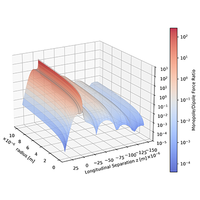
Resistive wall wake for nonultrarelativistic beam in ring model

Jiazhen Tang, Xiujie Deng, Zhilong Pan, Chuanxiang Tang, and Alexander Chao

Phys. Rev. Accel. Beams 29, 024202 (2026) - Published 12 February, 2026

Based on the non-ultrarelativistic assumption, this study defines a more universal theoretical framework for the wake function based on the ring model, and conducts systematic calculations for cylindrical metal pipes. On this basis, a completely new transverse wakefield force generated by the monopole is discovered and analyzed in detail. This research is mainly applicable when the transverse size b of the considered pipe and the longitudinal position s satisfy the condition s<b/γ, such as for SSMB (a new type of accelerator light source), where γ is the relativistic factor associated with the beam.

Erratum: Betatron frequency and the Poincaré rotation number [Phys. Rev. Accel. Beams 23, 054001 (2020)]

Sergei Nagaitsev and Timofey Zolkin

Phys. Rev. Accel. Beams 29, 029901 (2026) - Published 11 February, 2026

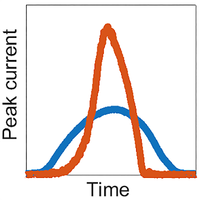
Longitudinal emittance improvement at an x-ray free-electron laser by shortening the injector laser pulse duration

Anastasiia Riabchikova, Philipp Dijkstal, Wenxiang Hu, Thomas G. Lucas, Sven Reiche, and Eduard Prat

Phys. Rev. Accel. Beams 29, 020703 (2026) - Published 10 February, 2026

X-ray free-electron laser (XFEL) performance is limited by longitudinal emittance, particularly for applications like external seeding or ultrashort-pulse production. The authors demonstrate, through both experiments and simulations at SwissFEL, that shortening the injector drive laser pulse duration can double the peak current, resulting in a significant improvement in longitudinal emittance. This simple method is readily applicable to XFEL facilities worldwide.

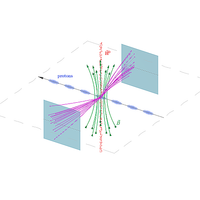
Eliminating beam-induced depolarizing effects in the hydrogen jet target for high-precision proton beam polarimetry at the electron-ion collider

F. Rathmann, A. Nass, K. O. Eyser, V. Shmakova, E. C. Aschenauer, G. Atoian, A. Cannavo, X. Chu, K. Hock, H. Huang, H. Lovelace, G. Mahler, N. N. Nikolaev, J. Ritter, G. Robert-Demolaize, V. Schoefer, P. Shanmuganathan, E. Shulga, H. Soltner, and Z. Zhang

Phys. Rev. Accel. Beams 29, 021001 (2026) - Published 10 February, 2026

Absolute proton beam polarimetry at the Electron–Ion Collider uses a polarized hydrogen jet target intersecting the hadron beam. At the EIC’s short bunch lengths and high repetition rates, beam-induced RF fields can resonantly depolarize the target atoms and compromise the required 1% polarization precision. We present a frequency-domain analysis of beam harmonics and hydrogen hyperfine transitions and show that a target guide field of about 400mT suppresses all relevant depolarizing resonances, enabling robust proton polarimetry under EIC operating conditions. The schematic illustrates the atomic hydrogen beam, proton bunches, guide field, and symmetric recoil detector geometry.

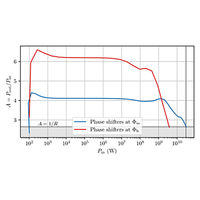
Startup regime of high-efficiency tapering-enhanced FEL oscillator

Margarit Asatrian, Wolfgang Hillert, Eugenio Ferrari, Andrew Fisher, and Pietro Musumeci

Phys. Rev. Accel. Beams 29, 020702 (2026) - Published 9 February, 2026

Increasing the energy transfer efficiency from electron beams to FEL radiation can allow for compact and powerful light sources for experiments and industrial applications. We provide an analytical model and numerical optimization of a high-gain, strongly tapered FEL oscillator at 13.5 nm, reaching percent-level efficiency. In particular, we use simulations to characterize the system throughout the buildup from shot noise and discuss the conditions necessary for achieving buildup and stable operation in steady state.

Beam collimator of electrostatic septum for high-intensity heavy-ion accelerator facility booster

Guodong Shen, Ze Du, Weiping Chai, Jingjing Zhang, He Zhao, Jie Liu, Guangyu Zhu, Geng Wang, Shuang Ruan, Youjin Yuan, Jiancheng Yang, and Qingzhao Zhang

Phys. Rev. Accel. Beams 29, 021601 (2026) - Published 6 February, 2026

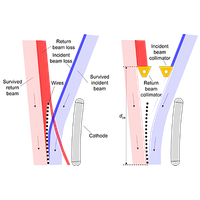
The dynamic vacuum effect is the primary limitation of beam intensity in high-intensity heavy-ion synchrotrons. Gas desorption induced by injection beam loss occurring in the injection electrostatic septum (ES) is still an unresolved issue. The desorption is featured by abundant, ultrafast, multi-penetration and HV breakdown. A novel ES collimator is proposed. Dynamic simulation of the dual-plane painting injection of the booster ring reveals the excellent performance of this scheme by a tenfold reduction in beam loss.

Study of fully coupled three-dimensional envelope instability using automatic differentiation

Ji Qiang

Phys. Rev. Accel. Beams 29, L024201 (2026) - Published 6 February, 2026

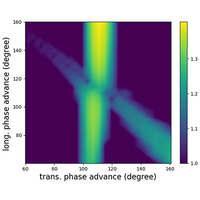
Auto-differentiation is applied to investigate the instability of a fully coupled three-dimensional envelope system governed by 21 ordinary differential equations. Conventionally, analyzing this complex system would require solving 441 ordinary differential equations, which is computationally intractable. However, by using auto-differentiation, only 21 equations need to be tracked. This approach allowed us to uncover an additional unreported instability stopband, which arises from space-charge-induced coupling, and highlights the significant advantages of auto-differentiation in analyzing complicated dynamical systems involving a large number of ordinary differential equations.

Coaxial integrated linear accelerator powered by a high-efficiency and high-power transit-time oscillator

Zi-Jing Zhang, Weihao Liu, and Hongliang Xu

Phys. Rev. Accel. Beams 29, 021301 (2026) - Published 5 February, 2026
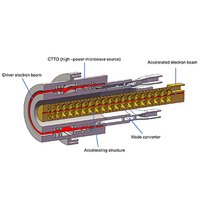
Conventional compact linear accelerators are limited by the low power of available microwave sources and the bulky footprint of distributed systems. To overcome these constraints, we directly integrate a novel coaxial transit-time oscillator (CTTO) with an accelerating structure, forming a unified device that merges efficient high-power microwave generation with inherent compactness. This work substantially advances the recently proposed coaxial integrated linac (CIzLinac) concept, achieving higher power and efficiency, improved stability, and enhanced engineering adaptability, which together significantly boost its readiness for practical deployment.

Sign In to Your Journals Account

Filter

Recent Issues

Vol. 29, Iss. 10
October 2026
Vol. 29, Iss. 9
September 2026
Vol. 29, Iss. 8
August 2026
Vol. 29, Iss. 7
July 2026
Category
Article Type
Section

Filter

Article Lookup

Enter a citation