Letters

Laser-target symmetry breaking in high-order harmonic generation: From frequency shift to odd-even intensity modulation

Doan-An Trieu, Van-Hoang Le, and Ngoc-Loan Phan

Phys. Rev. A 110, L041101 (2024) - Published 15 October, 2024

The two distinct manifestations of symmetry breaking in high-order harmonic generation, harmonic frequency shift and odd-even intensity modulation, are unified through a common origin - asymmetry in the time domain.

System-environment quantum information flow

Taysa M. Mendonça, Lucas C. Céleri, Mauro Paternostro, and Diogo O. Soares-Pinto

Phys. Rev. A 110, L040401 (2024) - Published 10 October, 2024

This work sheds light on the mechanism that governs the propagation of quantum information from a system to its surrounding environment, highlighting the possibility of witnessing a quantum-to-classical transition in the process.

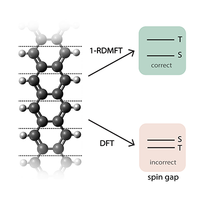
Enhancing density-functional theory for static correlation in large molecules

Daniel Gibney, Jan-Niklas Boyn, and David A. Mazziotti

Phys. Rev. A 110, L040802 (2024) - Published 10 October, 2024

The authors introduce a renormalized generalization of density functional theory that can treat static electron correlation in large molecules, while maintaining computational efficiency. Applications to hydrogen chains and acenes demonstrate the approach’s accuracy.

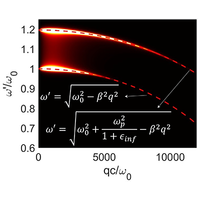
Dynamical Casimir effects: The need for nonlocality in time-varying dispersive nanophotonics

S. Ali Hassani Gangaraj, George W. Hanson, and Francesco Monticone

Phys. Rev. A 110, L041502 (2024) - Published 10 October, 2024

The authors study the role of material nonlocality (spatial dispersion) in dynamical Casimir effects in time-varying frequency-dispersive nanophotonic systems. They theoretically demonstrate that nonlocality regularizes the behavior of these systems by correcting their asymptotic response for large wavevectors and leads to physical effects missed by local models, including a significant broadening of the emission rate distribution, which are relevant for future experimental observations.

Dissociative recombination of CF+

Joshua Forer, Jeoffrey Boffelli, Mehdi Ayouz, Dávid Hvizdoš, Viatcheslav Kokoouline, Ioan F. Schneider, and Chris H. Greene

Phys. Rev. A 110, L040801 (2024) - Published 2 October, 2024

One of the most important processes in the fluorine chemical network within plasmas is dissociative recombination of the CF+ molecular ion with free electrons. This study interprets accurate experimental measurements and presents a fully quantum model of the process, with one of the key findings being the important role of the rotational excitation of the ion in the process.

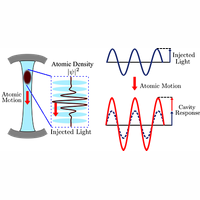
Entangled matter waves for quantum enhanced sensing

John Drew Wilson, Jarrod T. Reilly, Haoqing Zhang, Chengyi Luo, Anjun Chu, James K. Thompson, Ana Maria Rey, and Murray J. Holland

Phys. Rev. A 110, L041301 (2024) - Published 2 October, 2024

The authors present a new method for creating and controlling entanglement between atomic motion in a cavity, without the need for electronic interactions. The interaction arises from a general atom-cavity model and leads to controllable squeezing of atomic momentum. The system offers a highly tunable, many-body quantum sensor and simulator.

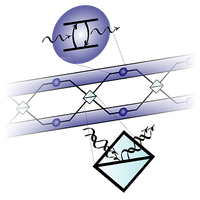
Photon bound states in coupled waveguides

Björn Schrinski, Johan A. Brimer, and Anders S. Sørensen

Phys. Rev. A 110, L041701 (2024) - Published 2 October, 2024

The authors develop a method for showing that photon-bound states are truly bound: when put on a beam splitter, bound photons stick together whereas unbound photons are split randomly.

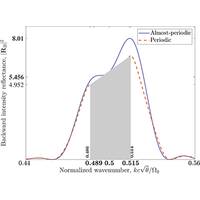
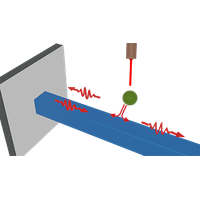
Enhanced scattering from an almost-periodic optical temporal slab

Stefanos Fr. Koufidis, Theodoros T. Koutserimpas, Francesco Monticone, and Martin W. McCall

Phys. Rev. A 110, L041501 (2024) - Published 1 October, 2024

The authors demonstrate that the temporal analog of quasicrystals, modeled as almost-periodic time-varying media, can actually enhance parametric amplification. By coupling fewer, broader modes, these defects paradoxically lead to a higher and wider amplification envelope, with promising applications in enhancing subharmonic resonances within the epsilon-near-zero regime.

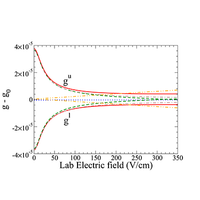
Electric-field-dependent g factors of a YbOH molecule

Alexander Petrov

Phys. Rev. A 110, L030804 (2024) - Published 24 September, 2024

The sensitivity of experiments searching for an electron electric dipole moment in the YbOH molecule can be strongly enhanced by laser cooling. This paper examines the quality of the internal comagnetometer of the YbOH molecule in the first excited bending vibrational mode. The author determines three main contributions to the difference in magnetic g factors between the l-doublet levels and shows that they are identical up to the relative error smaller than 10−4. This gives unprecedented control over systematic effects due to the stray magnetic field in the experiment.

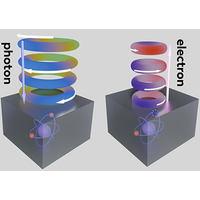
Generation of vortex electrons by atomic photoionization

I. I. Pavlov, A. D. Chaikovskaia, and D. V. Karlovets

Phys. Rev. A 110, L031101 (2024) - Published 24 September, 2024

The authors demonstrate the possibility, in principle, to generate photoelectrons with orbital angular momentum using a vortex laser beam in experimentally feasible scenarios; this process can be key to producing high-energy vortex electrons in linear accelerators. They find that the width of the electron wave packet depends on the initial energy of the vortex photon and not on its transverse size.

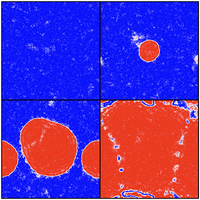
Generalized cold-atom simulators for vacuum decay

Alexander C. Jenkins, Ian G. Moss, Thomas P. Billam, Zoran Hadzibabic, Hiranya V. Peiris, and Andrew Pontzen

Phys. Rev. A 110, L031301 (2024) - Published 24 September, 2024

There has been a growing interest in using ultracold-atom experiments to explore laboratory analogs of the very early Universe. In this Letter, the authors present a new proposal that greatly expands the range of suitable cold-atom systems for rigorous early-Universe analogs, bringing practical experimental setups into reach.

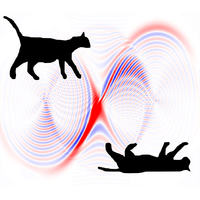
Unitary collapse of Schrödinger's cat state

Pavel Stránský, Pavel Cejnar, and Radim Filip

Phys. Rev. A 110, L030202 (2024) - Published 19 September, 2024

The authors study a system composed of a single qubit coupled to a soft-mode quantum oscillator. They show that spontaneous unitary evolution of this system create a Schrödinger-cat-like state of the oscillator, which is subsequently lost in a sudden process strongly resembling the measurement-induced collapse of wave function.

Improving on-demand single-photon-source coherence and indistinguishability through a time-delayed coherent feedback

Gavin Crowder, Lora Ramunno, and Stephen Hughes

Phys. Rev. A 110, L031703 (2024) - Published 10 September, 2024

By using a quantum-trajectory discretized waveguide model to simulate waveguide–quantum-dot systems, the authors show how a time-delayed coherent feedback can significantly improve key figures of merit for single-photon sources.

Exactly solvable model of light-scattering errors in quantum simulations with metastable trapped-ion qubits

Phillip C. Lotshaw, Brian C. Sawyer, Creston D. Herold, and Gilles Buchs

Phys. Rev. A 110, L030803 (2024) - Published 9 September, 2024

Metastable atomic levels have attracted recent attention for applications in quantum information processing and quantum simulation, but scalable approaches to model their fundamental errors are needed. The authors addressed this by solving a master equation that describes light-scattering errors for these qubits, providing physical insights into the influence of these errors, as well as scalable formulas for modeling a variety of future experiments.

Angular momentum flow without anything carrying it

Yakir Aharonov, Daniel Collins, and Sandu Popescu

Phys. Rev. A 110, L030201 (2024) - Published 5 September, 2024

The authors theoretically demonstrate a flow of angular momentum from one region to another across a region of space in which there is a vanishingly small probability of any particles (or fields) being present. This is contrary to the usual understanding that conserved quantities, such as angular momentum, are carried from one region to another either by particles carrying them, or by particles interacting with one another in a chain.

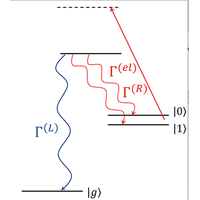
Systematic-free limit on new light scalar bosons via isotope-shift spectroscopy in Ca+

Timothy T. Chang, Bless Bah Awazi, Julian C. Berengut, Elina Fuchs, and S. Charles Doret

Phys. Rev. A 110, L030801 (2024) - Published 4 September, 2024

The authors utilize laser spectroscopy to perform precise measurements on multiple transitions in Ca+ and combine these measurements to form a King Plot which is consistent with linearity at the ppb level. Such linearity sets new isotope-shift-based limits on beyond-Standard-Model force carriers, free of systematics from Standard Model nuclear theory, and improves on prior work by a factor of three.

High-accuracy measurements of core-excited transitions in light Li-like ions

Moto Togawa, Steffen Kühn, Chintan Shah, Vladimir A. Zaytsev, Natalia S. Oreshkina, Jens Buck, Sonja Bernitt, René Steinbrügge, Jörn Seltmann, Moritz Hoesch, Christoph H. Keitel, Thomas Pfeifer, Maurice A. Leutenegger, and José R. Crespo López-Urrutia

Phys. Rev. A 110, L030802 (2024) - Published 4 September, 2024

A general systematic uncertainty affecting soft x-ray spectroscopy has been characterized and corrected. This resulted in a spectroscopic accuracy for light lithium-like ions that is comparable to current ab initio predictions.

Nontrivial intensity correlation from a coherent continuous-wave laser beam

Binod Joshi, Thomas A. Smith, and Yanhua Shih

Phys. Rev. A 110, L031702 (2024) - Published 4 September, 2024

Quantum correlations with a normalized value of g(2)(τ)>1 are typically observed in light in a thermal state (e.g., light from a star or incandescent bulb). Here, the authors demonstrate that similar correlations are present in a continuous-wave laser beam consisting of a large number of longitudinal modes modeled as coherent states.

First-principles construction of symmetry-informed quantum metrologies

Jesús Rubio

Phys. Rev. A 110, L030401 (2024) - Published 3 September, 2024

The author introduces a closed-form class of optimal quantum measurements that exploit the symmetries of metrological platforms. This approach simplifies the practical search for optimal strategies and enhances resource allocation per measurement.

Determining the absolute number density of a thermal vapor via photon correlations

Sofia Ribeiro, Adrián Juan-Delgado, and Simon A. Gardiner

Phys. Rev. A 110, L031701 (2024) - Published 3 September, 2024

The article proposes a methodology for determining the absolute number density of hot, dense atomic vapors confined within dielectric nanocells. Measuring the intensity-intensity correlations of light emitted as a result of near-resonant laser driving of the atomic ensemble, and taking the Fourier transform, produces a form of power spectrum; a dip in this spectrum reveals the average interatomic distance, from which it is possible to determine the atomic number density and, in turn, in principle also the temperature.

Sign In to Your Journals Account

Filter

Category
Section

Filter

Article Lookup

Enter a citation