Letters

Realization of a period-3 coplanar state in one-dimensional spin-orbit-coupled optical lattices

Yida Chu, Shijie Hu, and Tao Wang

Phys. Rev. A 111, L011304 (2025) - Published 28 January, 2025

The authors propose a three-sublattice spin-flop mechanism for achieving a period-3 coplanar state in a 1D system of alkaline-earth-metal atoms. This innovative mechanism can also be extended to create complex structures with larger period numbers in other spin models or various artificial setups.

Optimal cavity design for minimizing errors in cavity-QED-based atom-photon entangling gates with finite temporal duration

Takeru Utsugi, Rui Asaoka, Yuuki Tokunaga, and Takao Aoki

Phys. Rev. A 111, L011701 (2025) - Published 23 January, 2025

The authors present an optimal cavity design for atom-photon entangling gates based on cavity quantum electrodynamics, considering finite photon-pulse duration. By minimizing both the photon loss probability and the error rate due to temporal mode mismatch, they suggest that a cavity has an optimal length for the atom-photon gate, providing a guideline for implementing quantum information processing.

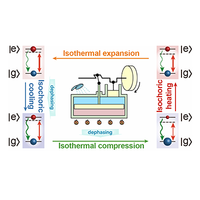
Experimental demonstration of single-spin Stirling engine cycles with enhanced efficiency

P.-D. Li, G.-Y. Ding, J.-Q. Zhang, Q. Yuan, S.-Q. Dai, T.-H. Cui, F. Zhou, L. Chen, Q. Zhong, H. Jing, Ş. K. Özdemir, and M. Feng

Phys. Rev. A 111, L010203 (2025) - Published 21 January, 2025

The authors demonstrate the performance of quantum Stirling cycles at the single-ion level. The experimental results highlight that elaborately introduced dephasing can enhance the efficiency of the quantum Stirling engine.

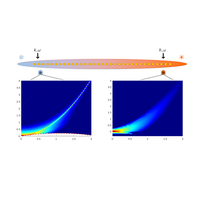
One-body dynamical correlation function of the Lieb-Liniger model at finite temperature

Song Cheng, Yang-Yang Chen, Xi-Wen Guan, Wen-Li Yang, and Hai-Qing Lin

Phys. Rev. A 111, L010802 (2025) - Published 17 January, 2025

Building on quantum integrability, the authors address the finite temperature one-body dynamical correlation function of 1D Bose gases using an algorithm grounded in the concept of generalized particle-hole excitations relative to a reference state. The correlation function is analyzed from the momentum-energy plane and its line-shape and momentum distribution are presented, well beyond the applicable regime of Tomonaga-Luttinger liquid theory predictions.

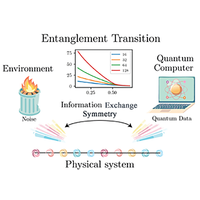
Entanglement transitions induced by quantum-data collection

Shane P. Kelly and Jamir Marino

Phys. Rev. A 111, L010402 (2025) - Published 16 January, 2025

The authors demonstrate that the transfer of quantum information can induce an entanglement transition. The transition generalizes the measurement-induced transition and spontaneously breaks a symmetry between the information gained by the computer and the information lost to the environment.

Floquet geometric squeezing in fast-rotating condensates

Li Chen, Fei Zhu, Yunbo Zhang, and Han Pu

Phys. Rev. A 111, L011303 (2025) - Published 14 January, 2025

Floquet engineering is employed to theoretically demonstrate two-mode geometric squeezing of a fast-rotating atomic Bose-Einstein condensate within the quantum Hall regime.

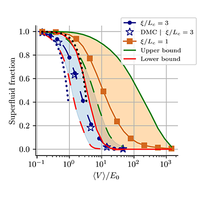
Superfluid fraction of interacting bosonic gases

Daniel Pérez-Cruz, Grigori E. Astrakharchik, and Pietro Massignan

Phys. Rev. A 111, L011302 (2025) - Published 13 January, 2025

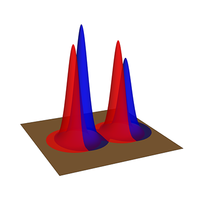
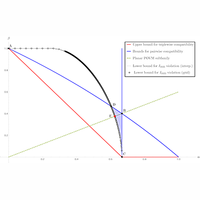
The authors investigate the superfluid fraction of bosonic gases in two-dimensional potentials using the Gross-Pitaevskii theory and Diffusion Monte Carlo method. It is shown that the upper and lower bounds introduced by Leggett (which are easily computable starting from in-situ images of the ultracold cloud) provide an accurate prediction for the exact superfluid fraction under many experimentally relevant conditions.

Supersolidity of dipolar Bose-Einstein condensates induced by coupling to fermions

Maciej Lewkowicz, Tomasz Karpiuk, Mariusz Gajda, and Mirosław Brewczyk

Phys. Rev. A 111, L011301 (2025) - Published 8 January, 2025

The authors report that the dipolar ultracold atomic Bose-Fermi mixture enters the supersolid phase when the interaction parameters are appropriately tuned. This behavior is supported by the appearance of low-energy Goldstone and Higgs excitation modes upon perturbation of the system.

Quasiperiodic Floquet-Gibbs states in Rydberg atomic systems

Wilson S. Martins, Federico Carollo, Kay Brandner, and Igor Lesanovsky

Phys. Rev. A 111, L010202 (2025) - Published 7 January, 2025

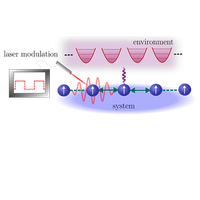
The authors explore the emergence of universal steady states in quasi-periodically driven interacting Rydberg systems in contact with a thermal environment. Their work highlights the potential of fast periodic driving at incommensurate frequencies to engineer new types of quantum matter and thermal machines.

Quantum correlations, mixed states, and bistability at the onset of lasing

Francesco Papoff, Mark Anthony Carroll, Gian Luca Lippi, Gian-Luca Oppo, and Giampaolo D'Alessandro

Phys. Rev. A 111, L011501 (2025) - Published 7 January, 2025

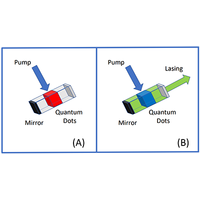
In models considering all quantum correlations between photons and electrons, lasing emerges from the interplay between bistable nonlasing states (A) and lasing states (B) with quantum properties not observable in the classical coherent fields of the standard laser theories. In the macrolaser limit, the laser threshold aligns with semiclassical theory predictions, but with the important distinction that lasing requires finite-size perturbations to occur.

On-the-fly ab initio Hagedorn wave-packet dynamics: Single vibronic level fluorescence spectra of difluorocarbene

Zhan Tong Zhang, Máté Visegrádi, and Jiří J. L. Vaníček

Phys. Rev. A 111, L010801 (2025) - Published 6 January, 2025

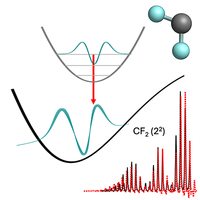
The authors combine on-the-fly ab initio molecular dynamics with Hagedorn semiclassical wavepackets to obtain a general method for evaluating fluorescence spectra from arbitrary vibronic levels of polyatomic molecules with anharmonic potential energy surfaces. To demonstrate the efficiency of the method, a single ab initio semiclassical trajectory is used to simultaneously compute fluorescence spectra from seven different vibronic levels of difluorocarbene.

Ancilla-entangling Floquet kicks for accelerating quantum algorithms

C.-C. Joseph Wang, Phillip C. Lotshaw, Titus Morris, Vicente Leyton-Ortega, Daniel Claudino, and Travis S. Humble

Phys. Rev. A 111, L010401 (2025) - Published 3 January, 2025

The authors propose a flexible way to accelerate quantum simulation by entangling primary system qubits with ancillary qubits. The practical benefits originate from tuning the ancillary gauge degrees of freedom to enhance the quantum algorithm’s original functionality in the system registry.

Certification of unbounded randomness with arbitrary noise

Shubhayan Sarkar

Phys. Rev. A 111, L010201 (2025) - Published 2 January, 2025

The author devises a scheme to certify limitless randomness using everyday noise like thermal radiation, making ultrasecure cryptography more achievable. The scheme is based on the maximal violation of the well-known Leggett-Garg inequalities and thus can be implemented using current technology.

Waveguide and cavity quantum electrodynamics with topological bowtie modes

Anastasiia V. Vladimirova, Guillermo Arregui, Sergei Lepeshov, Christian Anker Rosiek, Babak Vosoughi Lahijani, and Søren Stobbe

Phys. Rev. A 110, L061503 (2024) - Published 24 December, 2024

The authors demonstrate the existence of valley-Hall photonic topological insulators with strongly confined edge modes due to dielectric bowtie geometries. These topological building blocks enable waveguide quantum electrodynamics with ultrasmall mode volumes or by introducing perturbed topological waveguide sections as mirrors and cavity quantum electrodynamics with ultrahigh quality factors and ultrasmall mode volumes.

Exploiting nonequilibrium phase transitions and strong symmetries for continuous measurement of collective observables

Albert Cabot, Federico Carollo, and Igor Lesanovsky

Phys. Rev. A 110, L060601 (2024) - Published 23 December, 2024

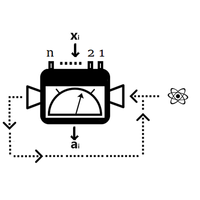
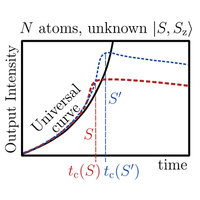
A collective spin system is considered, whose constituents aregoverned by a dissipative dynamics that displays a strong symmetry(total angular momentum) in conjunction with a nonequilibrium phase transition. By monitoring the system output, it is shown that these ingredients allow to infer the value of the total angular momentumwithout the need of repeated projective measurements orreinitializations of the spins.

Vortex bound states in dimerized π-flux optical lattices: Characterization, state preparation, and current measurement

Andrei A. Stepanenko and Marco Di Liberto

Phys. Rev. A 110, L061304 (2024) - Published 23 December, 2024

The authors introduce a mechanism to generate a bound state of two bosons with finite angular momentum, i.e. a vortex bound state. Approaches to prepare the state and measure its chirality are discussed.

Reconstructing superoscillations buried deeply in noise

Derek D. White, Shunxing Zhang, Barbara Šoda, Achim Kempf, Daniele C. Struppa, Andrew N. Jordan, and John C. Howell

Phys. Rev. A 110, L061502 (2024) - Published 23 December, 2024

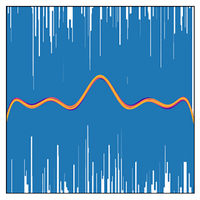
The authors demonstrate a method for creating superoscillating waves using frequency combs, and show that signals constructed using this method can be precisely spectrally filtered to reconstruct a superoscillating region that has been buried in orders of magnitude of noise. They further show that the superoscillating signal recovered from noise can be effectively used to range-resolve two objects well below the traditional range resolution limit.

Qualitative equivalence between incompatibility and Bell nonlocality

Shiv Akshar Yadavalli, Nikola Andrejic, and Ravi Kunjwal

Phys. Rev. A 110, L060201 (2024) - Published 10 December, 2024

The authors study the relationship between joint measurability structures and their ability to support Bell inequality violations with quantum measurements. They show that every joint measurability structure with some incompatibility can show Bell nonlocality in quantum theory.

Relativistic effects in molecular photoemission delays

Brock Grafstrom, Anna Wang-Holtzen, Jun Wang, Philip H. Bucksbaum, James P. Cryan, and Alexandra S. Landsman

Phys. Rev. A 110, L061101 (2024) - Published 6 December, 2024

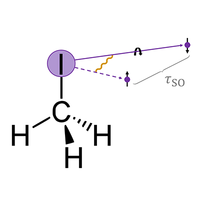
The authors use attosecond flashes of light to investigate relativistic effects in molecules, which are known to impact certain chemical reactions and molecular dynamics around conical intersections. The relativistic effects were contained in the relative photoemission delay between two spin-orbit split states in methyl iodide, and by using relativistic calculations, the authors explain how the anomalous dip in the measured spin-orbit delay spectrum results from the interplay of interchannel coupling and spin-flip transitions.

Capturing many-body correlation effects with quantum and classical computing

Karol Kowalski, Nicholas P. Bauman, Guang Hao Low, Martin Roetteler, John J. Rehr, and Fernando D. Vila

Phys. Rev. A 110, L060401 (2024) - Published 5 December, 2024

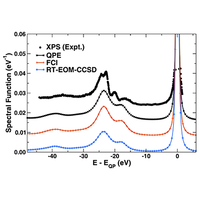
The authors demonstrate the efficacy of the quantum phase estimator algorithm for evaluating the spectral function related to the ionization-potential part of a one-electron Green’s function in the high-energy regime. They assess the algorithm’s accuracy by comparing it to results derived from both exact and approximate formulations that incorporate high-rank correlation effects.

Sign In to Your Journals Account

Filter

Category
Section

Filter

Article Lookup

Enter a citation