Letters

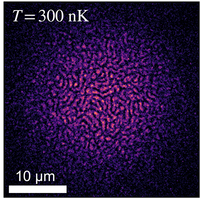
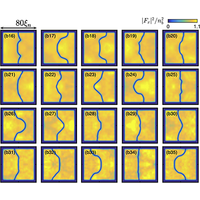
Absence of the breakdown of ferrodark solitons exhibiting a snake instability

Xiaoquan Yu and P. B. Blakie

Phys. Rev. A 110, L061303 (2024) - Published 4 December, 2024

The authors consider the dynamics of the recently discovered ferrodark soliton as a line defect in a quasi-two-dimensional ferromagnetic spin-1 Bose-Einstein condensate. This line ferrodark soliton exhibits snake instability however does not suffer the expected breakdown. Instead, it shows a chaotic motion combined with the proliferation of confined mass vortex pairs while the topological structure of the magnetic domain wall is kept.

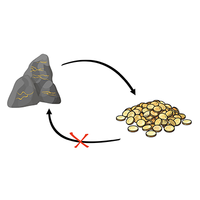
Physical limits on Raman scattering: The critical role of pump and signal co-design

Alessio Amaolo, Pengning Chao, Thomas J. Maldonado, Sean Molesky, and Alejandro W. Rodriguez

Phys. Rev. A 110, L061501 (2024) - Published 4 December, 2024

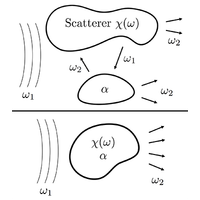
The authors present a method for calculating physical limits on objectives of Raman scattered fields manipulated by nanophotonic structuring. The findings demonstrate that a coupled treatment of pump field focusing and Raman field scattering is required to realistically predict Raman-enhancing and Raman-active photonic device performance.

Few-to-many-particle crossover of pair excitations in a superfluid

Fabian Resare and Johannes Hofmann

Phys. Rev. A 110, L061302 (2024) - Published 3 December, 2024

The authors examine the crossover of pair excitations from few- to many-particle Fermi gases, with a focus on the emergence of a “Higgs mode” that is characteristic of superfluid systems. By using an integrable pairing model that includes interactions between time-reversed pair states, a unified description of few- and many-body systems is provided with minor numerical cost. Agreement with recent few-body experiments is reported, which corroborates the pairing model, and the extrapolation to large particle numbers is discussed.

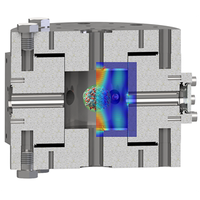
Multiphoton-dressed Rydberg excitations in a microwave cavity with ultracold Rb atoms

J. D. Massayuki Kondo, Seth T. Rittenhouse, Daniel Varela Magalhães, Vasil Rokaj, S. I. Mistakidis, H. R. Sadeghpour, and Luis Gustavo Marcassa

Phys. Rev. A 110, L061301 (2024) - Published 2 December, 2024

The authors demonstrate through Rydberg atom loss spectroscopy in a MOT that the well-known Autler-Townes split levels resonating in a microwave cavity can absorb and emit fractional photons to and from the cavity. A multilevel Jaynes-Cummings model provides theoretical support for near- and far-off-resonant multiphoton absorption and emission spectral features observed in the experiment.

Photon statistics from non-Hermitian Floquet theory: High-order-harmonic-generation and above-threshold-ionization spectra detected via IR detectors

Nimrod Moiseyev

Phys. Rev. A 110, L051101 (2024) - Published 26 November, 2024

Quantum illumination with high-dimensional Bell states

Armanpreet Pannu, Amr S. Helmy, and Hesham El Gamal

Phys. Rev. A 110, L050603 (2024) - Published 25 November, 2024

This work explores a protocol for quantum illumination using high-dimensional Bell states, showing that discrete-variable states can be effective in detecting targets across different noise conditions. The findings suggest that Bell states may serve as a viable alternative to continuous-variable states in quantum sensing, expanding the possibilities for entanglement-enhanced applications.

Uncovering measurement-induced entanglement via directional adaptive dynamics and incomplete information

Yu-Xin Wang (王语馨), Alireza Seif, and Aashish A. Clerk

Phys. Rev. A 110, L050602 (2024) - Published 19 November, 2024

The authors propose a general recipe for mapping measurement-induced conditional entanglement dynamics to a corresponding measurement- and postselection-free dissipative system, utilizing directional interactions between the original system and a set of auxiliary register modes. They further apply this approach to deterministically capture transitions in measurement-induced entanglement dynamics, due to a competition between entangling measurements and local unitaries, in both single-mode and many-body bosonic lattices.

Breaking and trapping Cooper pairs by Rydberg-molecule spectroscopy in atomic Fermi superfluids

Chih-Chun Chien, S. I. Mistakidis, and H. R. Sadeghpour

Phys. Rev. A 110, L051303 (2024) - Published 18 November, 2024

The authors propose a spectroscopic probe of the breaking and localization of Cooper pairs in an atomic Fermi superfluid interacting with a Rydberg impurity. A competition between two molecular formation mechanisms, the Rydberg potential and the pairing behind the Cooper pairs leads to rich physics in the system.

Emergent s-wave interactions in orbitally active quasi-two-dimensional Fermi gases

C. J. Dale, K. G. S. Xie, K. Pond Grehan, Shizhong Zhang, J. Maki, and J. H. Thywissen

Phys. Rev. A 110, L051302 (2024) - Published 15 November, 2024

The authors prepare a quasi-two-dimensional spin-polarized Fermi gas with orbital excitations and p-wave interactions enabled by a Feshbach resonance. Radio-frequency spectroscopy indicates s-wave scattering symmetry in the plane, demonstrating how gapped orbital degrees of freedom can be used to control scattering symmetry in strongly confined ultracold gases.

Operational interpretation of the Choi rank through exclusion tasks

Benjamin Stratton, Chung-Yun Hsieh, and Paul Skrzypczyk

Phys. Rev. A 110, L050601 (2024) - Published 13 November, 2024

By identifying what messages were not encoded, rather than what messages were encoded, in a quantum state, quantum state exclusion can bring certainty to the task of communicating classical information via noisy quantum states. Here, this notion is used to define a task through which the Choi rank of a quantum channel can be given an operational interpretation.

Observation of a broad state-to-state spin-exchange collision near a p-wave Feshbach resonance of Li6 atoms

Shuai Peng, Tangqian Shu, Bowen Si, Sijia Peng, Yixin Guo, Yongchang Han, Jiaming Li, Gaoren Wang, and Le Luo

Phys. Rev. A 110, L051301 (2024) - Published 12 November, 2024

The authors investigate spin-exchange collisions near a p-wave Feshbach resonance in 6Li atoms, observing an interaction range of approximately 10G that produces atom pairs in the second-lowest hyperfine state, held in a stable optical trap. Coupled-channel calculations reveal a broad resonance profile and low inelastic collision rate, opening possibilities for long-lived, strongly interacting p-wave Fermi gases.

Collisions of spin-polarized YO molecules for single partial waves

Justin J. Burau, Kameron Mehling, Matthew D. Frye, Mengjie Chen, Parul Aggarwal, Jeremy M. Hutson, and Jun Ye

Phys. Rev. A 110, L041306 (2024) - Published 31 October, 2024

The authors study collisions of directly laser-cooled YO molecules in an ultracold regime involving few partial waves. They observe loss enhancement with increasing temperature or a larger number of participating partial waves. The observed loss rates are compared to theory, suggesting incomplete loss at short range and resonant enhancement. This collision study is highly relevant for achieving a degenerate gas of polar laser-cooled molecules.

Fate of the Mollow triplet in strongly coupled atomic arrays

Orazio Scarlatella and Nigel R. Cooper

Phys. Rev. A 110, L041305 (2024) - Published 30 October, 2024

Ordered arrays of atoms have emerged as a novel platform where strong light-matter interactions can be achieved. The authors introduce a dynamical mean-field theory approach to investigate the steady states of these systems, featuring long-range dipolar interactions and collective dissipation. They show how the Mollow triplet for a single atom is modified by strong dipolar interactions, developing a characteristic lineshape with flat sidebands, sensitive to the ordered arrangement, but independent of some geometrical details.

Mott-glass phase induced by long-range correlated disorder in a one-dimensional Bose gas

Nicolas Dupuis and Andrei A. Fedorenko

Phys. Rev. A 110, L041304 (2024) - Published 25 October, 2024

The authors explore the phase diagram of a one-dimensional Bose gas in the presence of disorder with long-range correlations decaying with distance. The disorder induces a Berezinskii-Kosterlitz-Thouless transition from a superfluid phase to a localized phase. The study reveals the conditions under which the ground state is a Mott glass, characterized by vanishing compressibility and gapless conductivity, rather than the usual Bose glass.

Thermodynamic stability of a spin microemulsion in Rashba spin-orbit-coupled bosons

Ethan C. McGarrigle, Ron Nodel, Kris T. Delaney, Leon Balents, and Glenn H. Fredrickson

Phys. Rev. A 110, L041303 (2024) - Published 24 October, 2024

Recently, a “spin” quantum microemulsion analogue was revealed in numerical simulations of spin-orbit coupled Bose-Einstein condensates; however, an experimental realization remains to be seen. Here, the authors provide a computational investigation of the microemulsion’s thermodynamic stability in conditions previously unexplored, including a realistic 87Rb experiment. Their simulations reveal a much wider set of conditions where a spin microemulsion can exist.

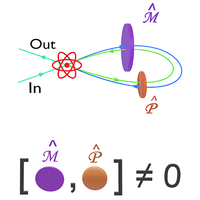
Breaking of reciprocity and the Pancharatnam-Berry phase for light scattered by a disordered cold-atom cloud

P. H. N. Magnani, P. G. S. Dias, M. Frometa, M. A. Martins, N. Piovella, R. Kaiser, Ph. W. Courteille, M. Hugbart, R. Bachelard, and R. C. Teixeira

Phys. Rev. A 110, L041302 (2024) - Published 23 October, 2024

The authors demonstrate reciprocity breaking induced by noncommuting polarization operations using an interferometric setup for light scattered by cold atoms. The experiment provides insights into how interference phenomena may be affected by symmetry-breaking effects in disordered systems.

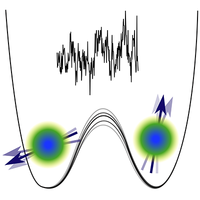
Quantum optimal control robust to 1/fα noises using fractional calculus: Voltage-controlled exchange in semiconductor spin qubits

Bohdan Khromets and Jonathan Baugh

Phys. Rev. A 110, L040602 (2024) - Published 22 October, 2024

The authors combine fractional calculus with optimization methods to design control signals that enhance the performance of quantum systems in noisy environments. They focus on identifying the ideal pulse characteristics to minimize the disruptive effects of electrical noise on exchange gates for semiconductor spin qubits.

Stabilizer entropies are monotones for magic-state resource theory

Lorenzo Leone and Lennart Bittel

Phys. Rev. A 110, L040403 (2024) - Published 18 October, 2024

The authors prove the monotonicity of stabilizer entropies under general stabilizer operations. This result establishes stabilizer entropies as the only known family of monotones that are experimentally measurable and computationally tractable.

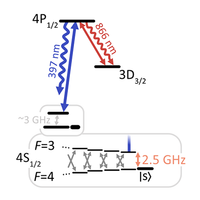
Polarization-insensitive state preparation for trapped-ion hyperfine qubits

A. D. Leu, M. C. Smith, M. F. Gely, and D. M. Lucas

Phys. Rev. A 110, L040402 (2024) - Published 16 October, 2024

This work presents a hybrid optical-microwave state preparation scheme for trapped ions with nuclear spin I > 1/2 at intermediate magnetic fields. This method provides a robust solution for high-fidelity state preparation that eliminates the need for polarization purity, making it well suited for scalable quantum computing systems.

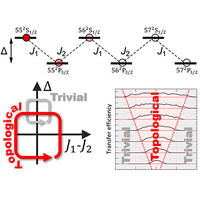
Realization of topological Thouless pumping in a synthetic Rydberg dimension

Martin Trautmann, Inti Sodemann Villadiego, and Johannes Deiglmayr

Phys. Rev. A 110, L040601 (2024) - Published 15 October, 2024
The authors demonstrate topological quantum pumping in a one-dimensional Rice-Mele chain realized in a synthetic dimension constructed from Rydberg states of cesium atoms. By dynamically controlling couplings and on-site energies through engineered radio-frequency fields, they explore the efficiency of quantum particle transport, offering insights into the emergence of topologically protected features in time-dependent quantum systems.

Sign In to Your Journals Account

Filter

Category
Section

Filter

Article Lookup

Enter a citation