Letters

Fermionic anyons: Entanglement and quantum computation from a resource-theoretic perspective

Allan Tosta, Antônio C. Lourenço, Daniel Brod, Fernando Iemini, and Tiago Debarba

Phys. Rev. A 110, L010404 (2024) - Published 8 July, 2024

Particles with exotic statistics serve as an important testbed for quantum information protocols and help us better understand the properties of the more naturally occurring bosons and fermions. The authors investigate the separability of a class of exotic particles known as fermionic anyons, establishing a connection between their capabilities as an architecture for quantum computation and their link with bosonic and fermionic quantum computer setups.

Robust and fast microwave-driven quantum logic for trapped-ion qubits

M. A. Weber, M. F. Gely, R. K. Hanley, T. P. Harty, A. D. Leu, C. M. Löschnauer, D. P. Nadlinger, and D. M. Lucas

Phys. Rev. A 110, L010601 (2024) - Published 8 July, 2024

The authors demonstrate a method for robust electronically driven quantum logic gates for trapped-ion qubits. Using “atomic clock” qubits stored in hyperfine states of calcium-43 ions, they have achieved the fastest such gates with greater than 99% fidelity.

Self-testing of genuine multipartite entangled states without network assistance

Ranendu Adhikary, Abhishek Mishra, and Ramij Rahaman

Phys. Rev. A 110, L010401 (2024) - Published 3 July, 2024

Self-testing of quantum correlations is an important problem in quantum information theory, and the task becomes more challenging in multipartite scenarios. In this context, the authors provide a network-assistance-free self-testing scheme for genuine multipartite entangled states by employing a generalized Hardy-type nonlocality argument and exploring its device-independent bound of the maximum probability of success.

Faithful geometric measures for genuine tripartite entanglement

Xiaozhen Ge, Lijun Liu, Yong Wang, Yu Xiang, Guofeng Zhang, Li Li, and Shuming Cheng

Phys. Rev. A 110, L010402 (2024) - Published 3 July, 2024

The authors present a geometric picture for tripartite entanglement that is valid for discrete, continuous, and even hybrid quantum systems. They further show that the triangle area, enclosed by any tripartite state, is a faithful measure for genuine tripartite entanglement.

Spin-precession method for sensitive electric dipole moment searches

A. Boeschoten, V. R. Marshall, T. B. Meijknecht, A. Touwen, H. L. Bethlem, A. Borschevsky, S. Hoekstra, J. W. F. van Hofslot, K. Jungmann, M. C. Mooij, R. G. E. Timmermans, W. Ubachs, and L. Willmann (NL-eEDM Collaboration)

Phys. Rev. A 110, L010801 (2024) - Published 3 July, 2024

In the context of searches for a nonzero permanent electric dipole moment (EDM), a spin-precession method is demonstrated which provides a high sensitivity to experimental parameters such as electric-field strength and employed laser intensity while maintaining sensitivity to an EDM. This approach allows for constraining systematic biases as a necessary step towards an increased sensitivity in probing physics beyond the Standard Model through stringent EDM limits.

Propagation effects in resonant high-order harmonic generation and high-order frequency mixing in a laser plasma

V. V. Strelkov and M. A. Khokhlova

Phys. Rev. A 110, L011101 (2024) - Published 3 July, 2024

Increasing the high-order harmonic-generation brightness is a key route to advance attosecond XUV light sources, which can be done by exploiting a resonance with a ground-to-autoionizing-state transition of the atom. In this Letter, it is shown that narrower resonances not only boost the high-order harmonic microscopic response but also improve phase matching, while for wider resonances the phase matching can be achieved in high-order frequency mixing.

Bypassing thermalization timescales in temperature estimation using prethermal probes

Nicholas Anto-Sztrikacs, Harry J. D. Miller, Ahsan Nazir, and Dvira Segal

Phys. Rev. A 109, L060201 (2024) - Published 27 June, 2024

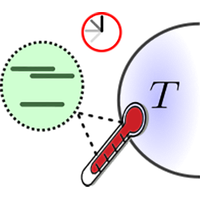
The authors consider time as a resource in thermometry. Noninvasive equilibrium probes are limited by their slow equilibration time. To overcome this deficiency, the authors introduce prethermal temperature probes, making use of the long-lived metastable states of systems with quasidegenerate excited states. Prethermal probes are shown to surpass corresponding equilibrium probes in terms of effective thermal sensitivity, opening avenues for rapid thermometry.

Topological winding guaranteed coherent orthogonal scattering

Cheng Guo and Shanhui Fan

Phys. Rev. A 109, L061503 (2024) - Published 27 June, 2024

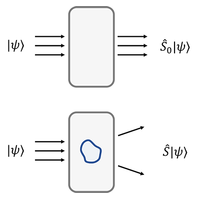
The authors introduce a new scattering phenomenon called coherent orthogonal scattering, where the output wave becomes orthogonal to the reference output wave in the absence of scatterers. This effect leads to complete extinction and complete mode conversion. The authors further examine the conditions for this effect and reveal its topological nature by relating it to the indivisibility between the dimension and the winding number of scattering submatrices.

Two-mode squeezing in Floquet-engineered power-law interacting spin models

Arman Duha and Thomas Bilitewski

Phys. Rev. A 109, L061304 (2024) - Published 26 June, 2024

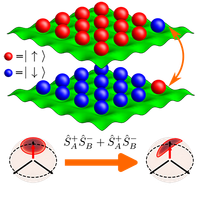
Long-range interacting spin systems can be used to generate metrologically useful entanglement in the form of spin squeezing resulting in quantum enhanced sensitivity. This work considers power-law spin exchange interactions to generate two-mode squeezing in a bilayer geometry. It shows how spatial control over the geometry allows for achieving the same sensitivity with power-law interactions as with infinite-range interactions, and how spatially Floquet-engineered interactions allow for achieving the ultimate Heisenberg scaling of sensitivity.

Ultracold coherent control of molecular collisions at a Förster resonance

Thibault Delarue and Goulven Quéméner

Phys. Rev. A 109, L061303 (2024) - Published 18 June, 2024

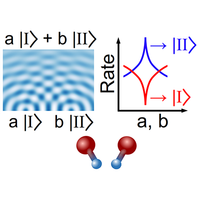
The authors show that a precise microwave preparation of a quantum superposition between three rotational states of an ultracold dipolar molecule generates controllable interferences in their calculated collisional rate coefficients, at an electric field that produces a Förster resonance. This can enable coherent control on ultracold molecular collisions in current experiments.

Chiral photoelectron spectroscopy using unpolarized light

Yoshi-Ichi Suzuki

Phys. Rev. A 109, L060802 (2024) - Published 17 June, 2024

The author demonstrates through symmetry analysis that the vector correlations induced by dipole-allowed transitions are generally sensitive to molecular chirality. As an example, the author finds that the two-particle angular distributions of photoelectrons and fragment ions resulting from ionization of randomly oriented molecules exhibit chirality, even with unpolarized or linearly polarized light.

Conformal invariance in out-of-equilibrium Bose-Einstein condensates governed by the Gross-Pitaevskii equation

J. Amette Estrada, M. Noseda, P. J. Cobelli, and P. D. Mininni

Phys. Rev. A 109, L061302 (2024) - Published 17 June, 2024

Researchers investigate the dynamics of out-of-equilibrium Bose-Einstein condensates, revealing the emergence of conformal invariant transient states and Schramm-Loewner evolution behavior, characterized by the evolution of density isolines. The paper discusses a link between this behavior in quantum turbulence and other four-wave interacting systems.

Weak-measurement-based pseudospin pointer: A cost-effective scheme for precision measurement

Ling Ye, Lan Luo, An Wang, Rongchun Ge, and Zhiyou Zhang

Phys. Rev. A 109, L060601 (2024) - Published 12 June, 2024

Faithfully condensing the vital information of a physical system is of significant fundamental and practical interest. In this letter, the authors introduce a measurement scheme and present a proof-of-principle experiment of a dimensionless pseudospin pointer based on weak measurement.

Topological phase transition in fluctuating imaginary gauge fields

Bikashkali Midya

Phys. Rev. A 109, L061502 (2024) - Published 10 June, 2024

Describing the band topology of disordered materials is a challenging task. Here, the author proposes a mean-field approach for analytically predicting spectral topological invariances and the boundary localization of associated eigenstates in bond-disordered lattices subjected to a spatially fluctuating imaginary gauge field (IGF) that breaks translational symmetry and uncovers a hidden topological phase transition in a quasicrystalline lattice under an IGF.

Antiferromagnetic behavior in self-bound one-dimensional composite bosons

M. C. Gordillo

Phys. Rev. A 109, L061301 (2024) - Published 5 June, 2024

The author theoretically studies the structure of self-bound one-dimensional droplets containing a mixture of ytterbium fermionic isotopes. The results indicate that these droplets consist of consecutive molecules made up of two different isotopes of ytterbium.

Charge transfer via temporary bonds in C60 + C60+ molecular collisions

J. Smucker, J. A. Montgomery, Jr., M. Bredice, M. G. Rozman, E. Yankson, R. Côté, and V. Kharchenko

Phys. Rev. A 109, L060801 (2024) - Published 3 June, 2024

The authors introduce a model of C60 resonant charge transfer which accounts for the formation of temporary bonds between the two colliding fullerenes. These bonds extend the interaction time between the two molecules, increasing the charge-transfer cross section.

Mesoscopic non-Hermitian skin effect

Alexander Poddubny, Janet Zhong, and Shanhui Fan

Phys. Rev. A 109, L061501 (2024) - Published 3 June, 2024

The authors derive the topological origin for the skin effect in a chiral waveguide quantum electrodynamics system which is lossless in the bulk. Unlike the conventional skin effect, this skin effect depends on the finite size of the lattice and is termed the “mesoscopic non-Hermitian skin effect.”

Floquet time crystals as quantum sensors of ac fields

Fernando Iemini, Rosario Fazio, and Anna Sanpera

Phys. Rev. A 109, L050203 (2024) - Published 30 May, 2024

The authors investigate the use of time-crystal phases for metrology, providing a concrete proposal as quantum sensors of AC fields. Their performance shows several useful advantages due to their long-range spatiotemporal ordering, overcoming the shot noise limit along with long interrogation times and robustness.

Temperature-enhanced critical quantum metrology

Laurin Ostermann and Karol Gietka

Phys. Rev. A 109, L050601 (2024) - Published 28 May, 2024

Counterintuitively, the authors show that critical metrology not only remains robust in the presence of finite temperature but can also benefit from it. Moreover, in certain cases, excited states exhibit significantly more non-classical behavior than ground states, further contributing to quantum-enhanced metrology.

First passage times for continuous quantum measurement currents

Michael J. Kewming, Anthony Kiely, Steve Campbell, and Gabriel T. Landi

Phys. Rev. A 109, L050202 (2024) - Published 20 May, 2024

The authors study First-Passage-Time distributions, and how they can be computed for stochastic measurement currents. They gain insights into signal-to-noise-ratio bounds and false positive reduction strategies, and charge-resolved master equations.

Sign In to Your Journals Account

Filter

Category
Section

Filter

Article Lookup

Enter a citation